Digital gift cards signal TikTok Shop’s retail expansion

TikTok Shop has introduced digital gift cards as part of its wider push into e-commerce. Users can purchase cards for $10 to $500 and choose animated designs for occasions such as birthdays or weddings. Availability is currently limited to the United States.

Recipients must have a TikTok account to redeem a gift card, and the balance is added to their TikTok Wallet instantly. Users can reply with a thank-you message or send a gift card as a return gesture. The approach reinforces TikTok’s focus on social interaction alongside transactions.

The feature puts the digital shop in more direct competition with established e-commerce platforms such as Amazon and eBay, which have long offered digital gift cards. Moves into higher-end retail to broaden its ambitions. The social media powerhouse is positioning itself as a full-scale online marketplace.

Momentum has continued to build, with US sales exceeding $500 million during the Black Friday and Cyber Monday period. The results highlight rising consumer confidence in the platform’s ability to drive purchases. Engagement is increasingly translating into measurable commerce.

Further developments are planned, including video messages and an interactive unboxing experience, which are expected to be released in early 2026. Expansion continues despite uncertainty around the platform’s future in the US. Negotiations over a potential sale remain unresolved ahead of January 2026.

Would you like to learn more about AI, tech, and digital diplomacy? If so, ask our Diplo chatbot!
Scientists develop fast AI tool for fusion energy

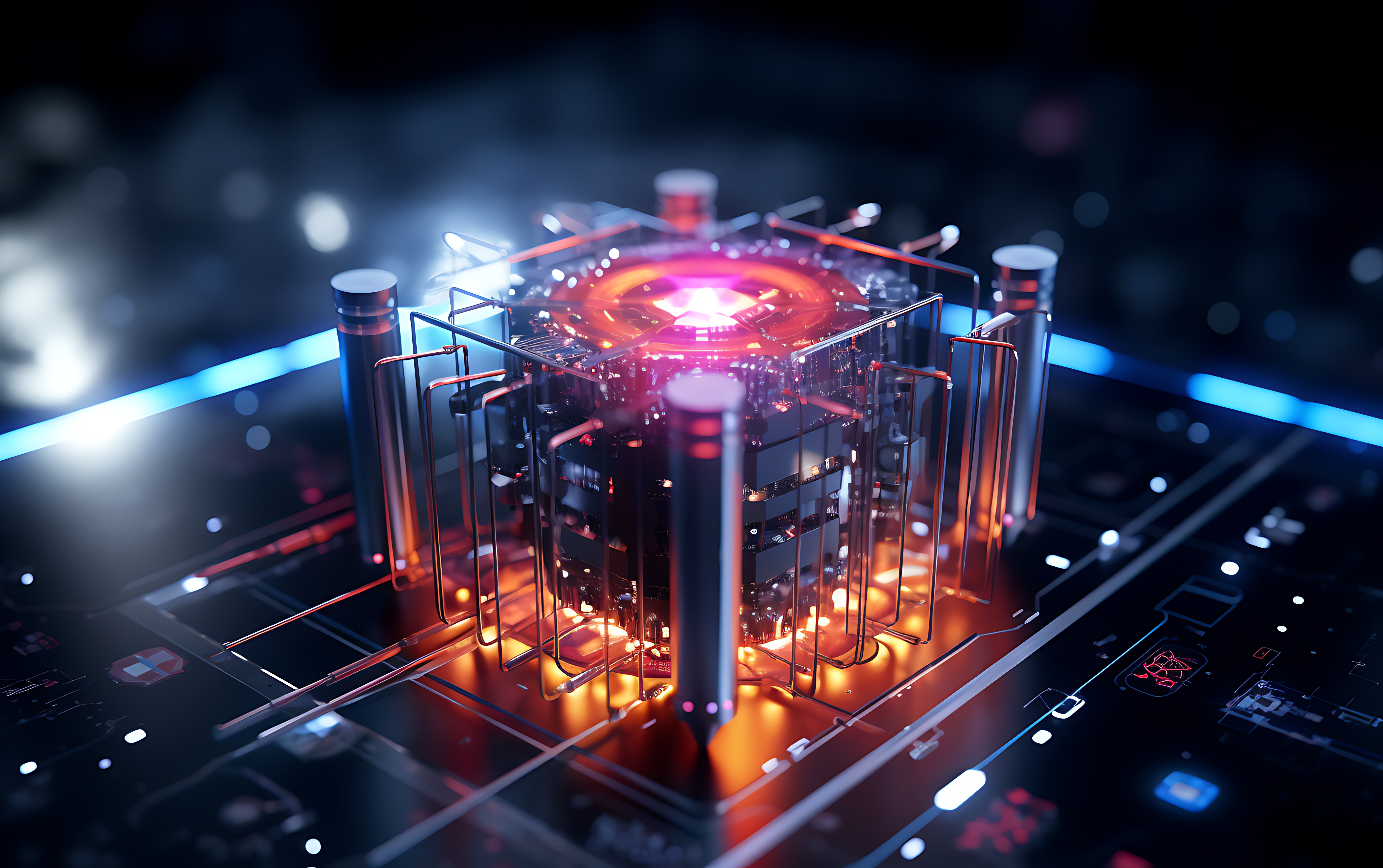
Scientists have developed an AI model capable of simulating complex fusion plasma in seconds, a process that previously took hours or even days. The tool, named GyroSwin, offers a faster, more cost-effective approach to designing future fusion power plants.

Traditional five-dimensional plasma simulations, which account for spatial dimensions and particle velocities, require immense supercomputing power and long computation times.

GyroSwin uses AI to learn plasma dynamics, producing accurate simulations up to 1,000 times faster than conventional methods. Faster modelling will help optimise turbulence management, a key challenge in achieving practical fusion energy.

The AI tool preserves crucial physical information, such as fluctuation scales and sheared flows, ensuring simulations remain physically interpretable.

Researchers at UK Atomic Energy Authority, Johannes Kepler University, and Emmi AI believe GyroSwin could transform the design and operation of next-generation fusion plants, including the UK’s STEP project.

GyroSwin demonstrates how AI and supercomputing can accelerate the path towards clean, abundant fusion energy while reducing the cost and complexity of plasma modelling, paving the way for a new era of fusion innovation.

Would you like to learn more about AI, tech and digital diplomacy? If so, ask our Diplo chatbot

UN report highlights AI opportunities for small businesses

AI is increasingly helping entrepreneurs in developing countries launch, manage, and grow their businesses, according to a new UNCTAD report. Start-ups and small businesses are using AI for marketing, customer service, logistics, finance, and product design.

Large language models are enabling smaller firms to adopt AI quickly and affordably, but adoption remains uneven. Many entrepreneurs struggle to see AI’s business value, and limited skills and talent slow adoption, especially in smaller firms.

Experts emphasise that supportive ecosystems, clear governance, and skills development are essential for meaningful AI integration.

Access to affordable technology and finance also plays a crucial role. Open-source platforms, collaborations, and phased adoption- from off-the-shelf tools to in-house capabilities, help firms experiment, learn, and grow while managing risk.

UNCTAD’s report highlights the importance of policy frameworks to foster AI adoption, recommending that governments provide clear, practical rules, accessible infrastructure, and targeted training.

Entrepreneurship support centres in several countries are already helping firms identify use cases and build hands-on AI skills, bridging the gap between strategy and practical implementation.

Would you like to learn more about AI, tech and digital diplomacy? If so, ask our Diplo chatbot!

Japan develops AI drones to track bears

A drone school in northeastern Japan is developing AI drones to detect bears. The system will send real-time locations to authorities via a smartphone app.

The drones have night-vision and infrared cameras and follow bears automatically once detected. Each drone flies for one hour before handing off surveillance and returning to base.

AI was trained using photos of black and brown bears from a local zoo. Officials hope it will reduce dangerous encounters and offer non-lethal ways to manage bears.

Other companies are testing similar systems in Fukushima and selling AI-equipped drones commercially. The academy aims to prevent human-bear conflicts and keep people and wildlife separate.

Would you like to learn more about AI, tech, and digital diplomacy? If so, ask our Diplo chatbot!

AI and cloud transform New Zealand services

Microsoft’s first New Zealand hyperscale cloud region has celebrated one year, providing local businesses and services with AI-powered tools and secure data storage. Organisations are using these capabilities to innovate, improve operations and enhance customer experiences.

Collaborations with Spark and Whakarongorau Aotearoa show AI can reduce administrative workloads and strengthen service delivery. Initiatives also support skills development, helping students, teachers and job seekers gain technology-focused credentials.

The datacentre operates sustainably, using renewable energy and waterless cooling systems to lower carbon emissions. These technologies help public services and businesses become more efficient while reducing environmental impact.

Looking ahead, Microsoft plans to expand AI adoption across New Zealand, supporting productivity, community services and responsible innovation for the next phase of digital growth.

Would you like to learn more about AI, tech, and digital diplomacy? If so, ask our Diplo chatbot!

NVIDIA joins US energy department Genesis mission to boost scientific discovery

The US Department of Energy has confirmed NVIDIA will join its Genesis Mission as a private-sector partner, strengthening collaboration between government, industry, and academia on advanced AI.

Launched under a recent executive order, the Genesis Mission aims to reinforce US leadership across energy, scientific research, and national security. Officials say the initiative is designed to significantly increase the productivity and impact of American science and engineering.

NVIDIA will support the Genesis Mission by providing AI and high-performance computing tools for climate modelling, manufacturing, robotics, nuclear energy, and quantum research. A memorandum of understanding sets priorities covering fission, fusion, digital twins, and autonomous laboratories.

The company is already working with the US Department of Energy on open AI models for scientific simulation. Projects also include AI-driven research in materials science, biology, and supply chains, with further collaboration planned.

The partnership builds on announcements made at NVIDIA’s GTC event in Washington. The announcements include work with Oracle on the Department’s largest scientific supercomputer at Argonne National Laboratory.

Would you like to learn more about AI, tech, and digital diplomacy? If so, ask our Diplo chatbot!


Android botnet Kimwolf infects nearly two million smart devices

Cybersecurity researchers have identified a large Android-based botnet capable of more than distributed denial-of-service attacks, highlighting growing risks from compromised consumer devices. The botnet, dubbed Kimwolf, is estimated to control close to two million infected systems worldwide.

The findings come from QiAnXin XLab, which said Kimwolf has infected around 1.8 million devices, mainly smart TVs, set-top boxes and tablets. Most infections were observed in Brazil, India, the US, Argentina, South Africa and the Philippines.

XLab said the infection vector remains unclear, but affected devices were linked to low-cost Android-based brands used for media streaming. Researchers noted repeated attempts to disrupt the Kimwolf, with its command-and-control infrastructure taken down several times before re-emerging.

According to the report, Kimwolf has adapted by shifting to decentralised infrastructure, including the use of Ethereum Name Service domains. Analysts also identified overlaps in code and infrastructure with AISURU, a botnet linked to record-scale DDoS attacks.

Cloudflare recently described AISURU as one of the largest robot networks observed, capable of attacks exceeding 29 terabits per second. XLab said shared infrastructure suggests both botnets are operated by the same threat group.

Would you like to learn more about AI, tech, and digital diplomacy? If so, ask our Diplo chatbot!
How Microsoft is teaching AI to understand biological systems

Medicine still relies largely on population averages, even though genetic and cellular differences shape how diseases develop and respond to treatment.

Researchers at Microsoft argue that AI could transform healthcare by learning the language of biology and enabling truly personalised medicine instead of one-size-fits-all therapies.

Ava Amini, principal researcher at Microsoft Research, explains that AI can detect biological patterns at a scale impossible for human analysis.

Single cancer biopsies can generate tens of millions of data points, allowing AI models to identify meaningful signals and support precision treatment strategies tailored to individual patients.

Building on decades of biological coding systems, Microsoft has developed generative models such as EvoDiff and the Dayhoff Atlas to design new proteins using biological language.

Lab testing has shown a marked improvement in functional success, demonstrating that AI-driven protein design is moving beyond theory into real-world application.

Challenges remain in modelling entire human cells, where current AI systems still predict averages rather than biological diversity. Microsoft researchers continue to pursue integrated experimental and computational approaches, aiming to bring precision oncology closer to everyday clinical practice.

Would you like to learn more about AI, tech and digital diplomacy? If so, ask our Diplo chatbot!

Samsung introduces upgraded AI-powered appliances at CES 2026

Samsung Electronics will showcase its latest kitchen appliances at CES 2026, highlighting upgrades to its Bespoke AI refrigerator, over-the-range microwave, and slide-in range. The company upgraded its vision-based AI with Google Gemini and Cloud to simplify kitchen tasks and enhance the cooking experience.

The upgraded Bespoke AI Refrigerator now recognises a wider variety of foods, including processed items without separate registration, and can track user-labelled ingredients. These improvements allow for more accurate food management and personalised kitchen experiences.

Samsung will also present the new Bespoke AI Wine Cellar, which identifies wine bottles, tracks their placement, and offers pairing suggestions via SmartThings AI Wine Manager.

Samsung is also updating appliance designs, with new French Door refrigerators, slide-in ranges, and over-the-range microwaves in a unified stainless steel finish. Upgrades feature easier drawer access, better cooktop ventilation, and redesigned controls for improved safety and convenience.

Visitors at CES 2026 will have the first opportunity to explore these innovations, demonstrating Samsung’s commitment to merging technology, design, and usability in modern kitchens.

Would you like to learn more about AI, tech and digital diplomacy? If so, ask our Diplo chatbot

Civil servants and AI will work together in 2050

Public administrations worldwide are facing unprecedented change as AI reshapes automation, procurement, and decision-making. Governments must stay flexible, open, and resilient, preparing for multiple futures with foresight, continuous learning, and adaptability.

During World Futures Day, experts from the SPARK-AI Alliance and representatives from governments, academia, and the private sector explored four potential scenarios for public service in 2050.

Scenarios ranged from human-centred administrations that reinforce trust, to algorithmic bureaucracies focused on oversight, agentic administrations with semi-autonomous AI actors, and data-eroded futures that require renewed governance of poor-quality data.

Key insights highlighted the growing importance of anticipatory capacity, positioning AI as a ‘co-worker’ rather than a replacement, and emphasising the need to safeguard public trust.

Civil servants will increasingly focus on ethical reasoning, interpretation of automated processes, and cross-disciplinary collaboration, supported by robust accountability and transparent data governance.

The SPARK-AI Alliance has launched a Working Group on the Future of Work in the Public Sector to help governments anticipate and prepare for change. Its focus will be on building resilient public administrations, evolving civil-service roles, and maintaining trust in AI-enabled governance.

Would you like to learn more about AI, tech and digital diplomacy? If so, ask our Diplo chatbot