
UN CSTD WG on data governance
The Working Group on Data Governance (WGDG) was established at the request of the UN General Assembly in Resolution A/RES/79/1, as part of the Pact for the Future/Global Digital Compact, to engage in a comprehensive and inclusive multistakeholder dialogue on data governance at all levels, as relevant for development. The WGDG was created under the UN Commission on Science and Technology for Development (CSTD). The group is expected to produce a report by the 81st session of the UN General Assembly.
Origins of the CSTD Working Group on Data Governance (WGDG)
At the United Nations Summit of the Future in 2024, world leaders adopted the Pact for the Future, which includes the Global Digital Compact (GDC) as its Annex I.
The GDC represents a high-level political commitment to ‘an inclusive, open, sustainable, safe, and secure digital future for all’. To achieve this overarching goal, the GDC sets out five main objectives:
- Objective 1: Close all digital divides and accelerate progress across the SDGs
- Objective 2: Expand inclusion in, and benefits from, the digital economy for all
- Objective 3: Foster an inclusive, open, safe, and secure digital space that respects, protects, and promotes human rights
- Objective 4: Advance responsible, equitable, and interoperable data governance approaches
- Objective 5: Enhance international governance of AI for the benefit of humanity
Each objective is embodied by specific commitments, most of them time-bound, with 2030 as the deadline for their realisation.
One of the GDC’s central pillars is data governance, which strengthens the presence of this issue on the UN’s global agenda.
The book Unpacking Global Digital Compact: Actors, Issues, and Processes by Sorina Teleanu explores the GDC’s complex negotiations and its role in fostering global cooperation amid diverse perspectives and diplomatic challenges. It serves as a vital resource for understanding how the GDC aligns digital governance with the public interest and addresses the challenges of an increasingly complex policy landscape. Download your copy here.
Data governance in the context of the GDC
Objective 4 of the GDC refers to advancing responsible, equitable, and interoperable data governance approaches. Under this objective, the GDC addresses five sets of topics:
- Data privacy and security, which highlights the relevance of privacy as an essential component of data governance, the need for coherence and consistency between existing and new frameworks, and the importance of empowering individuals and promoting capacity building.
- Data exchanges and standards, which emphasises the importance of data and metadata standards, data classification, and open data, in order to increase accessibility and the sharing of data.
- Data for SDGs and for development, which addresses the importance of safe and secure public data systems, the critical role of quality data, and the need to strengthen international cooperation to close gaps in data for development and increase the public availability of data.
- Cross-border data flows, which recognises the potential social, economic, and development benefits of secure and trusted cross-border data flows, and outlines member states’ commitment to advance consultations on how to facilitate such flows with trust.
- Interoperable data governance, under which UN member states request the CSTD to establish a dedicated multistakeholder working group to engage in dialogue on the fundamental principles of data governance at all levels, as relevant for development.
The commitments under each of these topics are summarised in Figure 1 below.
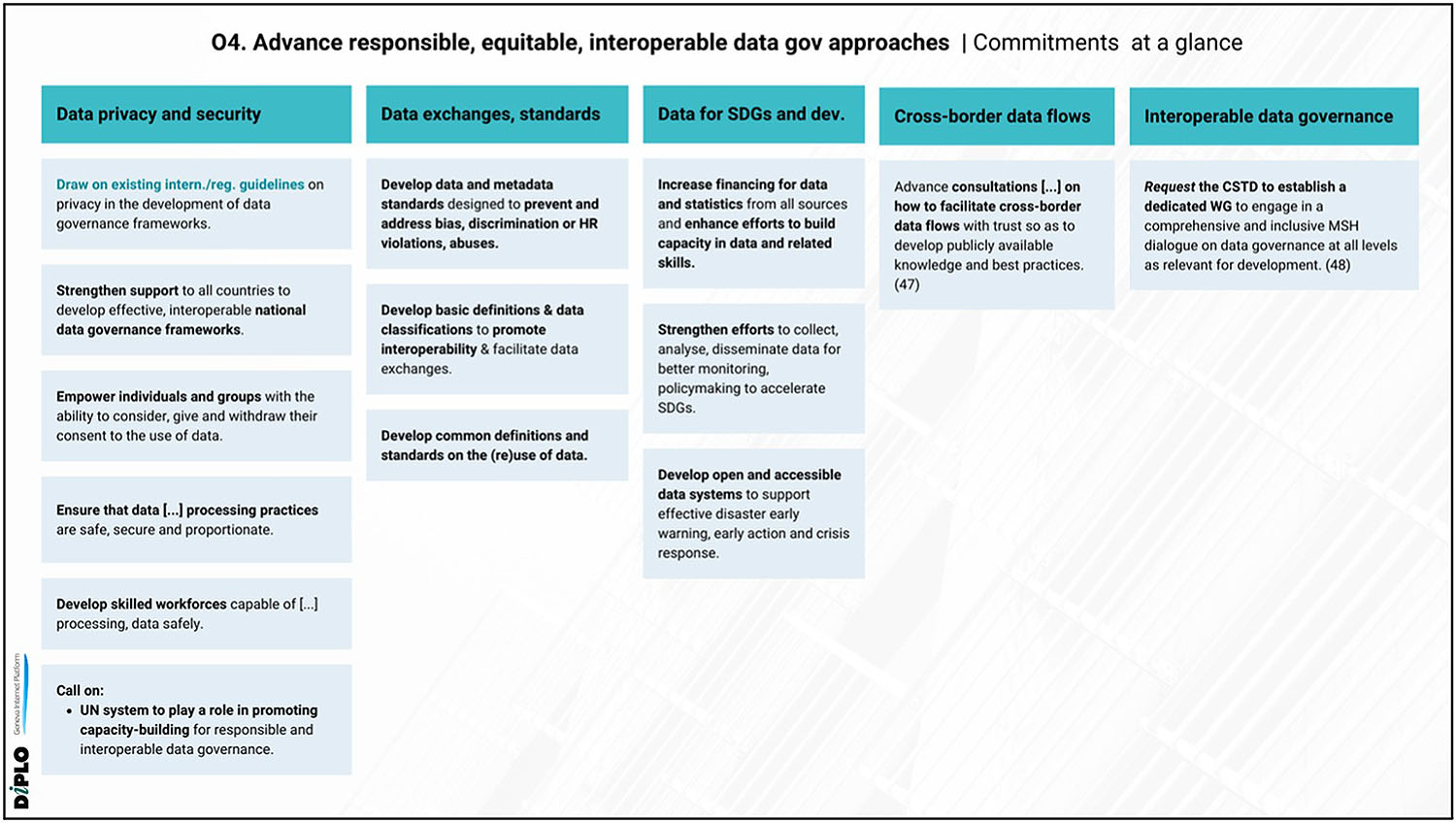
Figure 1: Advance responsible, equitable, interoperable data gov approaches (Teleanu, 2024).
The section dedicated to ‘interoperable data governance’, which provides the mandate for the CSTD WGDG, begins with a commitment to promote and support interoperability between national, regional, and international data policy frameworks (paragraph 48 of the GDC).
Interoperability is a key concept in the context of the GDC, capable of contributing to advancing development, fostering innovation, and promoting economic growth. For example, interoperability between data governance frameworks established at national and regional levels could help ensure alignment with international human rights standards, thereby facilitating consistent approaches to the protection of privacy and personal data across borders. In addition, interoperability could create more predictable governance frameworks, bring greater balance to the discussion on data localisation versus data flows, and support the harmonisation of standards that facilitate data access for development.
To support the commitment towards ‘interoperable data governance’, the GDC requested the Commission on Science and Technology for Development (CSTD) to establish a working group to engage in a comprehensive and inclusive multistakeholder dialogue on data governance at all levels, as relevant for development (CSTD WGDG).
Member states encouraged the WGDG to produce ‘follow-up recommendations towards equitable and interoperable data governance arrangements’. According to paragraph 48, these recommendations may include: ‘fundamental principles of data governance at all levels as relevant for development; proposals to support interoperability between national, regional, and international data systems; considerations of sharing the benefits of data; and options to facilitate safe, secure, and trusted data flows, including cross-border data flows as relevant for development’.
The WGDG is encouraged to report on its progress to the UNGA, by no later than UNGA 81, including on follow-up recommendations towards equitable and interoperable data governance arrangements (paragraph 48). UN member states will build on the outcomes of the WGDG’s work, as well as on the ongoing work of other relevant bodies and stakeholders, ‘in their efforts to pursue common understandings for data governance at all levels, as relevant for development’ (paragraph 49).
The set-up of the CSTD WGDG
Following consultations, the CSTD Bureau decided that the WGDG would be composed of 27 state members and 27 non-state members.
Intergovernmental and international organisations that expressed interest in joining the Working Group were accepted as observers.
The 27 states that are members of the Working Group are the following:
- African Regional Group: Burkina Faso, Cameroon, Djibouti, Egypt, Republic of the Gambia, Rwanda, United Republic of Tanzania
- Asia-Pacific Regional Group: China, India, Indonesia, Japan, Oman, Philippines
- Eastern European Regional Group: Estonia, Hungary, Romania
- Latin America and Caribbean Regional Group: Brazil, Colombia, Cuba, Ecuador, Peru
- Western Europe and Other States Regional Group: Austria, Canada, Finland, Germany, Switzerland, United States of America
Calls requesting applications were issued, with specific eligibility criteria for the technical communities, business sector, civil society, and academia. The final composition of the WGDG counts on four representatives from the technical community, eight from the business community, eight from civil society, and seven from academia. The first Chair of the Working Group was Mr Péter Major (Hungary). The group has two Vice-Chairs: H.E. Ambassador Muhammadou M.O. Kah, from the Gambia, who represents state members, and Ms Claire Melamed, from civil society, who represents non-state members of the Working Group.
Summary of CSTD WGDG meetings
The meetings of the WGDG have adopted a hybrid format. WGDG members and interested observers can either join the meeting physically, at the United Nations Headquarters in Geneva, or online. The category of ‘observers’ includes member states of the UN that are not members of the WG, international organizations and individuals from any other non-governmental stakeholder group. Members and observers who cannot attend meetings of the CSTD WGDG in person, may participate online, upon prior registration.
A summary of discussions and deliberations from each meeting, as well as during the intersessional work, can be found below.
First CSTD WGDG meeting: 1-2 May 2025
The main objectives of this meeting were to determine the Working Group’s terms of reference (ToR) and methods of work, to discuss the tasks outlined in the GDC, and to agree on topics and dates for subsequent meetings. The chair’s summary provides a detailed overview of discussions and deliberations.
The group decided to begin discussions on its ToR from scratch, rather than accept the draft initially proposed by the CSTD Bureau. The main points of discussion included:
- Whether the ToR should repeat expressions from the GDC, and reaffirm certain objectives, such as sustainability and equity, or if this was not necessary. The United States, in particular, opposed a reference to the 2030 Agenda and the sustainable development goals (SDGs). Delegations from Canada, Switzerland, Indonesia, Brazil, Ecuador, Austria and others expressed their support for maintaining the GDC’s language on SDGs, equity, inclusivity and sustainability and geographic balance.
- The scope of the group. The United States stressed that data governance should be managed at the national level, consistent with state sovereignty. Therefore, the WGDG should focus on facilitating information-sharing and capacity building, rather than formulating universal principles or frameworks.
- Mainstreaming asymmetries. The Gambia and some members from civil society stressed the importance of reflecting explicit references to data stewardship and remedies for power asymmetries.
- The structure and content of the report produced by the WGDG. Several members proposed that the group’s output should be organised as thematic chapters. Some members suggested that the WGDG should issue a series of thematic briefs rather than a single contribution.
- How to address dissent. While many members argued that divergent views should be recorded if consensus could not be reached, the United States maintained that all published outputs, including summaries of dissent, must themselves be adopted by consensus.
As consensus was not clear, the Chair of the WGDG invited members to submit comments on proposed themes for the WGDG report, modalities of work, and timelines. Following this, a second draft ToR and a proposed Work Plan would be circulated ahead of the next face-to-face meeting of the WGDG.
During the first meeting of the WGDG, the Secretariat adopted the practice of sharing draft texts and written submissions not only with WGDG members, but also with all individuals registered to attend the meeting as observers (online or on-site). This practice was maintained intersessionally, and emails continued to include both members and observers.
On 23 May, the Secretariat sent an e-mail to members and observers, requesting volunteers to co-author three thematic working papers aimed at supporting and informing the WGDG’s deliberations. These would be integrated into the WGDG’s report.
The themes of the papers were:
- Data ontologies, dedicated to examining how different conceptual frameworks define data, data governance, and the relationships between different types of data and the concepts they represent across various domains. The lead was Mr Peter Major (Chair).
- The development dimension of data, which aimed to explore the role of data in development, highlighting existing gaps and the need for capacity building (data for development). The lead was H.E. Ambassador Muhammadou Kah (Vice-Chair).
- Data taxonomies: This paper would analyse existing classification systems for different types of data (e.g. personal, sensitive, public-interest data), and their significance for policy development and regulatory coherence. The lead was Ms Claire Melamed (Vice-Chair).
The group of co-authors would also welcome written contributions, and the initial drafts of the three papers were expected to be circulated on 19 June 2025. The CSTD Secretariat received more than 20 expressions of interest to co-author the papers. Nevertheless, some members raised concerns regarding the tight deadlines, and highlighted the necessity of first agreeing on the ToR and the Work Plan. In response, the Chair decided to pause work on these papers until the ToR and Work Plan were finalised. The Chair also stressed that ‘All decisions, including the report on progress, will be based solely on our collective discussions and agreements in plenary.’
The Secretariat requested international organisations to provide summaries of their contributions on data governance, in order to serve as background information and support the Group’s subsequent discussions.
On 23 June, a document with an ‘overview of data principles’ was shared. This document, produced by the CSTD Secretariat at the request of the Working Group Chair, provided a compilation of relevant data governance principles, identified in policy documents, academic literature, and submissions from intergovernmental and international organisations. It identified commonalities and differences, and a recurrent reference to a few principles, such as consent, transparency, accountability, and human rights. The contribution was considered a living document, expected to evolve based on feedback and inputs received from WGDG members and observers.
On 25 June, a new draft ToR was shared, in which the changes proposed during the first meeting appeared between brackets.
Second CSTD WGDG meeting: 3-4 July 2025
The second meeting of the CSTD WGDG was dedicated to the finalisation of the ToR and the Work Plan, as well as to an exchange of views on the structure of the report, the methods of work of the group, and on timelines. The chair’s summary provides a detailed overview of discussions and deliberations.
The main outcome of the second meeting was the approval of the Terms of Reference and the Work Plan of the WGDG. Some aspects from these documents can be highlighted:
- Mandate: The ToR affirms that the mandate will be carried out as ‘articulated in Paragraph 48 of Annex 1 (GDC)’. This concise formulation avoided the cherry-picking of words, as well as the opposition raised to certain expressions contained in the GDC.
- Timeline: The main milestones in the work of the WGDG and tentative dates of meetings were defined.
- Working methods and consensus:
- The group decided to hold discussions in hybrid plenary meetings (in-person and remote participation). Plenaries are open to observers, and observers may contribute to the work of the group.
- During the intersessional periods, smaller groups may be formed to produce input to be discussed during the plenaries.
- The structure of the final report will allow for both consensus and non-consensus views. The group will work by consensus and will seek to elaborate, by consensus, any differing views in the report. However, if there are specific issues where consensus cannot be achieved, ‘the Chair will include a “Chair’s note” in the report on progress’. The ‘Chair’s notes’ should elaborate divergent views or disagreements in a balanced way, not reflecting one side or another as a majority or minority view. The notes will be made available to the members of the group for comments.
- Creation of four intersessional tracks, as a way to organise the work of the group. The tracks mirror the areas of work suggested by the GDC: principles of data governance at all levels; interoperability between national, regional, and international data systems; considerations of sharing the benefits of data; and facilitation of safe, secure, and trusted data flows, including cross-border data flows.
The intersessional tracks are led by two co-facilitators: one governmental member representative and one non-governmental member representative. More than 20 nominations for co-facilitators were received during July 2025, and a selection was jointly made by the Chair and Co-Chairs of the CSTD WGDG:
- Principles of data governance at all levels: United Republic of Tanzania and Alejandro Saucedo (Zalando, Business Sector)
- Interoperability between national, regional, and international data systems: Indonesia and Renata Ávila (Open Knowledge Foundation, civil society)
- Considerations for sharing the benefits of data: Brazil and Nick Ashton-Hart (APCO, Business Sector)
- Facilitation of safe, secure, and trusted data flows, including cross-border data flow: Ecuador and Dame Wendy Hall (Academia)
In August 2025, the appointed co-facilitators of the intersessional tracks launched an online survey with questions designed to gather substantive input from WGDG members and observers. The Secretariat produced a compilation of the submissions received, to be discussed during the plenary meeting in September.
Third CSTD WGDG meeting: 15-16 September 2025
This meeting was dedicated to discussing the synthesis reports produced by the CSTD Secretariat, based on responses to the questionnaire proposed by the co-facilitators of the intersessional tracks. WGDG members agreed that the reports are living documents, intended to be enhanced as further contributions are received. The chair’s summary provided an overview of discussions.
Track 1: Principles of data governance at all levels
The synthesis report was based on 28 contributions from members and other actors. It reviewed existing national, regional, and international frameworks (e.g. EU Data Governance Act, OECD privacy guidelines, China’s CSL/DSL/PIPL, APEC CBPR, MyData principles) to map convergences and gaps.
The main sections of the document relate to:
1. A proposed baseline of rights-anchored, people-centric principles.
2. Sector-specific nuances (health, finance, agriculture, biodiversity), showing the need for flexible application.
3. An indication of potential trade-offs – e.g. openness vs privacy, sovereignty vs free data flows, innovation vs compliance, and sustainability vs innovation.
4. Recommendations for further work.
The Secretariat also produced a background note with an overview of data principles, at the request of the Working Group Chair, to facilitate deliberations.
Track 2: Interoperability between national, regional, and international data systems
The synthesis report, based on 31 contributions from members and observers, framed interoperability as a complex issue spanning technical, semantic, cultural, and legal or regulatory layers. The report identified challenges, including a lack of common standards, regulatory fragmentation, and capacity gaps, while also warning of risks such as the lowering of global data protection standards and the reinforcement of market concentration. Conversely, it highlighted the transformative potential of interoperability to positively impact areas such as trade, public services, and innovation.
The report pointed to approaches that support collaboration without requiring full harmonisation. It also identified several existing interoperability frameworks at national, regional, and international levels, presented in the submissions as examples of current practice.
An informal interssessional meeting was held online by the co-facilitators of track 2 (Interoperability) on 10 October 2025. The goal was to foster dialogue and build trust among participants, while analysing the challenges related to two case studies on data governance in the health sector.
Track 3: Sharing the benefits of data
The synthesis report was based on 23 contributions from members and other actors. It indicated that a broad understanding of ‘benefits’ should be considered, encompassing not only economic gains but also social, cultural, environmental, and rights-based dimensions. The roles of stakeholders throughout the data lifecycle – from collection and curation to analysis and reuse – were presented as critical factors influencing the quality, trustworthiness, and ultimate value derived from data.
The report highlighted that governance arrangements – including standardisation, intellectual property, and data protection frameworks, can impact benefit-sharing. It also identified a need for further empirical research, particularly to understand the distributional effects of data-driven innovation and to ensure that benefits are shared widely across different communities and countries.
Track 4: Facilitation of safe, secure, and trusted data flows, including cross-border data flows
The synthesis report was based on 25 contributions from members and observers. It outlined a range of existing domestic, regional, and international measures that support data flows, such as data protection laws with transfer mechanisms (e.g. the EU’s GDPR), regional agreements (e.g. APEC’s CBPR system), and international frameworks from bodies such as the OECD and G20, which promote principles for trusted data exchange. Modern trade agreements were also noted for their role in embedding commitments to limit data localisation.
The contributions highlighted significant challenges – particularly for developing countries – including regulatory fragmentation, lack of capacity, infrastructure and security constraints, and power asymmetries that can result in extractive data flows. The report also described various mechanisms to promote safe sharing, including the role of data intermediaries, interoperable legal frameworks, international standards, and privacy-enhancing technologies.
Fourth CSTD WGDG meeting 18-19 November 2025
Following the passing of Mr Péter Major, WGDG Chair, the CSTD Bureau has agreed to nominate Ambassador Guilherme de Aguiar Patriota, Permanent Representative of Brazil to the WTO, as Interim Chair of the Working Group.
At the beginning of the 4th meeting, the CSTD Secretariat presented an overview of the draft synthesis note, which summarises more than 150 contributions received in the context of the public consultation being conducted by the four working tracks of the WGDG. The following overview of the four tracks was presented by the Secretariat:
Track 1 – Principles of data governance at all levels: many contributions highlighted that the potential benefits of a shared set of common principles could be realised by high-level frameworks that are universal in scope, but flexible and adaptable to different regional and national contexts.
Track 2 – Interoperability between national, regional, and international data systems: contributions highlighted that interoperability requires streamlined definitions, harmonised data formats and protocols, coherent legal and regulatory frameworks, as well as breaking down silos and sharing best practices.
Track 3 – Sharing the benefits of data: data sharing carries inherent value that extends well beyond sectoral dimensions. Data serves as an enabler of social, cultural, environmental, rights-based and human-centered benefits
Track 4 – Facilitation of safe, secure, and trusted data flows, including cross-border data flows: there was a general understanding that enhancing data flows does not automatically translates into socio-economic benefits, nevertheless, enabling safe, secure, and trusted cross-border data flows is essential for unlocking data’s full potential. Such flows are particularly important for health-care, emerging technologies, disaster prevention and climate resilience.
Contributions also showed several areas of divergence, such as: 1. how high-level data governance principles should be defined and applied at the national, regional and global levels; 2. what are the best approaches to address interoperability challenges, including infrastructure gaps, human capacity constraints, and trust deficits regarding data integrity and stewardship; 3. how stakeholders derive and share value from data, noting that there are different stakeholder configurations across regional blocks, and policy areas, and also highlighting the need for stronger quantitative and qualitative evidence on data sharing impacts; 4. how cross-border data sharing should address different circumstances, development priorities and diverse legal traditions.
A final round of consultations is ongoing, and a new synthesis will be presented on the 5th meeting of the CSTD WGDG, in March 2026. The expected next steps for the WGDG will include:
- A final round of inputs to the public consultation will be accepted until 31 January.
- A set of draft summaries will be prepared co-facilitators and the Secretariat. In the next meeting, the final synthesis paper by the Secretariat will be presented.
- A draft of skeleton (headlines) of the WGDG report will be prepared and presented for appreciation during the WGDG meeting in March 2026. The goal is to have agreement on these headlines, which will be presented as part of the WGDG progress report at the 29th CSTD session in April.
- Between April and December 2026 the CSTD WGDG members will draft the substantive sections of the report.
- December 2026: final version of the WGDG report.
Intersessional Meeting – Interoperability and data flows for development – 9 December 2025 (online)
This intersessional meeting gathered members of working tracks 2 and 4 to discuss interoperability in the context of data flows, including cross-border data flows. The aim was to create deeper synergies between the WGDG working tracks, recognising the substantive interplay between topics, as well as the cross-cutting nature of interoperability. The preliminary input from this session was expected to be reflected in the WGDG progress report.
The meeting was organised around two guiding questions: 1. How does interoperability, in the context of data flows and cross-border data flows, work in the exchange and utilization of data?; 2. What roles do standards, technical regulations, and policy frameworks play in enabling this process, especially in critical development areas such as health, education, agriculture, and emerging technologies?
The meeting started with two ‘firestarter presentations’ dedicated to provide an overview of concrete regional examples: 1. Japan’s recently issued Data Governance Guidelines and their relevance to interoperability and cross-border data flows; 2. experiences from Latin America and the Caribbean, drawing on discussions from the 13th Statistical Conference of the Americas. The latter presentation highlighted good regional practices, as well as challenges, such as capacity and technical assistance constraints, and privacy-preserving methods.
Discussions that followed among meeting participants touched upon several points, such as: the need for purpose limitation, traceability, and public oversight in order for interoperability to foster equitable economic arrangements; data commons, and the adoption of a development-first approach that prioritises critical use cases, such as pandemic surveillance and climate early-warning systems.
The co-facilitators noted emerging areas of common understanding, such as the importance of interoperability across technical, policy, semantic, legal, and organisational levels, as well as cross-cutting issues including financing, capacity-building, and actionable pathways to support sustainable development goals. They further highlighted the value of concrete case studies, particularly those demonstrating practical tools, regional cooperation, and effective development impacts.
Fifth CSTD WGDG meeting: 2-3 April 2026
The 5th meeting of the CSTD WGDG was dedicated to two main issues: a discussion on the outline of the report (the key sections the report should contain), and a presentation of the synthesis notes which collect the inputs received during the public consultation, under each of the four working tracks. The group also discussed a working plan for the next months.
The 5th meeting marked the transition from a brainstorming phase, captured in the synthesis notes, to a focus on drafting the WGDG report. Several members and observers made suggestions to the draft outline of the report produced by the co-chair, Claire Melamed. Suggestions were captured by the co-chairs and the Secretariat, to be included in a revised version.
As a general comment, participants said that the structure of the report should enable the mainstreaming of convergences and divergences, without smoothing out language to the point of losing the depth and richness of contributions. Specific comments were made on the need to strengthen and mainstream certain aspects, such as affordable infrastructure, local capacity building, indigenous data rights, gender, cultural and linguistic diversity, technology transfer, digital sovereignty and intellectual property. The need for more clarity and the adoption of working definitions of ‘data governance’, ‘interoperability’, and ‘trust’, for example, were also mentioned.
Working track co-facilitators noted that the second round of public consultations brought more participation from actors from developing countries, recognised the existence of cross-cutting issues, and the value of intersessional sessions.
Practical aspects and next steps:
- Written comments and suggestions to the outline of the report will be accepted until 22 March. An updated outline will be produced under the facilitation of the chair and co-chairs until the second week of April.
- During the meeting of the CSTD, in April, the chair, ambassador Patriota, will update the CSTD on the progress made, and on the outline of the report.
- A single drafting group will be formed to produce a draft zero of the report. It will be composed of working track co-facilitators (with changes as needed) and other volunteers. The drafting group should reflect:
- Representation of the four working tracks
- States and non-state actors
- Regional representation
- The first version of the report should be ready by June, and submitted for discussion by the group.
Due to the need for translation into several UN languages, the report should have a total of 7.300 words.
Ambassador Guilherme de Aguiar Patriota, Permanent Representative of Brazil to the WTO, expressed his availability to continue serving as chair of the group beyond April.
CSTD WGDG in 2026: key milestones
In 2026 the WGDG will produce the first draft of its report. The expected next steps are the following:
- In March, the CSTD WGDG finalised its brainstorming phase, and started to focus on the drafting the report.
- A ‘draft zero’ is expected in June 2026, and will undergo rounds of discussion among group members.
- The schedule of WGDG meetings (as of May 2026) is:
- 18-19 June
- 13-14 September (TBC)
- 4-5 November (TBC)
- A draft final report is expected by December 2026. It will be submitted to the CSTD in April 2027, and the finalised version is planned for submission during the 81st session of the United Nations General Assembly in 2027.