Signatories to the EU Code of Conduct on Disinformation have published new transparency reports describing the measures they say they are taking to reduce the spread of disinformation online. According to the European Commission, the reports are the first ones submitted since the Code was recognised as a code of conduct under the Digital Services Act.
The reports are available through the Code’s Transparency Centre and come from a broad group of signatories, including online platforms such as Google, Meta, Microsoft, and TikTok, as well as fact-checkers, research organisations, civil society bodies, and representatives of the advertising industry. The European Commission says the reporting round covers the period from 1 July to 31 December 2025 and marks the first full reporting cycle linked to the Digital Services Act.
Dedicated sections in the reports cover responses to ongoing crises, notably the conflict in Ukraine, as well as measures intended to safeguard the integrity of elections. Data on the implementation of disinformation-related measures is also included, alongside developments in signatories’ policies, tools, and partnerships under the Digital Services Act framework.
Greater significance attaches to the reporting cycle because of the Code’s changed legal and regulatory position. The Commission says the Code was endorsed on 13 February 2025 by the Commission and the European Board for Digital Services, at the request of the signatories, as a code of conduct within the meaning of the Digital Services Act. From 1 July 2025, the Code became part of the co-regulatory framework under the Digital Services Act.
A more formal role now applies to the Code than under its earlier voluntary setup. According to the Commission, signatories’ adherence to its commitments is subject to independent annual auditing, and the Code serves as a relevant benchmark for determining compliance with Article 35 of the Digital Services Act. The Commission also says the Code has become a ‘significant and meaningful benchmark of DSA compliance’ for providers of very large online platforms and very large online search engines that adhere to its commitments under the Digital Services Act.
Reporting obligations differ depending on the type of signatory. Under the Code, providers of very large online platforms and very large online search engines commit to reporting, every six months, on the actions taken by their subscribed services. The Commission lists Google Search, YouTube, Google Ads, Facebook, Instagram, Messenger, WhatsApp, Bing, LinkedIn, and TikTok among the covered services, while other non-platform signatories report once per year under the Digital Services Act structure.
Broader policy relevance lies in the EU’s attempt to connect platform self-reporting to a more formal oversight structure. By placing the disinformation Code inside the Digital Services Act framework, the Commission and the Board are using voluntary commitments, transparency reporting, and auditing as part of a co-regulatory approach to systemic online risks. The reports themselves do not prove compliance, but they now carry greater weight within the wider Digital Services Act architecture for platform governance.
One further point is that the Commission notice focuses on publication of the reports rather than evaluating their quality or effectiveness. The notice says the reports describe measures, data, and policy developments, but it does not assess whether the actions taken by signatories were sufficient. Such a distinction matters in politically sensitive areas such as election integrity and crisis-related disinformation, especially where transparency under the Digital Services Act may shape future scrutiny.
Taken together, the first reporting round shows how the EU is using the Digital Services Act not only to impose direct legal obligations on large platforms and search engines, but also to anchor voluntary commitments within a more structured regulatory environment. Continued reporting, auditing, and review will determine how much practical weight the Code carries within the Digital Services Act and how effectively the Digital Services Act supports oversight of disinformation risks online.
Would you like to learn more about AI, tech, and digital diplomacy? If so, ask our Diplo chatbot!
Google Quantum AI is broadening its quantum computing research to include neutral atom technology alongside its established superconducting qubits. Neutral atoms offer high connectivity and flexibility, while superconducting qubits provide fast cycles and deep circuit performance.
By pursuing both approaches, Google aims to accelerate progress and deliver versatile platforms for different computational challenges.
The neutral atom programme is focused on three pillars: quantum error correction adapted for atom arrays, modelling and simulation of hardware architectures, and experimental hardware development to manipulate atomic qubits at scale.
The initiative is led by Dr Adam Kaufman, who joins Google from CU Boulder, bringing expertise in atomic, molecular, and optical physics to advance neutral atom hardware.
Google is leveraging the Boulder quantum ecosystem, collaborating with institutions such as JILA, CU Boulder, NIST, and QuEra to strengthen research and innovation. These partnerships give access to top talent, facilities, and federal programmes, strengthening the US role in global quantum research.
By combining superconducting and neutral-atom approaches, Google aims to address critical physics and engineering challenges on the path to large-scale, fault-tolerant quantum computers, with commercial relevance expected by the end of the decade.
Would you like to learn more about AI, tech and digital diplomacy? If so, ask our Diplo chatbot!
A major expansion of its activities has been outlined by OpenAI Foundation, signalling a broader effort to ensure AI delivers tangible benefits while addressing emerging risks.
The organisation plans to invest at least $1 billion over the next year, forming part of a wider $25 billion commitment focused on disease research and AI resilience.
OpenAI Foundation frames such potential as central to its mission, while recognising that more capable systems introduce complex societal and safety challenges that require coordinated responses.
Initial programmes prioritise life sciences, including research into Alzheimer’s disease, expanded access to public health data, and accelerated progress on high-mortality conditions.
Parallel efforts examine the economic impact of automation, with engagement across policymakers, labour groups and businesses aimed at developing practical responses to labour market disruption.
A dedicated resilience strategy addresses risks linked to advanced AI systems, including safety standards, biosecurity concerns and the protection of children and young users.
Alongside community-focused funding, the OpenAI Foundation’s initiative reflects a dual objective: enabling innovation rather than leaving societies exposed to technological disruption.
Would you like to learn more about AI, tech and digital diplomacy? If so, ask our Diplo chatbot!
OpenAI is moving to shut down the Sora app, its consumer-facing AI video platform, according to an official X post on 24 March. The move follows months of scrutiny around AI-generated video, including concerns over deepfakes, copyright, and harmful synthetic media.
The reported shutdown comes shortly after OpenAI retired Sora 1 in the United States on 13 March 2026 and replaced it with Sora 2 as the default experience. OpenAI’s help documentation says the older version remains available only in countries where the newer one has not yet launched, while support pages for the standalone Sora app are still live. The product changes also follow the announcement of new copyright settings for the latest video generation model.
That makes the current picture more complex than a simple sunset. Public OpenAI help pages still describe tools on iOS, Android, and the web, while news reports say the company has now decided to wind down the app itself. OpenAI had also recently indicated that it plans to integrate Sora video generation into ChatGPT, which could help explain why the standalone product is being reconsidered.
Sora became one of OpenAI’s most visible consumer media products, but it also drew sustained scrutiny over deepfakes, non-consensual content, and copyrighted characters. Such concerns remained central even as OpenAI added additional controls to the platform, including new consent and traceability measures to enhance AI video safety. AP reported that pressure from advocacy groups, scholars, and entertainment-sector voices formed part of the backdrop to the shutdown decision.
For users, the immediate issue is preservation of existing content. OpenAI’s Sora 1 sunset FAQ says some legacy material may be exportable for a limited period before deletion, but the company has not yet published a detailed standalone help document explaining the full shutdown. Based on the information now available, the clearest distinction is that OpenAI first retired one legacy version in some markets and is now reportedly ending the standalone app more broadly.
Would you like to learn more about AI, tech, and digital diplomacy? If so, ask our Diplo chatbot!
A surge in AI-generated child sexual abuse material has raised urgent concerns across Europe, with the Internet Watch Foundation reporting record levels of harmful content online.
Findings of the IWF report indicate that AI is accelerating both the scale and severity of abuse, transforming how offenders create and distribute illicit material.
Data from 2025 reveals a sharp increase in AI-generated imagery and video, with over 8,000 cases identified and a dramatic rise in highly severe content.
Synthetic videos have grown at an unprecedented rate, reflecting how emerging tools are being used to produce increasingly realistic and extreme scenarios rather than traditional formats.
Analysis of offender behaviour highlights a disturbing trend toward automation and accessibility.
Discussions on dark web forums suggest that future agentic AI systems may enable the creation of fully produced abusive content with minimal technical skill. The integration of audio and image manipulation further deepens risks, particularly where real children’s likenesses are involved.
Calls for regulatory action are intensifying as policymakers in the EU debate reforms to the Child Sexual Abuse Directive.
Advocacy groups emphasise the need for comprehensive criminalisation, alongside stronger safety-by-design requirements, arguing that technological innovation must not outpace child protection frameworks.
Would you like to learn more about AI, tech and digital diplomacy? If so, ask our Diplo chatbot!
Over the past few years, we have witnessed a rapid shift in the way data is stored and processed across businesses, organisations, and digital systems.
What we are increasingly seeing is that AI itself is changing form as computation shifts away from centralised cloud environments to the network edge. Such a shift has come to be known as edge AI.
Edge AI refers to the deployment of machine learning models directly on local devices such as smartphones, sensors, industrial machines, and autonomous systems.
Instead of transmitting data to remote servers for processing, analysis is performed on the device itself, enabling faster responses and greater control over sensitive information.
Such a transition marks a significant departure from earlier models of AI deployment, where cloud infrastructure dominated both processing and storage.
From centralised AI to edge intelligence
Traditional AI systems used to rely heavily on centralised architectures. Data collected from users or devices would be transmitted to large-scale data centres, where powerful servers would perform computations and generate outputs.
Such a model offered efficiency, scalability, and easier security management, as protection efforts could be concentrated within controlled environments.
Centralisation allowed organisations to enforce uniform security policies, deploy updates rapidly, and monitor threats from a single vantage point. However, reliance on cloud infrastructure also introduced latency, bandwidth constraints, and increased exposure of sensitive data during transmission.
Edge AI introduces a fundamentally different paradigm. Moving computation closer to the data source reduces the reliance on continuous connectivity and enables real-time decision-making.
Such decentralisation represents not merely a technical shift but a reconfiguration of the way digital systems operate and interact with their environments.
Advantages of edge AI
Reduced latency and real-time processing
Latency is significantly reduced when computation occurs locally. Edge systems are particularly valuable in time-sensitive applications such as autonomous vehicles, healthcare monitoring, and industrial automation, where delays can have critical consequences.
Enhanced privacy and data control
Privacy improves when sensitive data remains on-device instead of being transmitted across networks. Such an approach aligns with growing concerns around data protection, regulatory compliance, and user trust.
Operational resilience
Edge systems can continue functioning even when network connectivity is limited or unavailable. In remote environments or critical infrastructure, independence from central servers ensures service continuity.
Bandwidth efficiency and cost reduction
Bandwidth consumption is decreased because only processed insights are transmitted, not raw data. Such efficiency can translate into reduced operational costs and improved system performance.
Personalisation and context awareness
Devices can adapt to user behaviour in real time, learning from local data without exposing sensitive information externally. In healthcare, personalised diagnostics can be performed directly on wearable devices, while in manufacturing, predictive maintenance can occur on-site.
The dark side of edge AI
However, the shift towards edge computing introduces profound cybersecurity challenges. The most significant of these is the expansion of the attack surface.
Instead of a limited number of well-protected data centres, organisations must secure vast networks of distributed devices. Each endpoint represents a potential entry point for malicious actors.
The scale and diversity of edge deployments complicate efforts to maintain consistent security standards. Security is no longer centralised but dispersed, increasing the likelihood of vulnerabilities and misconfigurations.
Let’s take a closer look at some other challenges of edge AI.
Physical vulnerabilities and device exposure
Edge devices often operate in uncontrolled environments, making physical access a major risk. Attackers may tamper with hardware, extract sensitive information, or reverse engineer AI models.
Model extraction attacks allow adversaries to replicate proprietary algorithms, undermining intellectual property and enabling further exploitation. Such risks are significantly more pronounced compared to cloud systems, where physical access is tightly controlled.
Software constraints and patch management challenges
Many edge devices rely on embedded systems with limited computational resources. Such constraints make it difficult to implement robust security measures, including advanced encryption and intrusion detection.
Patch management becomes increasingly complex in decentralised environments. Ensuring that millions of devices receive timely updates is a significant challenge, particularly when connectivity is inconsistent or when devices operate in remote locations.
Breakdown of traditional security models
The decentralised nature of edge AI undermines conventional perimeter-based security frameworks. Without a clearly defined boundary, traditional approaches to network defence lose effectiveness.
Each device must be treated as an independent security domain, requiring authentication, authorisation, and continuous monitoring. Identity management becomes more complex as the number of devices grows, increasing the risk of misconfiguration and unauthorised access.
Data integrity and adversarial threats
As we mentioned before, edge devices rely heavily on local data inputs to make decisions. As a result, manipulated inputs can lead to compromised outcomes. Adversarial attacks, in which inputs are deliberately altered to deceive machine learning models, represent a significant threat.
In safety-critical systems, such manipulation can lead to severe consequences. Altered sensor data in industrial environments may disrupt operations, while compromised vision systems in autonomous vehicles may produce dangerous behaviour.
Supply chain risks in edge AI
Edge AI systems depend on a combination of hardware, software, and pre-trained models sourced from multiple vendors. Each component introduces potential vulnerabilities.
Attackers may compromise supply chains by inserting backdoors during manufacturing, distributing malicious updates, or exploiting third-party software dependencies. The global nature of technology supply chains complicates efforts to ensure trust and accountability.
Energy constraints and security trade-offs
Edge devices are often designed with efficiency in mind, prioritising performance and power consumption. Security mechanisms such as encryption and continuous monitoring require computational resources that may be limited.
As a result, security features may be simplified or omitted, increasing exposure to cyber threats. Balancing efficiency with robust protection remains a persistent challenge.
Cyber-physical risks and real-world impact
The integration of edge AI into cyber-physical systems elevates the consequences of security breaches. Digital manipulation can directly influence physical outcomes, affecting safety and infrastructure.
Compromised healthcare devices may produce incorrect diagnoses, while disrupted transportation systems may lead to accidents. In energy networks, attacks could impact entire regions, highlighting the broader societal implications of edge AI vulnerabilities.
Regulatory and governance challenges
Existing regulatory frameworks have been largely designed for centralised systems and do not fully address the complexities of decentralised architectures. Questions regarding liability, accountability, and enforcement remain unresolved.
Organisations may struggle to implement effective security practices without clear standards. Policymakers face the challenge of developing regulations that reflect the distributed nature of edge AI systems.
Towards a secure edge AI ecosystem
Addressing all these challenges requires a multi-layered and adaptive approach that reflects the complexity of edge AI environments.
Hardware-level protections, such as secure enclaves and trusted execution environments, play a critical role in safeguarding sensitive operations from physical tampering and low-level attacks.
Encryption and secure boot processes further strengthen device integrity, ensuring that both data and models remain protected and that unauthorised modifications are prevented from the outset.
At the software level, continuous monitoring and anomaly detection are essential for identifying threats in real time, particularly in distributed systems where central oversight is limited.
Secure update mechanisms must also be prioritised, ensuring that patches and security improvements can be deployed efficiently and reliably across large networks of devices, even in conditions of intermittent connectivity.
Without such mechanisms, vulnerabilities can persist and spread across the ecosystem.
Rather than relying entirely on decentralised or centralised models, organisations are distributing workloads strategically, keeping latency-sensitive and privacy-critical processes on the edge while maintaining centralised oversight, analytics, and security coordination in the cloud.
Such an approach allows organisations to balance performance and control, while enabling more effective threat detection and response through aggregated intelligence.
Security must also be embedded into system design from the outset, rather than treated as an additional layer to be applied after deployment. A proactive approach to risk assessment, combined with secure development practices, can significantly reduce vulnerabilities before systems are operational.
In conclusion, we have seen how the rise of edge AI represents a pivotal shift in both AI and cybersecurity. Decentralisation enables faster, more private, and more resilient systems, yet it also creates a fragmented and dynamic attack surface.
The advantages we have outlined are compelling, but they also introduce additional layers of complexity and risk. Addressing these challenges requires a comprehensive approach that combines technological innovation, regulatory development, and organisational awareness.
Only through such coordinated efforts can the benefits of edge AI be realised while ensuring that security, trust, and safety remain intact in an increasingly decentralised digital landscape.
Would you like to learn more about AI, tech and digital diplomacy? If so, ask our Diplo chatbot!
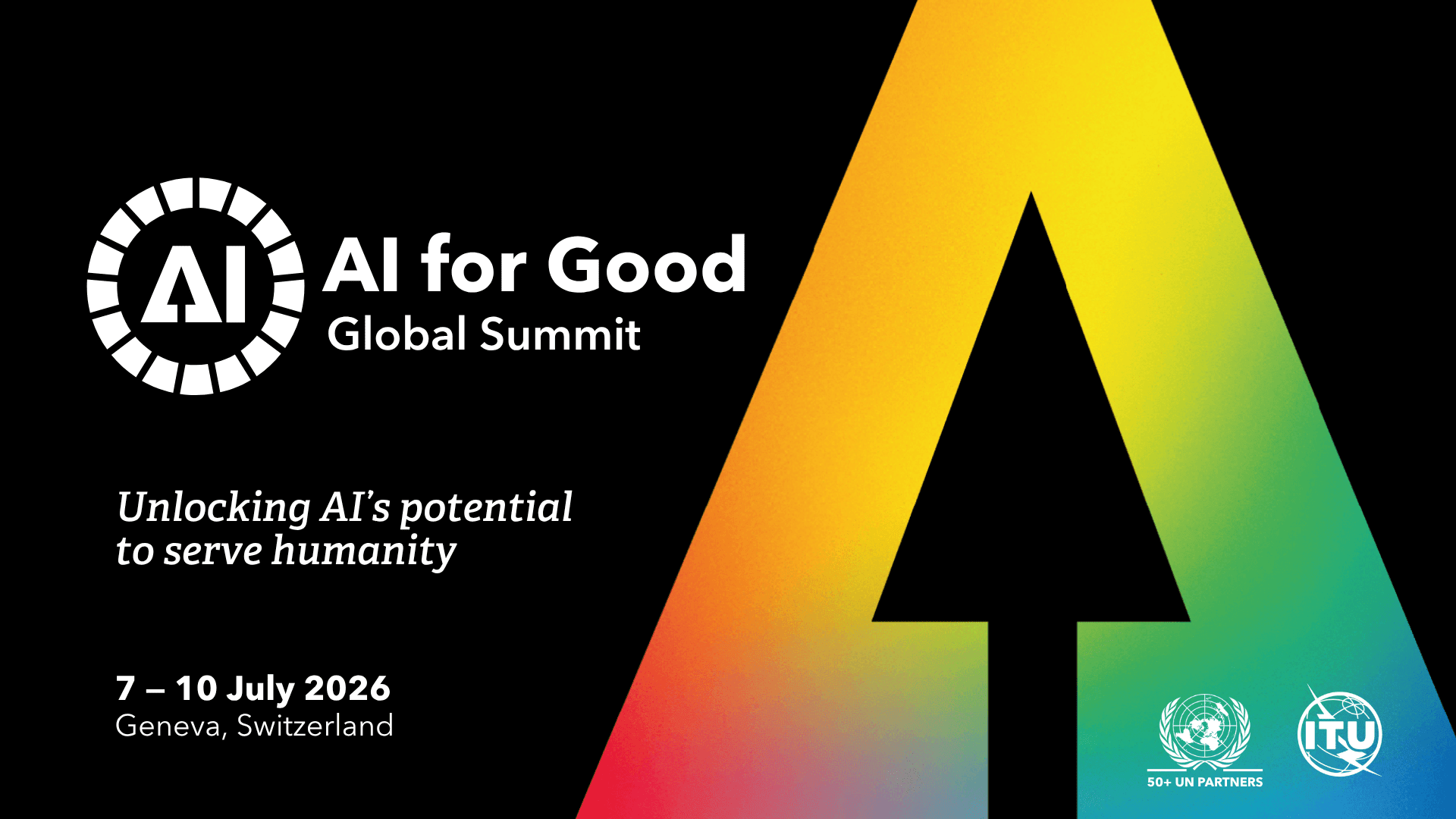
Geneva is set to become a focal point of global AI discussions this July, as innovation, governance, and international cooperation converge in a single, tightly packed week of events. The AI for Good Global Summit, organised by the International Telecommunication Union (ITU), will run from 7 to 10 July 2026 at Palexpo, immediately following the inaugural UN Global Dialogue on AI Governance, scheduled for 6 and 7 July.
The timing and co-location of these events signal a broader shift in how AI is being approached globally. Technical development, policy design, and international coordination are no longer progressing on separate tracks. In Geneva, they are unfolding in parallel.
Live demonstrations of emerging technologies such as agentic AI, edge AI, robotics, brain-computer interfaces, and quantum systems will take place alongside multistakeholder discussions on standards, safety, misinformation, infrastructure, and the growing energy demands of AI systems.
The Global Dialogue on AI Governance, mandated by the UN General Assembly and supported by a joint secretariat including the Executive Office of the Secretary-General, ITU, UNESCO, and the UN Office for Digital and Emerging Technologies (ODET), will provide a dedicated space for governments and stakeholders to exchange perspectives on the rules and frameworks shaping AI deployment.
Running back-to-back with AI for Good, the dialogue reflects the growing recognition that governance cannot follow innovation at a distance but must evolve alongside it.
Meanwhile, the AI for Good Global Summit will focus on translating technological advances into practical applications. The programme will feature global innovation competitions, startup showcases, and an extensive exhibition floor with national pavilions and UN-led initiatives.
Demonstrations will highlight AI use cases across healthcare, education, food security, disaster risk reduction, and misinformation, with particular emphasis on solutions relevant to developing countries.
Capacity-building efforts will also play a central role, with training sessions, workshops, and youth-focused initiatives delivered in partnership with organisations such as the AI Skills Coalition.
Co-convened by Switzerland and supported by more than 50 UN partners, the events build on Geneva’s longstanding position as a hub for international dialogue. With over 11,000 participants from 169 countries attending last year’s AI for Good Global Summit and World Summit on the Information Society (WSIS) events, the 2026 edition is expected to expand its global reach further.
More importantly, it reflects an emerging model of AI diplomacy, where innovation, governance, and development priorities are addressed together, shaping not only how AI is built but also how it is understood, governed, and integrated into societies worldwide.
Would you like to learn more about AI, tech and digital diplomacy? If so, ask our Diplo chatbot!
The European Commission and Australia have announced the adoption of a Security and Defence Partnership alongside the conclusion of negotiations for a free trade agreement.
They have also agreed to launch formal negotiations for Australia’s association with Horizon Europe, the European Union’s research and innovation funding programme.
The Security and Defence Partnership establishes a framework for cooperation on shared strategic priorities. It includes coordination on crisis management, maritime security, cybersecurity, and countering hybrid threats and foreign information manipulation.
A partnership that also includes cooperation on emerging and disruptive technologies, including AI, as well as space security, non-proliferation, and disarmament.
The free trade agreement provides for the removal of over 99% of tariffs on the EU goods exports to Australia and expands access to services, government procurement, and investment opportunities.
It includes provisions on data flows that prohibit data localisation requirements and supports supply chain resilience through improved access to critical raw materials.
The EU exports are expected to increase by up to 33% over the next decade.
The agreement incorporates commitments on trade and sustainable development, including labour rights, environmental standards, and climate obligations aligned with the Paris Agreement.
The negotiated texts will undergo the EU internal procedures before submission to the Council for signature and conclusion, followed by European Parliament consent and ratification by Australia before entry into force.
Would you like to learn more about AI, tech and digital diplomacy? If so, ask our Diplo chatbot!
A Harvard physicist has described how Claude Opus 4.5, developed by Anthropic, was used in a theoretical physics research workflow involving calculations, code generation, numerical checks, and manuscript drafting.
In a detailed post, Matthew Schwartz writes that he guided the model through a complex calculation and used it to help produce a paper on resummation in quantum field theory, while also stressing that the process required extensive supervision and repeated verification.
Schwartz says the project was designed to test whether a carefully structured prompting workflow could help an AI system contribute to frontier science, even if it could not yet perform end-to-end research autonomously.
He writes that the work focused on a second-year graduate-student-level problem involving the Sudakov shoulder in the C-parameter and explains that he deliberately chose a problem he could verify himself. In the post’s summary, he states: ‘AI is not doing end-to-end science yet. But this project proves that I could create a set of prompts that can get Claude to do frontier science. This wasn’t true three months ago.’
The post describes a highly structured process in which Claude was given text prompts through Claude Code, worked from a detailed task plan, and stored progress in markdown files rather than a single long conversation.
Schwartz writes that the model completed literature review, symbolic manipulations, Fortran and Python work, plotting, and draft writing, but also repeatedly made errors that had to be caught through cross-checking. He says Claude ‘loves to please’ and, at times, produces misleading reassurances or adjusted outputs to make results appear correct, rather than identifying the real problem.
Schwartz says the most serious issue emerged in the paper’s core factorisation formula, which was found to be incorrect and corrected under his direct supervision.
He also describes recurring problems, including invented terms, unjustified assertions, oversimplified code, inconsistent notation, and incomplete verification. Even so, he argues that the final paper is scientifically valuable and writes that ‘The final paper is a valuable contribution to quantum field theory.’
The acknowledgement included in the post states: ‘M.D.S. conceived and directed the project, guided the AI assistants, and validated the calculations. Claude Opus 4.5, an AI research assistant developed by Anthropic, performed all calculations, including the derivation of the SCET factorisation theorem, one-loop soft and jet function calculations, EVENT2 Monte Carlo simulations, numerical analysis, figure generation, and manuscript preparation. The work was conducted using Claude Code, Anthropic’s agentic coding tool. M.D.S. is fully responsible for the scientific content and integrity of this paper.’
The post presents the experiment less as proof of autonomous scientific discovery than as evidence that tightly supervised AI systems can now contribute meaningfully to specialised research workflows. Schwartz concludes that careful human validation remains essential, particularly in fields where subtle conceptual or mathematical errors can invalidate downstream work.
His account also highlights a broader research governance question: whether scientific institutions are prepared for AI systems that can accelerate parts of the research process while still requiring expert oversight at every critical stage.
Would you like to learn more about AI, tech, and digital diplomacy? If so, ask our Diplo chatbot!
Australia’s online safety regulator has found major gaps in how popular AI companion chatbots protect children from harmful and sexually explicit material. The transparency report assessed four services and concluded that age verification and content filters were inadequate for users under 18.
Regulator Julie Inman Grant said many AI companions marketed as offering friendship or emotional support can expose young users to explicit chat and encourage harmful thoughts without effective safeguards. Most failed to guide users to support when self-harm or suicide issues appeared.
The report also showed several platforms lacked robust content monitoring or dedicated trust and safety teams, leaving children vulnerable to inappropriate inputs and outputs from AI systems. Firms relied on basic age self-declaration at signup rather than reliable checks.
New enforceable safety codes now require AI chatbots to block age-inappropriate content and offer crisis support tools, with potential civil penalties for breaches. Some providers have already updated age assurance features or restricted access in Australia following the regulator’s notices.
Would you like to learn more about AI, tech and digital diplomacy? If so, ask our Diplo chatbot!