
The European marathon towards digital sovereignty
The EU is positioning itself as a solid geopolitical player and is now stepping up in terms of digital sovereignty.
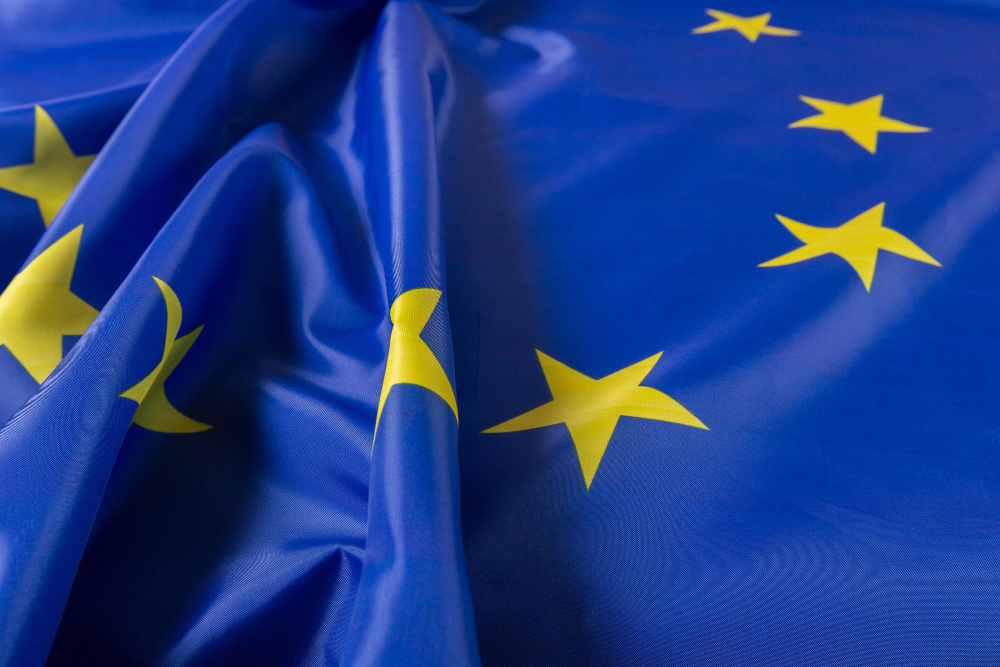
Derived from the Latin word ‘superanus’, through the French word ‘souveraineté’, sovereignty can be understood as: ‘the ultimate overseer, or authority, in the decision-making process of the state and in the maintenance of order’ – Britannica. Digital sovereignty, specifically European digital sovereignty, refers to ‘Europe’s ability to act independently in the digital world’.
In 2020, the European Parliament already identified the consequences of reliance on non-EU technologies. From the economic and social influence of non-EU technology companies, which can undermine user control over their personal data, to the slow growth of the EU technology companies and a limitation on the enforcement of European laws.
Today, these concerns persist. From Romanian election interference on TikTok’s platform, Microsoft’s interference with the ICC, to the Dutch government authentication platform being acquired by a US firm, and booming American and Chinese LLMs compared to European LLMs. The EU is at a crossroads between international reliance and homegrown adoption.
The issue of the EU digital sovereignty has gained momentum in the context of recent and significant shifts in US foreign policy toward its allies. In this environment, the pursuit of the EU digital sovereignty appears as a justified and proportionate response, one that might previously have been perceived as unnecessarily confrontational.
In light of this, this analysis’s main points will discuss the rationale behind the EU digital sovereignty (including dependency, innovation and effective compliance), recent European-centric technological and platform shifts, the steps the EU is taking to successfully be digitally sovereign and finally, examples of European alternatives
Rationale behind the move
The reasons for digital sovereignty can be summed up in three main areas: (I) less dependency on non-EU tech, (ii) leading and innovating technological solutions, and (iii) ensuring better enforcement and subsequent adherence to data protection laws/fundamental rights.
(i) Less dependency: Global geopolitical tensions between US-China/Russia push Europe towards developing its own digital capabilities and secure its supply chains. Insecure supply chain makes Europe vulnerable to failing energy grids.
More recently, US giant Microsoft threatened the International legal order by revoking US-sanctioned International Criminal Court Chief Prosecutor Karim Khan’s Microsoft software access, preventing the Chief Prosecutor from working on his duties at the ICC. In light of these scenarios, Europeans are turning to developing more European-based solutions to reduce upstream dependencies.
(ii) Leaders & innovators: A common argument is that Americans innovate, the Chinese copy, and the Europeans regulate. If the EU aims to be a digital geopolitical player, it must position itself to be a regulator which promotes innovation. It can achieve this by upskilling its workforce of non-digital trades into digital ones to transform its workforce, have more EU digital infrastructure (data centres, cloud storage and management software), further increase innovation spending and create laws that truly allow for the uptake of EU technological development instead of relying on alternative, cheaper non-EU options.
(iii) Effective compliance: Knowing that fines are more difficult to enforce towards non-EU companies than the EU companies (ex., Clearview AI), EU-based technological organisations would allow for corrective measures, warnings, and fines to be enforced more effectively. Thus, enabling more adherence towards the EU’s digital agenda and respect for fundamental rights.
Can the EU achieve Digital Sovereignty?
The main speed bumps towards the EU digital sovereignty are: i) a lack of digital infrastructure (cloud storage & data centres), ii) (critical) raw material dependency and iii) Legislative initiatives to facilitate the path towards digital sovereignty (innovation procurement and fragmented compliance regime).
i) lack of digital infrastructure: In order for the EU to become digitally sovereign it must have its own sovereign digital infrastructure.
In practice, the EU relies heavily on American data centre providers (i.e. Equinix, Microsoft Azure, Amazon Web Services) hosted in the EU. In this case, even though the data is European and hosted in the EU, the company that hosts it is non-European. This poses reliance and legislative challenges, such as ensuring adequate technical and organisational measures to protect personal data when it is in transit to the US. Given the EU-US DPF, there is a legal basis for transferring EU personal data to the US.
However, if the DPF were to be struck down (perhaps due to the US’ Cloud Act), as it has been in the past (twice with Schrems I and Schrems II) and potentially Schrems III, there would no longer be a legal basis for the transfer of the EU personal data to a US data centre.
Previously, the EU’s 2022 Directive on critical entities resilience allowed for the EU countries to identify critical infrastructure and subsequently ensure they take the technical, security and organisational measures to assure their resilience. Part of this Directive covers digital infrastructure, including providers of cloud computing services and providers of data centres. From this, the EU has recently developed guidelines for member states to identify critical entities. However, these guidelines do not anticipate how to achieve resilience and leave this responsibility with member states.
Currently, the EU is revising legislation to strengthen its control over critical digital infrastructure. Reports state revisions of existing legislation (Chips Act and Quantum Act) as well as new legislation (Digital Networks Act, the Cloud and AI Development Act) are underway.
ii) Raw material dependency: The EU cannot be digitally sovereign until it reduces some of its dependencies on other countries’ raw materials to build the hardware necessary to be technologically sovereign. In 2025, the EU’s goals were to create a new roadmap towards critical raw material (CRM) sovereignty to rely on its own energy sources and build infrastructure.
Thus, the RESourceEU Action Plan was born in December 2025. This plan contains 6 pillars: securing supply through knowledge, accelerating and promoting projects, using the circular economy and fostering innovation (recycling products which contain CRMs), increasing European demand for European projects (stockpiling CRMs), protecting the single market and partnering with third countries for long-lasting diversification. Practically speaking, part of this plan is to match Europe and or global raw material supply with European demand for European projects.
iii) Legislative initiatives to facilitate the path towards digital sovereignty:
Tackling difficult innovation procurement: the argument is to facilitate its uptake of innovation procurement across the EU. In 2026, the EU is set to reform its public procurement framework for innovation. The Innovation Procurement Update (IPU) team has representatives from over 33 countries (predominantly through law firms, Bird & Bird being the most represented), which recommends that innovation procurement reach 20% of all public procurement.
Another recommendation would help more costly innovative solutions to be awarded procurement projects, which in the past were awarded to cheaper procurement bids. In practice, the lowest price of a public procurement bid is preferred, and if it meets the remaining procurement conditions, it wins the bid – but de-prioritising this non-pricing criterion would enable companies with more costly innovative solutions to win public procurement bids.
Alleviating compliance challenges: lowering other compliance burdens whilst maintaining the digital aquis: recently announced at the World Economic Forum by Commission President Ursula von der Leyen, EU.inc would help cross-border business operations scaling up by alleviating company, corporate, insolvency, labour and taxation law compliance burdens. By harmonising these into a single framework, businesses can more easily grow and deploy cross-border solutions that would otherwise face hurdles.
Power through data: another legislative measure to help facilitate the path towards the EU digital sovereignty is unlocking the potential behind European data. In order to research innovative solutions, data is required. This can be achieved through personal or non-personal data. The EU’s GDPR regulates personal data and is currently undergoing amendments. If the proposed changes to the GDPR are approved, i.e. a broadening of its scope, data that used to be considered personal (and thus required GDPR compliance) could be deemed non-personal and used more freely for research purposes. The Data Act regulate the reuse and re-sharing of non-personal data. It aims to simplify and bolster the fair reuse of non-personal data. Overall, both personal and non-personal data can give important insight that research can benefit from in developing European innovative sovereign solutions.
European alternatives
European companies have already built a network of European platforms, services and apps with European values at heart:
| Category | Currently Used | EU Alternative | Comments |
| Social media | TikTok, X, Instagram | Monnet (Luxembourg) ‘W’ (Sweden) | Monnet is a social media app prioritises connections and non-addictive scrolling. Recently announced ‘W’ replaces ‘X’ and is gaining major traction with non-advertising models at its heart. |
| Microsoft’s Outlook and Google’s gmail | Tuta (mail/calendar), Proton (Germany), Mailbox (Germany), Mailfence (Belgium) | Replace email and calendar apps with a privacy focused business model. | |
| Search engine | Google Search and DuckDuckGo | Qwant (France) and Ecosia (German) | Qwant has focused on privacy since its launch in 2013. Ecosia is an ecofriendly focused business model which helps plant trees when users search |
| Video conferencing | Microsoft Teams and Slack a | Visio (France), Wire (Switzerland, Mattermost (US but self hosted), Stackfield (Germany), Nextcloud Talk (Germany) and Threema (Switzerland) | These alternatives are end-to-end encrypted. Visio is used by the French Government |
| Writing tools | Microsoft’s Word & Excel and Google Sheets, Notion | LibreOffice (German), OnlyOffice (Latvian), Collabora (UK), Nextcloud Office (German) and CryptPad (France) | LibreOffice is compatible with and provides an alternative to Microsoft’s office suit for free. |
| Cloud storage & file sharing | OneDrive, SharePoint and Google Drive | Pydio Cells (France), Tresorit (Switzerland), pCloud (Switzerland), Nextcloud (Germany) | Most of these options provide cloud storage and NexCloud is a recurring alternative across categories. |
| Finance | Visa and Mastercard | Wero (EU) | Not only will it provide an EU wide digital wallet option, but it will replace existing national options – providing for fast adoption. |
| LLM | OpenAI, Gemini, DeepSeek’s LLM | Mistral AI (France) and DeepL (Germany) | DeepL is already wildly used and Mistral is more transparent with its partially open-source model and ease of reuse for developers |
| Hardware | Semi conductors: ASML (Dutch) Data Center: GAIA-X (Belgium) | ASML is a chip powerhouse for the EU and GAIA-X set an example of EU based data centres with it open-source federated data infrastructure. |
A dedicated website called ‘European Alternatives’ provides exactly what it says, European Alternatives. A list with over 50 categories and 100 alternatives
Conclusion
In recent years, the Union’s policy goals have shifted towards overt digital sovereignty solutions through diversification of materials and increased innovation spending, combined with a restructuring of the legislative framework to create the necessary path towards European digital infrastructure.
Whilst this analysis does not include all speed bumps, nor avenues towards the road of the EU digital sovereignty, it sheds light on the EU’s most recent major policy developments. Key questions remain regarding data reuse, its impact on data protection fundamental rights and whether this reshaping of the framework will yield the intended results.
Therefore, how will the EU tread whilst it becomes a more coherent sovereign geopolitical player?
Would you like to learn more about AI, tech and digital diplomacy? If so, ask our Diplo chatbot!
About author

Orla Harris
Ms Orla Harris is a Knowledge Fellow with a strong focus on data protection, tracking technologies, cookies, and AI Act compliance. Drawing on her experience at Panteia and Considerati, she is well-versed in legal and regulatory questions at the intersection of law and technology.