A Chinese robotics firm has unveiled its latest innovation, a humanoid robot called the D9, which aims to redefine the relationship between humans and machines in everyday tasks. Created by Shenzhen-based Pudu Robotics, the D9 stands 5.57 feet tall and is designed to carry out a wide range of duties across various industries, from warehouses to retail stores.
The Chinese D9 robot boasts advanced capabilities, including the ability to walk at 4.5 mph, navigate stairs, and carry loads up to 44 pounds. What sets it apart is its use of cutting-edge sensors to create real-time 3D maps, allowing for precise self-navigation. Additionally, it features “human-level” natural interactions through sophisticated AI, making it more intuitive to work alongside people in fast-paced environments.
Pudu Robotics is entering a competitive market dominated by global tech giants like Tesla, with their Optimus robot. While the D9’s price is yet to be announced, it is expected to be in a similar range to its rivals, around £16,000 to £24,000. The robot’s versatility could make it an attractive option for companies looking to streamline labour-intensive operations.
As humanoid robots like the D9 advance, they raise important questions about the future of work and human-machine interactions. Pudu’s latest creation may be a glimpse into a world where robots play an ever-larger role in both professional and personal settings.
Meta Platforms and Amazon have announced plans to wind down their diversity, equity, and inclusion (DEI) initiatives, reflecting shifting political and legal land scapes as Donald Trump prepares to return to the US presidency. Meta, in an internal memo, revealed it is discontinuing DEI programs related to hiring, training, and supplier selection, while Amazon is phasing out its representation and inclusion efforts, targeting completion by late 2024.
These moves come amid growing conservative opposition to DEI initiatives, which critics argue promote preferential treatment. The trend has gained momentum following a 2023 Supreme Court ruling that struck down affirmative action in university admissions. Meta Vice President Janelle Gale noted the legal shift, explaining that the term ‘DEI’ has become polarising, and courts are signalling changes in their approach to such programs.
Meta has also made high-profile changes to align with conservative leadership, elevating Republican Joel Kaplan as its chief global affairs officer and adding UFC CEO Dana White, a close Trump ally, to its board. The company’s relationship with Trump has softened recently, with Meta pledging $1 million to his inaugural fund in December. These developments mark a departure from the company’s previous focus on inclusive policies following the 2020 protests against racial injustice.
As political and cultural pressures mount, corporate America’s retreat from DEI programs signals a broader shift in how businesses approach diversity and inclusion, navigating the intersection of public sentiment, legal rulings, and political dynamics.
A US waste management firm has introduced AI-powered electric garbage trucks to reduce fire risks caused by improperly disposed lithium-ion batteries. The vehicles, showcased at the Consumer Electronics Show (CES) in Las Vegas, can detect batteries in rubbish loads before they reach recycling centres, preventing potential fires.
Lithium-ion batteries, commonly used in gadgets like phones and toothbrushes, are highly flammable and often slip through existing detection systems at recycling facilities. Fires linked to these batteries have caused significant damage, with several US recycling centres burning down annually. The new trucks allow drivers to flag sensitive collections and alert facilities in advance.
The advanced trucks, developed by industrial firm Oshkosh, also come with electric arm technology to speed up collections and AI software to spot contamination in recycling bins. These features help reduce risks, improve efficiency, and allow companies to hold customers accountable for improper recycling. Waste management officials see electrification as a key step, as garbage trucks typically travel shorter distances, making them ideal for battery-powered operation.
French startup Rounded is developing an orchestration platform that allows companies to create their own AI voice agents. Initially focused on web3, the company shifted its attention to AI-powered voice interactions in mid-2023. Its first product, Donna, was designed for anesthetists, helping private hospitals handle large volumes of routine patient calls. The AI agent has already managed hundreds of thousands of conversations, improving in speed and accuracy over time.
After refining its technology, Rounded expanded its focus to offer a platform where businesses can build their own AI voice agents. Users can integrate various AI models, such as speech-to-text and text-to-speech engines, selecting components from providers like Azure, GPT-4o mini, and ElevenLabs. The platform also helps define prompts and parameters to optimise each agent’s performance for specific use cases.
The startup has secured €600,000 in funding from UC Berkeley’s SkyDeck accelerator and business investors. With growing interest in AI-powered customer interactions, Rounded is poised to attract further investment as it expands its product offering.
The Government of Uttar Pradesh, a state in northern India, and Google Cloud have partnered to launch a pioneering open network for agriculture, powered by Google’s Gemini and enabled by the Beckn Protocol. The initiative will provide millions of farmers with seamless access to essential services, including advisory, credit, mechanisation, and market linkages, all through a single platform.
The network is designed to be open and decentralised, allowing any service provider—from input suppliers to financial institutions and government agencies—to connect with farmers. Google’s Gemini framework facilitates easy access by enabling voice command interactions in multiple languages, including Hindi, Bengali, Telugu, Kannada, Gujarati, and Punjabi, with more languages to be added in the future.
The Beckn Protocol ensures interoperability and decentralisation, making the network an innovative alternative to traditional, closed-market systems. It encourages the development of customised solutions, fostering competition and innovation within the agricultural ecosystem.
The open network is part of Uttar Pradesh’s broader vision to digitise agriculture, double farmers’ incomes, and bridge the digital divide using AI technologies. The initiative also serves as a model for other regions, demonstrating how digital public infrastructure (DPI) can transform agriculture on a large scale.
The Uttar Pradesh government aims to empower farmers with the tools and resources they need to thrive in the 21st century. By leveraging the Beckn Protocol and Google Cloud’s DPI-in-a-box solution, the network enables the decentralised exchange of value, making agri-commerce and advisory services more accessible. Through this collaboration, Uttar Pradesh seeks to accelerate progress in agriculture while fostering innovation and enhancing its farming community’s economic and social impact.
Elon Musk has echoed concerns from AI researchers that the industry is running out of new, real-world data to train advanced models. Speaking during a livestream with Stagwell’s Mark Penn, Musk noted that AI systems have already processed most of the available human knowledge. He described this data plateau as having been reached last year.
To address the issue, AI developers are increasingly turning to synthetic data, information generated by the AI itself, to continue training models. Musk argued that self-generated data will allow AI systems to improve through self-learning, with major players like Microsoft, Google, and Meta already incorporating this approach in their AI models.
While synthetic data offers cost-saving advantages, it also poses risks. Some experts warn it could cause “model collapse,” reducing creativity and reinforcing biases if the AI reproduces flawed patterns from earlier training data. As the AI sector pivots towards self-generated training material, the challenge lies in balancing innovation with reliability.
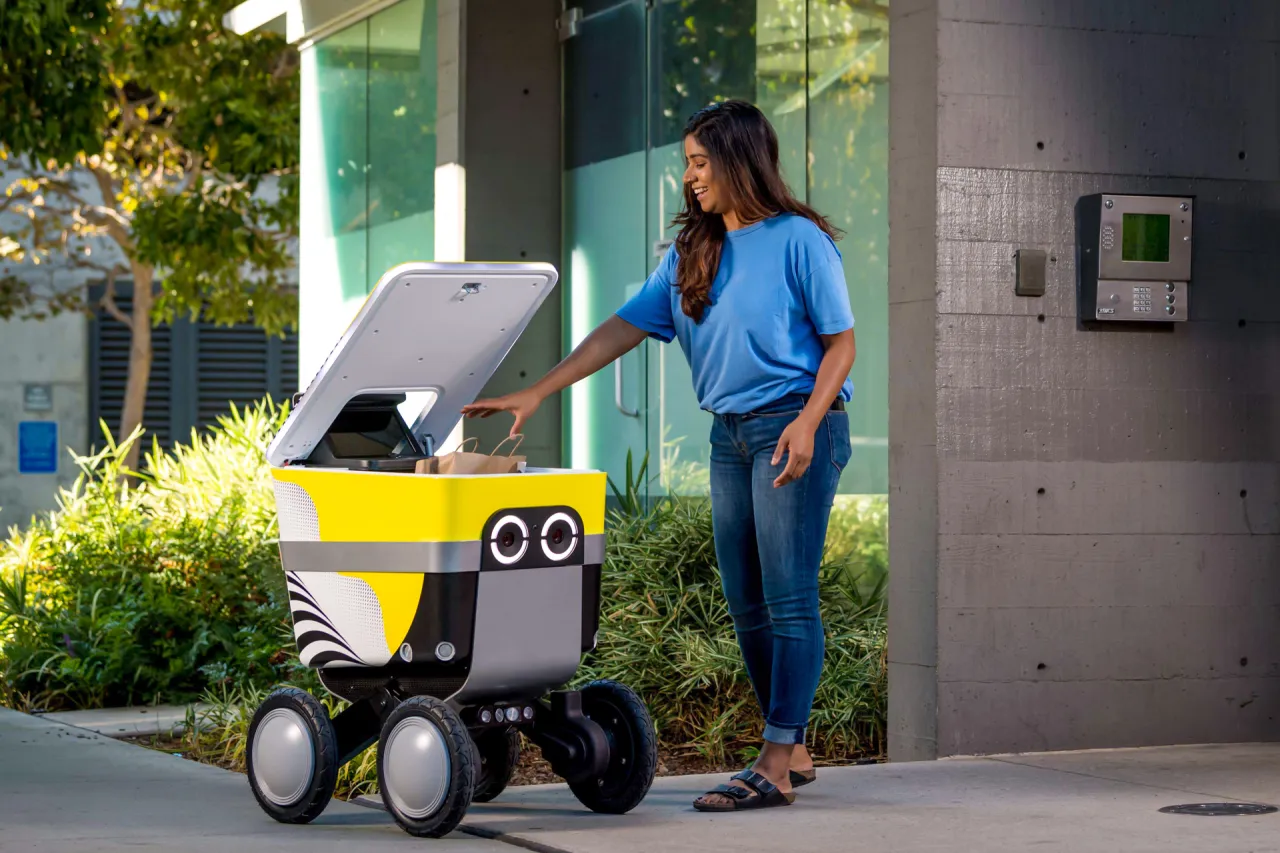
Serve Robotics, backed by Nvidia and Uber, has secured $80 million through a direct stock offering to institutional investors. The funding will support the expansion of its autonomous delivery robot fleet, with plans to scale from 100 robots in Los Angeles to 2,000 across multiple US cities by the end of 2025. CFO Brian Read stated that the investment is intended for long-term growth rather than short-term expenditure, positioning the company for sustained financial stability beyond 2026.
The fresh capital follows $86 million raised in December 2024, bringing Serve’s total funding to over $247 million in the past year. The company aims to use its reserves to self-finance equipment investments, reducing reliance on external financing and improving cash flow. Read highlighted that full ownership of the robots would provide greater financial flexibility and lower operational costs as the fleet expands.
Currently, Serve operates around 100 robots in Los Angeles, delivering for Uber Eats and 7-Eleven. A trial in Dallas, launched in partnership with Wing, is exploring hybrid drone and sidewalk robot deliveries. The company plans to deploy 250 additional robots in Los Angeles in early 2025, with the goal of achieving cash-flow positivity once the 2,000-robot fleet reaches full utilisation.
Microsoft will invest $3 billion to expand AI and cloud-computing infrastructure in India, CEO Satya Nadella announced during a conference in Bengaluru. The investment, the company’s largest expansion in the country, aims to strengthen its Azure cloud services and AI capabilities. Nadella also revealed plans to train 10 million people in AI by 2030, building on an earlier commitment to provide AI skilling opportunities for two million individuals by 2025, with a focus on smaller cities and rural areas.
India’s growing importance as a tech hub has attracted interest from major US technology firms, with recent visits from Nvidia’s Jensen Huang and Meta’s chief AI scientist Yann LeCun. Nadella met Prime Minister Narendra Modi to discuss technology, innovation, and Microsoft‘s ambitious plans for expansion in the country. India’s vast population and affordable internet access make it a key market for AI-driven growth.
Microsoft is making significant global investments in AI and cloud infrastructure, committing around $80 billion in fiscal 2025. More than half of that will be directed towards US data centers to support AI model training and cloud-based applications. With India positioned as a strategic market, Microsoft’s latest investment underscores the country’s growing role in the global AI ecosystem.
China has introduced a groundbreaking addition to its law enforcement toolkit – the Rotunbot RT-G, a spherical robot designed to aid police in high-speed chases and challenging terrains. Developed by Logon Technology, this 276-pound robotic marvel can travel up to 22 mph on land and water, navigate mud and rivers, and even withstand drops from ledges. Its rapid acceleration and amphibious capabilities make it a unique asset for pursuit scenarios.
Equipped with advanced technology, the RT-G boasts GPS for precise navigation, cameras, ultrasonic sensors, and systems for tracking and avoiding obstacles. Gyroscopic self-stabilisation ensures smooth operation, while a suite of non-lethal tools—including tear gas dispensers, net shooters, and acoustic crowd dispersal devices—enables it to handle diverse law enforcement tasks humanely and effectively.
The RT-G is already used in Wenzhou, Zhejiang province of China, where it assists police in commercial zones. While its real-world performance shows promise, limitations such as instability during turns and difficulty navigating stairs reveal areas for improvement. Despite these challenges, the Rotunbot RT-G represents a significant leap in robotic policing technology, blending innovation with practicality.
AI is revolutionising the legal field, offering solutions to improve fairness and reduce costs in the justice system. Tools powered by AI are being used to streamline tasks like analysing evidence, drafting contracts, and preparing cases. Organisations like the Westway Trust in London are adopting AI to assist clients with complex disputes, such as benefits appeals and housing issues. These tools save hours of work, enabling paralegals to focus on providing better support.
The technology has sparked excitement and debate among legal professionals. AI models are being developed to help barristers identify inconsistencies in real-time court transcripts and assist judges with evidence analysis. Advocates argue that AI could make justice more accessible, while reducing the burden on legal practitioners and cutting costs for clients. However, concerns about accuracy and bias persist, with experts emphasising the importance of human oversight.
Sir Geoffrey Vos, Master of the Rolls, underscores the need for AI to complement, not replace, human judges. Guidelines stress transparency in AI use and the responsibility of lawyers to verify outputs. While tools like ChatGPT can provide general advice, professionals caution against relying on non-specialised AI for legal matters. Experts believe that AI will play a crucial role in addressing the fairness gap in the justice system without compromising the rule of law.