Miles Laflin, a Bedfordshire-based pool cleaner known as ‘The Pool Guy’, has amassed over 22 million followers across social media platforms for his visually satisfying videos of pool cleaning. Despite his fame, the 34-year-old continues his day job, crediting it with keeping him grounded. Laflin has been in the pool cleaning business for over a decade and began sharing his work on TikTok, where a single video has attracted over 170 million views.
His viral content has significantly boosted his business, with 90% of his work coming from followers who discover him online. Laflin’s success led to him winning the high-quality content creator of the year title at the inaugural UK and Ireland TikTok Awards. He encourages others to share content about their jobs, emphasising that social media offers opportunities for brand deals, global travel, and personal transformation.
Laflin continues to balance his viral fame with his pool cleaning business, a testament to his passion for the trade. He believes there is an audience for every profession, urging aspiring content creators to showcase their unique skills online.
The automation industry is evolving beyond Robotic Process Automation (RPA) to embrace multi-agentic AI systems capable of autonomous decision-making. Companies like Automation Anywhere are at the forefront, introducing AI Agent Studio to help enterprises streamline operations across finance, HR, IT, and customer service. These agents accelerate workflows, reduce costs, and enhance operational efficiency by up to 90%.
Automation Anywhere executives highlight how these advanced AI agents surpass earlier systems by integrating retrieval-augmented generation (RAG) with decision-making capabilities. Unlike static models, these agents learn from user interactions, ensuring adaptability and accuracy. Their blend of RAG and AI offers enterprises scalable, secure, and flexible solutions tailored to specific needs.
The shift from RPA to Agentic Process Automation (APA) marks a milestone, enabling automation of complex processes while fostering innovation and redefining job roles. With applications spanning healthcare, finance, retail, and manufacturing, AI agents are poised to disrupt industries and drive significant growth.
Instacart has joined Uber in a legal challenge against a new Seattle ordinance regulating how app-based workers can be deactivated. The law, set to take effect in January, requires companies to provide gig workers with a 14-day notice of deactivation, base decisions on reasonable policies, and allow human review of all deactivations.
Seattle officials describe the legislation as a landmark move to ensure worker rights in the gig economy. Advocacy groups support the law, arguing that it addresses unfair deactivations and offers greater job security for app-based workers.
Instacart and Uber, however, claim the ordinance infringes on constitutional rights, federal laws, and operational safety. This lawsuit is part of broader disputes between tech companies and cities over labour regulations in the gig economy. Seattle has pledged to defend its policies, emphasising its commitment to protecting workers in modern app-driven industries.
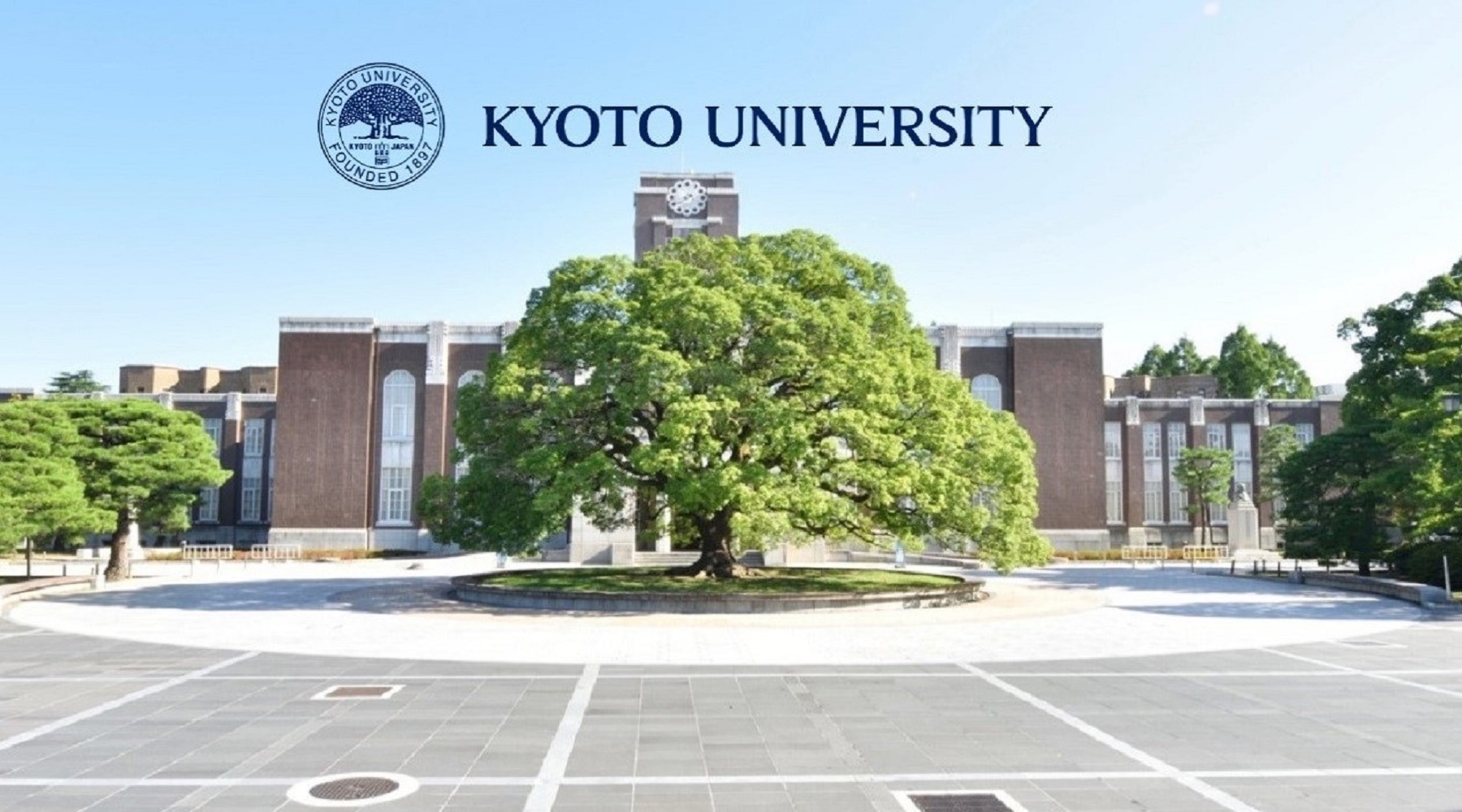
Kyoto University and construction firm Kajima Corp are collaborating on a groundbreaking project to develop a lunar habitat, ‘Neo Lunar Glass,’ capable of generating artificial gravity through rotation. The structure, intended to address the harmful effects of microgravity on the human body, is designed to create Earth-like living conditions on the moon.
The habitat will be a 200-metre-wide, 400-metre-tall paraboloid structure, accommodating up to 10,000 residents. Researchers plan to construct a ground-based prototype by the 2030s, using models and simulations to refine the technology.
The project aims to revolutionise lunar colonisation and human survivability in space, with a scale model already unveiled and early simulations demonstrating artificial gravity’s feasibility.
If AI was the buzzword for 2023 and 2024, quantum computing looks set to claim the spotlight in the years ahead. Despite growing interest, much remains unknown about this transformative technology, even as leading companies explore its immense potential.
Quantum computing and AI stand as two revolutionary technologies, each with distinct principles and goals. Quantum systems operate on the principles of quantum mechanics, using qubits capable of existing in multiple states simultaneously due to superposition. Such systems can address problems far beyond the reach of classical computers, including molecular simulations for medical research and complex optimisation challenges.
AI and quantum computing intersect in areas like machine learning, though AI still depends on classical computing infrastructure. Significant hurdles remain for quantum technology, including qubit errors and scalability. The extreme sensitivity of qubits to external factors, such as vibrations and temperature, complicates their control.
Experts suggest quantum computers could become practical within 10 to 20 years. Classical computers are unlikely to be replaced, as quantum systems will primarily focus on solving tasks beyond classical capabilities. Leading companies are working to shorten development timelines, with advancements poised to transform the way technology is utilised.
Huge investments in quantum computing
Investments in quantum computing have reached record levels, with start-ups raising $1.5 billion across 50 funding rounds in 2024. Figure like this one nearly doubles the $785 million raised the previous year, setting a new benchmark. The growth in AI is partly driving these investments, as quantum computing promises to handle AI’s significant computational demands more efficiently.
Quantum computing offers unmatched speed and energy efficiency, with some estimates suggesting energy use could be reduced by up to 100 times compared to traditional supercomputers. As the demand for faster, more sustainable computing grows, quantum technologies are emerging as a key solution.
Microsoft and Atom Computing announce breakthrough
In November 2024, Microsoft and Atom Computing achieved a milestone in quantum computing. Their system linked 24 logical qubits using just 80 physical qubits, setting a record in efficiency. This advancement could transform industries like blockchain and cryptography by enabling faster problem-solving and enhancing security protocols.
Despite the challenges of implementing such systems, both companies are aiming to release a 1,000-qubit quantum computer by 2025. The development could accelerate the adoption of quantum technologies across various sectors, paving the way for breakthroughs in areas such as machine learning and materials science.
Overcoming traditional computing’s limitations
Start-ups like BlueQubit are transforming quantum computing into a practical tool for industries. The San Francisco-based company has raised $10 million to launch its Quantum-Software-as-a-Service platform, enabling businesses to use quantum processors and emulators that perform tasks up to 100 times faster than conventional systems.
Industries such as finance and pharmaceuticals are already leveraging quantum optimisation. Specialised algorithms are addressing challenges like financial modelling and drug discovery, showcasing quantum computing’s potential to surpass traditional systems in tackling complex problems.
Google among giants pushing quantum computing
Google has recently introduced its cutting-edge quantum chip, Willow, capable of solving a computational problem in just five minutes. Traditional supercomputers would require approximately 10 septillion years for the same task.
The achievement has sparked discussions about quantum computing’s link to multiverse theories. Hartmut Neven, head of Google’s Quantum AI team, suggested the performance might hint at parallel universes influencing quantum calculations. Willow’s success marks significant advancements in cryptography, material science, and artificial intelligence.
Commercialisation is already underway
Global collaborations are fast-tracking quantum technology’s commercialisation. SDT, a Korean firm, and Finnish start-up SemiQon have signed an agreement to integrate SemiQon’s silicon-based quantum processing units into SDT’s precision measurement systems.
SemiQon’s processors, designed to work with existing semiconductor infrastructure, lower production costs and enhance scalability. These partnerships pave the way for more stable and cost-effective quantum systems, bringing their use closer to mainstream industries.
Quantum technologies aiding mobile networks
Telefonica Germany and AWS are exploring quantum applications in mobile networks. Their pilot project aims to optimise mobile tower placement, improve network security with quantum encryption, and prepare for future 6G networks.
Telefonica’s migration of millions of 5G users to AWS cloud infrastructure demonstrates how combining quantum and cloud technologies can enhance network efficiency. The project highlights the growing impact of quantum computing on telecommunications.
Addressing emerging risks
Chinese researchers at Shanghai University have exposed the potential threats quantum computing poses to existing encryption standards. Using a D-Wave quantum computer, they breached algorithms critical to modern cryptographic systems, including AES-256, commonly used for securing cryptocurrency wallets.
Although current quantum hardware faces environmental and technical limitations, researchers stress the urgent need for quantum-resistant cryptography. New encryption methods are essential to safeguard digital systems against future quantum-based vulnerabilities.
Quantum computing promises revolutionary capabilities but must overcome significant challenges in scaling and stability. Its progress depends on interdisciplinary collaboration in physics, engineering, and economics. While AI thrives on rapid commercial investment, quantum technology requires long-term support to fulfil its transformative potential.
Japanese farmers are embracing AI technology to address the challenges posed by climate change and labour shortages in agriculture. Farmers like Hiroaki Asakura in Aichi Prefecture are turning to smartphone apps that use machine learning to forecast pest outbreaks, enabling timely pesticide application. These tools help farmers optimise crop protection and reduce chemical usage, a significant step forward in modern farming.
One such app, developed by Mirai Vegetable Garden, analyses over a million pest and weather records to provide accurate predictions. For Asakura, this meant spraying pesticides earlier than usual to prevent black rot in his broccoli fields, a decision informed by the app’s warnings of rising risks. The technology, supporting crops like strawberries and tomatoes, also allows farmers to share outbreak information with neighbours for broader community protection.
These AI solutions are gaining traction nationwide. Apps developed by companies like Nihon Nohyaku Co and NTT Data CCS Corp identify over 1,100 pest species from photographs, offering farmers swift diagnosis and advice. As changing climate patterns lead to unusual pest behaviours, these innovations are vital. Japanese farmers and officials alike note that AI can bridge the gap between traditional know-how and modern challenges, ensuring sustainable crop production in the face of global warming.
Notre Dame Cathedral in Paris has reopened five years after a devastating fire left the iconic landmark in ruins. Painstakingly restored to its original grandeur, the reconstruction relied on technologies, including lasers and 3D modelling, to recreate the historic structure.
The restoration effort was supported by data from art historian Andrew Tallon’s 2015 laser scans, which captured billions of precise points across the cathedral. These scans were combined with post-fire drone footage and modern technology to create a detailed 3D model that guided the process. Companies such as Autodesk and AGP donated their expertise to ensure accuracy.
The newly restored cathedral now includes updated features such as fire suppression systems, optimised lighting, and a modernised plaza, designed with the help of 3D visualisations. Experts believe these advancements set a precedent for using technology to preserve cultural heritage and assist in disaster recovery.
Looking ahead, the detailed 3D model will help maintain Notre Dame and safeguard its legacy for generations. This project serves as a testament to the power of innovation in protecting the world’s most treasured monuments.
Tetsuwan Scientific, a startup founded by Cristian Ponce and Théo Schäfer, is developing robotic AI scientists designed to automate lab experiments. Inspired by the rapid evolution of AI models like GPT-4, these robots aim to address the repetitive and labour-intensive aspects of research. They combine low-cost robotic hardware with advanced software that interprets and executes scientific tasks autonomously.
The breakthrough came when Ponce tested AI’s ability to diagnose scientific data and offer solutions. However, existing lab robots lacked the ability to physically act on these insights. Tetsuwan’s solution integrates AI to give robots the context and flexibility to perform tasks like pipetting and analysing results without constant programming.
Currently working with La Jolla Labs in RNA therapeutic drug development, Tetsuwan has secured $2.7 million in funding to advance its technology. The ultimate goal is to create self-reliant AI scientists capable of automating the entire scientific process, from hypothesis to reproducible results, potentially accelerating innovation at an unprecedented pace.
Researchers at South Korea‘s KAIST (Korea Advanced Institute of Science and Technology) have developed a groundbreaking wearable robot that enables paraplegic users to walk, navigate obstacles, and climb stairs. The innovative exoskeleton, named WalkON Suit F1, weighs 50 kilograms (110 pounds) and uses 12 motors to replicate human joint movements.
Kim Seung-hwan, a paraplegic researcher on the KAIST team, demonstrated the robot, showcasing its ability to help him walk at 3.2 kph (2 mph), climb stairs, and even slide sideways onto a bench. “It can approach me wherever I am and help me stand up, which is one of its most distinct features,” Kim explained. Sensors and cameras integrated into the suit help maintain balance and assess surroundings, ensuring smooth and safe movement.
The WalkON Suit F1 reflects the vision of KAIST researcher Park Jeong-su, inspired by the movie Iron Man. Park hopes to bring real-life solutions to those with mobility challenges. The robot’s capabilities earned Kim a gold medal at Cybathlon 2024, an international competition highlighting assistive technologies for individuals with disabilities.
Kim expressed his motivation for participating in the project: ‘I wanted to tell my son that I used to be able to walk and share a diverse range of experiences with him.’ The KAIST team aims to continue refining the WalkON Suit F1 to further integrate it into everyday life for individuals with disabilities.
The world of online dating is set for a significant shake-up as companies turn to AI to enhance user experiences. Major platforms like Tinder, Hinge, and Bumble are introducing AI-powered features aimed at improving matchmaking, personalising user journeys, and offering support for daters.
Hinge, part of the Match Group, plans to launch an AI-driven dating coach next year, helping users refine profiles and navigate conversations. Similarly, Bumble’s AI safety tools and enhanced matchmaking algorithms are already shaping the dating experience. These innovations aim to move dating apps from self-service platforms to guided experiences tailored to individual needs.
Experts believe AI could reduce the frustrations of early-stage communication by identifying more compatible matches and even offering tools like AI concierges to assist with planning dates. While the integration of AI into online dating is still in its early stages, the industry is poised for transformative changes that could redefine how people connect online.