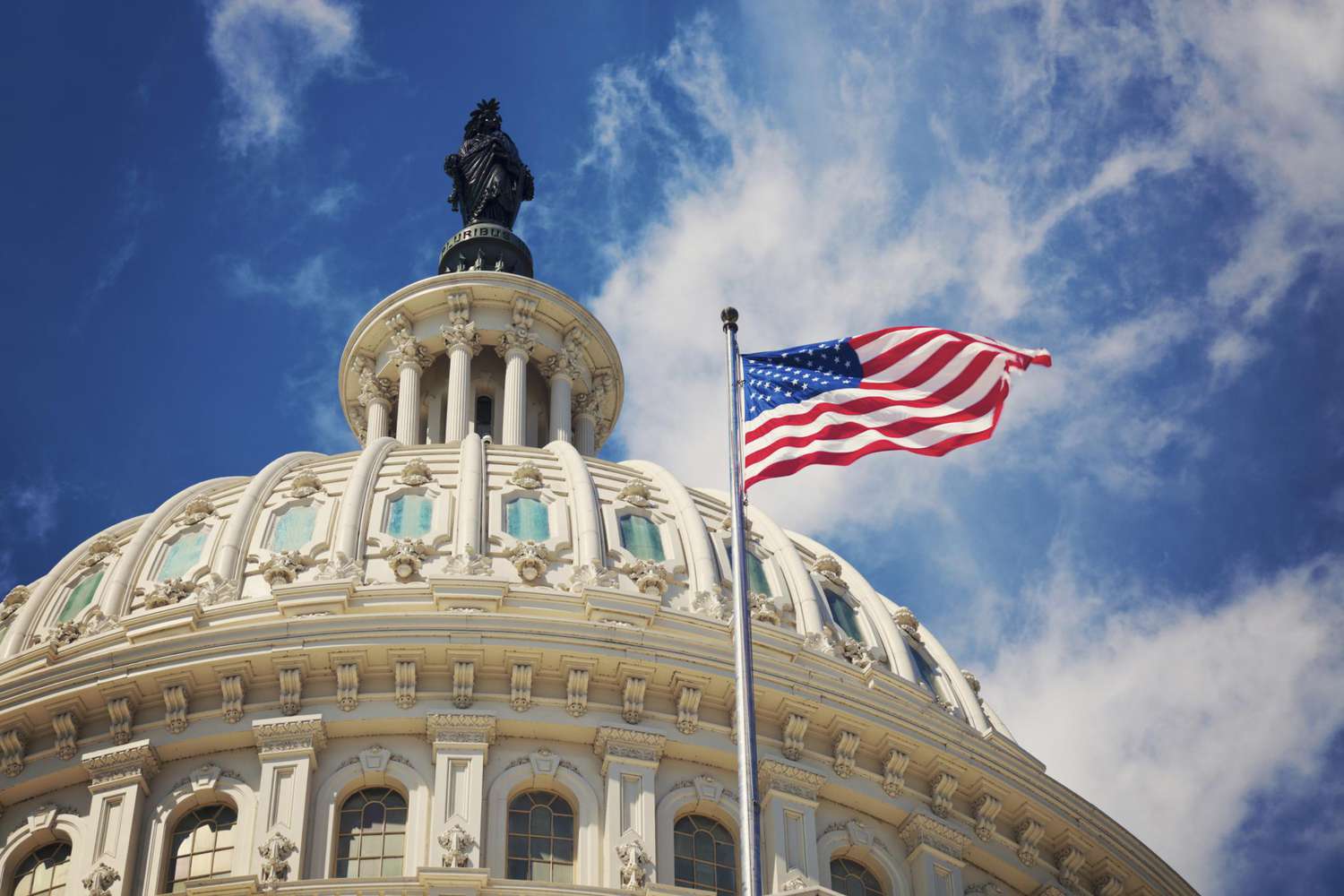
The chair of the US Securities and Exchange Commission, Gary Gensler, has warned of widespread fraud in the cryptocurrency industry, accusing companies of disregarding laws designed to protect investors. He highlighted recent enforcement actions against crypto firms, including Binance and FTX, as evidence of the sector exploiting unwary investors.
Meanwhile, Donald Trump has made a surprising U-turn, becoming an advocate for cryptocurrency. The former president, now seeking a third term, promises to make the US the global centre for crypto innovation and has even launched his own cryptocurrency business, World Liberty Financial. It marks a stark contrast to his previous criticisms of Bitcoin, which he once dismissed as a scam.
As the US presidential elections approach, the future of cryptocurrency regulation is at a critical point. Trump’s pro-crypto stance opposes the Biden administration’s clampdown on the industry. With millions being spent on political donations, the outcome could significantly influence the direction of crypto regulation, both in the US and worldwide.
Donald Trump made headlines on Wednesday by becoming the first US president, past or present, to publicly use Bitcoin. During a visit to PubKey, a cryptocurrency-themed bar in Manhattan, Trump completed a Bitcoin transaction with the help of the bar’s staff, purchasing burgers ahead of a rally in Long Island. His public use of the Bitcoin network has further solidified his engagement with the crypto industry.
This appearance follows his recent support for World Liberty Financial, a new crypto project involving Trump and several of his children. The project, which formally launched earlier this week, plans to issue a governance token called WLFI. Trump’s involvement in the crypto space has grown significantly in recent months, as he seeks the industry’s backing in his third run for president.
Trump has been vocal in his promise to make the US the ‘crypto capital of the planet,’ as he courts the digital asset sector in his campaign. His ongoing efforts to align with the crypto community signal a strategic push to secure their support ahead of the 2024 election.
Recent developments in 8-inch silicon carbide (SiC) technology mark a significant transformation in the semiconductor sector, especially for power electronics. Japan’s NGK Insulators has successfully created 8-inch SiC wafers, which will be showcased at ICSCRM 2024, underscoring the rapid advancements in this field. Additionally, Resonac is nearing the commercialisation of its 8-inch epitaxial wafers, targeting mass production of both epitaxial wafers and substrates by 2025, while Onsemi is set to introduce its 8-inch wafers later this year.
In the U.S., Wolfspeed has introduced a new 2300V SiC power module, leveraging advanced 8-inch wafer technology to enhance renewable energy applications and fast charging solutions. Meanwhile, in China, Sanan Optoelectronics has launched its 8-inch SiC substrate factory, with plans for significant production capacity, further indicating the growing global demand for these materials.
Market analysts anticipate that the transition from 6-inch to 8-inch wafers will lower production costs, enhancing the accessibility of SiC technology. Larger wafer sizes significantly decrease unit chip costs, with projections indicating that the market share for 8-inch SiC products could grow from under 2% today to approximately 15% by 2026. This shift is expected to create new opportunities across multiple industries, including automotive and renewable energy, as prices for SiC substrates continue to decline.
With increasing competition and advancements in production technology, the SiC industry is on the brink of widespread adoption. As prices for 6-inch substrates fall and 8-inch technology becomes more prevalent, the future looks promising for silicon carbide as a key player in the evolution of power electronics.
Kamala Harris has made her first public comments on cryptocurrency during her US presidential election campaign. Speaking at a Wall Street fundraiser on 22 September, Harris pledged to encourage investment in AI and digital assets while ensuring consumer protection. She also emphasised the need for consistent regulations to create a safe business environment. This marks a shift in Harris’ campaign, with many speculating on how her approach to crypto would differ from President Joe Biden’s.
Harris’ remarks have drawn attention from the crypto industry, with some viewing her comments as a positive step. However, critics, such as crypto legal experts, are wary of her focus on consumer protection, noting that it could be used to stifle the sector. Coinbase’s policy chief acknowledged Harris’ statement as significant but suggested it was less forward-thinking than Donald Trump’s pro-crypto stance. Trump, who has embraced the industry by releasing NFTs and backing his family’s crypto platform, has vowed to overhaul the current regulatory framework if elected.
Crypto has become a key issue in the upcoming election, with both Harris and Trump vying for the support of the industry. National polls show the two candidates running neck-and-neck, with Harris leading Trump by a slim margin of 2.9 percentage points.
The US House has recently passed a bill aimed at streamlining federal permitting for semiconductor manufacturing projects, a move anticipated to benefit companies like Intel and TSMC. This legislation seeks to address concerns that lengthy environmental reviews could hinder the construction of domestic chip plants, an essential component of US manufacturing strategy, especially as chipmakers have pledged around $400 billion in investments following the 2022 Chips and Science Act.
Many projects are experiencing delays despite investments. Intel’s facilities in Arizona, initially scheduled to open in 2024, may now begin operations in early 2025. Additionally, a $20 billion project in Ohio has been pushed back beyond 2026 due to market challenges and subsidy holdups. The new bill introduces criteria to exempt some projects from National Environmental Policy Act (NEPA) reviews, enabling construction to start before the year ends.
The legislation poses a challenge for the Biden administration, which seeks to enhance domestic manufacturing while achieving ambitious climate targets. As the government tackles this dilemma, the urgency to lessen dependence on Asian chip production, especially from Taiwan, continues to be a key priority.
Early Bitcoin miners from 2009 have recently begun moving their long-dormant holdings, sparking intrigue within the cryptocurrency community. On 20 September, five miner wallets, each receiving 50 BTC as block rewards shortly after the launch of the Bitcoin blockchain, saw their funds being transferred. These wallets, dating back to January and February 2009, are believed to belong to individuals present during Bitcoin’s inception, just weeks after its pseudonymous creator, Satoshi Nakamoto, introduced the protocol.
When mining, the 250 BTC in these wallets had little value. However, today, the total value has skyrocketed to £13 million. Bitcoin first hit $1 in 2011 on the now-defunct Mt. Gox exchange, a pivotal moment in its rise. The sudden movement of these ancient wallets has prompted speculation, with some suggesting the owners rediscovered their old hard drives, while others ponder whether they belong to Satoshi Nakamoto or early adopters like Hal Finney.
The first recorded Bitcoin transaction took place on 12 January 2009, when Nakamoto sent 10 BTC to Finney, who played a key role in Bitcoin’s early development. Now, with these recent wallet movements, many are left wondering about the identity of those behind them, adding another layer of mystery to Bitcoin’s origin story.
Gold has soared to a record high of $2,629 per ounce following the US Federal Reserve’s recent interest rate cut. This surge, which took place on 23rd September, was fuelled by a combination of reduced bond attractiveness and growing geopolitical tensions. With inflation concerns and ongoing conflicts in Ukraine, Israel, and other regions, many investors are turning to gold as a safer asset. Goldman Sachs analysts expect the precious metal to rise further, predicting it could hit $2,700 by early 2025.
Meanwhile, Bitcoin, often dubbed ‘digital gold’, is also experiencing a rise. Following the Fed’s 0.5% rate cut on 18th September, Bitcoin climbed by 8.5%, reaching a four-week high of $64,660. Crypto analysts predict that the cryptocurrency could break new all-time highs by the end of 2024, following its typical seasonal patterns.
While gold’s rise is grabbing attention, some argue that Bitcoin is now dominating investor interest. Peter Schiff, a known advocate for gold, remarked that many are overlooking the significance of gold’s performance, opting instead to focus on digital assets like Bitcoin.
Former US President and Republican candidate Donald Trump has announced the release of the ‘President Trump First Edition Silver Medallion,’ aimed at raising funds for his upcoming electoral campaign. The silver coin, priced at $100 and available on the RealTrumpCoins.com website, is minted from 99.9% fine silver. One side of the medallion features Trump’s face, while the reverse shows the White House and the phrase ‘In God We Trust.’
With the US presidential election approaching, Trump is exploring various ways to gather financial support. The silver medallion is his latest initiative to boost campaign donations. Trump has clarified that this is the “ONLY OFFICIAL coin” he has personally designed, distancing himself from numerous unofficial Trump-themed meme coins that have emerged in recent months.
Despite speculation that Trump might launch a cryptocurrency, this medallion is a traditional silver coin rather than a digital asset. Many of his supporters had anticipated a crypto launch following the introduction of the World Liberty Financial project, which included a governance token but lacked the typical features of a cryptocurrency.
Bank of Canada Governor Tiff Macklem has said that businesses adopting AI could create short-term inflationary pressures by increasing demand. Speaking at an AI conference in Toronto, he noted that while AI-driven productivity growth may benefit the economy in the long run, its immediate effects could add to inflation.
Macklem pointed to rising electricity demand from new data centres as an example of AI’s economic impact. He emphasised that central bankers are working to understand how AI will affect the economy, inflation, and employment. Despite concerns, there is no current evidence that AI displaces labour at a level that would significantly impact overall employment rates.
The Bank of Canada has begun using AI to improve economic forecasting, data analysis, and efficiency, though its application is still in the early stages. Macklem compared the central bank’s cautious approach to AI to cautiously entering a dark room, feeling the way forward before making decisions.
Canada has also introduced a Voluntary Code of Conduct for the responsible development of generative AI systems. Macklem underlined that while AI offers potential benefits, it brings challenges and uncertainties that require careful management by policymakers.
Investor interest in cryptocurrency has surged, with digital asset funds recording their second consecutive week of inflows. A report from CoinShares indicates that global crypto investment products garnered $321 million in inflows last week, slightly down from the previous week’s $436 million. US-based funds accounted for a significant share, attracting $277 million, while Switzerland contributed $63 million—its second-largest inflow this year.
CoinShares attributes this inflow trend to the US Federal Reserve’s recent 50 basis point interest rate cut, encouraging investments in cryptocurrencies and other high-risk assets. As a result, crypto funds experienced a 9% increase in their total assets under management, reaching $9.5 billion in total investment product volumes.
Bitcoin funds were the primary beneficiaries of this trend, seeing inflows of $284 million. Conversely, Ethereum funds continue to struggle, with $29 million in outflows for the fifth consecutive week, primarily driven by persistent withdrawals from Grayscale’s Ethereum Trust. However, Solana investment products have maintained a steady pace, recording small inflows of $3.2 million last week.