Taiwan‘s President Lai Ching-te has pledged to address concerns raised by former US President Donald Trump regarding Taiwan’s semiconductor industry. Speaking after a National Security Council meeting, Lai acknowledged the importance of global semiconductor supply chains and vowed to work with Taiwan’s semiconductor sector to develop strategies to address US concerns. He emphasised the need for democratic nations, including the US, to collaborate on creating a “democratic supply chain” for advanced chips, particularly in the growing AI sector.
Lai also reassured the US of Taiwan’s commitment to contributing to the international economy, noting that Taiwan, home to the world’s largest contract chipmaker, TSMC, plays a vital role in the semiconductor market. TSMC is heavily invested in the US, including a $65 billion investment in new factories in Arizona. Despite these efforts, Taiwan’s defence spending remains a topic of criticism, particularly from Trump, who has repeatedly highlighted Taiwan’s insufficient military expenditure amid increasing threats from China.
In response to US concerns, Lai revealed plans to propose a special budget to raise Taiwan’s defence spending from 2.5% of GDP to 3%. This proposal is currently being debated in parliament, where opposition parties hold a majority. Lai stressed that Taiwan’s determination to defend itself must be clear, as international allies continue to voice concerns over its defence readiness.
Finally, Lai reiterated Taiwan’s key role as a reliable trading partner to the US, especially in high-tech exports such as semiconductors. Taiwan’s trade surplus with the US surged by 83% last year, with exports reaching a record $111.4 billion.
For more information on these topics, visit diplomacy.edu.
Alibaba has announced a new partnership with Apple to support the development of AI services for iPhones in China, a move that aims to help Apple counter declining smartphone sales in its crucial market. The collaboration is seen as a significant win for Alibaba, which is gaining ground in China’s competitive AI industry, dominated by local players like DeepSeek. This deal comes after months of speculation regarding Apple’s AI strategy in the region, as the tech giant held discussions with other Chinese companies such as Baidu, ByteDance, and Tencent.
While the specifics of the partnership are still unclear, Alibaba’s chairman Tsai noted that Apple chose their AI technology to power its phones in China. The two companies have already submitted necessary regulatory materials to Chinese authorities, as consumer-facing AI products in the country require approval. Alibaba’s stock saw a notable rise following the announcement, reflecting investor optimism about the deal.
The timing of this collaboration is crucial for Apple, which has faced challenges in China, including falling iPhone sales and increased competition from domestic rivals like Huawei. Analysts suggest that Apple’s struggles in the region are partly due to the lack of advanced AI features in its phones, a growing demand in the Chinese market. Apple’s sales in Greater China dropped significantly in late 2024, and the company lost its top position in the market to local players like Vivo and Huawei.
For Alibaba, the partnership underscores its growing strength in AI, with its stock price surging in 2025. The company’s Qwen 2.5 AI model, which surpassed the capabilities of competitors, has become a focal point of its recent success. As Apple seeks to re-establish its presence in China, the effectiveness of this AI collaboration will likely play a critical role in its future in the market.
For more information on these topics, visit diplomacy.edu.
The rise of DeepSeek’s AI models is offering Chinese chipmakers like Huawei a better chance to compete in the domestic market against the powerful processors from US companies like Nvidia. For years, Huawei and other Chinese manufacturers have struggled to match Nvidia’s high-end chips, which are essential for training AI models. However, DeepSeek’s focus on ‘inference’ rather than raw processing power has led analysts to believe that it could help close the gap between Chinese-made processors and their US counterparts. Inference refers to the phase where AI models use trained data to make predictions, a process less reliant on heavy computational resources.
Several Chinese AI chipmakers, including Huawei, EnFlame, and Moore Threads, have recently stated that their products will support DeepSeek models, although few details have been disclosed. Industry executives predict that DeepSeek’s open-source nature and its low fees will drive the adoption of AI, helping Chinese companies bypass US export restrictions on advanced chips. In fact, Chinese chips like Huawei’s Ascend 910B have already been recognised as better suited for inference tasks, which require less computational power than training.
Despite these developments, Nvidia still dominates the global AI chip market. Analysts point out that while Chinese chips are cost-effective for inference tasks, Nvidia’s superior chips remain the preferred choice even for inference. Nvidia’s CUDA platform, which provides developers with a robust software environment, remains a key advantage, and Chinese companies like Huawei have struggled to convince developers to abandon CUDA in favour of their platforms, such as Huawei’s Compute Architecture for Neural Networks (CANN). The software performance of Chinese AI chips continues to lag behind, making it challenging for them to directly challenge Nvidia’s dominance.
For more information on these topics, visit diplomacy.edu.
Elon Musk has stated he will withdraw his $97.4 billion bid for OpenAI’s non-profit arm if the company halts plans to become a for-profit entity. Musk’s lawyers clarified in a court filing that if OpenAI’s board agrees to maintain the charity’s mission and remove the ‘for sale’ sign from its assets, he will retract his offer. However, if the conversion to a for-profit model continues, Musk’s consortium insists the charity must be compensated by what an independent buyer would pay for its assets.
OpenAI, originally founded by Musk and Sam Altman in 2015 as a non-profit, is in the midst of restructuring. Altman, now CEO, has moved to create a for-profit unit within the organisation to attract investors like Microsoft.
Musk, who left the company over disagreements with Altman, is suing to block this transition. This legal battle intensified this week when Musk’s group made a bid to purchase the non-profit’s assets, which Altman has rejected, stating that the organisation is not for sale.
For more information on these topics, visit diplomacy.edu.
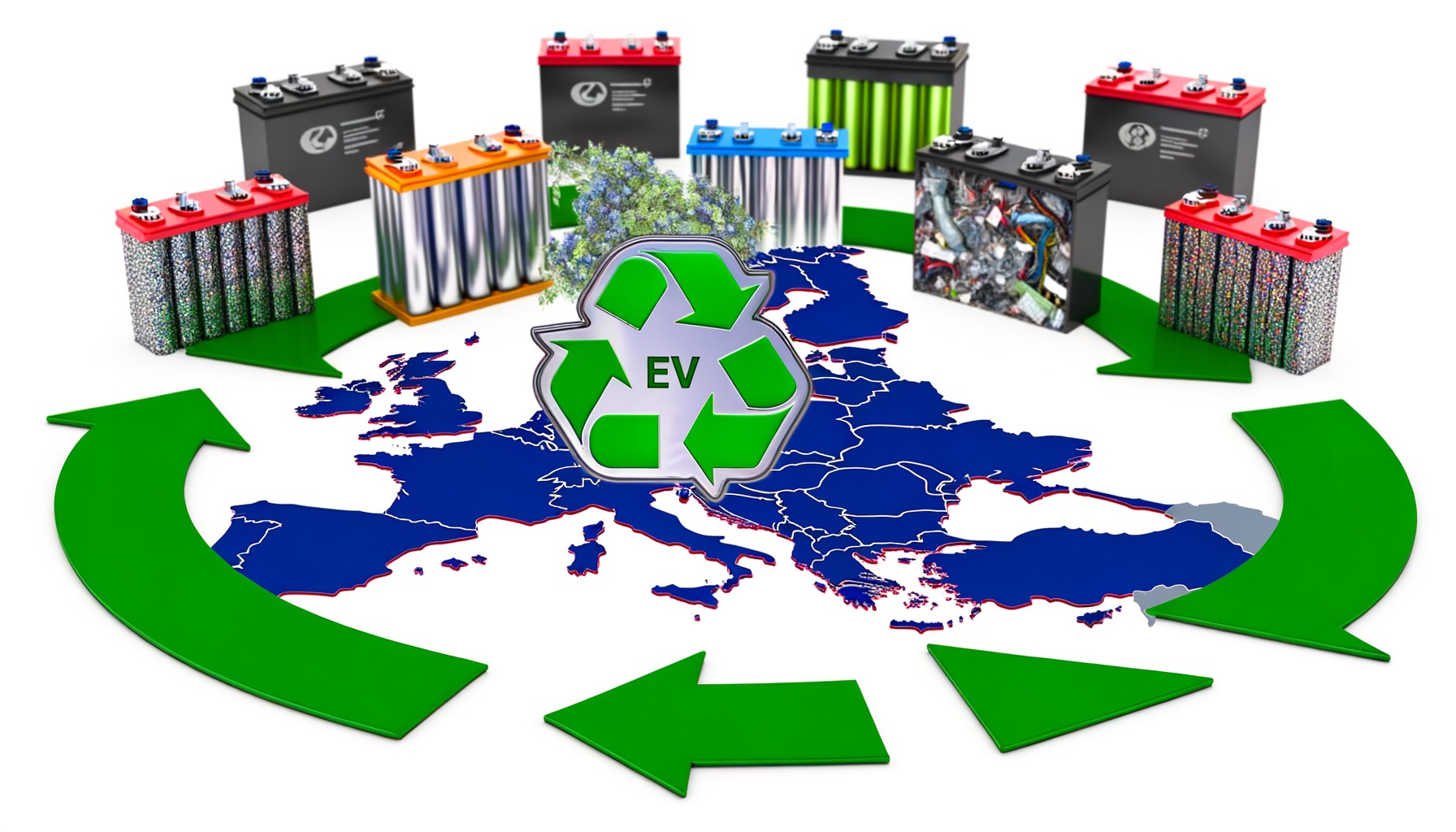
Two European startups have reached key milestones in electric vehicle (EV) battery recycling as they prepare to meet upcoming EU regulations and reduce reliance on China‘s battery supply chain. From August 2030, European automakers must ensure a minimum percentage of recycled materials in their EV batteries, spurring companies to develop advanced recycling technologies.
British startup Altilium has demonstrated that small batteries made with its recycled cathode active materials perform as well as or better than those using virgin materials from China. Research from Imperial College London showed that its process cuts CO2 emissions by 70% and reduces costs by 20%. The company, backed by investors including Sociedad Quimica y Minera de Chile and Marubeni, is currently working with Tata Motors’ JLR to recycle materials from old Jaguar i-Pace EVs.
Germany‘s tozero is developing a net-zero emissions process for recycling graphite, a key battery material that accounts for 40% of a lithium-ion battery’s carbon footprint. With €17 million in investment from backers including Honda, tozero plans to build a pilot plant within two years and produce around 2,000 tonnes of recycled graphite annually by 2027. The company is in talks with global automakers to supply them with its recycled materials, supporting the industry’s shift towards more sustainable EV production.
For more information on these topics, visit diplomacy.edu.
Alphabet CEO Sundar Pichai has praised the work of Chinese startup DeepSeek, calling it an example of how AI is a truly global field. Speaking at the World Governments Summit in Dubai, he noted that innovation in AI is happening across multiple regions and that competition will continue to grow.
Pichai reaffirmed Alphabet’s ambition to remain a leading force in AI but acknowledged that other players would also shape the industry. The rapid development of AI technology has led to increased competition between major tech companies and emerging startups worldwide.
The remarks highlight the expanding global landscape of AI, with companies from China, the United States, and other regions pushing forward advancements in the field. Pichai’s comments suggest that AI leadership will be defined by a diverse range of contributors rather than a single dominant player.
For more information on these topics, visit diplomacy.edu.
Google has announced a new partnership with Poland, signing a memorandum of understanding aimed at accelerating the adoption of AI in the country. The agreement was revealed by CEO Sundar Pichai during a news conference on Thursday. Through this collaboration, Google and Poland seek to use AI as a tool to drive economic growth and innovation, focusing on areas that include cybersecurity, health, and energy.
The deal highlights the potential for AI to transform key sectors of the economy, with both parties eager to explore new opportunities. Pichai emphasised how AI could help bolster cybersecurity measures, improve healthcare delivery, and increase energy efficiency in Poland, which would have far-reaching implications not just for the country but for the broader European region. These sectors, in particular, are seen as critical for future development, and the use of AI could significantly enhance Poland’s technological capabilities.
This partnership also underscores Google’s growing commitment to global AI initiatives, as the company continues to collaborate with governments and organisations around the world to implement AI-driven solutions. Poland is positioning itself as an important player in Europe’s AI landscape, and this agreement represents a step forward in its efforts to modernise and compete on a global scale in the rapidly evolving tech space.
For more information on these topics, visit diplomacy.edu.
Elon Musk announced on Thursday that his AI chatbot, Grok 3, is nearing completion and will be released in the next week or two. In a video call at the World Governments Summit in Dubai, Musk stated that Grok 3 exhibits powerful reasoning capabilities, outperforming other AI models in tests conducted so far. This new AI is being developed through Musk’s company, xAI, which he founded to rival OpenAI and Google.
Musk, also a co-founder of OpenAI, has been outspoken in his criticism of the AI startup. Recently, a consortium led by Musk made a $97.4 billion offer to acquire OpenAI’s nonprofit assets, a move that comes amid Musk’s ongoing legal battle with OpenAI. He is challenging the company’s decision to transition to a for-profit model, arguing that it undermines its original nonprofit mission.
In addition to discussing AI, Musk shared his thoughts on reducing US government spending, suggesting that $1 trillion could be saved by cutting inefficiencies. He also spoke on international matters, advising the US to be less involved in other countries’ affairs. Musk’s comments followed a partnership announcement with UAE AI Minister Omar Al Olama on a futuristic underground transport system called the “Dubai Loop.”
Musk’s remarks at the summit highlighted his wide-ranging influence, not only in technology but also in global political and economic discussions.
For more information on these topics, visit diplomacy.edu.
China’s chipmaking equipment purchases are expected to decline in 2025, following three years of growth, due to overcapacity and increasing restrictions from US sanctions. After purchasing $41 billion in equipment in 2024, which accounted for 40% of global sales, China’s spending is predicted to fall by 6% to $38 billion this year, marking the first decline since 2021. The drop in demand is attributed to reduced purchases in response to export controls and an excess of manufacturing capacity.
Despite these challenges, China has been a key driver for the global wafer fabrication equipment market over the past few years, even as other sectors saw downturns. Much of China’s equipment buying has been linked to stockpiling efforts in response to US sanctions aimed at limiting China’s ability to produce advanced chips, particularly for military use. Chinese firms, like SMIC and Huawei, have continued to advance in chip production, although at a higher cost and with more effort, while also focusing on expanding in the mature-node chip market.
In addition to growing its domestic production capabilities, China’s leading equipment manufacturers, such as Naura Technology Group and AMEC, are expanding internationally. However, the country still faces significant challenges in self-sufficiency, particularly in areas like lithography systems, testing, and assembly tools. While China’s domestic companies have made strides in equipment sales, they still rely heavily on foreign suppliers for advanced technology in these areas.
For more information on these topics, visit diplomacy.edu.
Lam Research, a leading US-based chip toolmaker, has announced plans to invest over 100 billion rupees ($1.2 billion) in Karnataka, India. The company has signed a memorandum of understanding with the Karnataka Industrial Area Development Board to facilitate the investment, which was revealed during the ‘Invest Karnataka’ event.
The initiative aligns with India’s efforts to strengthen its semiconductor ecosystem. Prime Minister Narendra Modi’s government has introduced a $10 billion incentive programme to attract global chip firms. With semiconductor market projected to reach $63 billion by 2026 in India, the country is emerging as a significant player in the global semiconductor race.
Karnataka, home to Bengaluru, serves as a critical driver of India’s economy. Known for its contributions to IT services, software, and manufacturing exports, the state is increasingly positioning itself as a hub for high-tech investments.
India’s IT minister hailed Lam Research’s investment as a major step in the nation’s semiconductor ambitions. The announcement reflects growing confidence in the government’s vision for a robust and competitive semiconductor industry.
For more information on these topics, visit diplomacy.edu.