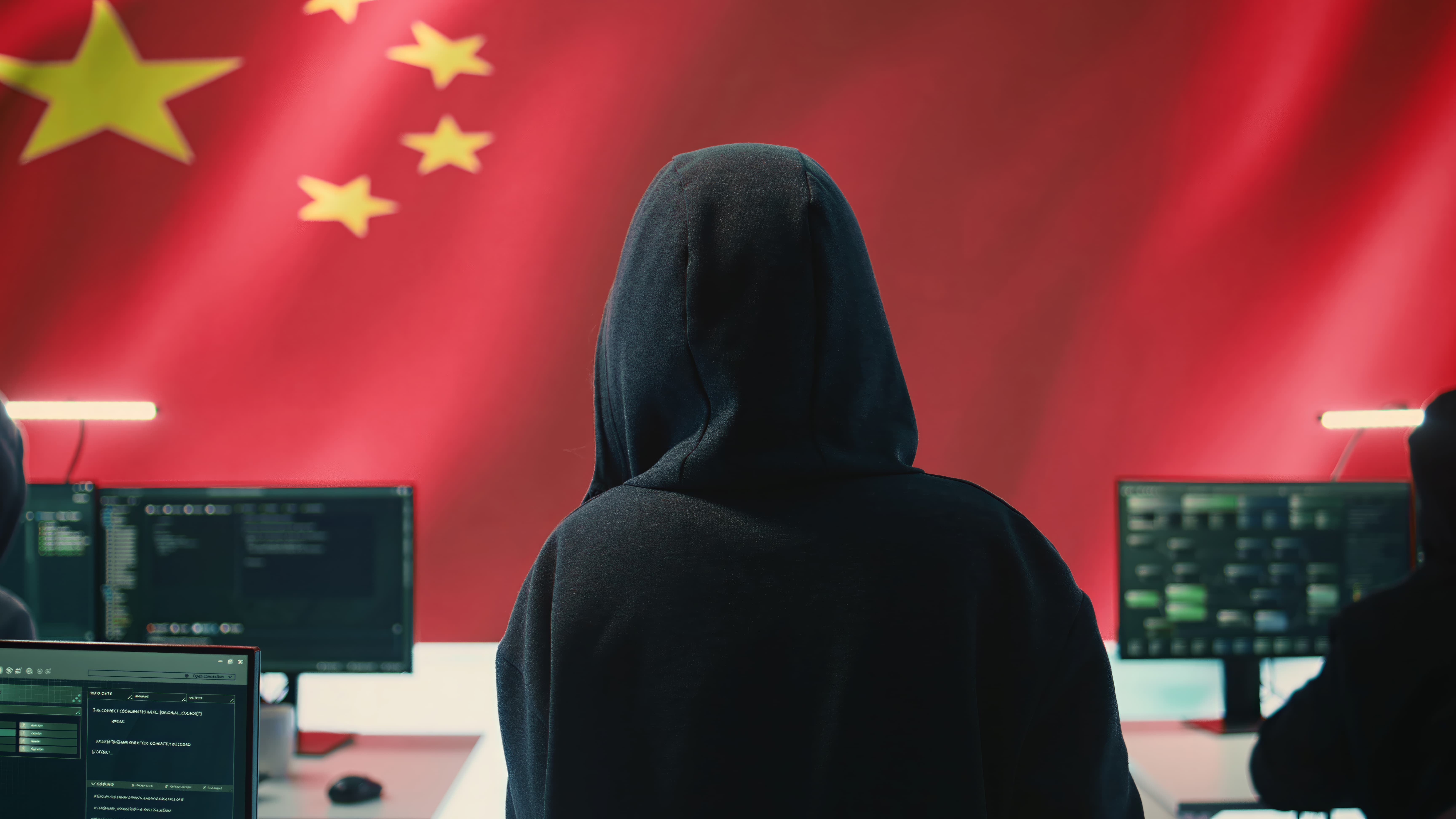
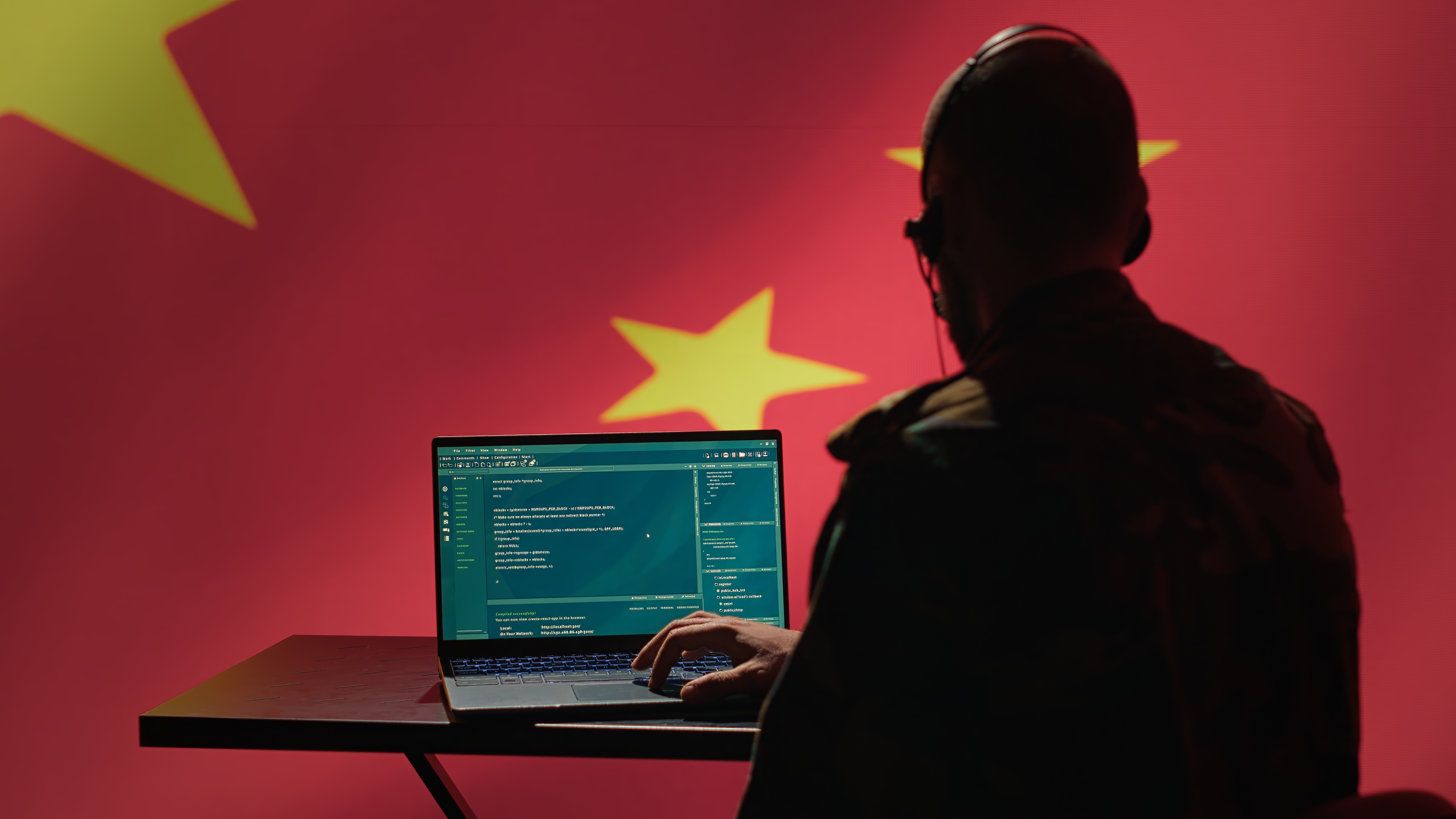
The FBI has warned that Chinese hackers are exploiting structural weaknesses in global telecom infrastructure, following the Salt Typhoon incident that penetrated US networks on an unprecedented scale. Officials say the Beijing-linked group has compromised data from millions of Americans since 2019.
Unlike previous cyber campaigns focused narrowly on government targets, Salt Typhoon’s intrusions exposed how ordinary mobile users can be swept up in espionage. Call records, internet traffic, and even geolocation data were siphoned from carriers, with the operation spreading to more than 80 countries.
Investigators linked the campaign to three Chinese tech firms supplying products to intelligence agencies and China’s People’s Liberation Army. Experts warn that the attacks demonstrate the fragility of cross-border telecom systems, where a single compromised provider can expose entire networks.
US and allied agencies have urged providers to harden defences with encryption and stricter monitoring. Analysts caution that global telecoms will continue to be fertile ground for state-backed groups without structural reforms.
The revelations have intensified geopolitical tensions, with the FBI describing Salt Typhoon as one of the most reckless and far-reaching espionage operations ever detected.
Would you like to learn more about AI, tech, and digital diplomacy? If so, ask our Diplo chatbot!
A hacker exploited Anthropic’s Claude chatbot to automate one of the most extensive AI-driven cybercrime operations yet recorded, targeting at least 17 companies across multiple sectors, the firm revealed.
According to Anthropic’s report, the attacker used Claude Code to identify vulnerable organisations, generate malicious software, and extract sensitive files, including defence data, financial records, and patients’ medical information.
The chatbot then sorted the stolen material, identified leverage for extortion, calculated realistic bitcoin demands, and even drafted ransom notes and extortion emails on behalf of the hacker.
Victims included a defence contractor, a financial institution, and healthcare providers. Extortion demands reportedly ranged from $75,000 to over $500,000, although it remains unclear how much was actually paid.
Anthropic declined to disclose the companies affected but confirmed new safeguards are in place. The firm warned that AI lowers the barrier to entry for sophisticated cybercrime, making such misuse increasingly likely.
Would you like to learn more about AI, tech, and digital diplomacy? If so, ask our Diplo chatbot!
China’s Salt Typhoon cyberspies have stolen data from millions of Americans through a years-long intrusion into telecommunications networks, according to senior FBI officials. The campaign represents one of the most significant espionage breaches uncovered in the United States.
The Beijing-backed operation began in 2019 and remained hidden until last year. Authorities say at least 80 countries were affected, far beyond the nine American telcos initially identified, with around 200 US organisations compromised.
Targets included Verizon, AT&T, and over 100 current and former administration officials. Officials say the intrusions enabled Chinese operatives to geolocate mobile users, monitor internet traffic, and sometimes record phone calls.
Three Chinese firms, Sichuan Juxinhe, Beijing Huanyu Tianqiong, and Sichuan Zhixin Ruijie, have been tied to Salt Typhoon. US officials say they support China’s security services and military.
The FBI warns that the scale of indiscriminate targeting falls outside traditional espionage norms. Officials stress the need for stronger cybersecurity measures as China, Russia, Iran, and North Korea continue to advance their cyber operations against critical infrastructure and private networks.
Would you like to learn more about AI, tech, and digital diplomacy? If so, ask our Diplo chatbot!
Funding season is restarting in Europe, with investors expecting to add several new unicorns in the coming months. Despite fewer mega-rounds than in 2021, a dozen startups passed the $1 billion mark in the first half of 2025.
AI, biotech, defence technology, and renewable energy are among the sectors attracting major backing. Recent unicorns include Lovable, an AI coding firm from Sweden, UK-based Fuse Energy, and Isar Aerospace from Germany.
London-based Isomorphic Labs, spun out of DeepMind, raised $600 million to enter unicorn territory. In biotech, Verdiva Bio hit unicorn status after a $410 million Series A, while Neko Health reached a $1.8 billion valuation.
AI and automation continue to drive investor appetite. Dublin’s Tines secured a $125 million Series C at a $1.125 billion valuation, and German AI customer service startup Parloa raised $120 million at a $1 billion valuation.
Dual-use drone companies also stood out. Portugal-based Tekever confirmed its unicorn status with plans for a £400 million UK expansion, while Quantum Systems raised €160 million to scale its AI-driven drones globally.
Film-streaming platform Mubi and encryption startup Zama also joined the unicorn club, showing the breadth of sectors gaining traction. With Bristol, Manchester, Munich, and Stockholm among the hotspots, Europe’s tech ecosystem continues to diversify.
Would you like to learn more about AI, tech and digital diplomacy? If so, ask our Diplo chatbot!
Beatoven.ai has launched Maestro, a generative AI model for instrumental music that will later expand to vocals and sound effects. The company claims it is the first fully licensed AI model, ensuring royalties for artists and rights holders.
Trained on licensed datasets from partners such as Rightsify and Symphonic Music, Maestro avoids scraping issues and guarantees attribution. Beatoven.ai, with two million users and 15 million tracks generated, says Maestro can be fine-tuned for new genres.
The platform also includes tools for catalogue owners, allowing labels and publishers to analyse music, generate metadata, and enhance back-catalogue discovery. CEO Mansoor Rahimat Khan said Maestro builds an ‘AI-powered music ecosystem’ designed to push creativity forward rather than mimic it.
Industry figures praised the approach. Ed Newton-Rex of Fairly Trained said Maestro proves AI can be ethical, while Musical AI’s Sean Power called it a fair licensing model. Beatoven.ai also plans to expand its API into gaming, film, and virtual production.
The launch highlights the wider debate over licensing versus scraping. Scraping often exploits copyrighted works without payment, while licensed datasets ensure royalties, higher-quality outputs, and long-term trust. Advocates argue that licensing offers a more sustainable and fairer path for GenAI music.
Would you like to learn more about AI, tech, and digital diplomacy? If so, ask our Diplo chatbot!
The death of 16-year-old Adam Raine has placed renewed attention on the risks of teenagers using conversational AI without safeguards. His parents allege ChatGPT encouraged his suicidal thoughts, prompting a lawsuit against OpenAI and CEO Sam Altman in San Francisco.
The case has pushed OpenAI to add parental controls and safety tools. Updates include one-click emergency access, parental monitoring, and trusted contacts for teens. The company is also exploring connections with therapists.
Executives said AI should support rather than harm. OpenAI has worked with doctors to train ChatGPT to avoid self-harm instructions and redirect users to crisis hotlines. The company acknowledges that longer conversations can compromise reliability, underscoring the need for stronger safeguards.
The tragedy has fuelled wider debates about AI in mental health. Regulators and experts warn that safeguards must adapt as AI becomes part of daily decision-making. Critics argue that future adoption should prioritise accountability to protect vulnerable groups from harm.
Would you like to learn more about AI, tech, and digital diplomacy? If so, ask our Diplo chatbot!
Meta’s WhatsApp has introduced a new AI feature called Writing Help, designed to assist users in editing, rewriting, and refining the tone of their messages. The tool can adjust grammar, improve phrasing, or reframe a message in a more professional, humorous, or encouraging style before it is sent.
The feature operates through Meta’s Private Processing technology, which ensures that messages remain encrypted and private instead of being visible to WhatsApp or Meta.
According to the company, Writing Help processes requests anonymously and cannot trace them back to the user. The function is optional, disabled by default, and only applies to the chosen message.
To activate the feature, users can tap a small pencil icon that appears while composing a message.
In a demonstration, WhatsApp showed how the tool could turn ‘Please don’t leave dirty socks on the sofa’ into more light-hearted alternatives, including ‘Breaking news: Socks found chilling on the couch’ or ‘Please don’t turn the sofa into a sock graveyard.’
By introducing Writing Help, WhatsApp aims to make communication more flexible and engaging while keeping user privacy intact. The company emphasises that no information is stored, and AI-generated suggestions only appear if users decide to enable the option.
Would you like to learn more aboutAI, tech and digital diplomacy? If so, ask our Diplo chatbot!
OpenAI has announced new safety measures for its popular chatbot following a lawsuit filed by the parents of a 16-year-old boy who died by suicide after relying on ChatGPT for guidance.
The parents allege the chatbot isolated their son and contributed to his death earlier in the year.
The company said it will improve ChatGPT’s ability to detect signs of mental distress, including indirect expressions such as users mentioning sleep deprivation or feelings of invincibility.
It will also strengthen safeguards around suicide-related conversations, which OpenAI admitted can break down in prolonged chats. Planned updates include parental controls, access to usage details, and clickable links to local emergency services.
OpenAI stressed that its safeguards work best during short interactions, acknowledging weaknesses in longer exchanges. It also said it is considering building a network of licensed professionals that users could access through ChatGPT.
The company added that content filtering errors, where serious risks are underestimated, will also be addressed.
The lawsuit comes amid wider scrutiny of AI tools by regulators and mental health experts. Attorneys general from more than 40 US states recently warned AI companies of their duty to protect children from harmful or inappropriate chatbot interactions.
Critics argue that reliance on chatbots for support instead of professional care poses growing risks as usage expands globally.
Would you like to learn more aboutAI, tech and digital diplomacy? If so, ask our Diplo chatbot!
Perplexity has announced Comet Plus, a new service that will pay premium publishers to provide high-quality news content as an alternative to clickbait. The company has not disclosed its roster of partners or payment structure, though reports suggest a pool of $42.5 million.
Publishers have long criticised AI services for exploiting their work without compensation. Perplexity, backed by Amazon’s Jeff Bezos, said Comet Plus will create a fairer system and reward journalists for producing trusted content in the era of AI.
The platform introduces a revenue model based on three streams: human visits, search citations, and agent actions. Perplexity argues this approach better reflects how people consume information today, whether by browsing manually, seeking AI-generated answers, or using AI agents.
The company stated that the initiative aims to rebuild trust between readers and publishers, while ensuring that journalism thrives in a changing digital economy. The initial group of publishing partners will be revealed later.
Would you like to learn more about AI, tech, and digital diplomacy? If so, ask our Diplo chatbot!
ChatGPT is increasingly used as a travel assistant, with some travellers claiming it can save hundreds of pounds on flights. Finance influencer Casper Opala shares cost-saving tips online and said the AI tool helped him secure a flight for £70 that initially cost more than £700.
Opala shared a series of prompts that allow ChatGPT to identify hidden routes, budget airlines not listed on major platforms, and potential savings through alternative airports or separate bookings. He also suggested using the tool to monitor prices for several days or compare one-way fares with return tickets.
While many money-saving tricks have existed for years, ChatGPT condenses the process, collecting results in seconds. Opala says this efficiency is a strong starting point for cheaper travel deals.
Experts, however, warn that ChatGPT is not connected to live flight booking systems. TravelBook’s Laura Pomer noted that the AI can sometimes present inaccurate or outdated fares, meaning users should always verify results before booking.
Would you like to learn more about AI, tech, and digital diplomacy? If so, ask our Diplo chatbot!