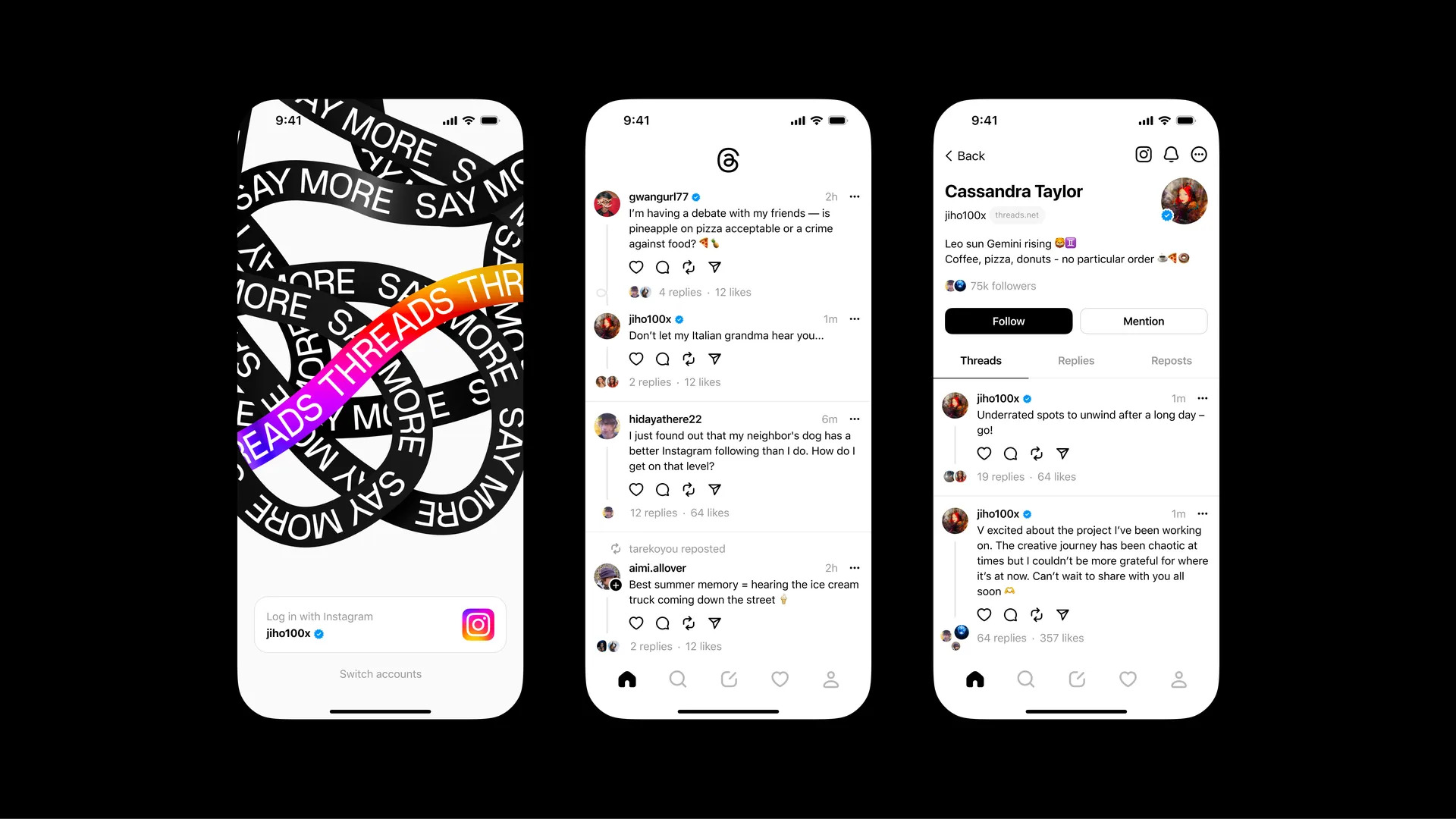
Threads is experimenting with gaming inside private chats, beginning with a simple basketball game that allows users to swipe to shoot hoops.
Meta confirmed that the game remains an internal prototype and is not available to the public, meaning there is no certainty it will launch. The feature was first uncovered by reverse engineer Alessandro Paluzzi, who frequently spots unreleased tools during development.
In-chat gaming could give Threads an advantage over rivals such as X and Bluesky, which do not currently offer built-in games. It may also position Threads as a competitor to Apple’s Messages, where users can already access chat-based games through third-party apps instead of relying on the platform alone.
Meta has already explored similar ideas inside Instagram DMs, including a hidden game that lets users keep an emoji bouncing on screen.
Threads continues to expand its feature set with Communities and disappearing posts, although the platform still trails X in US adoption despite reporting 400 million monthly users worldwide.
Would you like to learn more aboutAI, tech and digital diplomacy? If so, ask our Diplo chatbot!
The US tech company, Meta, has paused the international launch of its Ray-Ban Display smart glasses after seeing higher-than-expected demand in the US.
Meta had planned to begin selling the glasses in the UK, France, Italy and Canada in early 2026, but will now prioritise fulfilling US orders instead of expanding availability.
These smart glasses work with the Meta Neural Band wrist device, which interprets small hand movements.
Meta demonstrated new tools at CES in Las Vegas, including a teleprompter mode for delivering prepared remarks and a feature that lets users write messages by moving a finger across any surface while wearing the Neural Band. Pedestrian navigation support is also being extended to additional US cities.
Meta says demand has created waiting lists stretching well into 2026, prompting the pause while it reassesses global rollout plans.
Would you like to learn more aboutAI, tech and digital diplomacy? If so, ask our Diplo chatbot!
In the US, Morgan Stanley has moved to launch exchange-traded funds linked to Bitcoin and Solana, signalling that major banks are no longer prepared to watch the crypto market from the sidelines.
Filings submitted to the Securities and Exchange Commission show the bank intends to offer funds tied to the prices of both crypto assets, making it the first of the ten biggest US banks by assets to pursue crypto ETFs directly.
Interest from Wall Street has been strengthened by regulatory changes introduced under the Trump administration, which created clearer rules for stablecoins and crypto-related investment products.
BlackRock’s Bitcoin ETFs have already become a major source of revenue, encouraging banks to seek a more active role instead of limiting themselves to custody services.
The trend is expected to have implications for European investors. US-listed crypto ETFs cannot normally be sold to retail investors in the EU because they do not comply with UCITS requirements.
The shift suggests crypto has become too commercially significant for Wall Street institutions to ignore, with banks increasingly treating digital assets as part of mainstream financial services rather than a peripheral experiment.
Would you like to learn more aboutAI, tech and digital diplomacy? If so, ask our Diplo chatbot!
The South Korean tech giant, Samsung, used CES 2026 to foreground a cross-industry debate about trust, privacy and security in the age of AI.
During its Tech Forum session in Las Vegas, senior figures from AI research and industry argued that people will only fully accept AI when systems behave predictably, and users retain clear control instead of feeling locked inside opaque technologies.
Samsung outlined a trust-by-design philosophy centred on transparency, clarity and accountability. On-device AI was presented as a way to keep personal data local wherever possible, while cloud processing can be used selectively when scale is required.
Speakers said users increasingly want to know when AI is in operation, where their data is processed and how securely it is protected.
Security remained the core theme. Samsung highlighted its Knox platform and Knox Matrix to show how devices can authenticate one another and operate as a shared layer of protection.
Partnerships with companies such as Google and Microsoft were framed as essential for ecosystem-wide resilience. Although misinformation and misuse were recognised as real risks, the panel suggested that technological counter-measures will continue to develop alongside AI systems.
Consumer behaviour formed a final point of discussion. Amy Webb noted that people usually buy products for convenience rather than trust alone, meaning that AI will gain acceptance when it genuinely improves daily life.
The panel concluded that AI systems which embed transparency, robust security and meaningful user choice from the outset are most likely to earn long-term public confidence.
Would you like to learn more aboutAI, tech and digital diplomacy? If so, ask our Diplo chatbot!
Hardware maker Plaud has introduced a new AI notetaking pin called the Plaud NotePin S alongside a Mac desktop app for digital meeting notes ahead of CES in Las Vegas.
The wearable device costs 179 dollars and arrives with several accessories so users can attach or wear it in different ways. A physical button allows quick control of recordings and can be tapped to highlight key moments during conversations.
The NotePin S keeps the same core specifications as the earlier model, including 64GB of storage and up to 20 hours of continuous recording.
Two MEMS microphones capture speech clearly within roughly three metres. Owners receive 300 minutes of transcription each month without extra cost. Apple Find My support is also included, so users can locate the device easily instead of worrying about misplacing it.
Compared with the larger Note Pro, the new pin offers a shorter recording range and battery life, but the small size makes it easier to wear while travelling or working on the go.
Plaud says the device suits users who rely on frequent in-person conversations rather than long seated meetings.
Plaud has now sold more than 1.5 million notetaking devices. The company also aims to enter the AI meeting assistant market with a Mac desktop client that detects when a meeting is active and prompts users to capture audio.
The software records system sound and uses AI to organise the transcript into structured notes. Users can also add typed notes and images instead of relying only on audio.
Would you like to learn more aboutAI, tech and digital diplomacy? If so, ask our Diplo chatbot!
Samsung will open its CES 2026 presence with a Sunday evening press conference focused on integrating AI across its product portfolio. The event will take place on 4 January at the Wynn in Las Vegas and will be livestreamed online.
Senior executives, including TM Roh, head of the Device eXperience division, and leaders from Samsung’s visual display and digital appliance businesses, are expected to outline the company’s AI strategy. Samsung says the presentation will emphasise AI as a core layer across products and services.
The company has already previewed several AI-enabled devices ahead of CES. The devices include a portable projector that adapts to its surroundings, expanded Google Photos integration on Samsung TVs, and new Micro RGB television displays.
The company is also highlighting AI-powered home appliances designed to anticipate user needs. Examples include refrigerators that track food supplies, generate shopping lists, and detect early signs of device malfunction.
New smartphones are not expected at the event, with the next Galaxy Unpacked launch reportedly scheduled for later in January or early February.
Would you like to learn more about AI, tech, and digital diplomacy? If so, ask our Diplo chatbot!
AI is rapidly becoming the starting point for many everyday activities, from planning and learning to shopping and decision-making. A new report by PYMNTS Intelligence suggests that AI is no longer just an added digital tool, but is increasingly replacing traditional entry points such as search engines and mobile apps.
The study shows that AI use in the United States has moved firmly into the mainstream, with more than 60 per cent of consumers using dedicated AI platforms over the past year. Younger users and frequent AI users are leading the shift, increasingly turning to AI first rather than using it to support existing online habits.
Researchers found that how people use AI matters as much as how often they use it. Heavy users rely on AI across many aspects of daily life, treating it as a general-purpose system, while lighter users remain cautious and limit AI to lower-risk tasks. Trust plays a decisive role, especially when it comes to sensitive areas such as finances and banking.
The report also points to changing patterns in online discovery. Consumers who use standalone AI platforms are more likely to abandon older methods entirely, while those encountering AI through search engines tend to blend it with familiar tools. That difference suggests that the design and context of AI services strongly influence user behaviour.
Looking ahead, the findings hint at how AI could reshape digital commerce. Many consumers say they would prefer to connect digital wallets directly to AI platforms for payments, signalling a potential shift in how intent turns into transactions. As AI becomes a common entry point to the digital world, businesses and financial institutions face growing pressure to adapt their systems to this new starting line.
Would you like to learn more about AI, tech and digital diplomacy? If so, ask our Diplo chatbot!
The booming influencer economy of Belgium is colliding with an advertising rulebook that many creators say belongs to another era.
Different obligations across federal, regional and local authorities mean that wording acceptable in one region may trigger a reprimand in another. Some influencers have even faced large fines for administrative breaches such as failing to publish business details on their profiles.
In response, the Influencer Marketing Alliance in Belgium has launched a certification scheme designed to help creators navigate the legal maze instead of risking unintentional violations.
Influencers complete an online course on advertising and consumer law and must pass a final exam before being listed in a public registry monitored by the Jury for Ethical Practices.
Major brands, including L’Oréal and Coca-Cola, already prefer to collaborate with certified creators to ensure compliance and credibility.
Not everyone is convinced.
Some Belgian influencers argue that certification adds more bureaucracy at a time when they already struggle to understand overlapping rules. Others see value as a structured reminder that content creators remain legally responsible for commercial communication shared with followers.
The alliance is also pushing lawmakers to involve influencers more closely when drafting future rules, including taxation and safeguards for child creators.
Consumer groups such as BEUC support clearer definitions and obligations under the forthcoming EU Digital Fairness Act, arguing that influencer advertising should follow the same standards as other media instead of remaining in a grey zone.
Would you like to learn more about AI, tech and digital diplomacy? If so, ask our Diplo chatbot!
The Bank of Russia has reiterated its confidence in the long-term potential of the digital ruble, describing the project as one of the most advanced central bank digital currency initiatives globally.
According to the regulator, preparations for a large-scale rollout remain on track for 2026, with internal estimates suggesting the digital ruble could represent up to 5% of all cashless payments within seven years of launch.
Central bank officials highlighted smart contracts as a primary area of application, alongside budgetary payments and cross-border transaction mechanisms, where efficiency and transparency gains are expected.
The regulator added that global payment trends are being closely monitored. Officials stressed the importance of defining a clear role for each financial instrument rather than introducing technology without a specific economic purpose.
Bank of Russia officials also emphasised ongoing collaboration with market participants to identify new opportunities for the digital ruble and maximise its practical impact.
Would you like to learn more about AI, tech and digital diplomacy? If so, ask our Diplo chatbot!
The presidency of the Council of the European Union next year is expected to see Ireland lead a European drive for ID-verified social media accounts.
Tánaiste Simon Harris said the move is intended to limit anonymous abuse, bot activity and coordinated disinformation campaigns that he views as a growing threat to democracy worldwide.
A proposal that would require users to verify their identity instead of hiding behind anonymous profiles. Harris also backed an Australian-style age verification regime to prevent children from accessing social media, arguing that existing digital consent rules are not being enforced.
Media Minister Patrick O’Donovan is expected to bring forward detailed proposals during the presidency.
The plan is likely to trigger strong resistance from major social media platforms with European headquarters in Ireland, alongside criticism from the US.
However, Harris believes there is growing political backing across Europe, pointing to signals of support from French President Emmanuel Macron and UK Prime Minister Keir Starmer.
Harris said he wanted constructive engagement with technology firms rather than confrontation, while insisting that stronger safeguards are now essential.
He argued that social media companies already possess the technology to verify users and restrict harmful accounts, and that European-level coordination will be required to deliver meaningful change.
Would you like to learn more aboutAI, tech and digital diplomacy? If so, ask our Diplo chatbot!