OQC outlines bold 50,000 qubit quantum computing vision

Oxford Quantum Circuits (OQC) has revealed plans to develop a 50,000 qubit fault-tolerant quantum computer by 2034, using its proprietary ‘Dimon’ superconducting transmon technology.

Achieving such scale would require millions of physical qubits but promises to outperform global rivals, including Google and IBM, with real-world applications ranging from cyber threat detection to drug discovery.

The roadmap includes a significant push to reduce error rates and optimise chip materials, with recent breakthroughs enabling error detection at the hardware level. OQC claims it achieves a 99.8% gate fidelity in just 25 nanoseconds and a tenfold improvement in qubit efficiency compared to competitors.

Interim CEO Gerald Mullally said the roadmap marks a turning point, calling on finance and national security organisations to prepare for a quantum-driven future.

Now seeking $100 million in Series B funding, the firm plans to install its first quantum system in New York, later this year.

Would you like to learn more about AI, tech and digital diplomacy? If so, ask our Diplo chatbot!

Anthropic debuts AI tools for US national security

Anthropic has launched a new line of AI models, Claude Gov, explicitly tailored for US national security operations. Built with direct input from government clients, top-tier agencies already use the models.

These classified-use models were developed with enhanced safety testing and are optimised for handling sensitive material, including improved handling of classified data, rare language proficiency, and defence-specific document comprehension.

The Claude Gov models reflect Anthropic’s broader move into government partnerships, building on its collaboration with Palantir and AWS.

As competition in defence-focused AI intensifies, rivals including OpenAI, Meta, and Google are also adapting their models for secure environments.

The sector’s growing interest in custom, security-conscious AI tools marks a shift in how leading labs seek stable revenue streams and deeper ties with government agencies.

Would you like to learn more about AI, tech and digital diplomacy? If so, ask our Diplo chatbot!

ChatGPT adds meeting recording and cloud access

OpenAI has launched new features for ChatGPT that allow it to record meetings, transcribe conversations, and pull information directly from cloud platforms like Google Drive and SharePoint.

Instead of relying on typed input alone, users can now speak to ChatGPT, which records audio, creates editable summaries, and helps generate follow-up content such as emails or project outlines.

‘Record’ is currently available to Team users via the macOS app and will soon expand to Enterprise and Edu accounts.

The recording tool automatically deletes the audio after transcription and applies existing workspace data rules, ensuring recordings are not used for training.

Instead of leaving notes scattered across different platforms, users gain a structured and searchable history of conversations, voice notes, or brainstorming sessions, which ChatGPT can recall and apply during future interactions.

At the same time, OpenAI has introduced new connectors for business users that let ChatGPT access files from cloud services like Dropbox, OneDrive, Box, and others.

These connectors allow ChatGPT to search and summarise information from internal documents, rather than depending only on web search or user uploads. The update also includes beta support for Deep Research agents that can work with tools like GitHub and HubSpot.

OpenAI has embraced the Model Context Protocol, an open standard allowing organisations to build their own custom connectors for proprietary tools.

Rather than serving purely as a general-purpose chatbot, ChatGPT is evolving into a workplace assistant capable of tapping into and understanding a company’s complete knowledge base.

Would you like to learn more about AI, tech and digital diplomacyIf so, ask our Diplo chatbot!

New York Times sues OpenAI over data use

The New York Times has launched legal action against OpenAI, accusing the company of using its news articles without permission to train AI language models.

The NYT has asked the court to make OpenAI keep all ChatGPT user data indefinitely to find evidence for its case.

OpenAI’s Chief Operating Officer, Brad Lightcap, criticised the demand, saying it conflicts with privacy commitments and longstanding industry standards. OpenAI is appealing the order, arguing it represents an excessive overreach that weakens user privacy protections.

Despite the ongoing appeal, OpenAI must comply with the court’s directive until further notice. A limited, audited legal and security team will manage the stored data securely and only use it to meet legal obligations.

The data retention order impacts over 400 million weekly ChatGPT users, including those on Free, Plus, Pro, Teams, and many API plans. However, Enterprise and Zero Data Retention users remain unaffected.

Would you like to learn more about AI, tech and digital diplomacy? If so, ask our Diplo chatbot

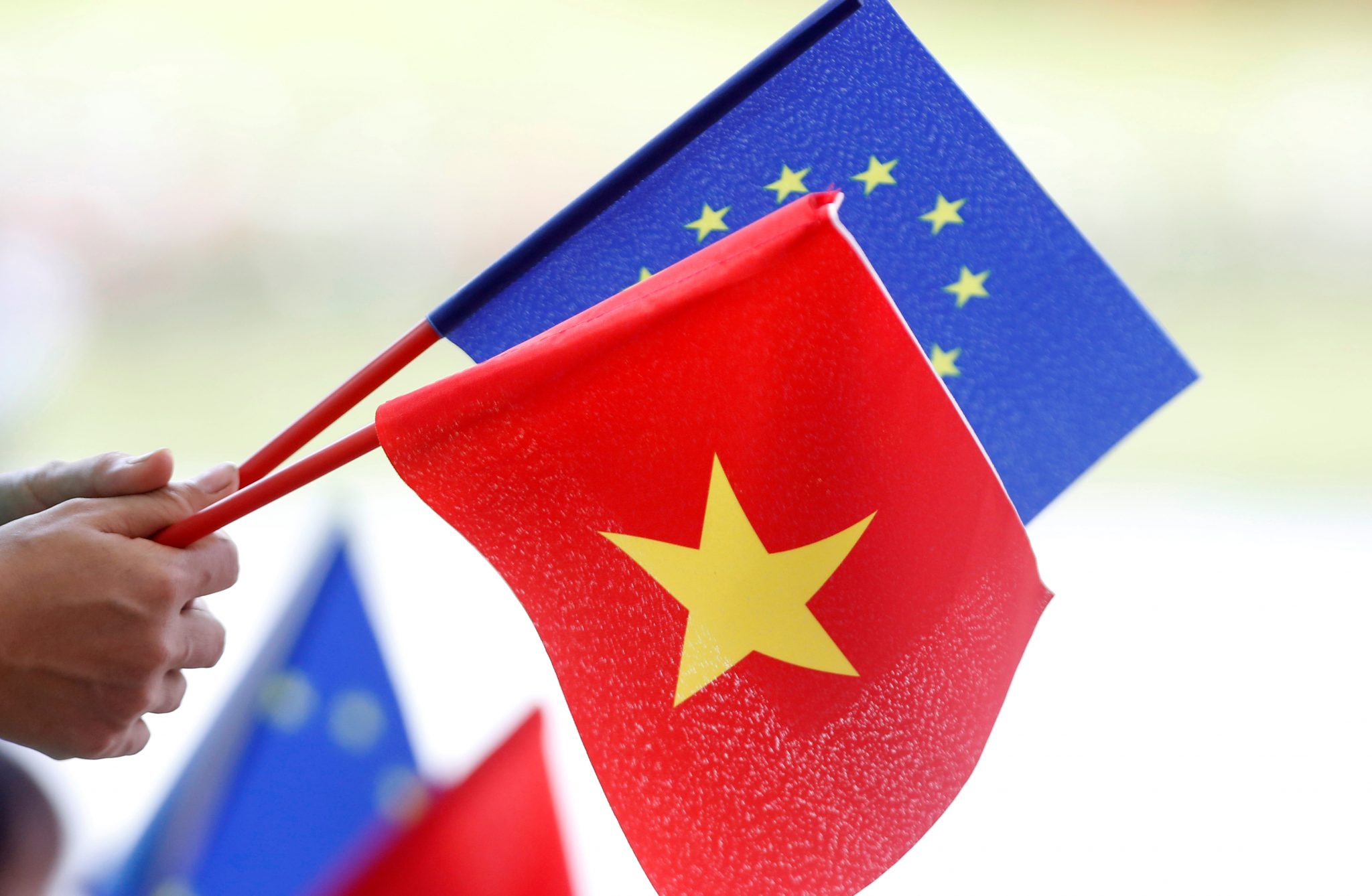
EU launches global digital strategy

The European Union has launched a sweeping international digital strategy to bolster its global tech leadership and secure a human-centric digital transformation. With the digital and AI revolution reshaping economies and societies worldwide, the EU is positioning itself as a reliable partner in building resilient, open, and secure digital ecosystems.

The strategy prioritises collaboration with international partners to scale digital infrastructure, strengthen cybersecurity, and support emerging technologies like AI, quantum computing, and semiconductors while promoting democratic values and human rights in digital governance. The EU will deepen and expand its global network of Digital Partnerships and Dialogues to remain competitive and secure in a fast-changing geopolitical landscape.

These collaborations focus on research, industrial innovation, regulatory cooperation, and secure supply chains, while engaging countries across Africa, Latin America, Asia, and the EU’s own neighbourhood. The strategy also leverages trade instruments and investment frameworks such as the Global Gateway to support secure 5G and 6G networks, submarine cables, and digital public infrastructure, helping partner countries improve connectivity, resilience, and sustainability.

To enhance global digital governance, the EU is pushing for international standards that uphold privacy, security, and openness, and opposing efforts to fragment the internet. It supports inclusive multilateralism, working through institutions like the UN, G7, and OECD to shape rules for the digital age.

With initiatives ranging from AI safety cooperation and e-signature mutual recognition to safeguarding children online and combating disinformation, the EU aims to set the benchmark for ethical and secure digital transformation. At the heart of this vision is the EU Tech Business Offer—a modular, cross-border platform combining technology, capacity-building, and financing.

Through Team Europe and partnerships with industry, the EU seeks to bridge the digital divide, export trusted digital solutions, and foster an interconnected world aligned with European democratic principles. The strategy underscores that in today’s interconnected world, the EU’s prosperity and security hinge on shaping a digital future that is competitive, inclusive, and values-driven.

Would you like to learn more about AI, tech and digital diplomacy? If so, ask our Diplo chatbot!

M&S CEO targeted by hackers in abusive ransom email

Marks & Spencer has been directly targeted by a ransomware group calling itself DragonForce, which sent a vulgar and abusive ransom email to CEO Stuart Machin using a compromised employee email address.

The message, laced with offensive language and racist terms, demanded that Machin engage via a darknet portal to negotiate payment. It also claimed that the hackers had encrypted the company’s servers and stolen customer data, a claim M&S eventually acknowledged weeks later.

The email, dated 23 April, appears to have been sent from the account of an Indian IT worker employed by Tata Consultancy Services (TCS), a long-standing M&S tech partner.

TCS has denied involvement and stated that its systems were not the source of the breach. M&S has remained silent publicly, neither confirming the full scope of the attack nor disclosing whether a ransom was paid.

The cyber attack has caused major disruption, costing M&S an estimated £300 million and halting online orders for over six weeks.

DragonForce has also claimed responsibility for a simultaneous attack on the Co-op, which left some shelves empty for days. While nothing has yet appeared on DragonForce’s leak site, the group claims it will publish stolen information soon.

Investigators believe DragonForce operates as a ransomware-as-a-service collective, offering tools and platforms to cybercriminals in exchange for a 20% share of any ransom.

Some experts suspect the real perpetrators may be young hackers from the West, linked to a loosely organised online community called Scattered Spider. The UK’s National Crime Agency has confirmed it is focusing on the group as part of its inquiry into the recent retail hacks.

Would you like to learn more about AI, tech and digital diplomacy? If so, ask our Diplo chatbot!

Apple sues European Commission over DMA interoperability ruling

Apple is mounting a legal challenge against the European Commission after being ordered to open up its tightly controlled ecosystem to rival companies under the Digital Markets Act (DMA).

The tech giant filed its appeal with the EU’s General Court, claiming the decision would undermine user privacy and harm innovation.

The dispute centres on a March ruling by the Commission following months of dialogue, which concluded that Apple must guarantee interoperability—a requirement that would allow third-party developers to connect non-Apple products, such as smartwatches and headphones, to iPhones and iPads.

Apple has pushed back strongly, arguing that the mandate is ‘unreasonable, costly and stifles innovation.’ A company spokesperson said the move would benefit what Apple describes as ‘data-hungry companies’ like Meta and Samsung, who could gain access to users’ most sensitive data through third-party connections.

Since December 2024, the European Commission has been pressing Apple to make its ecosystem more open to promote competition across the digital sector. However, Apple maintains that complying with the order would compromise the company’s privacy-first approach and violate its data protection standards.

The Commission, meanwhile, insists the measures are proportionate and fully aligned with the EU’s stringent privacy and security framework. It argues that the order would not strip Apple of control over its devices, but rather enable fairer access for other tech players while keeping user protections intact.

The case is set to become a major test of how far the EU can push tech giants to comply with the Digital Markets Act, which was designed to curb the dominance of so-called ‘gatekeepers’ in digital markets.

Would you like to learn more about AI, tech and digital diplomacy? If so, ask our Diplo chatbot!

Google warns users to switch to passkeys after new phishing attacks

Google is once again urging users to upgrade their account security by moving away from password-only access, as cyber scams grow increasingly sophisticated.

The warning follows an attempted phishing attack on Instagram boss Adam Mosseri, who revealed he had been targeted by a convincing scam involving a fake Google phone call and a seemingly legitimate email prompting him to change his password.

Though Google quickly traced and suspended the accounts involved, the incident highlights the evolving nature of online threats. The company has reiterated that it never contacts users by phone or email about password changes or account issues. Any such message should be considered a scam.

In response, Google is encouraging users to adopt stronger security methods, such as Passkeys—a login system that replaces passwords with biometric authentication via a trusted device like a smartphone. This can include fingerprint recognition, facial scan, or the phone’s screen lock.

The tech giant also recommends using two-factor authentication (2FA), but advises against relying on SMS codes or email-based verification, which can be intercepted. Instead, users should opt for an authentication app or use Passkeys for greater protection.

With scams becoming more difficult to detect, Google’s message is clear: take proactive steps to secure your account. Users who receive suspicious communication claiming to be from Google are advised to avoid engaging and verify concerns through Google’s official support channels.

Would you like to learn more about AI, tech and digital diplomacy? If so, ask our Diplo chatbot!
Gmail accounts at risk as attacks rise

Google has urged Gmail users to upgrade their account security after revealing that over 60% have been targeted by cyberattacks. Despite the increasing threat, most people still rely on outdated protections like passwords and SMS-based two-factor authentication.

Google is now pushing users to adopt passkeys and social sign-ins to improve their defences. Passkeys offer phishing-resistant access and use biometric methods such as fingerprint or facial recognition tied to a user’s device, removing the need for traditional passwords.

While digitally savvy Gen Z users are more likely to adopt these new methods, but many still reuse passwords, leaving their accounts exposed to breaches and scams. Google emphasised that passwords are both insecure and inconvenient and called on users to switch to tools that offer stronger protection.

Microsoft, meanwhile, has gone even further by encouraging users to eliminate passwords entirely. Google’s long-term goal is to simplify sign-ins while increasing security across its platforms.

Would you like to learn more about AI, tech and digital diplomacy? If so, ask our Diplo chatbot!

WhatsApp to add usernames for better privacy

WhatsApp is preparing to introduce usernames, allowing users to hide their phone numbers and opt for a unique ID instead. Meta’s push reflects growing demand for more secure and anonymous communication online.

Currently in development and not yet available for testing, the new feature will let users create usernames with letters, numbers, periods, and underscores, while blocking misleading formats like web addresses.

The move aims to improve privacy by letting users connect without revealing personal contact details. A system message will alert contacts whenever a username is updated, adding transparency to the process.

Although still in beta, the feature is expected to roll out soon, bringing WhatsApp in line with other major messaging platforms that already support username-based identities.

Would you like to learn more about AI, tech and digital diplomacy? If so, ask our Diplo chatbot!