Apple is set to begin selling its iPhone 16 in Indonesia following a new agreement with the government, which includes the establishment of a manufacturing plant and a research and development centre. The country’s industry minister, Agus Gumiwang Kartasasmita, confirmed on Wednesday that Apple would soon receive the required local content certificate to allow sales of the device. However, he did not specify when the certificate would be issued.
Indonesia had previously banned the iPhone 16 due to Apple’s failure to meet the local content requirement, which mandates that a certain percentage of parts must be sourced domestically or through local partnerships. Although Apple has no manufacturing facilities in Indonesia, it has been operating developer academies in the country since 2018. Indonesia, with its population of 280 million, is keen to attract more tech-related investment.
Analysts have warned that the local content ban could harm investor confidence and fuel concerns about protectionism, but the new agreements between Apple and the Indonesian government may help address these issues.
For more information on these topics, visit diplomacy.edu.
Adobe has launched Photoshop on mobile phones for the first time, introducing both a free version and a premium subscription priced at $7.99 per month. Previously, the lowest-cost subscription was $9.99 per month for iPad users.
The app is now available on Apple’s iPhone, with an Android version expected soon.
The move comes as smartphone operating systems increasingly offer built-in photo editing features similar to Photoshop. Adobe aims to attract younger users who rely on their phones for photography and content creation.
Even the free version includes features such as layer editing, masking, and text tools, making it useful for creating social media content, podcast covers, and video thumbnails.
Adobe‘s creative software remains a major source of revenue, despite missing Wall Street expectations in its 2025 forecast.
Deepa Subramaniam, Adobe’s vice president of product marketing, said the company designed the mobile app specifically for next-generation creators who use their phones as their primary editing tool.
For more information on these topics, visit diplomacy.edu.
Italy is demanding 12.5 million euros ($13 million) from Elon Musk’s social network X following a tax probe linked to a broader investigation into Meta. The case, which focuses on value-added tax (VAT) claims for the years 2016 to 2022, is significant as it raises questions about how social networks provide access to their services. Italian tax authorities argue that user registrations on platforms like X, Facebook, and Instagram should be considered taxable transactions, as they involve the exchange of personal data for a membership account.
This case could have major implications for the tech sector in Europe, potentially altering the way business models are structured in the 27-nation European Union, as VAT is a harmonised EU tax. Although the claim of 12.5 million euros is a small amount for X, the outcome of this case could influence future tax policies across the region. Both X and Meta must respond to the tax authority’s observations by late March or early April, with the option to either accept the charges or challenge them in court.
The investigation also comes at a sensitive time, as US President Donald Trump has criticised digital taxes in countries like Italy that target US tech firms. Musk, who has strong ties with Italian Prime Minister Giorgia Meloni, is also keen to expand his Starlink business in the country. If no agreement is reached, Italy’s Revenue Agency may pursue a lengthy judicial review, which could take up to 10 years to resolve.
For more information on these topics, visit diplomacy.edu.
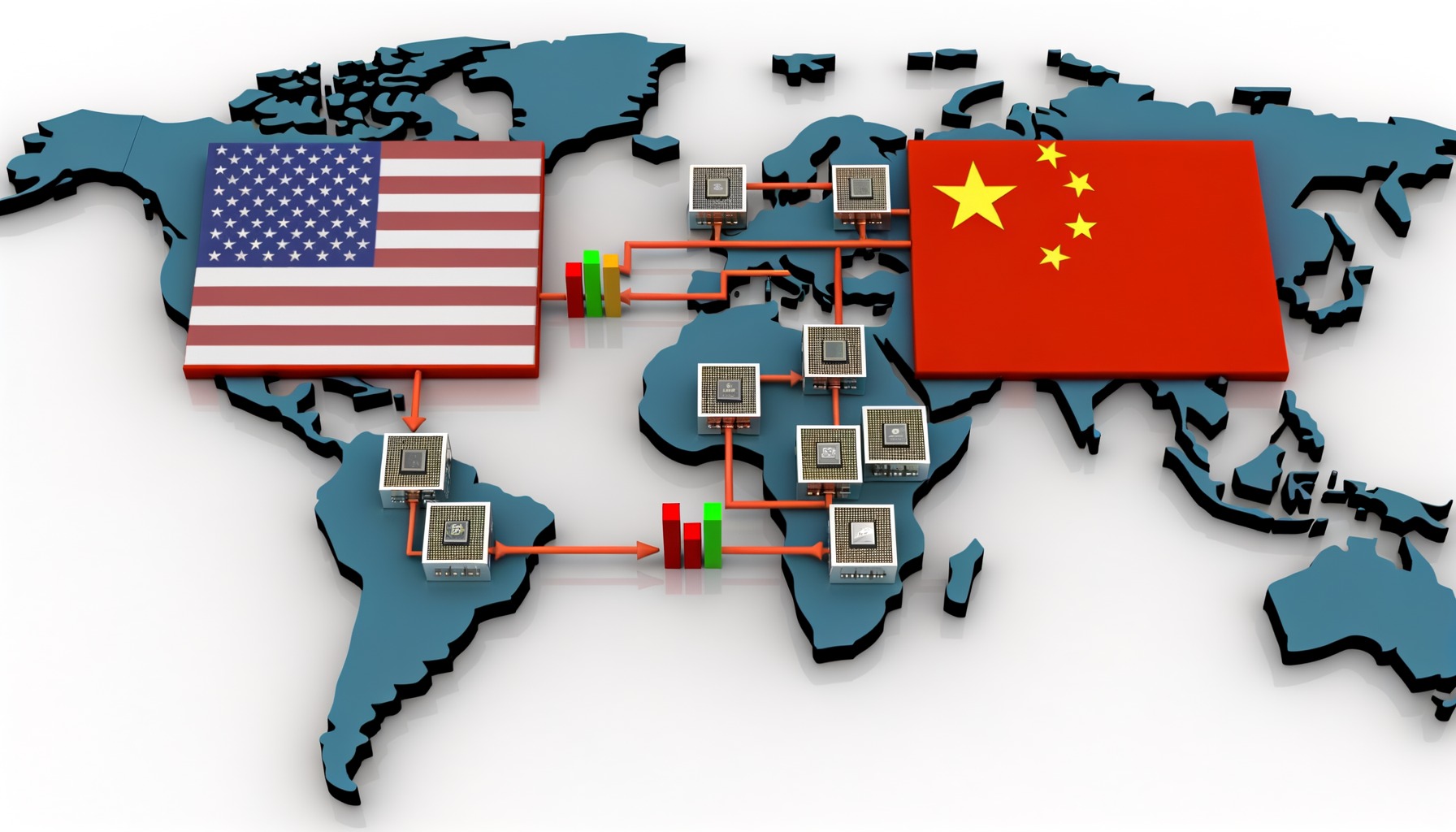
China has warned that the United States‘ efforts to pressure other nations into targeting its semiconductor industry will ultimately backfire.
During a regular press briefing, Chinese foreign ministry spokesperson Lin Jian criticised Washington’s approach, arguing that it would disrupt the global semiconductor supply chain and hinder industry development worldwide.
Lin Jian emphasised that such actions not only undermine fair competition but also threaten the stability of the global technology market.
Tensions between the US and China over semiconductor access have escalated in recent years, with Washington implementing export controls and encouraging its allies to adopt similar measures.
Beijing has consistently opposed these restrictions, calling them politically motivated attempts to curb China’s technological progress.
For more information on these topics, visit diplomacy.edu.
Intel has announced that the first two of ASML’s cutting-edge high NA lithography machines are now in operation at its factories. Early data shows these machines are producing more consistent results than previous models, with a reported reliability double that of earlier systems. This marks a turning point for Intel, which had struggled with the earlier generation of extreme ultraviolet (EUV) machines.
Intel’s production of 30,000 wafers in a single quarter using these new machines signifies a substantial step forward in chip manufacturing. These high NA machines can print features onto chips with fewer exposures and less processing time, streamlining the production process and reducing costs. This development is set to contribute to Intel’s upcoming 18A manufacturing technology, expected to power a new generation of PC chips later this year.
The company is also preparing to implement the high NA machines for the next generation of 14A technology, though no mass production date has yet been confirmed. This breakthrough is seen as a pivotal moment for Intel, positioning it to reclaim ground lost to rivals in recent years.
For more information on these topics, visit diplomacy.edu.
SpaceX is preparing to deploy its Starlink satellite internet terminals to enhance the information technology networks that support the United States Federal Aviation Administration’s (FAA) national airspace system, according to Bloomberg News.
The move is expected to improve connectivity and speed within the FAA’s complex network, which manages the vast and busy American airspace.
Integrating Starlink into the FAA’s infrastructure could boost the agency’s ability to handle data-heavy operations, improve real-time communications, and strengthen system resilience during peak travel periods or emergencies.
Reliable satellite internet could also help modernise outdated network components and reduce disruptions in air traffic control services.
Starlink, known for its global satellite coverage and high-speed internet capabilities, has been expanding its commercial and governmental partnerships.
The collaboration with the FAA highlights Starlink’s growing role in critical infrastructure, pushing SpaceX further into sectors where reliable connectivity is essential.
For more information on these topics, visit diplomacy.edu.
Microsoft has reportedly scrapped leases for significant data centre capacity in the United States, raising concerns about a potential slowdown in its AI infrastructure expansion.
TD Cowen analysts revealed that the company cancelled leases amounting to “a couple of hundred megawatts” with at least two private data-centre operators. The move has added weight to investor worries that the AI-driven market surge may be losing momentum.
Despite the lease cancellations, Microsoft maintains its commitment to invest over $80 billion in AI and cloud capacity this fiscal year.
A company spokesperson confirmed the investment plan remains intact, noting that adjustments to infrastructure are part of strategic planning rather than a broader scale-back.
Analysts suggest the lease cancellations might reflect a shift in Microsoft’s data centre strategy following years of aggressive expansion to meet AI demand.
Supply chain constraints had previously forced the company to secure excess capacity, sometimes at premium rates.
However, with growing investor scepticism around the costs of AI infrastructure and emerging competition from low-cost Chinese firms like DeepSeek, Microsoft’s recalibration has intensified concerns about the long-term sustainability of the AI boom.
For more information on these topics, visit diplomacy.edu.
Nvidia has filed a lawsuit against the European Commission for accepting a referral from Italy to review its acquisition of AI startup Run:ai. The US chipmaker argues that the Commission violated a recent court ruling that restricts its powers over minor transactions. This case follows growing concerns over the Commission’s use of Article 22, which allows it to review smaller mergers that fall below EU merger thresholds, a move companies have criticised as overreach.
While the case will not impact the approval of the AI‘s deal, which was cleared in December, a ruling in favour of Nvidia could curb the European Commission’s ability to regulate similar transactions in the future. Nvidia argues that the decision breaches legal principles, including proportionality and equal treatment, and undermines legal certainty for businesses operating in the EU.
For more information on these topics, visit diplomacy.edu.
More than 1,000 musicians have joined forces to release a silent album as part of a protest against the UK government’s proposed changes to copyright laws. The changes would allow AI companies to use artists’ work to train models without needing permission, a move critics argue would undermine creators’ rights. The silent album, titled ‘Is This What We Want?’, features empty studios and performance spaces, symbolising the potential loss of control over their work.
The changes have sparked outrage from high-profile artists such as Kate Bush, who warned that this could lead to the exploitation of musicians by tech companies. The protest album, which includes contributions from other major artists like Ed Sheeran and Dua Lipa, aims to highlight the negative impact of such reforms on the livelihoods of creators.
The UK government argues that these changes will help boost the AI and creative industries, allowing them to reach their full potential. However, the controversy over copyright law is growing, with many in the music industry urging a rethink before any new regulations are finalised.
For more information on these topics, visit diplomacy.edu.
Google has launched a new free AI tool aimed at helping developers with code completion and assistance. Gemini Code Assist for Individuals allows users to interact with a Google AI model through a chat window, helping to fix bugs, complete code, or explain parts of a codebase. The tool can be integrated into popular coding environments like VS Code and JetBrains, and supports a range of programming languages. It offers impressive capabilities, with 180,000 code completions per month—90 times more than GitHub’s free Copilot plan—and 240 daily chat requests, well beyond the limits of competing tools.
In addition, Google unveiled Gemini Code Assist for GitHub, a tool that automatically scans code in pull requests to identify bugs and provide helpful suggestions. These tools highlight Google’s increasing efforts to compete with Microsoft and GitHub in the developer space. Both tools leverage Google’s Gemini 2.0 AI model, fine-tuned for coding tasks, and offer a context window four times larger than similar models, enabling the AI to process more complex code.
The launch marks a strategic move by Google to attract developers, especially those early in their careers, with the hope that some will eventually transition to premium plans. Gemini Code Assist for Individuals is available through a free public preview, with Google planning to roll out additional enterprise features soon, including integration with third-party tools and more advanced customisation options for businesses.
For more information on these topics, visit diplomacy.edu.