EU grants €920 million to Infineon for new semiconductor facility

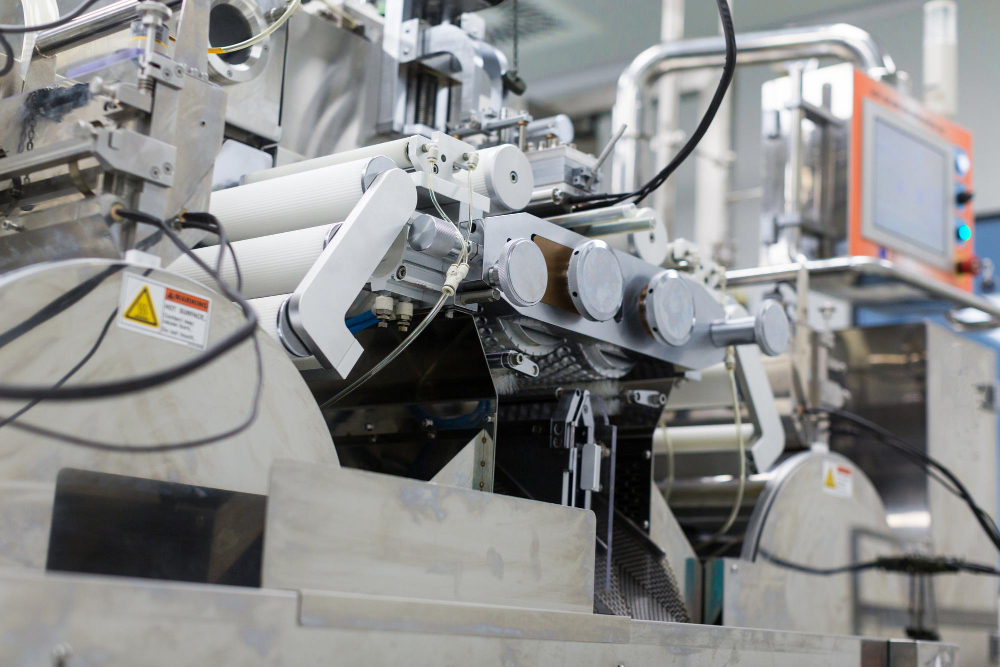
The European Commission has approved a €920 million German state aid package for Infineon to build a new semiconductor manufacturing plant in Dresden. This funding will support the company’s MEGAFAB-DD project, which aims to produce a wide variety of chips. The new facility, expected to reach full capacity by 2031, will play a key role in strengthening Europe’s technological autonomy and security of supply in semiconductor technologies, aligning with the European Chips Act’s goals.

This move is part of a global trend where chipmakers are investing heavily in new plants, taking advantage of subsidies from the US and the EU to maintain the West’s edge in semiconductor technology over China. The European Commission has allocated €15 billion for public and private semiconductor projects by 2030, further reinforcing the region’s commitment to securing its position in the industry.

Infineon’s €3.5 billion investment, the largest in its history, will help address the growing demand for semiconductors used in industrial, automotive, and consumer applications. The company has committed to ensuring the plant benefits the wider EU semiconductor value chain, including research and development for the next generation of chips. The plant will also contribute to crisis preparedness by prioritising orders in case of supply shortages.

For more information on these topics, visit diplomacy.edu.

AI’s rapid rise sparks innovation and concern

AI has transformed everyday life, powering everything from social media recommendations to medical breakthroughs. As major tech companies and governments compete to lead in AI development, concerns about ethics, bias, and environmental impact are growing.

AI systems, while capable of learning and processing vast amounts of data, lack human reasoning and empathy. Generative AI, which creates text, images, and music, has raised questions about misinformation, copyright issues, and job displacement.

AI’s influence is particularly evident in the workplace, education, and creative industries. Some experts fear it could worsen financial inequality, with automation threatening millions of jobs.

Writers, musicians, and artists have criticised AI developers for using their work without consent. Meanwhile, AI-generated misinformation has caused controversy, with major companies halting or revising their AI features after errors.

The technology also presents security risks, with deepfakes and algorithmic biases prompting urgent discussions about regulation.

Governments worldwide are introducing policies to manage AI’s risks while encouraging innovation. The European Union has imposed strict controls on AI in sensitive sectors with the AI Act, while China enforces rules ensuring compliance with censorship laws.

The United Kingdom and the United States have formed AI Safety Institutes to evaluate risks, though concerns remain over AI’s environmental impact. The rise of large data centres, which consume vast amounts of energy and water, has sparked debates about sustainability.

Despite these challenges, AI continues to advance, shaping the future in ways that are still unfolding.

For more information on these topics, visit diplomacy.edu.

EU delays AI liability directive due to stalled negotiations

The European Commission has removed the AI Liability Directive from its 2025 work program due to stalled negotiations, though lawmakers in the European Parliament’s Internal Market and Consumer Protection Committee (IMCO) have voted to continue working on the proposal. A spokesperson confirmed that IMCO coordinators will push to keep the directive on the political agenda, despite the Commission’s plans to withdraw it. The Legal Affairs committee has yet to make a decision on the matter.

The AI Liability Directive, proposed in 2022 alongside the EU’s AI Act, aimed to address the potential risks AI systems pose to society. While some lawmakers, such as German MEP Axel Voss, criticised the Commission’s move as a ‘strategic mistake,’ others, like Andreas Schwab, called for more time to assess the impact of the AI Act before introducing separate liability rules.

The proposal’s withdrawal has sparked mixed reactions within the European Parliament. Some lawmakers, like Marc Angel and Kim van Sparrentak, emphasised the need for harmonised liability rules to ensure fairness and accountability, while others expressed concern that such rules might not be needed until the AI Act is fully operational. Consumer groups welcomed the proposed legislation, while tech industry representatives argued that liability issues were already addressed under the revamped Product Liability Directive.

For more information on these topics, visit diplomacy.edu.

Young people rely on social media for political news

A growing number of young Europeans are turning to social media platforms like TikTok, Instagram, and YouTube as their primary news source, surpassing traditional outlets such as TV and print media. According to the latest European Parliament Youth Survey, 42% of people aged 16 to 30 rely on social media for news about politics and social issues. This shift highlights changing preferences toward fast-paced, accessible content but also raises concerns about the growing risk of disinformation among younger generations.

Younger users, especially those aged 16 to 18, are more likely to trust platforms like TikTok and Instagram, while those aged 25 to 30 tend to rely more on Facebook, online press, and radio for their news. However, the rise of social media as a news source has also led to increased exposure to fake news. A report from the Reuters Institute revealed that 27% of TikTok users struggle to identify misleading content, while Instagram has faced criticism for relaxing its fact-checking systems.

Despite being aware of the risks, young Europeans continue to engage with social media for news. A significant 76% of respondents reported encountering fake news in the past week, yet platforms like Instagram remain the most popular news sources. This trend is impacting trust in political institutions, with many young people expressing scepticism toward the EU and skipping elections due to a lack of information.

The reliance on social media for news has shifted political discourse, as fake news and AI-generated content have been used to manipulate public opinion. The constant exposure to sensationalised false information is also having psychological effects, increasing anxiety and confusion among young people and pushing some to avoid news altogether.

For more information on these topics, visit diplomacy.edu.

Poland fails to appoint DSA regulator after EU deadline

A year after the EU’s legal deadline, Poland has yet to designate a national regulator to help the European Commission enforce the Digital Services Act (DSA), which governs online platforms. The country risks being referred to the EU courts for non-compliance, becoming the only member state not to have appointed a regulator. The European Commission initiated an infringement procedure in late 2023, urging Poland to meet the requirements.

Poland was also warned for not establishing penalty rules under the DSA. While Belgium has named its telecom regulator as the country’s DSA coordinator, Poland has not made such appointments, although the Ministry for Digitalization stated that it is ‘working on’ implementing the regulation. The process is still ongoing, with no clear timeline for completion.

The DSA, aimed at curbing illegal content online, required EU member states to designate national regulators by February 2024. These Digital Services Coordinators (DSCs) are meant to oversee the implementation of the rules and support the European Commission in monitoring compliance. Poland’s delay, along with Spain and the Netherlands, has led to formal notices from the Commission, which could take further legal action if the issues are not resolved soon.

For more information on these topics, visit diplomacy.edu.

EU’s Ribera criticises Trump’s disruption of transatlantic relations

The EU’s competition chief, Teresa Ribera, has criticised US President Donald Trump for disrupting the ‘trustful relationship’ between Europe and the United States, highlighting the unpredictability and instability of Washington’s actions. In an interview with Reuters, Ribera stated that while Europe must engage in negotiations with the White House on trade issues, it should not be pressured into changing laws that have already been passed. She emphasised that Europe must remain firm on its principles, including human rights, democracy, and the unity of the continent, despite Trump’s transactional political approach.

Ribera also responded to criticism from Trump and his government, who have labelled EU regulations on US tech companies as a form of taxation. She dismissed these claims, stressing that Europe’s legal framework aims to ensure stability and predictability for businesses. In contrast, she expressed concern over the uncertainty created by the White House’s frequent policy shifts, particularly with regard to tariffs on steel, aluminium, and other sectors. The EU has vowed to respond firmly to any tariff increases imposed by Trump.

In addition, Ribera revealed that the European Commission would soon decide whether tech giants Apple and Meta Platforms have complied with the EU’s Digital Markets Act. Both companies face potential fines if found in breach of the regulations, which are designed to curb their market dominance. Ribera also confirmed that investigations into Elon Musk’s social media platform X would continue, disregarding Musk’s ties to the US administration.

As tensions between Washington and Brussels continue to rise, Ribera reiterated that businesses seek a stable and predictable legal environment, something she feels is increasingly lacking in the US under Trump’s leadership. The EU remains committed to enforcing its regulations and protecting its values despite external pressures.

For more information on these topics, visit diplomacy.edu.

EU denies US influence over AI regulation rollback

The European Union has dismissed claims that recent decisions to scale back planned AI regulations were influenced by pressure from the US Trump administration. The bloc recently scrapped the AI Liability Directive, a draft law intended to make it easier for consumers to sue over AI-related harms. EU digital chief Henna Virkkunen stated that the move was driven by a desire to enhance competitiveness by reducing bureaucracy and regulatory burdens.

Washington has encouraged a more lenient approach to AI rules, with US Vice President JD Vance urging European lawmakers to embrace the ”AI opportunity” during a speech in Paris.

The timing of the European Commission‘s 2025 work programme release—one day after Vance’s remarks—has fuelled speculation about US influence over the bloc’s regulatory decisions. However, the EU insists that its focus remains on fostering regional AI development rather than bowing to external pressure.

The upcoming AI code of practice will align reporting requirements with existing AI legislation, ensuring a streamlined regulatory framework. The Commission’s work programme emphasises a ”bolder, simpler, faste” approach, aiming to accelerate AI adoption across Europe while maintaining regulatory oversight.

For more information on these topics, visit diplomacy.edu.

Meta opens Facebook Marketplace to rivals after EU antitrust fine

Meta has announced a new programme allowing rival classified ad providers to list their adverts on Facebook Marketplace, following a €797 million EU antitrust fine for unfair competition.

The European Commission ruled in November that Meta had given its own service an unfair advantage by tying Marketplace to Facebook and imposing restrictive trading conditions on competitors.

The company has challenged the fine in court but says the new initiative, called the Facebook Marketplace Partner Program, is a response to EU competition concerns.

The programme was tested last month in Germany, France, and the United States in partnership with eBay. Under the scheme, third-party online classified ad services can display their listings on Facebook Marketplace alongside user-generated listings.

Meta maintains that the EU’s decision unfairly targets US companies, with CEO Mark Zuckerberg previously describing EU actions as akin to a “tariff regime.”

The European Commission is now reviewing whether Meta has fully complied with the ruling. If found lacking, the company could face further scrutiny and potential penalties. The move marks a significant shift in how Marketplace operates, potentially reshaping competition in the online classified ads sector.

For more information on these topics, visit diplomacy.edu.

EU scraps tech patent, AI liability, and messaging privacy rules

The European Commission has abandoned proposed regulations on technology patents, AI liability, and privacy rules for messaging apps, citing a lack of foreseeable agreement among EU lawmakers and member states. The draft rules faced strong opposition from industry groups and major technology firms. A proposed regulation on standard essential patents, designed to streamline licensing disputes for telecom and smart device technologies, was scrapped after opposition from patent holders like Nokia and Ericsson. Car manufacturers and tech giants such as Apple and Google had pushed for reforms to reduce royalty costs.

A proposal that would have allowed consumers to sue AI developers for harm caused by their technology was also withdrawn. The AI Liability Directive, first introduced in 2022, aimed to hold providers accountable for failures in AI systems. Legal experts say the move does not indicate a shift in the EU’s approach to AI regulation, as several laws already govern the sector. Meanwhile, plans to extend telecom privacy rules to platforms like WhatsApp and Skype have been dropped. The proposal, first introduced in 2017, had been stalled due to disagreements over tracking cookies and child protection measures.

The decision has drawn mixed reactions from industry groups. Nokia welcomed the withdrawal of patent rules, arguing they would have discouraged European investment in research and development. The Fair Standards Alliance, representing firms such as BMW, Tesla, and Google, expressed disappointment, warning that the decision undermines fair patent licensing. The Commission has stated it will reassess the need for revised proposals but has not provided a timeline for future regulatory efforts.

For more information on these topics, visit diplomacy.edu.

EU regulators to discuss DeepSeek over data privacy concerns

European data protection authorities are set to discuss Chinese AI startup DeepSeek amid growing concerns about how the company handles personal data. The European Data Protection Board will review the firm’s practices at its monthly meeting on Tuesday, following questions from several national regulators about whether European user data is being used for AI training and if it could be transferred to China.

France‘s privacy watchdog, CNIL, has already questioned DeepSeek about its AI model and any potential risks to user privacy. Ireland‘s data protection authority has also requested information, while Italy has taken a more drastic step by ordering DeepSeek to block its chatbot in the country due to unresolved concerns over its privacy policy.

The European Union is known for its strict data protection laws, with the General Data Protection Regulation (GDPR) considered one of the most comprehensive privacy frameworks globally. Authorities are now working to coordinate their approach to ensure a consistent response to DeepSeek’s activities across the region.