
Cypriots worry AI threatens artists and culture

A new Eurobarometer survey has revealed that a significant majority of Cypriots are worried about the impact of AI on the cultural sector and the livelihoods of artists. Eight in ten believe that generative AI poses a threat to employment in the arts, a figure higher than the EU average of 73 per cent.

Despite these concerns, only half of Cypriots say they can distinguish between AI-generated and human-made artworks. The survey also highlights deeper cultural challenges in Cyprus. Only 23 per cent of respondents believe artists are paid fairly, compared to 51 per cent across the EU.

When asked about EU priorities in cultural cooperation, Cypriots pointed to protecting cultural heritage, fair pay for artists, reskilling cultural workers, improving access to the arts, and boosting funding for creative sectors.

Cypriots overwhelmingly value culture’s role in Europe’s future, with 91 per cent endorsing its importance. However, just 63 per cent believe artists in Cyprus enjoy freedom from government censorship, and only 59 per cent feel protected from other forms of suppression, both figures well below EU averages.

Would you like to learn more about AI, tech and digital diplomacy? If so, ask our Diplo chatbot

Apple explores AI search as Google deal faces questions

Apple is reportedly exploring a move towards integrating AI-powered search within its Safari browser, as questions mount over the future of its partnership with Google. Cue made the comments during his testimony in the US Department of Justice’s antitrust trial against Google’s parent company, Alphabet.

Senior Vice President Eddy Cue revealed the company is considering collaborations with AI search leaders such as OpenAI, Anthropic, and Perplexity, amid a broader shift in user behaviour towards AI tools.

Safari recently experienced its first decline in search usage, a trend attributed to users adopting AI-driven search solutions. While Apple currently integrates ChatGPT into Siri and plans to add Google’s Gemini, the company remains cautious about replacing Google as the default search engine.

Cue acknowledged the financial benefits of the $20 billion annual deal with Google and expressed concerns over jeopardising the partnership. Discussions continue as Apple balances innovation with maintaining its lucrative search agreement with Google.

Despite this, Cue predicts AI search engines could eventually surpass traditional models. Apple has also evaluated other AI technologies, including DeepSeek and xAI’s Grok, highlighting its growing interest in generative AI.

Would you like to learn more about AI, tech and digital diplomacy? If so, ask our Diplo chatbot!

Amazon expands warehouse automation with Vulcan robots

Amazon has officially unveiled its Vulcan robots, an advanced robotics system designed to improve safety and efficiency in its fulfilment centres. Already in operation at facilities in Spokane, USA, and Hamburg, Germany, the new technology was showcased at an event in Dortmund this week.

The robots combine AI-powered software with a spatula-like gripping mechanism and sensors to pick up and stow items with a high degree of precision. Amazon says the robots are capable of handling around 75 percent of its product inventory and can operate at speeds comparable to human workers.

Their design allows them to safely access items stored at the highest and lowest levels of the eight-foot storage pods used throughout Amazon’s centres.

A wider rollout is expected in the UK over the next three years, with several distribution centres in Yorkshire set to adopt the technology.

Amazon highlights the Vulcan system as a key advancement in warehouse automation, aimed at improving worker safety and streamlining complex logistics operations.

Would you like to learn more about AI, tech and digital diplomacy? If so, ask our Diplo chatbot!

Apple turns to AI as Google loses ground in Safari searches

Google is seeing a historic dip in search traffic through Apple’s Safari browser, marking the first such decline ever, according to Apple’s Eddy Cue.

The shift comes as users increasingly turn to AI-powered search tools like ChatGPT, Perplexity and Microsoft Copilot, which offer direct and conversational responses without the need to browse traditional websites.

In response, Apple is now exploring a major revamp of Safari to better integrate AI-driven search capabilities.

AI is gradually reshaping how people interact with information online, posing a serious challenge to Google’s long-standing dominance. Cue noted that although current AI tools are not perfect, they are rapidly improving and may soon offer compelling alternatives to traditional search engines.

Apple currently supports ChatGPT within Siri and may soon include Google’s Gemini AI, as it continues to diversify the digital search options available on its platforms.

The shift is especially significant given Google’s $20 billion annual deal to remain Safari’s default search engine. The US justice department is scrutinising these types of agreements in its case against Google’s parent company, Alphabet, suggesting such arrangements limit genuine competition.

Cue stressed that AI has opened the door to new players in the search market and that true competition only arises when technological disruption invites innovation.

As large language models grow more advanced, their appeal increases—despite occasional errors known as hallucinations.

AI tools offer richer, more intuitive user experiences, often skipping the step of clicking through to websites. While this threatens traffic for content providers, it also underscores a pivotal shift: AI is no longer just a feature—it is transforming how people seek and consume information.

Would you like to learn more about AI, tech and digital diplomacy? If so, ask our Diplo chatbot!

Meta brings back Robert Fergus to lead AI lab

Meta Platforms has brought back Robert Fergus to lead its AI research lab, FAIR, which he helped found in 2014 alongside Yann LeCun. After spending five years as a research director at Google’s DeepMind, Fergus returns to replace Joelle Pineau, who steps down on 30 May.

Fergus, who previously spent six years as a research scientist at Facebook, announced his return on LinkedIn, expressing gratitude to Pineau and reaffirming Meta’s long-term commitment to AI.

FAIR, Meta’s Fundamental AI Research division, focuses on innovations such as voice translation and image recognition to support its open-source Llama language model.

The move comes as Meta ramps up its AI investment, with CEO Mark Zuckerberg allocating up to $65 billion in capital spending for 2025 to expand the company’s AI infrastructure.

AI is now deeply integrated into Meta’s services, including Facebook, Instagram, Messenger, WhatsApp, and a new standalone app meant to rival OpenAI.

By bringing Fergus back instead of appointing a new outsider, Meta signals its intent to build on its existing AI legacy while pushing further toward human-level machine experiences.

Would you like to learn more about AI, tech and digital diplomacy? If so, ask our Diplo chatbot!

Gemini Nano boosts scam detection on Chrome

Google has released a new report outlining how it is using AI to better protect users from online scams across its platforms.

The company says AI is now actively fighting scams in Chrome, Search and Android, with new tools able to detect and neutralise threats more effectively than before.

At the heart of these efforts is Gemini Nano, Google’s on-device AI model, which has been integrated into Chrome to help identify phishing and fraudulent websites.

The report claims the upgraded systems can now detect 20 times more harmful websites, many of which aim to deceive users by creating a false sense of urgency or offering fake promotions. These scams often involve phishing, cryptocurrency fraud, clone websites and misleading subscriptions.

Search has also seen major improvements. Google’s AI-powered classifiers are now better at spotting scam-related content before users encounter it. For example, the company says it has reduced scams involving fake airline customer service agents by over 80 per cent, thanks to its enhanced detection tools.

Meanwhile, Android users are beginning to see stronger safeguards as well. Chrome on Android now warns users about suspicious website notifications, offering the choice to unsubscribe or review them safely.

Google has confirmed plans to extend these protections even further in the coming months, aiming to cover a broader range of online threats.

Would you like to learn more about AI, tech and digital diplomacy? If so, ask our Diplo chatbot!
China launches advanced Tianji 4.0 quantum control system

A Chinese startup, Origin Quantum, has unveiled Tianji 4.0, a cutting-edge superconducting quantum measurement and control system capable of supporting quantum computers with over 500 qubits.

Built in Hefei, Tianji 4.0 enhances scalability, integration, stability and automation, offering major advances over its previous version that powered China’s third-generation superconducting quantum computer, Origin Wukong.

The system, described as the ‘nerve centre’ of quantum computers, improves the precision and speed of controlling quantum chips.

Kong Weicheng, who leads the development team, highlighted that Tianji 4.0 will streamline quantum computer R&D and accelerate delivery timelines significantly.

Since launching in early 2024, Origin Wukong has served users in 139 countries, completing more than 380,000 tasks across industries such as finance and biomedicine. The release of Tianji 4.0 signals China’s growing leadership in quantum computing technology.

Would you like to learn more about AI, tech and digital diplomacy? If so, ask our Diplo chatbot!

OpenAI launches data residency in India for ChatGPT enterprise

OpenAI has announced that enterprise and educational customers in India using ChatGPT can now store their data locally instead of relying on servers abroad.

The move, aimed at complying with India’s upcoming data localisation rules under the Digital Personal Data Protection Act, allows conversations, uploads, and prompts to remain within the country. Similar options are now available in Japan, Singapore, and South Korea.

Data stored under this new residency option will be encrypted and kept secure, according to the company. OpenAI clarified it will not use this data for training its models unless customers choose to share it.

The change may also influence a copyright infringement case against OpenAI in India, where the jurisdiction was previously questioned due to foreign server locations.

Alongside this update, OpenAI has unveiled a broader international initiative, called OpenAI for Countries, as part of the US-led $500 billion Stargate project.

The plan involves building AI infrastructure in partner countries instead of centralising development, allowing nations to create localised versions of ChatGPT tailored to their languages and services.

OpenAI says the goal is to help democracies develop AI on their own terms instead of adopting centralised, authoritarian systems.

The company and the US government will co-invest in local data centres and AI models to strengthen economic growth and digital sovereignty across the globe.

Would you like to learn more about AI, tech and digital diplomacy? If so, ask our Diplo chatbot!

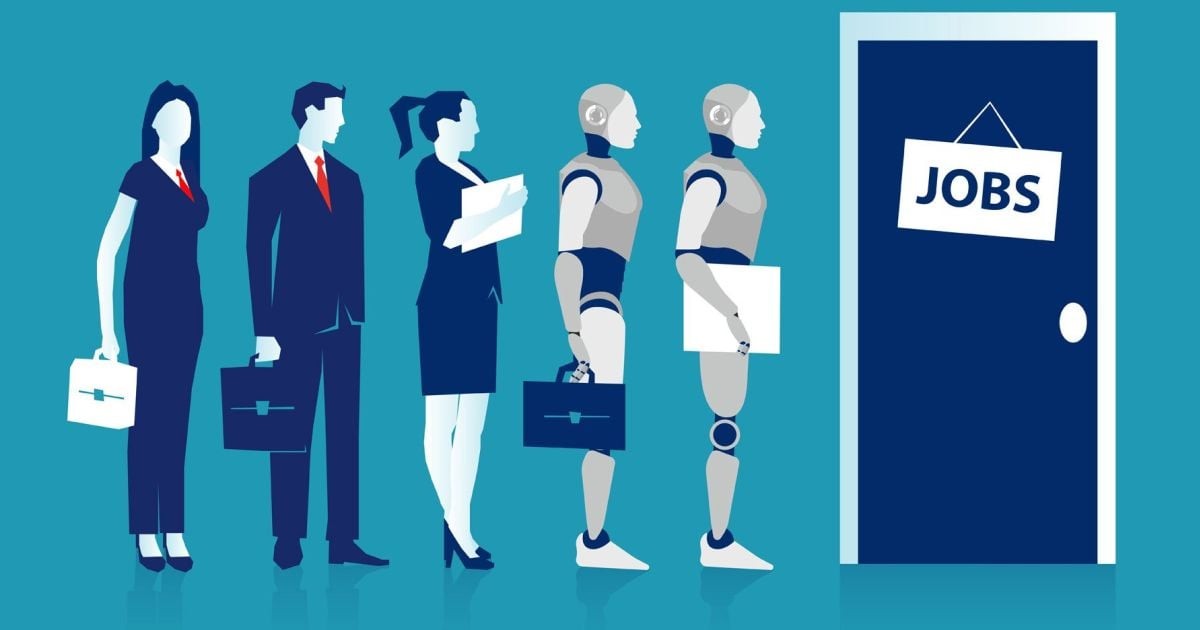
CrowdStrike cuts jobs amid AI shift

Cybersecurity firm CrowdStrike is laying off 500 employees—5% of its workforce—as it shifts towards an AI-led operating model to boost efficiency and hit a $10 billion annual revenue goal.

In a letter to staff, CEO George Kurtz described AI as a ‘force multiplier’ meant to reduce hiring needs instead of expanding headcount.

The restructure, expected to cost up to $53 million through mid-2026, will still see hiring in customer-facing and engineering roles.

Yet despite its optimism, the company’s regulatory filings flag notable risks in depending on AI, such as faulty outputs, legal uncertainty, and the challenge of managing fast-moving systems. Analysts have also linked the shift to wider market pressures, not merely strategic innovation.

Principal analyst Sofia Ali warned that the AI-first approach may backfire if transparency, governance, and human oversight are not prioritised. Over-reliance on automation—especially in threat detection or customer support—could erode user trust instead of reinforcing it, particularly during critical incidents.

CrowdStrike’s move mirrors a broader tech trend: over 52,000 tech jobs were cut in early 2025 as firms embraced AI to replace automatable roles. For cybersecurity leaders, the challenge now lies in balancing AI’s promise with the human expertise essential to trust and resilience.

Would you like to learn more about AI, tech and digital diplomacy? If so, ask our Diplo chatbot!

AI spending remains strong despite Trump’s tariffs, says Goldman Sachs

President Donald Trump’s new tariffs may force companies to adjust staffing and marketing budgets, but spending on AI will likely remain protected. That is according to Eric Sheridan, co-business unit leader for technology, media, and telecommunications at Goldman Sachs.

Speaking on the Goldman Sachs Exchange podcast, Sheridan said the latest tariffs are expected to create more volatility in operational costs, particularly affecting head count, marketing, and long-term projects.

However, he predicted that investment in AI would not suffer the same impact. ‘Given the sheer number of players investing both offensively and defensively at AI, I think this spend will get protected for a little longer,’ he explained.

Sheridan cited Meta as a prime example. In its recent first-quarter earnings, Meta raised its annual capital expenditure guidance to between $64 and $72 billion, up from a previous range of $60 to $65 billion.

CEO Mark Zuckerberg reaffirmed that AI remains the company’s top priority, even as Meta cut other expenses such as salaries and marketing.

‘We continue to find ways to find efficiencies inside the organization, but we are not at a point where we want to sacrifice long-duration investments,’ Sheridan noted, summarising Meta’s stance.

The broader business environment is shifting as companies respond to Trump’s ‘Liberation Day’ tariffs, announced on April 2. These include a 10% baseline levy and additional ‘reciprocal tariffs.’

While most reciprocal tariffs are paused for 90 days as negotiations continue, China faces a hefty 145% tariff. United States and Chinese officials are set to meet for trade talks this weekend in Switzerland, potentially shaping the next phase of global trade dynamics.

Would you like to learn more about AI, tech and digital diplomacy? If so, ask our Diplo chatbot!