The East Asian country is preparing to enforce a nationwide ban on mobile phone use in classrooms, yet schools remain divided over how strictly the new rules should be applied.
A ban that takes effect in March under the revised education law, and officials have already released guidance enabling principals to warn students and restrict smart devices during lessons.
These reforms will allow devices only for limited educational purposes, emergencies or support for pupils with disabilities.
Schools may also collect and store phones under their own rules, giving administrators the authority to prohibit possession rather than merely restricting use. The ministry has ordered every principal to establish formal regulations by late August, leaving interim decisions to each school leader.
Educators in South Korea warn that inconsistent approaches are creating uncertainty. Some schools intend to collect phones in bulk, others will require students to keep devices switched off, while several remain unsure how far to go in tightening their policies.
The Korean Federation of Teachers’ Associations argues that such differences will trigger complaints from parents and pupils unless the ministry provides a unified national standard.
Surveys show wide variation in current practice, with some schools banning possession during lessons while others allow use during breaks.
Many teachers say their institutions are ready for stricter rules, yet a substantial minority report inadequate preparation. The debate highlights the difficulty of imposing uniform digital discipline across a diverse education system.
Would you like to learn more about AI, tech and digital diplomacy? If so, ask our Diplo chatbot!
Pentagon officials are at odds with AI developer Anthropic over restrictions designed to prevent autonomous weapons targeting and domestic surveillance. The disagreement has stalled discussions under a $200 million contract.
Anthropic has expressed concern about its tools being used in ways that could harm civilians or breach privacy. The company emphasises that human oversight is essential for national security applications.
The dispute reflects broader tensions between Silicon Valley firms and government use of AI. Pentagon officials argue that commercial AI can be deployed as long as it follows US law, regardless of corporate guidelines.
Anthropic’s stance may affect its Pentagon contracts as the firm prepares for a public offering. The company continues to engage with officials while advocating for ethical AI deployment in defence operations.
Would you like to learn more about AI, tech, and digital diplomacy? If so, ask our Diplo chatbot!
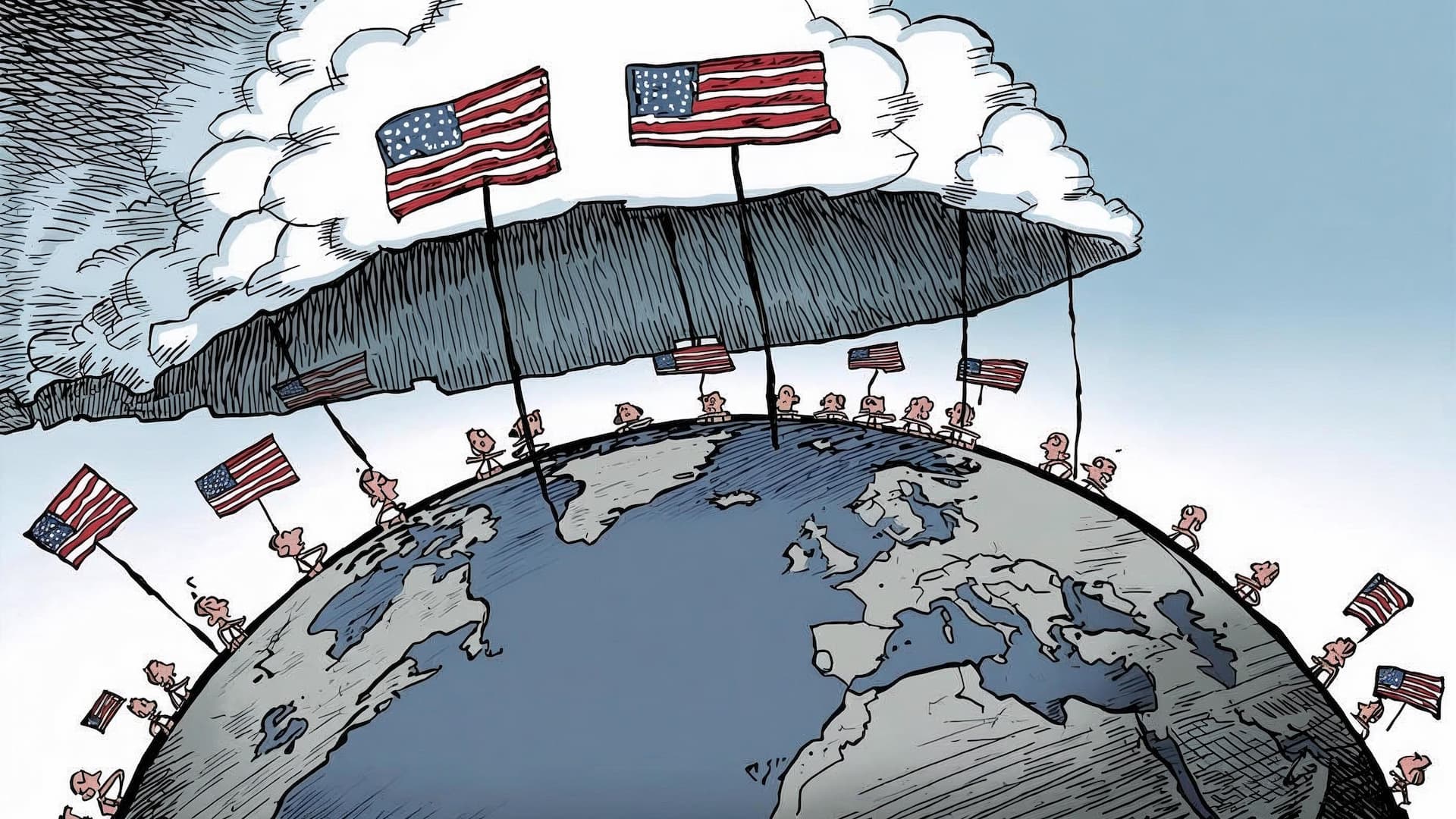
European technology leaders are increasingly questioning the long-held assumption that information technology operates outside politics, amid growing concerns about reliance on US cloud providers and digital infrastructure.
At HiPEAC 2026, Nextcloud chief executive Frank Karlitschek argued that software has become an instrument of power, warning that Europe’s dependence on American technology firms exposes organisations to legal uncertainty, rising costs, and geopolitical pressure.
He highlighted conflicts between EU privacy rules and US surveillance laws, predicting continued instability around cross-border data transfers and renewed risks of services becoming legally restricted.
Beyond regulation, Karlitschek pointed to monopoly power among major cloud providers, linking recent price increases to limited competition and warning that vendor lock-in strategies make switching increasingly difficult for European organisations.
He presented open-source and locally controlled cloud systems as a path toward digital sovereignty, urging stronger enforcement of EU competition rules alongside investment in decentralised, federated technology models.
Would you like to learn more about AI, tech, and digital diplomacy? If so, ask our Diplo chatbot!
The European Commission has opened a formal investigation into Grok after the tool produced millions of sexualised images of women and children.
A scrutiny that centres on whether X failed to carry out adequate risk assessments before releasing the undressing feature in the European market. The case arrives as ministers, including Sweden’s deputy prime minister, publicly reveal being targeted by the technology.
Brussels is preparing to use its strongest digital laws instead of deferring to US pressure. The Digital Services Act allows the European Commission to fine major platforms or force compliance measures when systemic harms emerge.
Experts argue the Grok investigation represents an important test of European resolve, particularly as the bloc tries to show it can hold powerful companies to account.
Concerns remain about the willingness of the EU to act decisively. Reports suggest the opening of the probe was delayed because of a tariff dispute with Washington, raising questions about whether geopolitical considerations slowed the enforcement response.
Several lawmakers say the delay undermined confidence in the bloc’s commitment to protecting fundamental rights.
The investigation could last months and may have wider implications for content ranking systems already under scrutiny.
Critics say financial penalties may not be enough to change behaviour at X, yet the case is still viewed as a pivotal moment for European digital governance. Observers believe a firm outcome would demonstrate that emerging harms linked to synthetic media cannot be ignored.
Would you like to learn more about AI, tech and digital diplomacy? If so, ask our Diplo chatbot!
A global wave of deepfake abuse is spreading across Telegram as millions of users generate and share sexualised images of women without consent.
Researchers have identified at least 150 active channels offering AI-generated nudes of celebrities, influencers and ordinary women, often for payment. The widespread availability of advanced AI tools has turned intimate digital abuse into an industrialised activity.
Telegram states that deepfake pornography is banned and says moderators removed nearly one million violating posts in 2025. Yet new channels appear immediately after old ones are shut, enabling users to exchange tips on how to bypass safety controls.
The rise of nudification apps on major app stores, downloaded more than 700 million times, adds further momentum to an expanding ecosystem that encourages harassment rather than accountability.
Experts argue that the celebration of such content reflects entrenched misogyny instead of simple technological misuse. Women targeted by deepfakes face isolation, blackmail, family rejection and lost employment opportunities.
Legal protections remain minimal in much of the world, with fewer than 40% of countries having laws that address cyber-harassment or stalking.
Campaigners warn that women in low-income regions face the most significant risks due to poor digital literacy, limited resources and inadequate regulatory frameworks.
The damage inflicted on victims is often permanent, as deepfake images circulate indefinitely across platforms and are impossible to remove, undermining safety, dignity and long-term opportunities comprehensively.
Would you like to learn more about AI, tech and digital diplomacy? If so, ask our Diplo chatbot!
The data protection authority of France has imposed a €5 million penalty on France Travail after a massive data breach exposed sensitive personal information collected over two decades.
A leak which included social security numbers, email addresses, phone numbers and home addresses of an estimated 36.8 million people who had used the public employment service. CNIL said adequate security measures would have made access far more difficult for the attackers.
The investigation found that cybercriminals exploited employees through social engineering instead of breaking in through technical vulnerabilities.
CNIL highlighted the failure to secure such data breach requirements under the General Data Protection Regulation. The watchdog also noted that the size of the fine reflects the fact that France Travail operates with public funding.
France Travail has taken corrective steps since the breach, yet CNIL has ordered additional security improvements.
The authority set a deadline for these measures and warned that non-compliance would trigger a daily €5,000 penalty until France Travail meets GDPR obligations. A case that underlines growing pressure on public institutions to reinforce cybersecurity amid rising threats.
Would you like to learn more about AI, tech and digital diplomacy? If so, ask our Diplo chatbot!
The Dutch data protection authority has urged the government to act swiftly to protect the country’s digital sovereignty, warning that dependence on overseas technology firms could expose vital public services to significant risk.
Concern has intensified after DigiD, the national digital identity system, appeared set for acquisition by a US company, raising questions about long-term control of key infrastructure.
The watchdog argues that the Netherlands relies heavily on a small group of non-European cloud and IT providers, and stresses that public bodies lack clear exit strategies if foreign ownership suddenly shifts.
Additionally, the watchdog criticises the government for treating digital autonomy as an academic exercise rather than recognising its immediate implications for communication between the state and citizens.
In a letter to the economy minister, the authority calls for a unified national approach rather than fragmented decisions by individual public bodies.
It proposes sovereignty criteria for all government contracts and suggests termination clauses that enable the state to withdraw immediately if a provider is sold abroad. It also notes the importance of designing public services to allow smooth provider changes when required.
The watchdog urges the government to strengthen European capacity by investing in scalable domestic alternatives, including a Dutch-controlled government cloud. The economy ministry has declined to comment.
Would you like to learn more about AI, tech and digital diplomacy? If so, ask our Diplo chatbot!
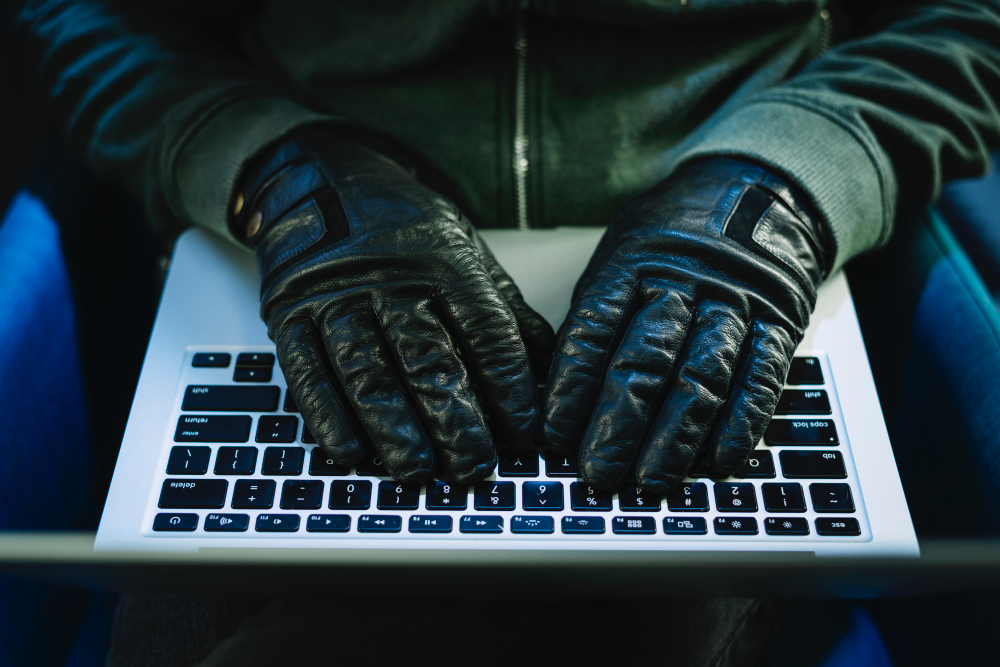
A Chrome browser extension posing as an AI assistant has stolen OpenAI credentials from more than 10,000 users. Cybersecurity platform Obsidian identified the malicious software, known as H-Chat Assistant, which secretly harvested API keys and transmitted user data to hacker-controlled servers.
The extension, initially called ChatGPT Extension, appeared to function normally after users provided their OpenAI API keys. Analysts discovered that the theft occurred when users deleted chats or logged out, triggering the transmission of credentials via hardcoded Telegram bot credentials.
At least 459 unique API keys were exfiltrated to a Telegram channel months before they were discovered in January 2025.
Researchers believe the malicious activity began in July 2024 and continued undetected for months. Following disclosure to OpenAI on 13 January, the company revoked compromised API keys, though the extension reportedly remained available in the Chrome Web Store.
Security analysts identified 16 related extensions sharing the identical developer fingerprints, suggesting a coordinated campaign by a single threat actor.
LayerX Security consultant Natalie Zargarov warned that whilst current download numbers remain relatively low, AI-focused browser extensions could rapidly surge in popularity.
The malicious extensions exploit vulnerabilities in web-based authentication processes, creating, as researchers describe, a ‘materially expanded browser attack surface’ through deep integration with authenticated web applications.
Would you like to learn more about AI, tech and digital diplomacy? If so, ask our Diplo chatbot!
Worldcoin jumped 40% after reports that OpenAI is developing a biometric social platform to verify users and eliminate bots. The proposed network would reportedly integrate AI tools while relying on biometric identification to ensure proof of personhood.
Sources cited by Forbes claim the project aims to create a humans-only platform, differentiating itself from existing social networks, including X. Development is said to be led by a small internal team, with work reportedly underway since early 2025.
Biometric verification could involve Apple’s Face ID or the World Orb scanner, a device linked to the World project co-founded by OpenAI chief executive Sam Altman.
The report sparked a sharp rally in Worldcoin, though part of the gains later reversed amid wider market weakness. Despite the brief surge, Worldcoin has remained sharply lower over the past year amid weak market sentiment and ongoing privacy concerns.
Would you like to learn more about AI, tech and digital diplomacy? If so, ask our Diplo chatbot!
SoundCloud disclosed a major data breach in December 2025, confirming that around 29.8 million global user accounts were affected. The incident represents one of the largest security failures involving a global music streaming platform.
The privacy breach exposed email addresses alongside public profile information, including usernames, display names and follower data. SoundCloud said passwords and payment details were not accessed, but the combined data increases the risk of phishing.
SoundCloud detected unauthorised activity in December 2025 and launched an internal investigation. Attackers reportedly exploited a flaw that linked public profile data with private email addresses at scale.
After SoundCloud refused an extortion demand, the stolen dataset was released publicly. SoundCloud has urged users worldwide to monitor accounts closely and enable stronger security protections.
Would you like to learn more about AI, tech and digital diplomacy? If so, ask our Diplo chatbot!