Scientists are applying AI to enhance iceberg tracking and movement prediction, using machine learning models that analyse historical drift patterns, ocean currents and weather data.
These AI systems aim to identify how icebergs behave over time and improve forecasts for their positions, which can help maritime operators and climate researchers anticipate hazards and plan safe routes.
Traditional methods for tracking icebergs, relying on satellite imagery and manual analysis, are limited by coverage gaps and delays. The new AI techniques can fill these gaps by generating continuous trajectory predictions, enabling more proactive monitoring over remote polar waters.
Researchers suggest that this approach could support shipping safety, offshore operations, and environmental management as climate change alters iceberg calving and drift behaviours.
This work reflects broader trends in using AI for environmental modelling, where machine learning augments physical models to better understand complex natural systems influenced by changing climate conditions.
Would you like to learn more about AI, tech and digital diplomacy? If so, ask our Diplo chatbot!
Pusan National University is piloting AI-powered translation glasses that display real-time subtitles of Korean-language lectures, aiming to reduce language barriers for international students. As a result, students can follow classes more easily, grasp specialised terminology, and engage more fully without the constant risk of missing key points.
In addition to academic settings, the technology is improving communication across campus life. For example, university staff, including counsellors, report that the glasses enable more natural, face-to-face conversations with foreign students, rather than relying on phones or other intermediary devices for translation.
Moreover, the pilot supports a broader push to internationalise the campus through AI-based multilingual services, including translated course syllabi and websites, with wider rollout to follow pending evaluation.
At the same time, the company behind the glasses is looking to expand adoption beyond Busan. If deployed more widely, the technology could influence higher education policies by easing language requirements and helping universities attract more international students, particularly as domestic enrolment declines.
However, several practical challenges remain. While translation accuracy is already high, issues such as device weight and battery life have prompted the development of lighter models. As the system continues to be refined and trained on academic vocabulary, its reliability and usability are expected to improve further.
Would you like to learn more about AI, tech and digital diplomacy? If so, ask our Diplo chatbot!
Enterprises in France are accelerating the use of AI to manage increasingly complex multicloud environments, according to new ISG research. Companies in France are balancing innovation, compliance and rising cost pressures.
The report says multicloud adoption in France now extends beyond large corporations to midsize firms and regulated sectors. Organisations in France are spreading workloads across hyperscalers and sovereign clouds to reduce risk.
AI driven automation is becoming central to cloud governance in France as manual oversight proves unsustainable. French enterprises are using AI tools for performance optimisation, anomaly detection and real time policy enforcement.
Data sovereignty and cost control are also shaping cloud strategies in France. Companies in France are adopting FinOps practices and sovereign cloud services to meet regulatory demands and strengthen cybersecurity.
Would you like to learn more about AI, tech and digital diplomacy? If so, ask our Diplo chatbot!
Anthropic has expanded its AI assistant Claude with Cowork, an agent-based workspace for everyday office tasks. Users can grant controlled folder access so Claude can create, edit, and organise files within workflows. Cowork is available in research preview for Claude Max subscribers on macOS.
Claude Cowork breaks work into step-by-step plans and carries out tasks independently. Multiple jobs can run at once, from sorting documents to producing reports from notes or screenshots. The system is positioned as a digital colleague rather than a chatbot.
Anthropic has introduced 11 plug-ins that extend Claude Cowork across legal, sales, marketing, support, and data analysis. Organisations can define workflows, apply brand rules, and integrate business data into task execution. The tools are designed to be customisable without technical complexity.
The company has open-sourced its initial plug-ins and expects enterprises to build tailored versions. Previously part of Claude Code, the tools are now integrated into Claude Cowork through a simplified interface. Anthropic frames the update as embedding AI directly into operations.
Market reaction has highlighted fears that agent-based AI could disrupt software services. Major IT stocks in India reportedly fell following the launch. The term ‘SaaSpocalypse’ reflects unease about AI becoming core infrastructure.
Would you like to learn more about AI, tech, and digital diplomacy? If so, ask our Diplo chatbot!
Researchers in Australia have built the largest quantum simulator yet to study complex quantum materials and advanced electronic behaviour. By placing individual atoms on silicon chips, the system recreates real-material interactions directly at the quantum level.
Unlike conventional computers, which struggle to model certain effects accurately, the simulator directly mirrors how electrons interact inside materials such as superconductors. This allows scientists to explore phenomena that would otherwise require enormous computational resources.
The system, known as Quantum Twins, consists of grids containing 15,000 qubits arranged to emulate atomic structures. By controlling how electrons move and interact across the grid, researchers can replicate key material properties linked to conductivity and magnetic behaviour.
Early experiments successfully simulated transitions between conducting and insulating states, as well as responses to magnetic fields. These results suggest the platform can handle complex two-dimensional systems that challenge classical modelling techniques.
Scientists in Australia believe the simulator could accelerate research into unconventional superconductors and other advanced materials, with potential applications in energy, electronics, medicine, and artificial photosynthesis technologies.
Would you like to learn more about AI, tech, and digital diplomacy? If so, ask our Diplo chatbot!
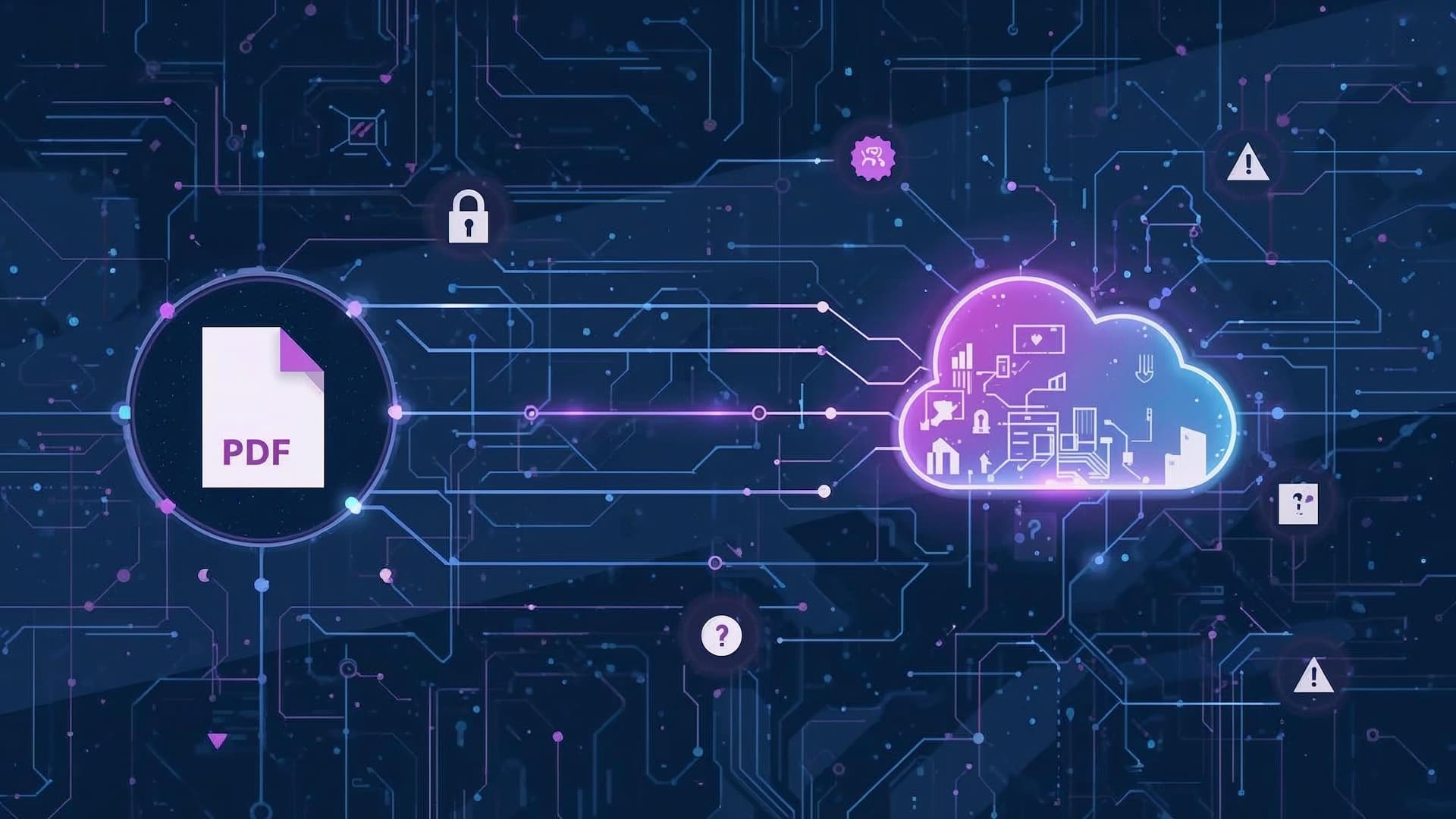
Phishing continues to succeed despite increasingly sophisticated AI-driven threats, with attackers relying on familiar tools such as PDFs and cloud services. Researchers have identified a new campaign using legitimate-looking documents to redirect victims to credential-harvesting pages impersonating Dropbox.
The attack starts with professional emails framed as procurement or tender requests. When recipients open the attached PDF, they are quietly redirected through trusted cloud infrastructure before reaching a fake Dropbox login page designed to steal corporate credentials.
Each stage appears legitimate in isolation, allowing the campaign to bypass standard filters and authentication checks. Business-style language, reputable hosting platforms, and realistic branding reduce suspicion while exploiting everyday workplace routines.
Security specialists warn that long-standing trust in PDFs and mainstream cloud services has lowered user vigilance. Employees have been conditioned to view these formats as safe, creating opportunities for attackers to weaponise familiar business tools.
Experts say phishing awareness must evolve beyond basic link warnings to reflect modern multi-stage attacks. Alongside training, layered defences such as multi-factor authentication and anomaly detection remain essential for limiting damage.
Would you like to learn more about AI, tech, and digital diplomacy? If so, ask our Diplo chatbot!
The US tech giant, Amazon, is preparing a new phase for its proprietary production tools as the company opens a closed beta that will give selected studios early access to its AI systems.
Developers created the technology inside Amazon MGM Studios to improve character consistency across scenes and speed up work in pre and post-production instead of relying on fragmented processes.
The programme begins in March and is expected to deliver initial outcomes by May. Amazon is working with recognised industry figures such as Robert Stromberg, Kunal Nayyar and former Pixar animator Colin Brady to refine the methods.
The company is also drawing on Amazon Web Services and several external language model providers to strengthen performance.
Executives insist the aim is to assist creative teams rather than remove them from the process. The second season of the series ‘House of David’ already used more than 300 AI-generated shots, showing how the technology can support large-scale productions instead of replacing artistic decision-making.
Industry debate continues to intensify as studios explore new automation methods. Netflix also used generative tools for major scenes in ‘The Eternaut’.
Amazon has repeatedly cited AI progress when announcing staff reductions, which added further concern over the long-term effects on employment and creative roles.
Would you like to learn more about AI, tech and digital diplomacy? If so, ask our Diplo chatbot!
UN Secretary-General António Guterres has formally submitted, for consideration and appointment by the United Nations General Assembly, the proposed composition of a new Independent International Scientific Panel on AI, marking a step towards evidence-based global AI governance.
The panel brings together 40 experts from across regions and disciplines, selected through an open global call that attracted more than 2,600 applications, and members serve in a personal and independent capacity.
In his submission to the General Assembly, Guterres said the body would act as the first fully independent global scientific authority focused on closing the AI knowledge gap and assessing real-world impacts across economies and societies.
According to the UN chief, a reliable and unbiased understanding of AI has become essential as technologies reshape governance, labour markets, and social systems at an accelerating speed.
The panel will operate for an initial three-year term, aiming to provide a shared scientific foundation for international cooperation amid rising geopolitical tension and technological competition.
Would you like to learn more about AI, tech, and digital diplomacy? If so, ask our Diplo chatbot!
The dating platform is expanding its reliance on AI, with Tinder experimenting with a feature designed to ease swipe fatigue among users.
A tool, known as Chemistry, that builds a picture of each person through optional questions and by reviewing their Camera Roll with permission, offering a more personalised route toward potential matches instead of repetitive browsing.
Match is currently testing the feature only in Australia. Executives say the system allows people to receive a small set of tailored profiles rather than navigating large volumes of candidates.
Tinder hopes the approach will strengthen engagement during a period when registrations and monthly activity remain lower than last year, despite minor improvements driven by AI-based recommendations.
Developers are also refocusing the broader discovery experience to reflect concerns raised by Gen Z around authenticity, trust and relevance.
The platform now relies on verification tools such as Face Check, which Match says cut harmful interactions by more than half instead of leaving users exposed to impersonators.
These moves indicate a shift away from the swipe mechanic that once defined the app, offering more direct suggestions that may improve outcomes.
Marketing investment is set to rise as part of the strategy. Match plans to allocate $50 million to new campaigns that will position Tinder as appealing again, using creators on TikTok and Instagram to reframe the brand.
Strong quarterly revenue failed to offset weaker guidance, yet the company argues that AI features will help shape a more reliable and engaging service for users seeking consistent matches.
Would you like to learn more about AI, tech and digital diplomacy? If so, ask our Diplo chatbot!
The European Commission is testing a European open source system for its internal communications as worries grow in Brussels over deep dependence on US software.
A spokesperson said the administration is preparing a solution built on the Matrix protocol instead of relying solely on Microsoft Teams.
Matrix is already used by several European institutions, including the French government, German healthcare bodies and armed forces across the continent.
The Commission aims to deploy it as a complement and backup to Teams rather than a full replacement. Officials noted that Signal currently fills that role but lacks the flexibility needed for an organisation of the Commission’s size.
The initiative forms part of a wider push for digital sovereignty within the EU. A Matrix-based tool could eventually link the Commission with other Union bodies that currently lack a unified secure communication platform.
Officials said there is already an operational connection with the European Parliament.
The trial reflects growing sensitivity about Europe’s strategic dependence on non-European digital services.
By developing home-grown communication infrastructure instead of leaning on a single foreign supplier, the Commission hopes to build a more resilient and sovereign technological foundation.
Would you like to learn more about AI, tech and digital diplomacy? If so, ask our Diplo chatbot!