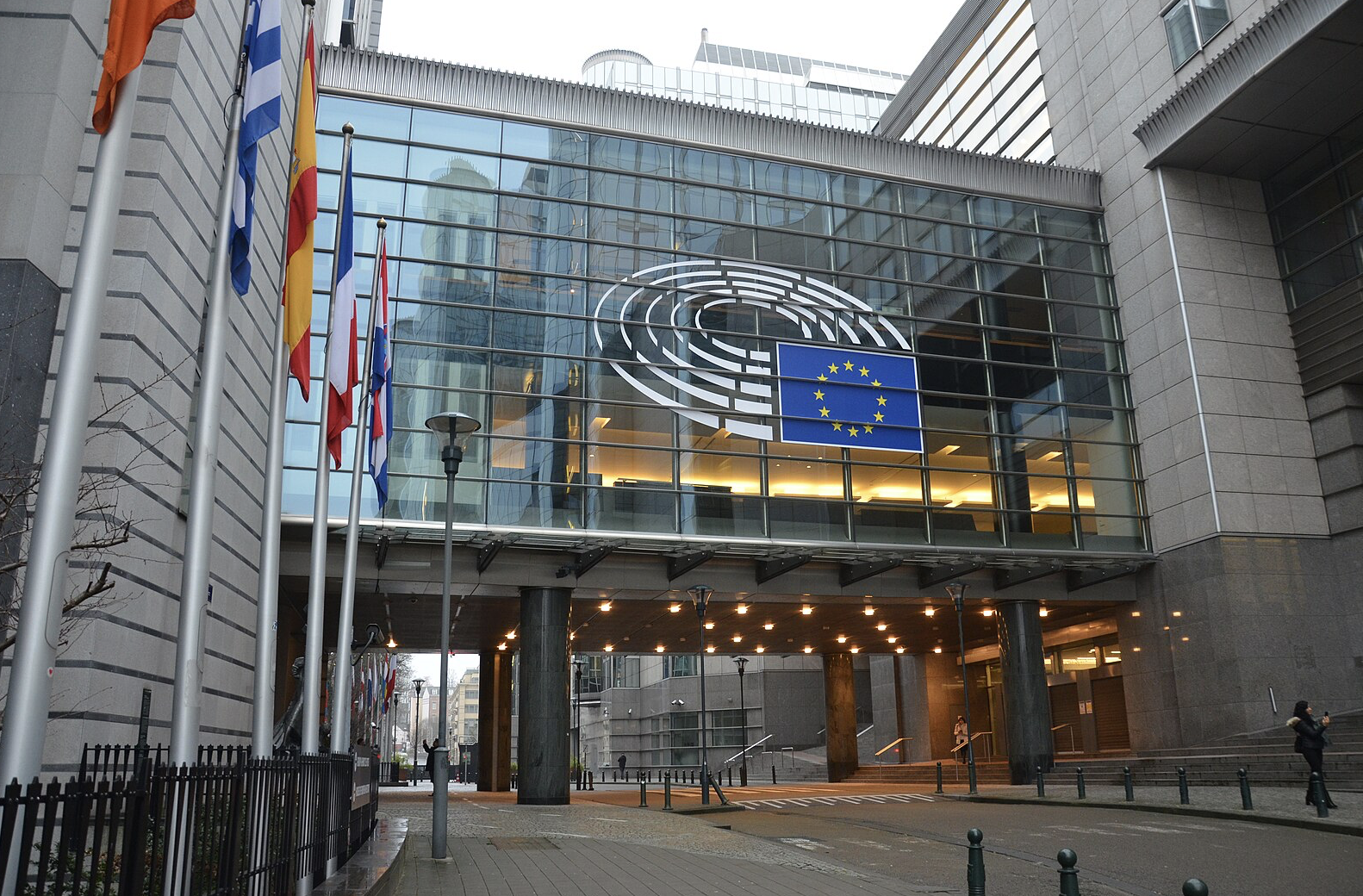
European lawmakers remain divided over whether AI tools that generate non-consensual sexual images should face an explicit ban in the EU legislation.
The split emerged as debate intensified over the AI simplification package, which is moving through Parliament and the Council rather than remaining confined to earlier negotiations.
Concerns escalated after Grok was used to create images that digitally undressed women and children.
The EU regulators responded by launching an investigation under the Digital Services Act, and the Commission described the behaviour as illegal under existing European rules. Several lawmakers argue that the AI Act should name pornification apps directly instead of relying on broader legal provisions.
Lead MEPs did not include a ban in their initial draft of the Parliament’s position, prompting other groups to consider adding amendments. Negotiations continue as parties explore how such a restriction could be framed without creating inconsistencies within the broader AI framework.
The Commission appears open to strengthening the law and has hinted that the AI omnibus could be an appropriate moment to act. Lawmakers now have a limited time to decide whether an explicit prohibition can secure political agreement before the amendment deadline passes.
Would you like to learn more about AI, tech and digital diplomacy? If so, ask our Diplo chatbot!
Researchers from MIT’s Computer Science and Artificial Intelligence Laboratory and Asari AI have introduced EnCompass, a framework designed to enhance how AI agents interact with large language models.
The system improves agent performance by automatically backtracking when errors occur and running multiple execution paths in parallel to identify the most effective outcome.
Programming AI agents traditionally requires extensive additional code to handle model mistakes. EnCompass removes that burden by embedding retry and search logic directly into execution.
Developers annotate key decision points, allowing the framework to explore alternative reasoning paths while preserving the agent’s original workflow structure.
Efficiency gains appear significant. Trials show coding effort for search implementation reduced by as much as 80%, while accuracy in code translation tasks improved between 15% and 40%.
Researchers demonstrated the framework’s ability to optimise repository translation and rule discovery across complex digital systems.
Future applications extend to large-scale software maintenance, scientific experimentation, and engineering design. Presented at NeurIPS, EnCompass positions structured search as key to advancing reliable, high-performance AI agent systems.
Would you like to learn more about AI, tech and digital diplomacy? If so, ask our Diplo chatbot!
The confrontation between Spain and Telegram founder Pavel Durov has intensified after he claimed that Pedro Sánchez endangered online freedoms.
Government officials responded that the tech executive spread lies rather than engage with the proposed rules in good faith. Sánchez argued that democracy would not be silenced by what he called the techno-oligarchs of the algorithm.
The dispute followed the unveiling of new measures aimed at major technology companies. The plan introduces a ban on social media use for under-16s and holds corporate leaders legally responsible when unlawful or hateful content remains online rather than being removed.
Platforms would also need to adopt age-verification tools such as ID checks or biometric systems, which Durov argued could turn Spain into a surveillance state by allowing large-scale data collection.
Tensions widened as Sánchez clashed with prominent US tech figures. Sumar urged all bodies linked to the central administration to leave X, a move that followed Elon Musk’s accusation that the Spanish leader was acting like a tyrant.
The row highlighted how Spain’s attempt to regulate digital platforms has placed its government in open conflict with influential technology executives.
Would you like to learn more about AI, tech and digital diplomacy? If so, ask our Diplo chatbot!
Albania has lifted its temporary ban on TikTok after nearly a year, the government announced, saying that concerns about public, social and digital safety have now been addressed and that access will resume nationwide.
The restriction was introduced in March 2025 following a fatal stabbing linked to a social media dispute and aimed to protect younger users instead of exposing them to harmful online content.
Under the new arrangement, authorities are partnering with TikTok to introduce protective filters based on keywords and content controls and to strengthen reporting mechanisms for harmful material.
The government described the decision as a shift from restrictive measures to a phase of active monitoring, inter-institutional cooperation, and shared responsibility with digital platforms.
Although the ban has now been lifted, a court challenge contends that the earlier suspension violated the constitutional right to freedom of expression, and a ruling is expected later in February. Opposition figures also criticised the original ban when it was applied ahead of parliamentary elections.
Despite the formal ban, TikTok remained accessible to many users in Albania through virtual private networks during the year it was in force, highlighting the challenge of enforcing such blocks in practice.
Critics have also noted that addressing the impact on youth may require broader digital education and safety measures.
Would you like to learn more about AI, tech and digital diplomacy? If so, ask our Diplo chatbot!
Researchers at Mass General Brigham have unveiled BrainIAC, an artificial intelligence model capable of analysing brain MRI scans to predict age, dementia risk, tumour mutations, and cancer survival. The model demonstrates remarkable flexibility, handling a wide variety of medical tasks with high accuracy.
BrainIAC employs self-supervised learning to identify features from unlabeled MRI datasets, allowing it to adapt to numerous clinical applications without requiring extensive annotated data. Its performance surpasses that of conventional task-specific AI frameworks.
Tests on nearly 49,000 MRI scans across seven different tasks revealed the model’s ability to generalise across both healthy and abnormal images. It successfully tackled both straightforward tasks, such as scan classification, and complex challenges, including tumour mutation detection.
The team highlights BrainIAC’s potential to accelerate biomarker discovery, improve diagnostic tools, and personalise patient care. While results are promising, researchers note that further studies on additional imaging techniques and larger datasets are necessary to validate its broader clinical use.
Would you like to learn more about AI, tech, and digital diplomacy? If so, ask our Diplo chatbot!
Renowned physicist John Martinis, a Nobel Prize winner, is pursuing a new quantum computing breakthrough. His early work proved electrical circuits could behave like quantum particles, enabling modern quantum machines.
Momentum grew when Martinis led Google’s ‘quantum supremacy’ experiment, outperforming classical computers in specialised tasks. Scaling remains difficult because fragile qubits, complex wiring and manufacturing limits reduce reliability.
Startup QoLab, founded in 2024, is redesigning quantum chip architecture to solve those hardware problems. Integrating components onto chips could reduce wiring, improve stability and enable larger systems.
Useful quantum computers could transform chemistry, materials science and complex simulations beyond classical limits. Martinis believes hardware innovation and scalable manufacturing will determine future industry leaders.
Would you like to learn more about AI, tech, and digital diplomacy? If so, ask our Diplo chatbot!
Artificial intelligence is becoming a cornerstone of India’s economic and industrial growth. The upcoming AI summit highlights the goal of building AI as national infrastructure, reflecting India’s languages, values, and knowledge systems.
Indian IT and service industries are moving beyond software maintenance to providing AI infrastructure and intelligent systems. Such a transformation can automate workflows, boost productivity, and create new opportunities domestically and globally.
Industrial AI is set to transform manufacturing, enabling next-generation factories through virtual twin technologies. AI grounded in physics and industrial knowledge allows faster prototyping, efficient resource use, and greater competitiveness for large enterprises and MSMEs.
Collaborations between NVIDIA and Dassault Systèmes showcase AI-driven factories and industrial intelligence. India’s talent, scale, and digital ecosystem position it to lead in industrial and generative AI, setting global technological and economic benchmarks.
Would you like to learn more about AI, tech, and digital diplomacy? If so, ask our Diplo chatbot!
Anthropic’s official announcement emphasises that Claude will not carry advertising or ad-influenced content within conversations, positioning the AI assistant as a trusted and distraction-free ‘space to think’ for tasks ranging from deep thinking and research to work and personal problem-solving.
The company argues that AI interactions differ fundamentally from search or social media, as users often share context-rich, sensitive information where commercial incentives could conflict with genuinely helpful responses.
In the post, Anthropic explains that while ads have a clear place in many digital products, introducing them into conversational AI would compromise usefulness and trust.
Instead, the company plans to generate revenue through enterprise contracts and paid subscriptions, continuing to invest in product improvements, integrations with third-party tools (e.g., Figma, Asana), and broader access initiatives, all without monetising attention or engagement directly.
The statement also notes that Claude’s conversation data is kept private and anonymous, and that ads could skew model incentives toward engagement metrics rather than solving user problems effectively.
Anthropic positions this approach as central to preserving Claude’s role as a dedicated thinking and productivity assistant.
Would you like to learn more about AI, tech and digital diplomacy? If so, ask our Diplo chatbot!
AI and digital technologies are set to play a central role at the Milano-Cortina 2026 Winter Olympic Games, positioning the event as a global showcase for large-scale AI deployment. Organisers aim to demonstrate how advanced technologies can transform major international events across media, operations, and public engagement.
Audience experience will be significantly reshaped through AI-powered broadcasting and digital platforms. Innovations include first-person drones following athletes in real time and AI-assisted replays that generate multi-angle freeze frames and performance data. In parallel, AI-driven tools on the official Olympic website and social media platforms will offer personalised highlights, summaries, and interactive content.
At the same time, technology will support athletes both on and off the field. AI systems will monitor and flag abusive online content, while dedicated digital applications will assist with training, injury prevention, and communication with family members during competitions.
Beyond digital innovation, the Games will also highlight sustainability through design. Transparent, reusable Olympic torches powered by biofuel and made from recycled materials will showcase how technology can support environmental responsibility alongside sporting tradition.
Would you like to learn more about AI, tech and digital diplomacy? If so, ask our Diplo chatbot!
The rapid expansion of AI infrastructure, especially high-bandwidth memory (HBM) used in data centres and AI accelerators, is causing memory chip makers to prioritise production capacity for high-margin AI-related products, squeezing the supply of traditional DRAM and NAND used in consumer devices like smartphones, tablets and PCs.
Industry leaders, including Samsung, SK Hynix and Micron, are shifting wafer capacity toward AI-grade memory, and major cloud and hyperscale buyers (e.g., Nvidia, AWS, Google) are securing supply through long-term contracts, which reduces available inventory for mid-tier device manufacturers.
As a result, memory pricing has climbed sharply, forcing consumer electronics makers to raise retail prices, cut specs or downgrade other components to maintain margins.
Analysts warn the mid-range smartphone segment, typically priced between roughly $400–$600, faces a particular squeeze, with fewer compelling devices expected and slower spec improvements, as memory becomes a dominant cost driver and supply constraints persist.
Would you like to learn more about AI, tech and digital diplomacy? If so, ask our Diplo chatbot!