Cate Blanchett has voiced her concerns about the societal implications of AI, describing the threat as ‘very real.’ In an interview with the BBC, the Australian actress shared her scepticism about advancements like driverless cars and AI‘s potential to replicate human voices, noting the broader risks for humanity. Blanchett emphasised that AI could replace anyone, not just actors, and criticised some technological advancements as ‘experimentation for its own sake.’
While promoting Rumours, her new apocalyptic comedy film, Blanchett described the plot as reflective of modern anxieties. The film, directed by Guy Maddin, portrays world leaders navigating absurd situations, offering both satire and a critique of detachment from reality. Blanchett highlighted how the story reveals the vulnerability and artificiality of political figures once removed from their structures of power.
Maddin shared that his characters emerged from initial disdain but evolved into figures of empathy as the narrative unfolds. Blanchett added that both actors and politicians face infantilisation within their respective systems, highlighting parallels in their perceived disconnection from the real world.
TikTok is stepping beyond the digital screen with its first UK and Ireland Awards, celebrating 72 creators across 12 categories. From travel influencers to comedy sketch stars, these creators, with over 101 million combined followers, will be recognised in a London ceremony, highlighting the growing cultural impact of short-form content.
The platform’s nominees range from lifestyle influencers to niche creators like fossil hunters and ASMR pool cleaners. TikTok’s Melissa McFarlane emphasised that the awards showcase creators’ influence on everything from literature to cooking, proving that TikTok communities are shaping trends well beyond the app.
Nominees like Ayamé Ponder, known for her comedy sketches, are also using their platforms for broader causes. Meanwhile, creators Jade Beaty and Ryan Losasso hope the awards will inspire others to try content creation, a process they say takes considerable effort despite misconceptions.
With millions of European users and global awards spanning 20 regions, TikTok aims to underline the value of its creators’ work. As the app continues to define social media culture, these UK awards celebrate the diverse talents driving its viral success.
A team from Johns Hopkins and Stanford has trained robotic systems to perform surgical tasks with human-like precision. Using a da Vinci Surgical System, the researchers applied ‘imitation learning,’ where robots observe recorded surgical videos to replicate complex movements like suturing and tissue manipulation. This innovative method eliminates the need for manual programming and allows robots to learn from the combined expertise of skilled surgeons.
The AI-powered system combines imitation learning with advanced machine learning techniques, enabling it to convert visual data into precise robotic actions. Not only does it perform surgical tasks proficiently, but it can also self-correct in real time, such as retrieving a dropped needle without human intervention. Such adaptability could reduce complications and enhance patient outcomes.
This breakthrough accelerates the path toward autonomous robotic surgery. Researchers believe robots can now learn new procedures in days rather than months. While full autonomy in surgery remains a future goal, this advancement marks a significant step toward safer and more accessible healthcare worldwide.
Oxford University Press has crowned ‘brain rot’ its Word of the Year, spotlighting concerns about the mental impact of consuming low-quality online content. Defined as the supposed decline in intellectual or mental acuity caused by excessive exposure to trivial material, the term has seen a 230% surge in use from 2023 to 2024, driven by social media trends.
The phrase has historical roots, first appearing in 1854 when American author Henry David Thoreau criticised society’s intellectual decay in his book Walden. However, it has gained new relevance in today’s digital age, particularly among younger generations. Oxford Professor Andrew Przybylski clarifies that ‘brain rot’ is less a diagnosis and more a reflection of collective anxieties about online life.
Casper Grathwohl, President of Oxford Languages, notes that the term reflects broader concerns about how digital culture shapes modern identity and leisure. Its selection follows last year’s winner, ‘rizz,’ highlighting how internet slang continues to influence language. Alongside ‘brain rot,’ contenders like ‘Romantasy’ and ‘dynamic pricing’ illustrate the blend of digital culture, economic trends, and evolving lifestyles shaping language today.
The PongBot, a cutting-edge AI-powered tennis robot, is revolutionising solo tennis practice. Unlike traditional ball machines, this smart device uses a clip-on sensor to track your court position and adjusts its shots in real-time. Whether you’re a beginner or a seasoned player, it simulates match conditions by varying ball speed, spin, and placement, offering a dynamic training experience anytime.
Players can personalise their sessions via the PongBot app, which features up to 300 preprogrammed drills and custom sequences. With speeds of up to 80 mph and an eight-hour battery life, the AI robot provides intense training tailored to skill level. Advanced AI match training makes it feel like playing against a real opponent, pushing players to improve their game.
Initially funded through a wildly successful Kickstarter campaign, the PongBot comes in two models priced at $699 and $899. With seamless integration with smart devices like Apple Watch and support from tech giant Qualcomm, this high-tech training partner is set to ship in December, perfect for off-season practice.
Popular YouTuber and former NASA engineer Mark Rober has unveiled a unique project: a satellite designed to take selfies with Earth as the backdrop. Partnering with Google and T-Mobile, Rober plans to launch the satellite aboard SpaceX’s Transporter 12 mission in January 2025. Users can upload their selfies to be displayed on a Google Pixel aboard the satellite, which will snap their portrait alongside the planet when it passes over their location.
Accessing the ‘Earth selfie’ is free for subscribers of CrunchLabs, Rober’s educational engineering kit program, as well as T-Mobile customers and Google Pixel users with special codes. Codes can be redeemed starting 3 December at spaceselfie.com, and participants will receive updates on when their photo will be taken.
The satellite itself features innovative engineering, including solar arrays and dual Google Pixel phones for redundancy. To overcome challenges in orientation, Rober’s team equipped the satellite with a flywheel to shift its position for tasks like photo capture and data transmission. Rober’s latest YouTube video provides a deeper dive into the satellite’s mechanics.
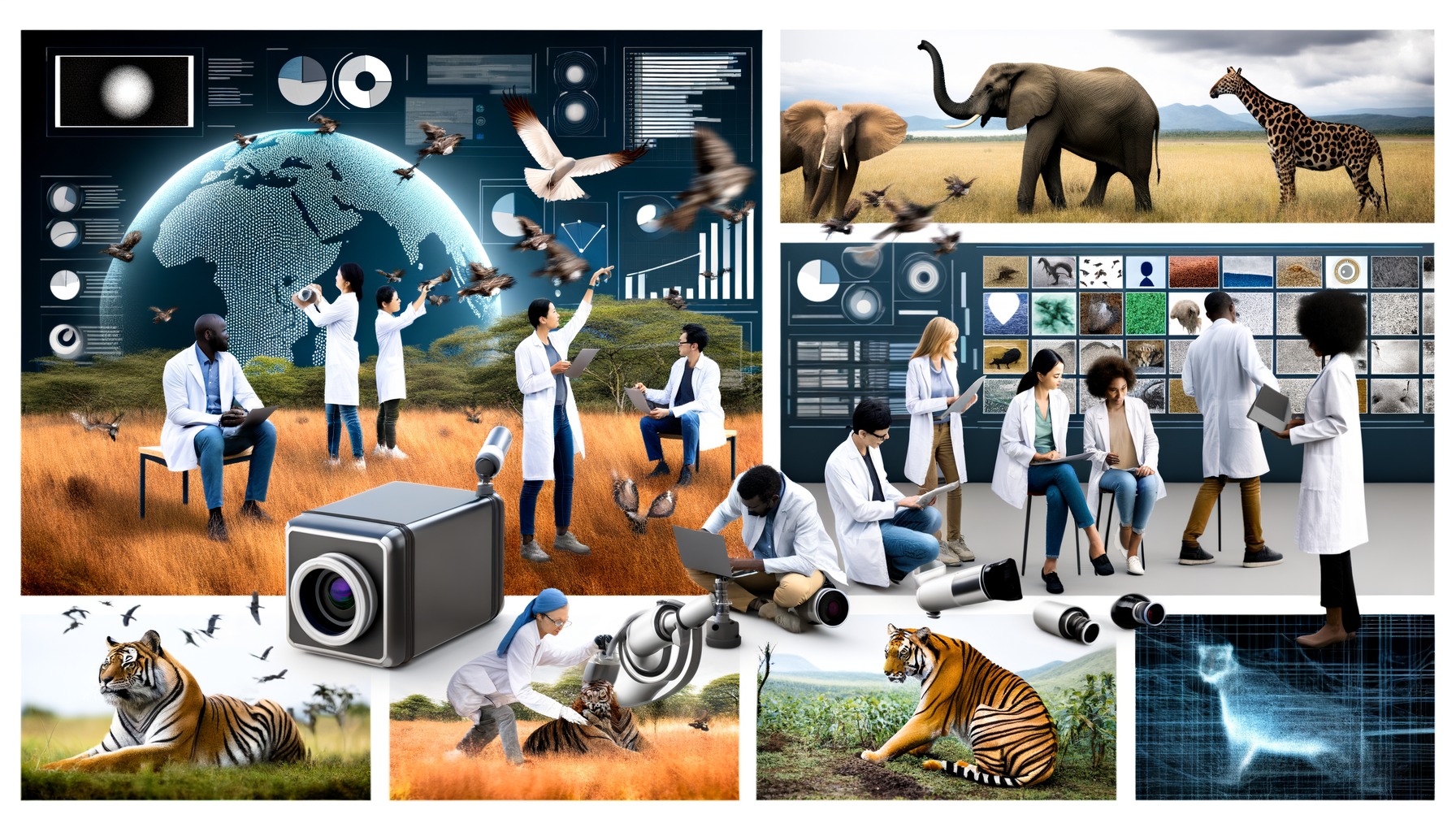
Researchers in Canada are using AI to address the accelerating mass extinction of insects. Led by the Montreal Insectarium, the Antenna project combines solar-powered camera traps, high-resolution imaging, and AI algorithms to monitor biodiversity in regions spanning from the Arctic to the Panamanian rainforests. The project aims to double the biodiversity data collected over the last century within five years.
Insects, crucial for global ecosystems, face unprecedented decline due to climate change, habitat destruction, and pesticides. However, the scope of these losses remains difficult to quantify. AI‘s ability to process vast amounts of data offers hope, with early tests in Panama uncovering 300 previously unknown species in a single week.
Focusing initially on moths, the project uses open-source AI models to encourage public participation and collaboration. Researchers aim to expand applications to discover deep-sea species and monitor pests threatening agriculture. Education also plays a role, with museum visitors using apps to identify species.
Artificial intelligence is reshaping agriculture in the United States, offering solutions to longstanding challenges like labor shortages and rising costs. With US farms dwindling from 6.8 million in the 1930s to just 1.9 million in 2023, AI-powered technologies are stepping in to improve crop yields, resource efficiency, and food production. Experts emphasise AI’s ability to analyse massive amounts of data, guiding decisions on irrigation, fertilisation, and pest control to maximise productivity.
Despite its potential, adoption remains limited, with only 27% of US farmers currently using emerging technologies like AI. However, investment is projected to grow significantly, from $2B in 2024 to over $5B by 2028. Researchers at institutions like the AI Institute for Next Generation Food Systems are exploring applications from robotics to controlled indoor environments, which enable year-round farming and climate adaptability for crops like grapes.
While high upfront costs and accessibility remain hurdles, proponents believe AI can accelerate agricultural innovation and foster collaboration among farmers. By combining advanced tools and shared data, AI could help build a more sustainable food system and support the delivery of fresh, nutritious produce to underserved areas.
OpenAI and the Korea Development Bank (KDB) have partnered to support the growth of South Korea’s AI ecosystem. The collaboration aims to develop AI models specifically designed for the Korean language and enhance the country’s position in the global AI landscape.
KDB views AI as a critical driver of national competitiveness and will assist OpenAI in navigating the local market by acting as a coordinator for government affairs. The partnership reflects a shared vision to advance South Korea’s technological and economic future through AI innovation. That move also highlights South Korea’s commitment to becoming a leader in the AI industry, with OpenAI playing a key role in advancing these goals.
The growing impact of AI is also evident in South Korea’s search engine market, where AI-driven technologies are changing how users access information. Naver, the leading domestic search engine, has experienced a decline in market share, while global search engines like Google, which integrate AI features such as OpenAI’s ChatGPT, have seen growth.
Why does it matter?
That shift signifies a broader transformation in the digital landscape, as AI-enhanced search engines provide more personalised and summarised answers, moving away from traditional lists of information. The increasing adoption of AI in search engines underscores the growing influence of AI on various industries in South Korea.
Crystal Intelligence and Dubai Police have collaborated to address economic crimes within the rapidly growing digital asset space. By combining advanced blockchain analytics with law enforcement expertise, the two entities aim to predict and prevent financial crimes, ensuring robust security within the digital asset ecosystem.
That collaboration reflects Dubai’s commitment to remaining at the forefront of global blockchain innovation. Moreover, as part of its broader strategy, the UAE, particularly Dubai, has positioned itself as a leader in digital assets by creating a regulatory framework that fosters innovation while ensuring security and compliance.
Notably, establishing the Virtual Assets Regulatory Authority (VARA), the world’s first regulator for virtual assets, has attracted numerous blockchain companies and service providers to the city, further solidifying Dubai’s role as a central hub for digital assets. This collaboration also involves strengthening Dubai Police’s capabilities through Crystal Intelligence’s advanced tools in transaction monitoring, risk management, and predictive analytics.
Why does it matter?
These tools will enable law enforcement to proactively detect and address fraudulent activities across blockchain networks, thereby ensuring the integrity of Dubai’s digital asset market. By combining regulatory foresight with cutting-edge technology, Dubai demonstrates its leadership in integrating innovation with security. Ultimately, this partnership sets a new global standard for digital asset security and offers a model for other jurisdictions to follow as they navigate the complexities of financial crimes in the digital asset space.