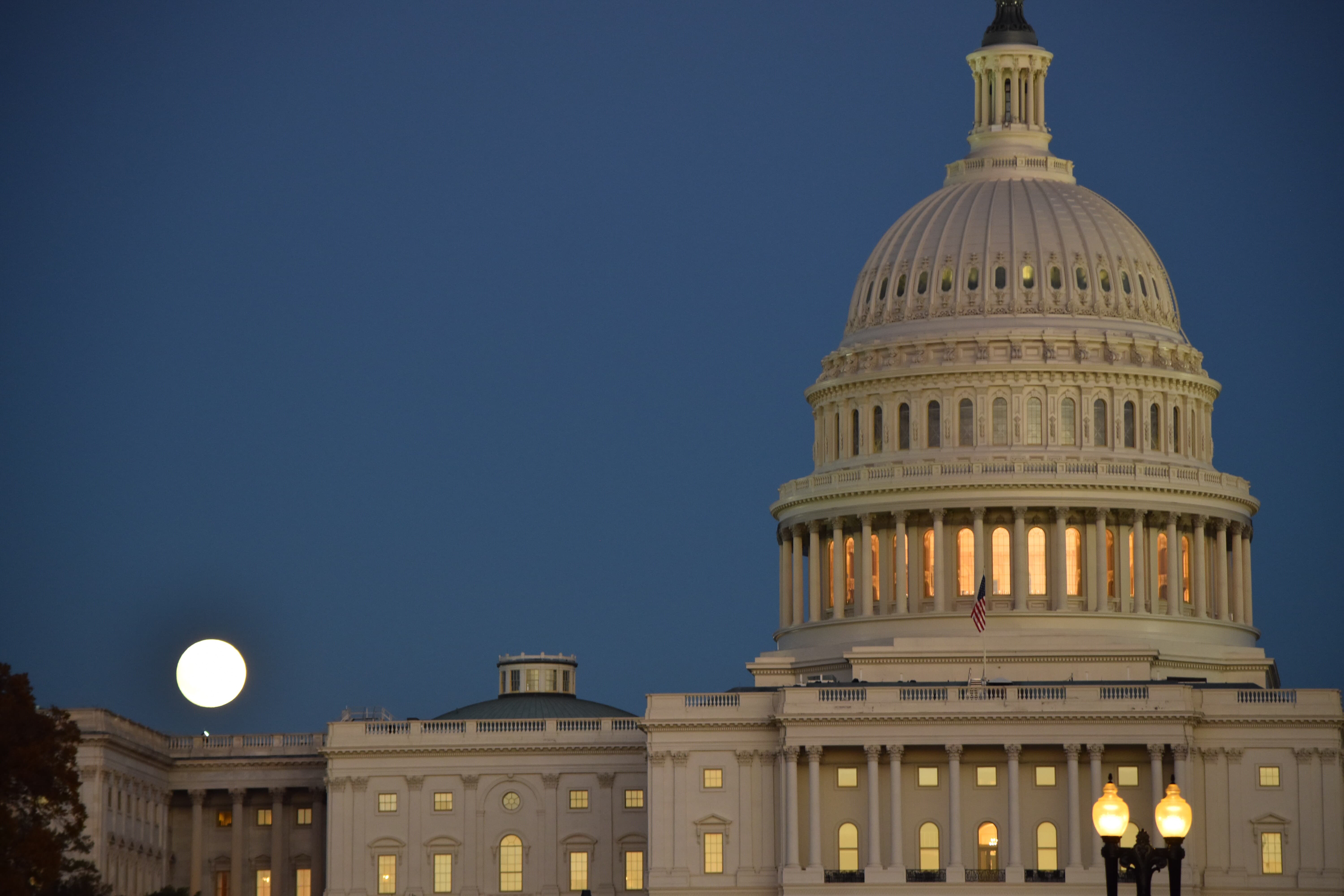
TikTok and its parent company ByteDance are urging a US appeals court to dismiss the Justice Department’s request to keep parts of its legal case against TikTok confidential. The government aims to file over 15% of its brief and 30% of its evidence in secret, which TikTok argues would hinder its ability to challenge any potentially incorrect factual claims.
The Justice Department, which has not commented publicly, recently filed a classified document outlining security concerns regarding ByteDance’s ownership of TikTok. The document includes declarations from the FBI and other national security agencies.
The government contends that TikTok’s Chinese ownership poses a significant national security threat due to its access to vast amounts of personal data from American users and China’s potential for information manipulation.
In response, TikTok maintains that it has never and will never share US user data with China or manipulate video content as alleged. The company suggests appointing a district court judge as a special master to review the classified submissions if the court does not reject the secret evidence.
The Biden administration has asked the court to dismiss lawsuits filed by TikTok, ByteDance, and TikTok creators that aim to block a law requiring the divestiture of TikTok’s US assets by 19 January or face a ban. Despite the lack of evidence that the Chinese government has accessed US user data, the Justice Department insists that the potential risk remains too significant to ignore.
Elon Musk announced plans to discuss a $5 billion investment in his AI startup, xAI, with Tesla’s board. This potential move, preceded by a poll launched on social medial platform X, has sparked concerns about a conflict of interest, as Musk launched xAI to compete with Microsoft-backed OpenAI. A recent social media poll showed strong public support for the investment, with over two-thirds of respondents in favor.
Tesla recently reported lower-than-expected second-quarter results, with declining automotive gross margins and profits. Musk highlighted the potential benefits of integrating xAI’s technologies with Tesla, including advancements in full self-driving and new data centre development. However, critics argue that the investment might not be in the best interest of Tesla shareholders.
xAI, launched by Musk last year, has already raised $6 billion in funding, attracting major investors such as Andreessen Horowitz and Sequoia Capital. Despite Musk’s ambitious plans for xAI, his past ventures have faced scrutiny over conflicts of interest, including the controversial acquisition of SolarCity by Tesla in 2016.
Two European Parliament committees have formed a joint working group to oversee the implementation of the AI Act, according to sources familiar with the matter. The committees involved, Internal Market and Consumer Protection (IMCO) and Civil Liberties, Justice and Home Affairs (LIBE), are concerned about the transparency of the AI Office’s staffing and the role of civil society in the implementation process.
The European Commission’s AI Office is responsible for coordinating the implementation of the AI Act, which will come into force on 1 August. The Act prohibits certain AI applications, like real-time biometric identification, which will be enforced six months later. Full implementation is set for two years after the Act’s commencement when the Commission must clarify key provisions.
Traditionally, the European Parliament has had a limited role in regulatory implementation, but MEPs focused on tech policy are pushing for greater involvement, especially with recent digital regulations. The Parliament already monitors the implementation of the Digital Services and Digital Markets Acts, aiming to ensure effective oversight and transparency in these critical areas.
Researchers at the Paul Scherrer Institute (PSI) and the Massachusetts Institute of Technology (MIT) have developed an AI system to improve the categorisation of breast cancer. The new technology, led by G.V. Shivashankar from PSI and Caroline Uhler from MIT, aims to provide a reliable and cost-effective method for predicting the progression of ductal carcinoma in situ (DCIS) to invasive ductal carcinoma (IDC).
DCIS, a precursor of breast cancer in the milk ducts, accounts for about 25% of breast cancer diagnoses. It can develop into a threatening invasive form in 30 to 50% of cases. The AI system, trained on tissue samples stained with DAPI dye, analyses chromatin images to identify patterns matching those identified by human pathologists. This approach leverages AI’s potential, as highlighted by research in Lancet Digital Health showing AI outperforming radiologists in breast cancer detection.
The researchers believe this AI-based tumour classification method has significant potential, though further studies are necessary to ensure its reliability and safety. The US Department of Defense (DoD) has been using AI to detect cancer since 2020, showcasing the growing role of AI in medical diagnostics. The new system developed by PSI and MIT could lead to more accurate predictions and better treatment decisions for patients.
Elon Musk has revealed that Tesla will start using humanoid robots next year. These robots will initially serve Tesla internally, with plans to begin sales by 2026. However, announcement aligns with Musk’s broader strategy to cut costs amid decreasing demand for Tesla vehicles.
Tesla’s recent financial update reported a significant drop in profits for the second quarter, from $2.7bn to less than $1.5bn. Despite various price cuts, automotive revenue decreased by 7% year-on-year, though a rise in the energy storage business led to a modest 2% increase in overall revenue. Consequently, Tesla’s shares fell by almost 8% in after-hours trading.
Musk has been increasingly focusing on advanced technologies such as AI and autonomous driving. He announced that the Optimus robot would be ready for internal use at Tesla by the end of this year, with mass production expected by 2026. Optimus is designed to perform tasks that are unsafe, repetitive, or boring for humans.
Mr Musk’s ambitious timelines have often been missed, including previous predictions about self-driving taxis. Tesla remains committed to developing robo-taxis, but their launch depends on regulatory approval. Other companies like Honda and Boston Dynamics are also developing humanoid robots, highlighting the competitive nature of this emerging field.
The prime minister of Australian state Queensland, Steven Miles, has condemned an AI-generated video created by the LNP opposition, calling it a ‘turning point for our democracy.’ The TikTok video depicts the Queensland premier dancing under text about rising living costs and is clearly marked as AI-generated. Miles has stated that the state Labor party will not use AI-generated advertisements in the upcoming election campaign.
Miles expressed concerns about the potential dangers of AI in political communication, highlighting the need for caution as videos are more likely to be believed than doctored photos. Despite rejecting AI for their own content, Miles dismissed the need for truth in advertising laws, asserting that Labor has no intention of creating deepfake videos.
The LNP defended their use of AI, emphasising that the video was clearly labelled and aimed at highlighting issues like higher rents and increased power prices under Labor. The Electoral Commission of Queensland noted that while the state’s electoral act does not specifically address AI, any false statements about a candidate’s character can be prosecuted.
Experts, including communications lecturer Susan Grantham and QUT’s Patrik Wikstrom, have warned about the broader implications of AI in politics. Grantham pointed out that politicians already using AI for lighter content are at greater risk of being targeted. Wikstrom stressed that the real issue is political communication designed to deceive, echoing concerns raised by a UK elections watchdog about AI deepfakes undermining elections. Australia is also planning to implement tougher laws focusing on deepfakes.
Grok, Elon Musk’s AI model available on the X platform, encountered significant issues in accuracy following the attempted assassination of former President Donald Trump. The AI model posted incorrect headlines, including one falsely claiming Vice President Kamala Harris had been shot and another wrongly identifying the shooter as an antifa member. These errors stemmed from Grok’s inability to discern sarcasm and verify unverified claims on X.
After announcing plans to develop TruthGPT, Elon Musk has promoted Grok as a revolutionary tool for news aggregation, leveraging real-time posts from millions of users. Despite its potential, the incident underscores Grok’s limitations, particularly in handling breaking news. The model’s humorous design can also be a drawback, leading to the spread of misinformation and confusion.
The reliance on AI for news summaries raises concerns about accuracy and context, especially during critical events. Former Facebook public-policy director Katie Harbath emphasized the need for human oversight in providing context and verifying facts. The incident with Grok mirrors challenges faced by other AI models, such as OpenAI’s ChatGPT, which includes disclaimers to manage user expectations.
Elon Musk’s grand vision of establishing a human colony on Mars is rapidly taking shape at SpaceX, where intensive planning efforts are underway alongside rocket development. Musk, driven by a lifelong fascination with Mars, has directed SpaceX teams to design everything from dome habitats to spacesuits capable of withstanding Mars’s harsh conditions. His ambitious timeline now targets having a million people living on Mars within the next 20 years, a drastic acceleration from earlier projections.
Musk remains undeterred despite the immense challenges—such as freezing temperatures, dust storms, and the need for artificial atmospheres. SpaceX’s Starship rocket, designed to transport humans to Mars, is central to these plans, with recent successful test flights marking crucial milestones. The company envisions Starship as a transportation vessel and a potential living space equipped with amenities like living quarters and recreational facilities, crucial for long-term habitation on the red planet.
Asimov’s Foundation series was part of the inspiration for making life/consciousness multiplanetary.
Being multiplanetary greatly extends the probable lifespan of civilization.
While Musk’s vision has sparked both admiration and scepticism, particularly given the complexities of Martian colonisation, SpaceX is forging ahead with concrete steps. Internal discussions include considerations on bioengineering, sustainable living through greenhouses, and even potential food sources like plant-based alternatives from Impossible Foods. Despite operational challenges and controversies, SpaceX continues to attract dedicated employees who share Musk’s belief in creating a multi-planetary civilisation.
Musk’s determination to secure humanity’s future on Mars remains resolute, setting SpaceX on a course that challenges conventional timelines and expectations in space exploration. While NASA projects a much later timeframe for human missions to Mars, Musk’s aggressive pursuit of his Martian dream underscores his relentless drive to push the boundaries of what’s possible in space travel and colonisation.
At the recent World AI Conference in Shanghai, China’s leading AI company, SenseTime, unveiled its latest model, SenseNova 5.5, which can identify objects, provide feedback on drawings, and summarise text. Comparable to OpenAI’s GPT-4, SenseNova 5.5 aims to attract users with 50 million free tokens and free migration support from OpenAI services. The launch of SenseNova 5.5 comes at a crucial time, as OpenAI will block Chinese users from accessing its tools starting 9 July, intensifying the rivalry between US and Chinese AI firms.
OpenAI’s decision to block Chinese users has sparked concern in China’s AI community, raising questions about equitable access to AI technologies. However, it has also created an opportunity for Chinese companies like SenseTime, Baidu, Zhipu AI, and Tencent Cloud to attract new users with free tokens and migration services, accelerating the development of Chinese AI companies that are already engaged in fierce competition.
Why does this matter?
The US-China tech rivalry has led to US restrictions on exporting advanced semiconductors to China, impacting the AI industry’s growth. While Chinese companies are quickly advancing, the US sanctions are causing shortages in computing capacity, as seen with Kuaishou’s AI model restrictions. Despite these challenges, Chinese commentators view OpenAI’s departure as a chance for China to achieve greater technological self-reliance and independence.
Google DeepMind and Harvard University researchers have developed a realistic virtual rat to study the neural circuits that control movement. The virtual rat’s brain, made up of artificial neural networks, was trained using hours of neural recordings from real rats.
This digital brain could predict and replicate the behaviour of actual rats, such as running or rearing up. The study identified key brain regions involved in movement and demonstrated that AI can simulate neural signals more accurately than older models.
Bridging the gap between AI and neuroscience, the project offers new ways to study brain functions and movements. However, this method allows researchers to tweak neural connections in the virtual rat to observe how changes affect behaviour, providing insights that are challenging to obtain through traditional lab experiments. By understanding how the brain commands muscle movements, the research could lead to advancements in both robotics and neuroscience.
Offering a platform to test hypotheses about brain function and behaviour quickly and efficiently, the virtual rat enables researchers to explore more complex tasks. The team plans to use these virtual rats to understand further how real brains generate intricate behaviours. Combining AI with biological data, the collaboration highlights the potential to uncover the mechanisms of brain function and movement.