OpenAI is set to argue in an Ontario court that a copyright lawsuit by Canadian news publishers should be heard in the United States. The case, the first of its kind in Canada, alleges that OpenAI scraped Canadian news content to train ChatGPT without permission or payment.
The coalition of publishers, including CBC/Radio-Canada, The Globe and Mail, and Postmedia, says the material was created and hosted in Ontario, making the province the proper venue. They warn that accepting OpenAI’s stance would undermine Canadian sovereignty in the digital economy.
OpenAI, however, says the training of its models and web crawling occurred outside Canada and that the Copyright Act cannot apply extraterritorially. It argues the publishers are politicising the case by framing it as a matter of sovereignty rather than jurisdiction.
The dispute reflects a broader global clash over how generative AI systems use copyrighted works. US courts are already handling several similar cases, though no clear precedent has been established on whether such use qualifies as fair use.
Publishers argue Canadian courts must decide the matter domestically, while OpenAI insists it belongs in US courts. The outcome could shape how copyright laws apply to AI training and digital content across borders.
Would you like to learn more about AI, tech and digital diplomacy? If so, ask our Diplo chatbot!
Researchers at NYU’s Tandon School of Engineering have demonstrated how large language models can be utilised to execute ransomware campaigns autonomously. Their prototype, dubbed Ransomware 3.0, simulated every stage of an attack, from intrusion to the generation of a ransom note.
The system briefly raised an alarm after cybersecurity firm ESET discovered its files on VirusTotal, mistakenly identifying them as live malware. The proof-of-concept was designed only for controlled laboratory use and posed no risk outside testing environments.
Instead of pre-written code, the prototype embedded text instructions that triggered AI models to generate tailored attack scripts. Each execution created unique code, evading traditional detection methods and running across Windows, Linux, and Raspberry Pi systems.
The researchers found that the system identified up to 96% of sensitive files and could generate personalised extortion notes, raising psychological pressure on victims. With costs as low as $0.70 per attack using commercial AI services, such methods could lower barriers for criminals.
The team stressed that the work was conducted ethically and aims to help defenders prepare countermeasures. They recommend monitoring file access patterns, limiting outbound AI connections, and developing defences against AI-generated attack behaviours.
Would you like to learn more about AI, tech, and digital diplomacy? If so, ask our Diplo chatbot!
Bloomberg’s Mark Gurman now reports that Apple plans to introduce its AI-powered web search tool in spring 2026. The move would position it against OpenAI and Perplexity, while renewing pressure on Google.
The speculation comes after news that Google may integrate its Gemini AI into Apple devices. During an antitrust trial in April, Google CEO Sundar Pichai confirmed plans to roll out updates later this year.
According to Gurman, Apple and Google finalised an agreement for Apple to test a Google-developed AI model to boost its voice assistant. The partnership reflects Apple’s mixed strategy of dependence and rivalry with Google.
With a strong record for accurate Apple forecasts, Gurman suggests the company hopes the move will narrow its competitive gap. Whether it can outpace Google, especially given Pixel’s strong AI features, remains an open question.
Would you like to learn more about AI, tech, and digital diplomacy? If so, ask our Diplo chatbot!
Mental health experts in Iowa have warned that teenagers are increasingly turning to AI chatbots instead of seeking human connection, raising concerns about misinformation and harmful advice.
The issue comes into focus on National Suicide Prevention Day, shortly after a lawsuit against ChatGPT was filed over a teenager’s suicide.
Jessica Bartz, a therapy supervisor at Vera French Duck Creek, said young people are at a vulnerable stage of identity formation while family communication often breaks down.
She noted that some teens use chatbot tools like ChatGPT, Genius and Copilot to self-diagnose, which can reinforce inaccurate or damaging ideas.
‘Sometimes AI can validate the wrong things,’ Bartz said, stressing that algorithms only reflect the limited information users provide.
Without human guidance, young people risk misinterpreting results and worsening their struggles.
Experts recommend that parents and trusted adults engage directly with teenagers, offering empathy and open communication instead of leaving them dependent on technology.
Bartz emphasised that nothing can replace a caring person noticing warning signs and intervening to protect a child’s well-being.
Would you like to learn more aboutAI, tech and digital diplomacy? If so, ask our Diplo chatbot!
Abu Dhabi hosted a Weather Summit that explored how AI could transform forecasting and support operations, such as cloud seeding. Experts emphasised that AI enhances analysis but must complement, rather than replace, human judgement.
Discussions focused on Earth-system forecasting using satellite datasets, IoT devices, and geospatial systems. Quality, interoperability, and equitable access to weather services were highlighted as pressing priorities.
Speakers raised questions about public and private sector incentives’ reliability, transparency, and influence on AI. Collaboration across sectors was crucial to strengthening trust and global cooperation in meteorology.
WMO President Dr Abdulla Al Mandous said forecasting has evolved from traditional observation to supercomputing and AI. He argued that integrating models with AI could deliver more precise local forecasts for agriculture, aviation, and disaster management.
The summit brought together leaders from UN bodies, research institutions, and tech firms, including Google, Microsoft, and NVIDIA. Attendees highlighted the need to bridge data gaps, particularly in developing regions, to confront rising climate challenges.
Would you like to learn more about AI, tech, and digital diplomacy? If so, ask our Diplo chatbot!
A Ukrainian cybercrime suspect has been added to the EU’s Most Wanted list for his role in the 2019 LockerGoga ransomware attack against a major Norwegian aluminium company and other global incidents.
The fugitive is considered a high-value target and is wanted by multiple countries. The US Department of Justice has offered up to USD 10 million for information leading to the arrest.
Europol stated that the identification of the suspect followed a lengthy, multinational investigation supported by Eurojust, with damages from the network estimated to be in the billions. Several members of the group have already been detained in Ukraine.
Investigators have mapped the network’s operations, tracing its hierarchy from malware developers and intrusion experts to money launderers who processed illicit proceeds. The wanted man is accused of directly deploying LockerGoga ransomware.
Europol has urged the public to visit the EU Most Wanted website and share information that could assist in locating the fugitive. The suspect’s profile is now live on the platform.
Would you like to learn more about AI, tech, and digital diplomacy? If so, ask our Diplo chatbot!
Uber and Chinese startup Momenta will begin robotaxi testing in Munich in 2026, marking their first public deployment in continental Europe. The trials will start with human safety operators, with plans to expand across additional European cities.
Founded in 2016, Momenta is one of China’s leading autonomous vehicle companies, having tested self-driving cars since 2018. The company is already collaborating with automakers such as Mercedes-Benz and BMW to integrate advanced driver assistance systems.
Uber is broadening its global AV network, which already spans 20 partners across mobility, delivery, and freight. In the US, Waymo robotaxis operate via Uber’s app, while international partnerships include WeRide in the Gulf and Wayve in London.
Competition in Europe is intensifying. Baidu from China and Lyft plan to roll out robotaxis in Germany and the UK next year, while Uber has chosen Munich, Germany, as its engineering base and a strong automotive ecosystem.
German regulators must still certify Momenta’s technology and approve geo-fenced operating areas. If successful, Munich will become Momenta’s first European launchpad, building on its Shanghai robotaxi service and global ADAS deployment.
Would you like to learn more about AI, tech, and digital diplomacy? If so, ask our Diplo chatbot!
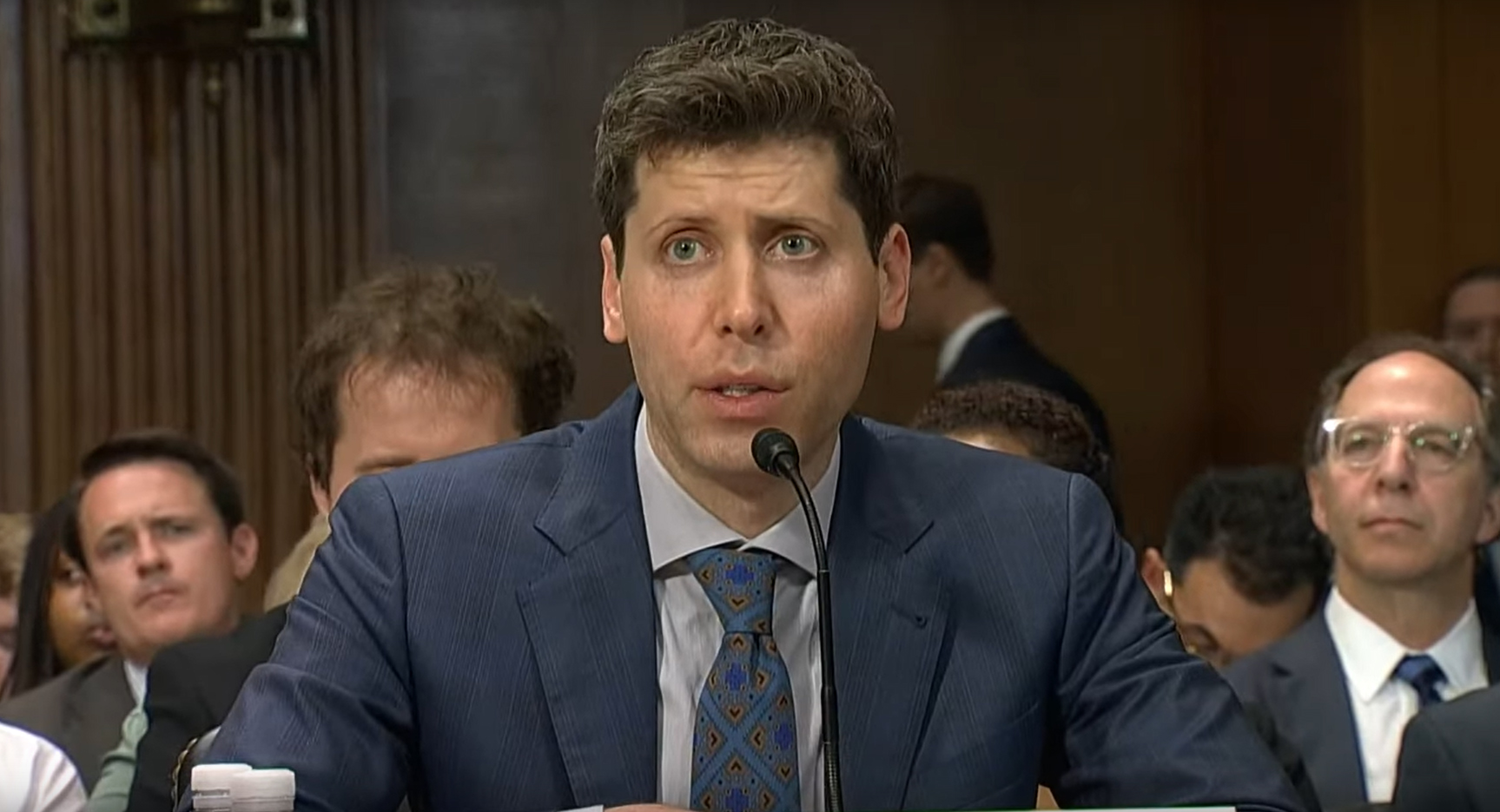
Sam Altman, X enthusiast and Reddit shareholder, has expressed doubts over whether social media content can still be distinguished from bot activity. His remarks followed an influx of praise for OpenAI Codex on Reddit, where users questioned whether such posts were genuine.
Altman noted that humans are increasingly adopting quirks of AI-generated language, blurring the line between authentic and synthetic speech. He also pointed to factors such as social media optimisation for engagement and astroturfing campaigns, which amplify suspicions of fakery.
The comments follow OpenAI’s backlash over the rollout of GPT-5, which saw Reddit communities shift from celebratory to critical. Altman acknowledged flaws in a Reddit AMA, but the fallout left lasting scepticism and lower enthusiasm among AI users.
Underlying this debate is the wider reality that bots dominate much of the online environment. Imperva estimates that more than half of 2024’s internet traffic was non-human, while X’s own Grok chatbot admitted to hundreds of millions of bots on the platform.
Some observers suggest Altman’s comments may foreshadow an OpenAI-backed social media venture. Whether such a project could avoid the same bot-related challenges remains uncertain, with research suggesting that even bot-only networks eventually create echo chambers of their own.
Would you like to learn more about AI, tech, and digital diplomacy? If so, ask our Diplo chatbot!
Quantum computers could become more efficient with a new quantum router that directs data more quickly within machines. Researchers at Stanford have built the component, which could eventually form the backbone of quantum random access memory (QRAM).
The router utilises superconducting qubits, controlled by electromagnetic pulses, to transmit information to quantum addresses. Unlike classical routers, it can encode addresses in superposition, allowing data to be stored in two places simultaneously.
In tests with three qubits, the router achieved a fidelity of around 95%. If integrated into QRAM, it could unlock new algorithms by placing information into quantum states where locations remain indeterminate.
Experts say the advance could benefit areas such as quantum machine learning and database searches. It may also support future ideas, such as quantum IP addresses, although more reliable designs with larger qubit counts are still required.
The Stanford team acknowledges the device needs refinement to reduce errors. But with further development, the quantum router could be a vital step toward practical QRAM and more powerful quantum computing applications.
Would you like to learn more about AI, tech, and digital diplomacy? If so, ask our Diplo chatbot!
A malvertising campaign is targeting IT workers in the EU with fake GitHub Desktop installers, according to Arctic Wolf. The goal is to steal credentials, deploy ransomware, and infiltrate sensitive systems. The operation has reportedly been active for over six months.
Attackers used malicious Google Ads that redirected users to doctored GitHub repositories. Modified README files mimicked genuine download pages but linked to a lookalike domain. MacOS users received the AMOS Stealer, while Windows victims downloaded bloated installers hiding malware.
The Windows malware evaded detection using GPU-based checks, refusing to run in sandboxes that lacked real graphics drivers. On genuine machines, it copied itself to %APPDATA%, sought elevated privileges, and altered Defender settings. Analysts dubbed the technique GPUGate.
The payload persisted by creating privileged tasks and sideloading malicious DLLs into legitimate executables. Its modular system could download extra malware tailored to each victim. The campaign was geo-fenced to EU targets and relied on redundant command servers.
Researchers warn that IT staff are prime targets due to their access to codebases and credentials. With the campaign still active, Arctic Wolf has published indicators of compromise, Yara rules, and security advice to mitigate the GPUGate threat.
Would you like to learn more about AI, tech, and digital diplomacy? If so, ask our Diplo chatbot!