Mexico’s competition watchdog has accused Amazon and Mercado Libre of erecting barriers that limit the mobility of sellers in the country’s e-commerce market. The two platforms reportedly account for 85% of the seller market.
The Federal Economic Competition Commission (COFECE) stated that the companies provide preferential treatment to sellers who utilise their logistics services and fail to disclose how featured offers are selected, thereby restricting fair competition.
Despite finding evidence of these practices, COFECE stopped short of imposing corrective measures, citing a lack of consensus among stakeholders. Amazon welcomed the decision, saying it demonstrates the competitiveness of the retail market in Mexico.
The watchdog aims to promote a more dynamic e-commerce sector, benefiting buyers and sellers. Its February report had recommended measures to improve transparency, separate loyalty programme services, and allow fairer access to third-party delivery options.
Trade associations praised COFECE for avoiding sanctions, warning that penalties could harm consumers and shield traditional retailers. Mercado Libre has not yet commented on the findings.
Would you like to learn more about AI, tech, and digital diplomacy? If so, ask our Diplo chatbot!
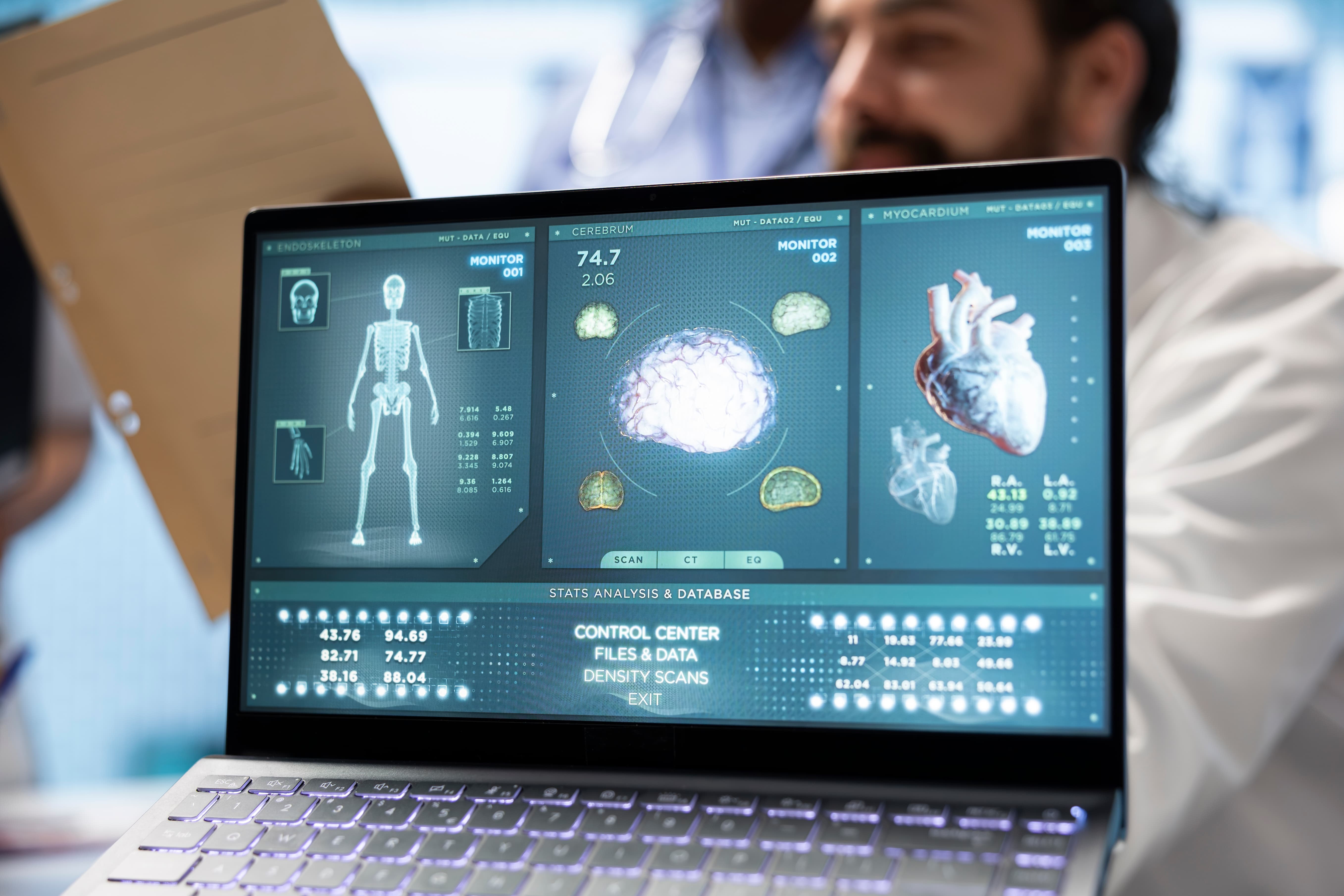
Scientists have unveiled an AI tool capable of predicting the risk of developing over 1,000 medical conditions. Published in Nature, the model can forecast certain cancers, heart attacks, and other diseases more than a decade in advance.
Developed by the German Cancer Research Centre (DKFZ), the European Molecular Biology Laboratory (EMBL), and the University of Copenhagen, the model utilises anonymised health data from the UK and Denmark. It tracks the order and timing of medical events to spot patterns that lead to serious illness.
Researchers said the tool is exceptionally accurate for diseases with consistent progression, including some cancers, diabetes, heart attacks, and septicaemia. Its predictions work like a weather forecast, indicating higher risk rather than certainty.
The model is less reliable for unpredictable conditions such as mental health disorders, infectious diseases, or pregnancy complications. It is more accurate for near-term forecasts than for those decades ahead.
Though not yet ready for clinical use, the system could help doctors identify high-risk patients earlier and enable more personalised, preventive healthcare strategies. Researchers say more work is needed to ensure the tool works for diverse populations.
Would you like to learn more about AI, tech, and digital diplomacy? If so, ask our Diplo chatbot!
Ireland has designated 15 authorities to monitor compliance with the EU’s AI Act, making it one of the first EU countries fully ready to enforce the new rules. The AI Act regulates AI systems according to their risk to society and began phasing in last year.
Governments had until 2 August to notify the European Commission of their appointed market surveillance authorities. In Ireland, these include the Central Bank, Coimisiún na Meán, the Data Protection Commission, the Competition and Consumer Protection Commission, and the Health and Safety Authority.
The country will also establish a National AI Office as the central coordinator for AI Act enforcement and liaise with EU institutions. A single point of contact must be designated where multiple authorities are involved to ensure clear communication.
Ireland joins Cyprus, Latvia, Lithuania, Luxembourg, Slovenia, and Spain as countries that have appointed their contact points. The Commission has not yet published the complete list of authorities notified by member states.
Former Italian Prime Minister Mario Draghi has called for a pause in the rollout of the AI Act, citing risks and a lack of technical standards. The Commission has launched a consultation as part of its digital simplification package, which will be implemented in December.
Would you like to learn more about AI, tech, and digital diplomacy? If so, ask our Diplo chatbot!
AI is reshaping healthcare, according to experts featured in Microsoft’s new podcast seriesThe AI Revolution in Medicine, Revisited.
Peter Lee, President of Microsoft Research, spoke with clinicians and researchers about how AI is helping doctors work more effectively and patients access better care. From note-taking during visits to accelerating drug discovery, the technology is already proving its value.
A doctor of UC San Diego Health in the US said AI helps physicians draft longer, more empathetic responses to patient messages, reducing mental strain. Meanwhile, Stanford’s Dr Roxana Daneshjou described how AI detected a dosage error in a medical summary, acting as a crucial safeguard.
Bill Gates highlighted how AI could boost healthcare in low-income regions by providing medical intelligence where doctors are scarce. Other guests suggested the technology may even blur traditional boundaries between medical specialties while accelerating drug development.
Would you like to learn more about AI, tech and digital diplomacy? If so, ask our Diplo chatbot!
Scaling law estimation helps organisations make better decisions about architecture, optimisers and dataset sizes before devoting extensive compute budgets.
The team assembled over 485 pre-trained models across 40 families (including Pythia, OPT, Bloom, LLaMA and others) and tracked almost 1.9 million performance metrics. Using that dataset, they fit more than 1,000 scaling laws and assessed variables such as the number of parameters, the token count, intermediate training checkpoints, and seed effects.
Practical recommendations include discarding training data from very early stages (before about 10 billion tokens), using several small models across sizes rather than only large ones, and using intermediate checkpoints rather than waiting for final model loss.
The guide also notes that a 4 percent absolute relative error (ARE) is near best-case for prediction quality, though up to 20 percent ARE remains useful depending on budget.
Because training large models can cost millions, these scaling laws also help those without huge resources to approximate outcomes more safely. AI model inference scaling laws are still under development and are flagged as important future work.
Would you like to learn more about AI, tech and digital diplomacy? If so, ask our Diplo chatbot!
Jaguar Land Rover (JLR) has confirmed that its production halt will continue until at least Wednesday, 24 September, as it works to recover from a major cyberattack that disrupted its IT systems and paralysed production at the end of August.
JLR stated that the extension was necessary because forensic investigations were ongoing and the controlled restart of operations was taking longer than anticipated. The company stressed that it was prioritising a safe and stable restart and pledged to keep staff, suppliers, and partners regularly updated.
Reports suggest recovery could take weeks, impacting production and sales channels for an extended period. Approximately 33,000 employees remain at home as factory and sales processes are not fully operational, resulting in estimated losses of £1 billion in revenue and £70 million in profits.
The shutdown also poses risks to the wider UK economy, as JLR represents roughly four percent of British exports. The incident has renewed calls for the Cyber Security and Resilience Bill, which aims to strengthen defenses against digital threats to critical industries.
No official attribution has been made, but a group calling itself Scattered Lapsus$ Hunters has claimed responsibility. The group claims to have deployed ransomware and published screenshots of JLR’s internal SAP system, linking itself to extortion groups, including Scattered Spider, Lapsus$, and ShinyHunters.
Would you like to learn more about AI, tech, and digital diplomacy? If so, ask our Diplo chatbot!
Bracknell and Wokingham College has confirmed a cyberattack that compromised data collected for Disclosure and Barring Service (DBS) checks. The breach affects data used by Activate Learning and other institutions, including names, dates of birth, National Insurance numbers, and passport details.
Access Personal Checking Services (APCS) was alerted by supplier Intradev on August 17 that its systems had been accessed without authorisation. While payment card details and criminal conviction records were not compromised, data submitted between December 2024 and May 8, 2025, was copied.
APCS stated that its own networks and those of Activate Learning were not breached. The organisation is contacting only those data controllers where confirmed breaches have occurred and has advised that its services can continue to be used safely.
Activate Learning reported the incident to the Information Commissioner’s Office following a risk assessment. APCS is still investigating the full scope of the breach and has pledged to keep affected institutions and individuals informed as more information becomes available.
Individuals have been advised to closely monitor their financial statements, exercise caution when opening phishing emails, and regularly update security measures, including passwords and two-factor authentication. Activate Learning emphasised the importance of staying vigilant to minimise risks.
Would you like to learn more about AI, tech, and digital diplomacy? If so, ask our Diplo chatbot!
Oxford Quantum Circuits (OQC) and Digital Realty have launched the first quantum-AI data centre in New York City at the JFK10 facility, powered by Nvidia GH200 Grace Hopper Superchips. The project combines superconducting quantum computers with AI supercomputing under one roof.
OQC’s GENESIS quantum computer is the first to be deployed in a New York data centre, designed to support hybrid workloads and enterprise adoption. Future GENESIS systems will ship with Nvidia accelerated computing and CUDA-Q integration as standard.
OQC CEO Gerald Mullally said the centre will drive the AI revolution securely and at scale, strengthening the UK–US technology alliance. Digital Realty CEO Andy Power called it a milestone for making quantum-AI accessible to enterprises and governments.
UK Science Minister Patrick Vallance highlighted the £212 billion economic potential of quantum by 2045, citing applications from drug discovery to clean energy. He said the launch puts British innovation at the heart of next-generation computing.
The centre, embedded in Digital Realty’s PlatformDIGITAL, will support applications in finance, security, and AI, including quantum machine learning and accelerated model training. OQC Chair Jack Boyer said it demonstrates UK–US collaboration in leading frontier technologies.
Would you like to learn more about AI, tech, and digital diplomacy? If so, ask our Diplo chatbot!
Advertising is heading for a split future. By 2030, brands will run hyper-personalised AI campaigns or embrace raw human storytelling. Everything in between will vanish.
AI-driven advertising will go far beyond text-to-image gimmicks. These adaptive systems will combine social trends, search habits, and first-party data to create millions of real-time ad variations.
The opposite approach will lean into imperfection, featuring unpolished TikToks, founder-shot iPhone videos, and authentic and alive content. Audiences reward authenticity over carefully scripted, generic campaigns.
Mid-tier, polished, forgettable, creative work will be the first to fade away. AI can replicate it instantly, and audiences will scroll past it without noticing.
Marketers must now pick a side: feed AI with data and scale personalisation, or double down on community-driven, imperfect storytelling. The middle won’t survive.
Would you like to learn more about AI, tech, and digital diplomacy? If so, ask our Diplo chatbot!
Google’s Gemini latest update has sparked a social media craze by allowing users to transform 2D photos into lifelike 3D figurines. The feature, part of Gemini 2.5 Flash Image, has quickly become the standout trend from the update.
Instead of serving as a photo-editing tool, Gemini now helps users turn selfies, portraits, and pet photos into stylized statuettes. The images resemble collectable vinyl or resin figures, with smooth finishes and polished detailing.
The digital figurine trend blends personalisation with creativity, allowing users to reimagine themselves or loved ones as miniature display pieces. The playful results have been widely shared across platforms, driving renewed engagement with Google’s AI suite.
The figurine generator also complements Gemini’s other creative functions, such as image combination and style transformation, which allow users to experiment with entirely new aesthetics. Together, these tools extend Gemini’s appeal beyond simple photo correction.
While other platforms have offered 3D effects, Gemini’s version produces highly polished results in seconds, democratising what was once a niche 3D modelling skill. For many, it is the most accessible way to turn memories into digital art.
Would you like to learn more about AI, tech, and digital diplomacy? If so, ask our Diplo chatbot!