Apple boosts AI investment with new hires and acquisitions

Apple is ramping up its AI efforts, with CEO Tim Cook confirming that the company is significantly increasing its investments in the technology. During the Q3 2025 earnings call, Cook said AI would be embedded across Apple’s devices, platforms and internal operations.

The firm has reallocated staff to focus on AI and continues to acquire smaller companies to accelerate progress, completing seven acquisitions this year alone. Capital expenditure has also risen, partly due to the growing focus on AI.

Despite criticism that Apple has lagged behind in the AI race, the company insists it will not rush features to market. More than 20 Apple Intelligence tools have already been released, with additional features like live translation and an AI fitness assistant expected by year-end.

The updated version of Siri, which promises greater personalisation, has been pushed to 2026. Cook dismissed suggestions that AI-powered hardware, like glasses, would replace the iPhone, instead positioning future devices as complementary.

Would you like to learn more about AI, tech and digital diplomacy? If so, ask our Diplo chatbot!

OpenAI pulls searchable chats from ChatGPT

OpenAI has removed a feature that allowed users to make their ChatGPT conversations publicly searchable, following backlash over accidental exposure of sensitive content.

Dane Stuckey, OpenAI’s CISO, confirmed the rollback on Thursday, describing it as a short-lived experiment meant to help users find helpful conversations. However, he acknowledged that the feature posed privacy risks.

‘Ultimately, we think this feature introduced too many opportunities for folks to accidentally share things they didn’t intend to,’ Stuckey wrote in a post on X. He added that OpenAI is working to remove any indexed content from search engines.

The move came swiftly after Fast Company and privacy advocate Luiza Jarovsky reported that some shared conversations were appearing in Google search results.

Jarovsky posted examples on X, noting that even though the chats were anonymised, users were unknowingly revealing personal experiences, including harassment and mental health struggles.

To activate the feature, users had to tick a box allowing their chat to be discoverable. While the process required active steps, critics warned that some users might opt in without fully understanding the consequences. Stuckey said the rollback will be complete by Friday morning.

The incident adds to growing concerns around AI and user privacy, particularly as conversational platforms like ChatGPT become more embedded in everyday life.

Would you like to learn more about AI, tech and digital diplomacy? If so, ask our Diplo chatbot!

UK universities urged to act fast on AI teaching

UK universities risk losing their competitive edge unless they adopt a clear, forward-looking approach to ΑΙ in teaching. Falling enrolments, limited funding, and outdated digital systems have exposed a lack of AI literacy across many institutions.

As AI skills become essential for today’s workforce, employers increasingly expect graduates to be confident users rather than passive observers.

Many universities continue relying on legacy technology rather than exploring the full potential of modern learning platforms. AI tools can enhance teaching by adapting to individual student needs and helping educators identify learning gaps.

However, few staff have received adequate training, and many universities lack the resources or structure to embed AI into day-to-day teaching effectively.

To close the growing gap between education and the workplace, universities must explore flexible short courses and microcredentials that develop workplace-ready skills.

Introducing ethical standards and data transparency from the start will ensure AI is used responsibly without weakening academic integrity.

Would you like to learn more about AI, tech and digital diplomacy? If so, ask our Diplo chatbot!

ChatGPT gets smarter with Study Mode to support active learning

OpenAI has launched a new Study Mode in ChatGPT to help users engage more deeply with learning. Rather than simply providing answers, the feature guides users through concepts and problem-solving step-by-step. It is designed to support critical thinking and improve long-term understanding.

The company developed the feature with educators, scientists, and pedagogy experts. They aimed to ensure the AI supports active learning and doesn’t just deliver quick fixes. The result is a mode that encourages curiosity, reflection, and metacognitive development.

According to OpenAI, Study Mode allows users to approach subjects more critically and thoroughly. It breaks down complex ideas, asks questions, and helps manage cognitive load during study. Instead of spoon-feeding, the AI acts more like a tutor than a search engine.

The shift reflects a broader trend in educational technology — away from passive learning tools. Many students turn to AI for homework help, but educators have warned of over-reliance. Study Mode attempts to strike a balance by promoting engagement over shortcuts.

For instance, rather than giving the complete solution to a maths problem, Study Mode might ask: ‘What formula might apply here?’ or ‘How could you simplify this expression first?’ This approach nudges students to participate in the process and build fundamental problem-solving skills.

It also adapts to different learning needs. In science, it might walk through hypotheses and reasoning. It may help analyse a passage or structure an essay in the humanities. Prompting users to think aloud mirrors effective tutoring strategies.

OpenAI says feedback from teachers helped shape the feature’s tone and pacing. One key aim was to avoid overwhelming learners with too much information at once. Instead, Study Mode introduces concepts incrementally, supporting better retention and understanding.

The company also consulted cognitive scientists to align with best practices in memory and comprehension. However, this includes encouraging users to reflect on their learning and why specific steps matter. Such strategies are known to improve both academic performance and self-directed learning.

While the feature is part of ChatGPT, it can be toggled on or off. Users can activate Study Mode when tackling a tricky topic or exploring new material. They can then switch to normal responses for broader queries or summarised answers.

Educators have expressed cautious optimism about the update. Some see it as a tool supporting homework, revision, or assessment preparation. However, they also warn that no AI can replace direct teaching or personalised guidance.

Tools like this could be valuable in under-resourced settings or for independent learners.

Study Mode’s interactive style may help level the playing field for students without regular academic support. It also gives parents and tutors a new way to guide learners without doing the work for them.

Earlier efforts included teacher guides and classroom use cases. However, Study Mode marks a more direct push to reshape how students use AI in learning.

It positions ChatGPT not as a cheat sheet, but as a co-pilot for intellectual growth.

Looking ahead, OpenAI says it plans to iterate based on user feedback and teacher insights. Future updates may include subject-specific prompts, progress tracking, or integrations with educational platforms. The goal is to build a tool that adapts to learning styles without compromising depth or rigour.

As AI continues to reshape education, tools like Study Mode may help answer a central question: Can technology support genuine understanding, instead of just faster answers? With Study Mode, OpenAI believes the answer is yes, if used wisely.

Would you like to learn more about AI, tech, and digital diplomacy? If so, ask our Diplo chatbot!


Aeroflot cyberattack cripples Russian flights in major breach

A major cyberattack on Russia’s flagship airline Aeroflot has caused severe disruptions to flights, with hundreds of passengers stranded at airports. Responsibility was claimed by two hacker groups: Ukraine’s Silent Crow and the Belarusian hacktivist collective Belarus Cyber-Partisans.

The attack is among the most damaging cyber incidents Russia has faced since the full-scale invasion of Ukraine in February 2022. Past attacks disrupted government portals and large state-run firms such as Russian Railways, but most resumed operations quickly. This time, the effects were longer-lasting.

Social media showed crowds of delayed passengers packed into Moscow’s Sheremetyevo Airport, Aeroflot’s main hub. The outage affected not only Aeroflot but also its subsidiaries, Rossiya and Pobeda.

Most of the grounded flights were domestic. However, international services to Belarus, Armenia, and Uzbekistan were also cancelled or postponed due to the IT failure.

Early on Monday, Aeroflot issued a statement warning of unspecified problems with its IT infrastructure. The company alerted passengers that delays and disruptions were likely as a result.

Later, Russia’s Prosecutor’s Office confirmed that the outage was the result of a cyberattack. It announced the opening of a criminal case and launched an investigation into the breach.

Kremlin spokesperson Dmitry Peskov described the incident as ‘quite alarming’, admitting that cyber threats remain a serious risk for all major service providers operating at scale.

In a Telegram post, Silent Crow claimed it had maintained access to Aeroflot’s internal systems for over a year. The group stated it had copied sensitive customer data, internal communications, audio recordings, and surveillance footage collected on Aeroflot employees.

The hackers claimed that all of these resources had now either been destroyed or made inaccessible. ‘Restoring them will possibly require tens of millions of dollars. The damage is strategic,’ the group wrote.

Screenshots allegedly showing Aeroflot’s compromised IT dashboards were shared via the same Telegram channel. Silent Crow hinted it may begin publishing the stolen data in the coming days.

It added: ‘The personal data of all Russians who have ever flown with Aeroflot have now also gone on a trip — albeit without luggage and to the same destination.’

The Belarus Cyber-Partisans, who have opposed Belarusian President Alexander Lukashenko’s authoritarian regime for years, said the attack was carefully planned and intended to cause maximum disruption.

‘This is a very large-scale attack and one of the most painful in terms of consequences,’ said group coordinator Yuliana Shametavets. She told The Associated Press that the group spent months preparing the strike and accessed Aeroflot’s systems by exploiting several vulnerabilities.

The Cyber-Partisans have previously claimed responsibility for other high-profile hacks. In April 2024, they said they had breached the internal network of Belarus’s state security agency, the KGB.

Belarus remains a close ally of Russia. Lukashenko, in power for over three decades, has permitted Russia to use Belarusian territory as a staging ground for the invasion of Ukraine and to deploy tactical nuclear weapons on Belarusian soil.

Russia’s aviation sector has already faced repeated interruptions this summer, often caused by Ukrainian drone attacks on military or dual-use airports. Flights have been grounded multiple times as a precaution, disrupting passenger travel.

The latest cyberattack adds a new layer of difficulty, exposing the vulnerability of even the most protected elements of Russia’s transportation infrastructure. While the full extent of the data breach is yet to be independently verified, the implications could be long-lasting.

For now, it remains unclear how long it will take Aeroflot to fully restore services or what specific data may have been leaked. Both hacker groups appear determined to continue using cyber tools as a weapon of resistance — targeting Russia’s most symbolic assets.

Would you like to learn more about AI, tech, and digital diplomacy? If so, ask our Diplo chatbot!

Trust in human doctors remains despite AI advancements

OpenAI CEO Sam Altman has stated that AI, especially ChatGPT, now surpasses many doctors in diagnosing illnesses. However, he pointed out that individuals still prefer human doctors because of the trust and emotional connection they provide.

Altman also expressed concerns about the potential misuse of AI, such as using voice cloning for fraud and identity theft. He emphasised the need for stronger privacy protections for sensitive conversations with AI tools like ChatGPT, noting that current standards are inadequate and should align with those for therapists.

Would you like to learn more about AI, tech and digital diplomacy? If so, ask our Diplo chatbot!

AI bands rise as real musicians struggle to compete

AI is quickly transforming the music industry, with AI-generated bands now drawing millions of plays on platforms like Spotify.

While these acts may sound like traditional musicians, they are entirely digital creations. Streaming services rarely label AI music clearly, and the producers behind these tracks often remain anonymous and unreachable. Human artists, meanwhile, are quietly watching their workload dry up.

Music professionals are beginning to express concern. Composer Leo Sidran believes AI is already taking work away from creators like him, noting that many former clients now rely on AI-generated solutions instead of original compositions.

Unlike previous tech innovations, which empowered musicians, AI risks erasing job opportunities entirely, according to Berklee College of Music professor George Howard, who warns it could become a zero-sum game.

AI music is especially popular for passive listening—background tracks for everyday life. In contrast, real musicians still hold value among fans who engage more actively with music.

However, AI is cheap, fast, and royalty-free, making it attractive to publishers and advertisers. From film soundtracks to playlists filled with faceless artists, synthetic sound is rapidly replacing human creativity in many commercial spaces.

Experts urge musicians to double down on what makes them unique instead of mimicking trends that AI can easily replicate. Live performance remains one of the few areas where AI has yet to gain traction. Until synthetic bands take the stage, artists may still find refuge in concerts and personal connection with fans.

Would you like to learn more about AI, tech and digital diplomacy? If so, ask our Diplo chatbot!

Flipkart employee deletes ChatGPT over emotional dependency

ChatGPT has become an everyday tool for many, serving as a homework partner, a research aid, and even a comforting listener. But questions are beginning to emerge about the emotional bonds users form with it. A recent LinkedIn post has reignited the debate around AI overuse.

Simrann M Bhambani, a marketing professional at Flipkart, publicly shared her decision to delete ChatGPT from her devices. In a post titled ‘ChatGPT is TOXIC! (for me)’, she described how casual interaction escalated into emotional dependence. The platform began to resemble a digital therapist.

Bhambani admitted to confiding every minor frustration and emotional spiral to the chatbot. Its constant availability and non-judgemental replies gave her a false sense of security. Even with supportive friends, she felt drawn to the machine’s quiet reliability.

What began as curiosity turned into compulsion. She found herself spending hours feeding the bot intrusive thoughts and endless questions. ‘I gave my energy to something that wasn’t even real,’ she wrote. The experience led to more confusion instead of clarity.

Rather than offering mental relief, the chatbot fuelled her overthinking. The emotional noise grew louder, eventually becoming overwhelming. She realised that the problem wasn’t the technology itself, but how it quietly replaced self-reflection.

Deleting the app marked a turning point. Bhambani described the decision as a way to reclaim mental space and reduce digital clutter. She warned others that AI tools, while useful, can easily replace human habits and emotional processing if left unchecked.

Many users may not notice such patterns until they are deeply entrenched. AI chatbots are designed to be helpful and responsive, but they lack the nuance and care of human conversation. Their steady presence can foster a deceptive sense of intimacy.

People increasingly rely on digital tools to navigate their daily emotions, often without understanding the consequences. Some may find themselves withdrawing from human relationships or journalling less often. Emotional outsourcing to machines can significantly change how people process personal experiences.

Industry experts have warned about the risks of emotional reliance on generative AI. Chatbots are known to produce inaccurate or hallucinated responses, especially when asked to provide personal advice. Sole dependence on such tools can lead to misinformation or emotional confusion.

Companies like OpenAI have stressed that ChatGPT is not a substitute for professional mental health support. While the bot is trained to provide helpful and empathetic responses, it cannot replace human judgement or real-world relationships. Boundaries are essential.

Mental health professionals also caution against using AI as an emotional crutch. Reflection and self-awareness take time and require discomfort, which AI often smooths over. The convenience can dull long-term growth and self-understanding.

Bhambani’s story has resonated with many who have quietly developed similar habits. Her openness has sparked important discussions on emotional hygiene in the age of AI. More users are starting to reflect on their relationship with digital tools.

Social media platforms are also witnessing an increased number of posts about AI fatigue and cognitive overload. People are beginning to question how constant access to information and feedback affects emotional well-being. There is growing awareness around the need for balance.

AI is expected to become even more integrated into daily life, from virtual assistants to therapy bots. Recognising the line between convenience and dependency will be key. Tools are meant to serve, not dominate, personal reflection.

Developers and users alike must remain mindful of how often and why they turn to AI. Chatbots can complement human support systems, but they are not replacements. Bhambani’s experience serves as a cautionary tale in the age of machine intimacy.

Would you like to learn more about AI, tech and digital diplomacy? If so, ask our Diplo chatbot!
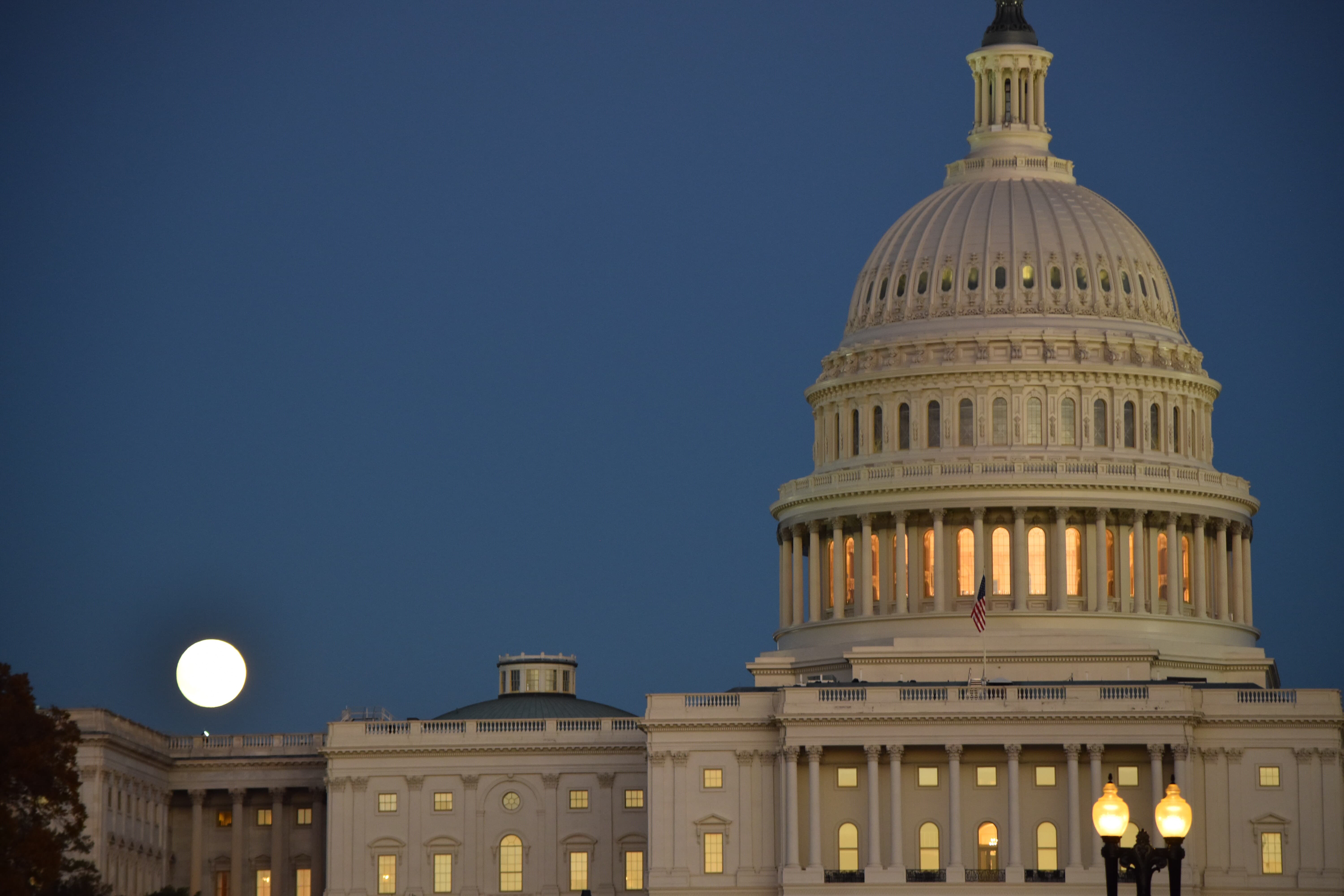
Tech giants back Trump’s AI deregulation plan amid public concern over societal impacts

Donald Trump recently hosted an AI summit in Washington, titled ‘Winning the AI Race,’ geared towards a deregulated atmosphere for AI innovation. Key figures from the tech industry, including Nvidia’s CEO Jensen Huang and Palantir’s CTO Shyam Sankar, attended the event.

Co-hosted by the Hill and Valley Forum and the Silicon Valley All-in Podcast, the summit was a platform for Trump to introduce his ‘AI Action Plan‘, comprised of three executive orders focusing on deregulation. Trump’s objective is to dismantle regulatory restrictions he perceives as obstacles to innovation, aiming to re-establish the US as a leader in AI exportation globally.

The executive orders announced target the elimination of ‘ideological dogmas such as diversity, equity, and inclusion (DEI)’ in AI models developed by federally funded companies. Additionally, one order promotes exporting US-developed AI technologies internationally, while another seeks to lessen environmental restrictions and speed up approvals for energy-intensive data centres.

These measures are seen as reversing the Biden administration’s policies, which stressed the importance of safety and security in AI development. Technology giants Apple, Meta, Amazon, and Alphabet have shown significant support for Trump’s initiatives, contributing to his inauguration fund and engaging with him at his Mar-a-Lago estate. Leaders like OpenAI’s Sam Altman and Nvidia’s Jensen Huang have also pledged substantial investments in US AI infrastructure.

Despite this backing, over 100 groups, including labour, environmental, civil rights, and academic organisations, have voiced their opposition through a ‘People’s AI action plan’. These groups warn of the potential risks of unregulated AI, which they fear could undermine civil liberties, equality, and environmental safeguards.

They argue that public welfare should not be compromised for corporate gains, highlighting the dangers of allowing tech giants to dominate policy-making. That discourse illustrates the divide between industry aspirations and societal consequences.

The tech industry’s influence on AI legislation through lobbying is noteworthy, with a report from Issue One indicating that eight of the largest tech companies spent a collective $36 million on lobbying in 2025 alone. Meta led with $13.8 million, employing 86 lobbyists, while Nvidia and OpenAI saw significant increases in their expenditure compared to previous years. The substantial financial outlay reflects the industry’s vested interest in shaping regulatory frameworks to favour business interests, igniting a debate over the ethical responsibilities of unchecked AI progress.

As tech companies and pro-business entities laud Trump’s deregulation efforts, concerns persist over the societal impacts of such policies.

Would you like to learn more about AI, tech and digital diplomacyIf so, ask our Diplo chatbot!

China issues action plan for global AI governance and proposes global AI cooperation organisation

At the 2025 World AI Conference in Shanghai, Chinese Premier Li Qiang urged the international community to prioritise joint efforts in governing AI, making reference to a need to establish a global framework and set of rules widely accepted by the global community. He unveiled a proposal by the Chinese government to create a global AI cooperation organisation to foster international collaboration, innovation, and inclusivity in AI across nations.

China attaches great importance to global AI governance, and has been actively promoting multilateral and bilateral cooperation with a willingness to offer more Chinese solutions‘.

An Action Plan for AI Global Governance was also presented at the conference. The plan outlines, in its introduction, a call for ‘all stakeholders to take concrete and effective actions based on the principles of serving the public good, respecting sovereignty, development orientation, safety and controllability, equity and inclusiveness, and openness and cooperation, to jointly advance the global development and governance of AI’.

The document includes 13 points related to key areas of international AI cooperation, including promoting inclusive infrastructure development, fostering open innovation ecosystems, ensuring high-quality data supply, and advancing sustainability through green AI practices. It also calls for consensus-building around technical standards, advancing international cooperation on AI safety governance, and supporting countries – especially those in the Global South – in ‘developing AI technologies and services suited to their national conditions’.

Notably, the plan indicates China’s support for multilateralism when it comes to the governance of AI, calling for an active implementation of commitments made by UN member states in the Pact for the Future and the Global Digital Compact, and expressing support for the establishment of the International AI Scientific Panel and a Global Dialogue on AI Governance (whose terms of reference are currently negotiated by UN member states in New York).

Would you like to learn more about AI, tech and digital diplomacyIf so, ask our Diplo chatbot!