
US agencies to adopt ChatGPT to modernise government operations

The US government has finalised a deal with OpenAI to integrate ChatGPT Enterprise across all federal agencies. Each agency will access ChatGPT for $1 to support AI adoption and modernise operations.

According to the General Services Administration, the move aligns with the White House’s AI Action Plan, which aims to make the US a global leader in AI development. The plan promotes AI integration, innovation, and regulation across public institutions.

However, privacy advocates and cybersecurity experts have raised concerns over the risks of centralised AI in government. Critics cite the potential for mass surveillance, narrative control, and sensitive data exposure.

Sam Altman, CEO of OpenAI, has cautioned users that AI conversations are not protected under privacy laws and could be used in legal proceedings. Storing data on centralised servers via large language models raises concerns over civil liberties and government overreach.

Would you like to learn more about AI, tech and digital diplomacy? If so, ask our Diplo chatbot

AI-assisted multi-disease CT scans launched in Beijing hospital

Beijing United Family Hospital and Alibaba DAMO Academy have launched a joint effort to bring advanced AI screening into clinical use.

Their flagship project uses a plain CT scan combined with DAMO Academy’s multi-condition detection AI to facilitate early identification of gastrointestinal cancers and chronic diseases.

The technology has already internationally earned the FDA’s ‘Breakthrough Device’ designation. Collaborators stress that combining AI with established international standards supports more accurate, patient-centred care.

The system streamlines diagnosis, reducing delays and improving reliability, especially for cancers that traditional screening often misses. Hospital leadership argues that the partnership shifts screening from reactive to proactive models.

Would you like to learn more about AI, tech and digital diplomacy? If so, ask our Diplo chatbot!
Cyber Force proposal gains momentum in Washington

A new commission will begin work next month to explore creating a standalone Cyber Force as a military service. The Centre for Strategic and International Studies leads the effort in collaboration with the Cyber Solarium Commission 2.0.

The study responds to ongoing weaknesses in how the US military organises, trains and equips personnel for cyber operations. These shortcomings have prompted calls for a dedicated force with a focused mission.

The Cyber Force would aim to improve readiness and capability in the digital domain, mirroring the structure of other service branches. Cyber operations are seen as increasingly central to national security.

Details of the commission’s work will emerge in the coming months as discussions shape what such a force might look like.

Would you like to learn more about AI, tech and digital diplomacy? If so, ask our Diplo chatbot!

The end of the analogue era and the cognitive rewiring of new generations

Navigating a world beyond analogue

The digital transformation of daily life represents more than just a change in technological format. It signals a deep cultural and cognitive reorientation.

Rather than simply replacing analogue tools with digital alternatives, society has embraced an entirely new way of interacting with information, memory, time, and space.

For younger generations born into this reality, digital mediation is not an addition but the default mode of experiencing the world. A redefinition like this introduces not only speed and convenience but also cognitive compromises, cultural fragmentation, and a fading sense of patience and physical memory.

Generation Z as digital natives

Generation Z has grown up entirely within the digital realm. Unlike older cohorts who transitioned from analogue practices to digital habits, members of Generation Z were born into a world of touchscreen interfaces, search engines, and social media ecosystems.

As Generation Z enters the workforce, the gap between digital natives and older generations is becoming increasingly apparent. For them, technology has never been a tool to learn. It has always been a natural extension of their daily life.

young university students using laptop and studying with books in library school education concept

The term ‘digital native’, first coined by Marc Prensky in 2001, refers precisely to those who have never known a world without the internet. Rather than adapting to new tools, they process information through a technology-first lens.

In contrast, digital immigrants (those born before the digital boom) have had to adjust their ways of thinking and interacting over time. While access to technology might be broadly equal across generations in developed countries, the way individuals engage with it differs significantly.

Instead of acquiring digital skills later in life, they developed them alongside their cognitive and emotional identities. This fluency brings distinct advantages. Young people today navigate digital environments with speed, confidence, and visual intuition.

They can synthesise large volumes of information, switch contexts rapidly, and interact across multiple platforms with ease.

The hidden challenges of digital natives

However, the native digital orientation also introduces unique vulnerabilities. Information is rarely absorbed in depth, memory is outsourced to devices, and attention is fragmented by endless notifications and competing stimuli.

While older generations associate technology with productivity or leisure, Generation Z often experiences it as an integral part of their identity. The integration can obscure the boundary between thought and algorithm, between agency and suggestion.

Being a digital native is not just a matter of access or skill. It is about growing up with different expectations of knowledge, communication, and identity formation.

Memory and cognitive offloading: Access replacing retention

In the analogue past, remembering involved deliberate mental effort. People had to memorise phone numbers, use printed maps to navigate, or retrieve facts from memory rather than search engines.

The rise of smartphones and digital assistants has allowed individuals to delegate that mental labour to machines. Instead of internalising facts, people increasingly learn where and how to access them when needed, a practice known as cognitive offloading.

digital brain

Although the shift can enhance decision-making and productivity by reducing overload, it also reshapes the way the brain handles memory. Unlike earlier generations, who often linked memories to physical actions or objects, younger people encounter information in fast-moving and transient digital forms.

Memory becomes decentralised and more reliant on digital continuity than on internal recall. Rather than cognitive decline, this trend marks a significant restructuring of mental habits.

Attention and time: From linear focus to fragmented awareness

The analogue world demanded patience. Sending a letter meant waiting for days, rewinding a VHS tape required time, and listening to an album involved staying on the same set of songs in a row.

Digital media has collapsed these temporal structures. Communication is instant, entertainment is on demand, and every interface is designed to be constantly refreshed.

Instead of promoting sustained focus, digital environments often encourage continuous multitasking and quick shifts in attention. App designs, with their alerts, pop-ups, and endless scrolling, reinforce a habit of fragmented presence.

Studies have shown that multitasking not only reduces productivity but also undermines deeper understanding and reflection. Many younger users, raised in this environment, may find long periods of undivided attention unfamiliar or even uncomfortable.

The lost sense of the analogue

Analogue interactions involved more than sight and sound. Reading a printed book, handling vinyl records, or writing with a pen engaged the senses in ways that helped anchor memory and emotion. These physical rituals provided context and reinforced cognitive retention.

highlighter in male hand marked text in book education concept

Digital experiences, by contrast, are streamlined and screen-bound. Tapping icons and swiping a finger across glass lack the tactile diversity of older tools. Sensory uniformity might lead to a form of experiential flattening, where fewer physical cues are accessible to strengthen memory.

Digital photography lacks the permanence of a printed one, and music streamed online does not carry the same mnemonic weight as a cherished cassette or CD once did.

From communal rituals to personal streams

In the analogue era, media consumption was more likely to be shared. Families gathered around television sets, music was enjoyed communally, and photos were stored in albums passed down across generations.

These rituals helped synchronise cultural memory and foster emotional continuity and a sense of collective belonging.

The digital age favours individualised streams and asynchronous experiences. Algorithms personalise every feed, users consume content alone, and communication takes place across fragmented timelines.

While young people have adapted with fluency, creating their digital languages and communities, the collective rhythm of cultural experience is often lost.

People no longer share the same moment. They now experience parallel narratives shaped by personal profiles and rather than social connections.

Digital fatigue and social withdrawal

However, as the digital age reaches a point of saturation, younger generations are beginning to reconsider their relationship with the online world.

While constant connectivity dominates modern life, many are now striving to reclaim physical spaces, face-to-face interactions, and slower forms of communication.

In urban centres, people often navigate large, impersonal environments where community ties are weak and digital fatigue is contributing to a fresh wave of social withdrawal and isolation.

Despite living in a world designed to be more connected than ever before, younger generations are increasingly aware that a screen-based life can amplify loneliness instead of resolving it.

But the withdrawal from digital life has not been without consequences.

Those who step away from online platforms sometimes find themselves excluded from mainstream social, political, or economic systems.

Others struggle to form stable offline relationships because digital interaction has long been the default. Both groups would probably say that it feels like living on a razor’s edge.

Education and learning in a hybrid cognitive landscape

Education illustrates the analogue-to-digital shift with particular clarity. Students now rely heavily on digital sources and AI for notes, answers, and study aids.

The approach offers speed and flexibility, but it can also hinder the development of critical thinking and perseverance. Rather than engaging deeply with material, learners may skim or rely on summarised content, weakening their ability to reason through complex ideas.

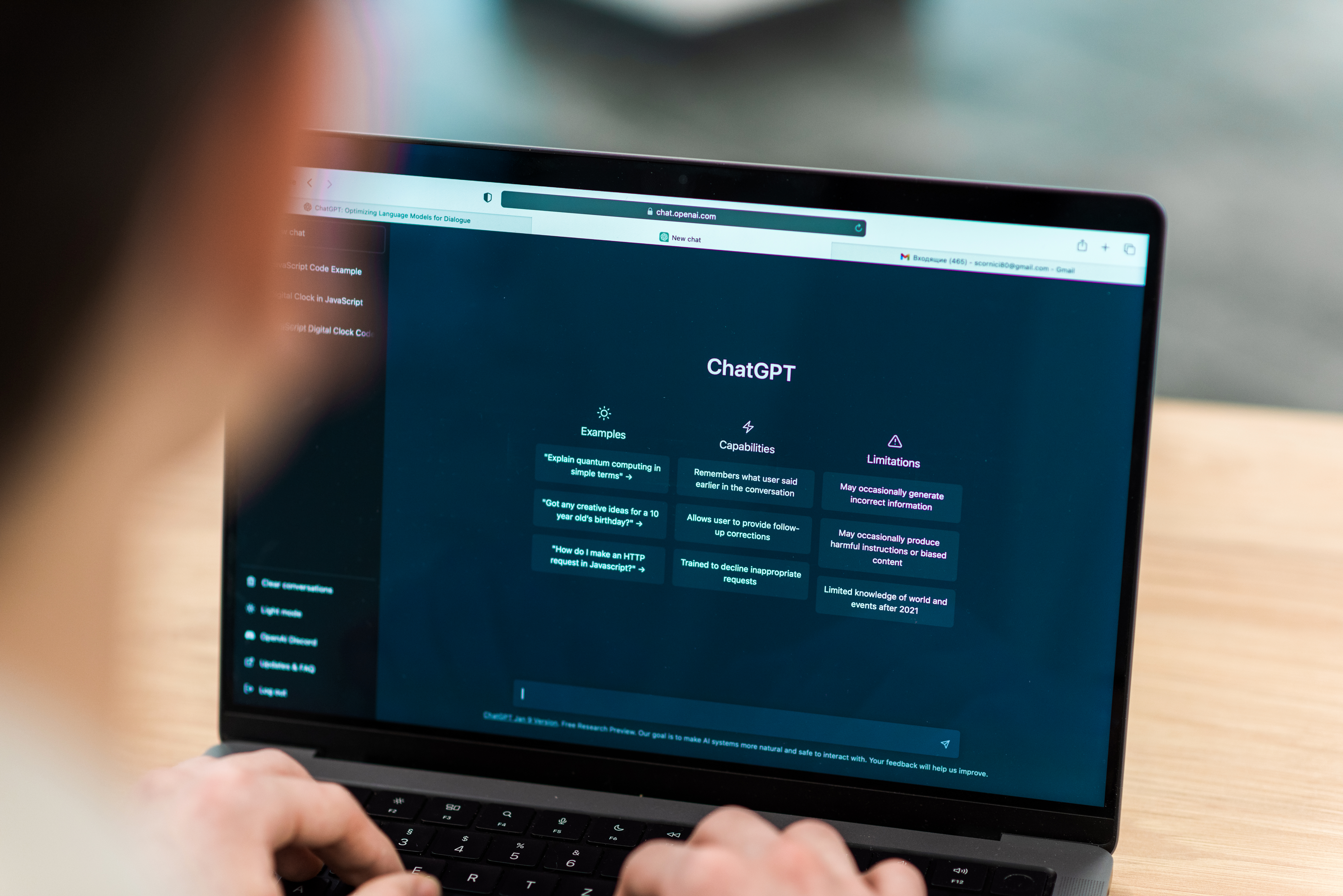
ChatGPT students Jocelyn Leitzinger AI in education

Educators must now teach not only content but also digital self-awareness. Helping students understand how their tools shape their learning is just as important as the tools themselves.

A balanced approach that includes reading physical texts, taking handwritten notes, and scheduling offline study can help cultivate both digital fluency and analogue depth. This is not a nostalgic retreat, but a cognitive necessity.

Intergenerational perception and diverging mental norms

Older and younger generations often interpret each other through the lens of their respective cognitive habits. What seems like a distraction or dependency to older adults may be a different but functional way of thinking to younger people.

It is not a decline in ability, but an adaptation. Ultimately, each generation develops in response to the tools that shape its world.

Where analogue generations valued memorisation and sustained focus, digital natives tend to excel in adaptability, visual learning, and rapid information navigation.

multi generation family with parents using digital tablet with daughter at home

Bridging the gap means fostering mutual understanding and encouraging the retention of analogue strengths within a digital framework. Teaching young people to manage their attention, question their sources, and reflect deeply on complex issues remains vital.

Preserving analogue values in a digital world

The end of the analogue era involves more than technical obsolescence. It marks the disappearance of practices that once encouraged mindfulness, slowness, and bodily engagement.

Yet abandoning analogue values entirely would impoverish our cognitive and cultural lives. Incorporating such habits into digital living can offer a powerful antidote to distraction.

Writing by hand, spending time with printed books, or setting digital boundaries should not be seen as resistance to progress. Instead, these habits help protect the qualities that sustain long-term thinking and emotional presence.

Societies must find ways to integrate these values into digital systems and not treat them as separate or inferior modes.

Continuity by blending analogue and digital

As we have already mentioned, younger generations are not less capable than those who came before; they are simply attuned to different tools.

The analogue era may be gone for good, but its qualities need not be lost. We can preserve its depth, slowness, and shared rituals within a digital (or even a post-digital) world, using them to shape more balanced minds and more reflective societies.

To achieve something like this, education, policy, and cultural norms should support integration. Rather than focus solely on technical innovation, attention must also turn to its cognitive costs and consequences.

Only by adopting a broader perspective on human development can we guarantee that future generations are not only connected but also highly aware, capable of critical thinking, and grounded in meaningful memory.

Would you like to learn more about AI, tech and digital diplomacy? If so, ask our Diplo chatbot!

OpenAI to improve its ability in detecting mental or emotional distress

In search of emotional support during a mental health crisis, it has been reported that people use ChatGPT as their ‘therapist.’ While this may seem like an easy getaway, reports have shown that ChatGPT’s responses have had an amplifying effect on people’s delusions rather than helping them find coping mechanisms. As a result, OpenAI stated that it plans to improve the chatbot’s ability to detect mental distress in the new GPT-5 AI model, which is expected to launch later this week.

OpenAI admits that GPT-4 sometimes failed to recognise signs of delusion or emotional dependency, especially in vulnerable users. To encourage healthier use of ChatGPT, which now serves nearly 700 million weekly users, OpenAI is introducing break reminders during long sessions, prompting users to pause or continue chatting.

Additionally, it plans to refine how and when ChatGPT displays break reminders, following a trend seen on platforms like YouTube and TikTok.

Would you like to learn more about AI, tech and digital diplomacy? If so, ask our Diplo chatbot!

Musk’s robotaxi ambitions threatened as Tesla faces a $243 million autopilot verdict

A recent court verdict has required Tesla to pay approximately $243 million in damages following a 2019 fatal crash involving an Autopilot-equipped Model S.

The Florida jury found Tesla’s driver-assistance software defective, a claim the company intends to appeal, asserting that the driver was solely responsible for the incident.

The ruling may significantly impact Tesla’s ambitions to expand its emerging robotaxi network in the US, fuelling heightened scrutiny over the safety of the company’s autonomous technology from both regulators and the public.

The timing of this legal setback is critical as Tesla is seeking regulatory approval for its robotaxi services, crucial to its market valuation and efforts to manage global competition while facing backlash against CEO Elon Musk’s political views.

Additionally, the company has recently awarded CEO Elon Musk a substantial new compensation package worth approximately $29 billion in stock options, signalling the company’s continued reliance on Musk’s leadership at a critical juncture, since the company plans transitions from a struggling auto business toward futuristic ventures like robotaxis and humanoid robots.

Tesla’s approach to autonomous driving, which relies on cameras and AI instead of more expensive technologies like lidars and radars used by competitors, has prompted it to start a limited robotaxi trial in Texas. However, its aggressive expansion plans for this service starkly contrast with the cautious rollouts by companies such as Waymo, which runs the US’s only commercial driverless robotaxi system.

The jury’s decision also complicates Tesla’s interactions with state regulators, as the company awaits approvals in multiple states, including California and Florida. While Nevada has engaged with Tesla regarding its robotaxi programme, Arizona remains indecisive.

This ruling challenges Tesla’s narrative of safety efficacy, especially since the case involved a distracted driver whose vehicle ran a stop sign and collided with a parked car, yet the Autopilot system was partially blamed.

Source: Reuters

Would you like to learn more about AI, tech and digital diplomacyIf so, ask our Diplo chatbot!

Google AI Mode raises fears over control of news

Google’s AI Mode has quietly launched in the UK, reshaping how users access news by summarising information directly in search results.

By paraphrasing content gathered across the internet, the tool offers instant answers while reducing the need to visit original news sites.

Critics argue that the technology monopolises UK information by filtering what users see, based on algorithms rather than editorial judgement. Concerns have grown over transparency, fairness and the future of independent journalism.

Publishers are not compensated for content used by AI Mode, and most users rarely click through to the sources. Newsrooms fear pressure to adapt their output to align with Google’s preferences or risk being buried online.

While AI may streamline convenience, it lacks accountability. Regulated journalism must operate under legal frameworks, whereas AI faces no such scrutiny even when errors have real consequences.

Would you like to learn more about AI, tech and digital diplomacy? If so, ask our Diplo chatbot!

Moflin, Japan’s AI-powered robot pet with a personality

A fluffy, AI-powered robot pet named Moflin is capturing the imagination of consumers in Japan with its unique ability to develop distinct personalities based on how it is ‘raised.’ Developed by Casio, Moflin recognises its owner and learns their preferences through interactions such as cuddling and stroking, boasting over four million possible personality variations.

Priced at ¥59,400, Moflin has become more than just a companion at home, with some owners even taking it along on day trips. To complement the experience, Casio offers additional services, including a specialised salon to clean and maintain the robot’s fur, further enhancing its pet-like feel.

Erina Ichikawa, the lead developer, says the aim was to create a supportive sidekick capable of providing comfort during challenging moments, blending technology with emotional connection in a new way.

A similar ‘pet’ was also seen in China. Namely, AI-powered ‘smart pets’ like BooBoo are gaining popularity in China, especially among youth, offering emotional support and companionship. Valued for easing anxiety and isolation, the market is set to reach $42.5 billion by 2033, reflecting shifting social and family dynamics.

Would you like to learn more about AI, tech and digital diplomacy? If so, ask our Diplo chatbot!

UK Online Safety Act under fire amid free speech and privacy concerns

The UK’s Online Safety Act, aimed at protecting children and eliminating illegal content online, is stirring a strong debate due to its stringent requirements on social media platforms and websites hosting adult content.

Critics argue that the act’s broad application could unintentionally suppress free speech, as highlighted by social media platform X.

X claims the act results in the censorship of lawful content, reflecting concerns shared by politicians, free-speech campaigners, and content creators.

Moreover, public unease is evident, with over 468,000 individuals signing a petition for the act’s repeal, citing privacy concerns over mandatory age checks requiring personal data on adult content sites.

Despite mounting criticism, the UK government is resolute in its commitment to the legislation. Technology Secretary Peter Kyle equates opposition to siding with online predators, emphasising child protection.

The government asserts that the act also mandates platforms to uphold freedom of expression alongside child safety obligations.

While X criticises both the broad scope and the tight compliance timelines of the act, warning of pressures towards over-censorship, it calls for significant statutory revisions to protect personal freedoms while safeguarding children.

The government rebuffs claims that the Online Safety Act compromises free speech, with assurances that the law equally protects freedom of expression.

Meanwhile, Ofcom, the UK’s communications regulator, has initiated investigations into the compliance of several companies managing pornography sites, highlighting the rigorous enforcement.

Source: Reuters

Would you like to learn more about AI, tech and digital diplomacyIf so, ask our Diplo chatbot!

Amazon plans to bring ads to Alexa+ chats

Amazon is exploring ways to insert ads into conversations with its AI assistant Alexa+, according to CEO Andy Jassy. Speaking during the company’s latest earnings call, he described the feature as a potential tool for product discovery and future revenue.

Alexa+ is Amazon’s upgraded digital assistant designed to support more natural, multi-step conversations using generative AI. It is already available to millions of users through Prime subscriptions or as a standalone service.

Jassy said longer interactions open the door for embedded advertising, although the approach has not yet been fully developed. Industry observers see this as part of a wider trend, with companies like Google and OpenAI also weighing ad-based business models.

Alexa+ has received mixed reviews so far, with delays in feature delivery and technical challenges like hallucinations raising concerns. Privacy advocates have warned that ad targeting within personal conversations may worry users, given the data involved.

Would you like to learn more about AI, tech and digital diplomacy? If so, ask our Diplo chatbot!