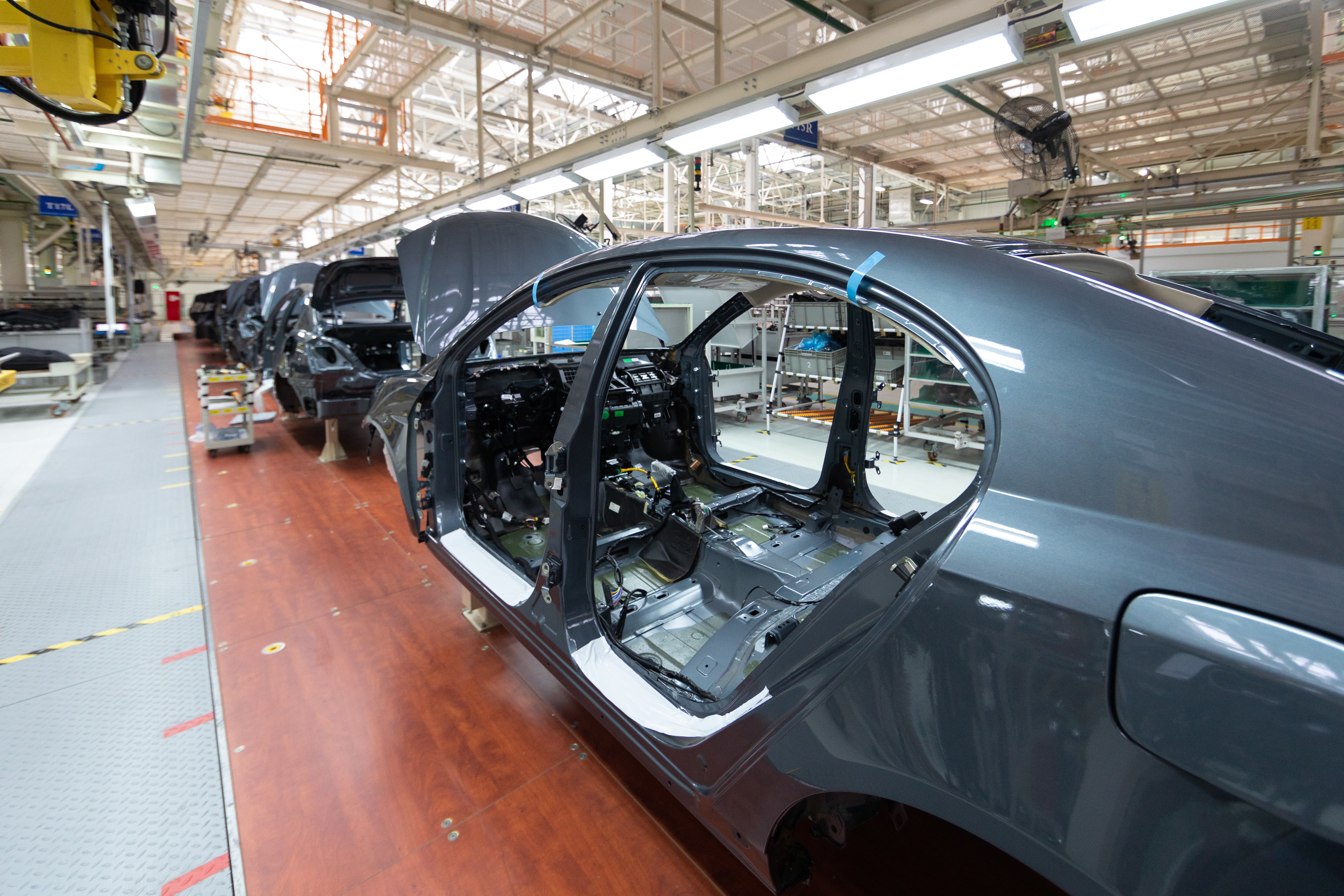
Anthropic aims to decode AI ‘black box’ within two years​

Anthropic CEO Dario Amodei has unveiled an ambitious plan to make AI systems more transparent by 2027. In a recent essay titled ‘The Urgency of Interpretability,’ Amodei highlighted the pressing need to understand the inner workings of AI models.

He expressed concern over deploying highly autonomous systems without a clear grasp of their decision-making processes, deeming it ‘basically unacceptable’ for humanity to remain ignorant of how these systems function.

Anthropic is at the forefront of mechanistic interpretability, a field dedicated to deciphering the decision-making pathways of AI models. Despite these advancements, Amodei emphasized that much more research is needed to fully decode these complex systems.​

Looking ahead, Amodei envisions conducting ‘brain scans’ or ‘MRIs’ of advanced AI models to detect potential issues like tendencies to deceive or seek power. He believes that achieving this level of interpretability could take five to ten years but is essential for the safe deployment of future AI systems.

Amodei also called on industry peers, including OpenAI and Google DeepMind, to intensify their research efforts in this area and urged governments to implement ‘light-touch’ regulations to promote transparency and safety in AI development.​

Would you like to learn more about AI, tech and digital diplomacy? If so, ask our Diplo chatbot

Meta cuts jobs in Reality Labs

Meta has announced layoffs within its Reality Labs division, impacting Oculus Studios and hardware development teams. Among those affected is the team behind Supernatural, a popular VR fitness app that Meta acquired for over $400 million.

The company stated that these restructuring efforts aim to improve efficiency and focus on developing future mixed reality experiences, particularly in fitness and gaming. Despite reaffirming its commitment to VR and mixed reality, Meta’s moves reflect its Quest headset business challenges.

While its smart glasses partnership with Ray-Ban has exceeded sales expectations, Quest devices continue to underperform, with the latest Quest 3S already seeing discounts less than a year after release.

Why does it matter?

The layoffs signal Meta’s attempt to streamline operations as it navigates a shifting market for virtual and mixed reality. Although the company promises ongoing support for its VR communities, these changes highlight the pressures Meta faces in turning its ambitious metaverse and hardware ventures into sustainable success.

Would you like to learn more about AI, tech and digital diplomacy? If so, ask our Diplo chatbot!

Auto Shanghai 2025 showcases cutting-edge AI robots

At Auto Shanghai 2025, running from April 23 to May 2, nearly 1,000 companies from 26 countries showcase their innovations.

A major highlight of the event has been the introduction of AI humanoid robots.

Among the most talked-about innovations is Mornine Gen-1, an AI humanoid robot developed by Chinese automaker Chery.

Designed to resemble a young woman, Mornine is set for various roles, from auto sales consultation to retail guidance and entertainment performances.

Also drawing attention is AgiBot’s A2 interactive service robot. Serving as a ‘sales consultant,’ the A2’s smart, interactive features have made it a standout at the event.

Would you like to learn more about AI, tech and digital diplomacy? If so, ask our Diplo chatbot!

Microsoft’s Surface ad uses generative AI without anyone noticing

Microsoft recently revealed that it created a minute-long ad for its Surface Pro and Surface Laptop using generative AI, but the twist is that no one seemed to notice the AI elements, even though the ad has been online for nearly three months.

Released on January 30th, the ad features a mix of real footage and AI-generated content, with some AI-generated visuals corrected and integrated with live shots.

The AI tools were first used to generate the script, storyboards, and pitch deck for the ad. From there, a combination of text prompts and sample images helped generate visuals, which were iterated on and refined with image and video generators like Hailuo and Kling.

Creative director Cisco McCarthy explained that it took thousands of prompts to achieve the desired results, although the process ultimately saved the team around 90% of the time and cost typically needed for such a production.

Despite the AI involvement, most viewers didn’t notice the difference. The ad has received over 40,000 views on YouTube, but none of the top comments suggest AI was used. The quick-cut editing style helped mask the AI output’s flaws, demonstrating how powerful generative AI has become in the right hands.

Would you like to learn more about AI, tech and digital diplomacy? If so, ask our Diplo chatbot!

Perplexity expands iPhone app with voice features

AI research firm Perplexity has rolled out a new voice assistant for iPhones, expanding its app’s functionality to include reminders, email writing, and third-party services like ride-booking.

The assistant allows for continuous voice interaction even when the app is running in the background, although it cannot access system-level features due to Apple’s limitations. First launched on Android in January, the AI now supports multiple apps and can play media or draft emails via default Apple apps.

Users can activate it using the Action button on newer iPhones, but some features still require manual input depending on system permissions. The assistant is free to use, with limitations on the number of messages, while a £20/month subscription lifts those restrictions.

Despite comparisons with Siri, Perplexity lacks screen or camera-sharing capabilities, though it can search content from podcasts and YouTube. Developers say the update marks a significant step towards offering an AI assistant that rivals native options.

Would you like to learn more about AI, tech and digital diplomacy? If so, ask our Diplo chatbot!

BMW partners with DeepSeek for in-car AI features

BMW has announced plans to integrate AI developed by China’s DeepSeek into its vehicles sold in the Chinese market.

The announcement was made by CEO Oliver Zipse during the Shanghai Auto Show, aligning BMW with local brands such as Geely and Zeekr that have adopted similar AI technologies.

The DeepSeek-R1 model has been increasingly used across Chinese automotive sector to power intelligent cockpit systems, voice controls, and driving assistance.

Geely showcased its ‘Full-Domain AI for Smart Vehicles’, which includes AI-powered chassis control and driver interaction capabilities.

DeepSeek’s influence extends beyond automotive applications, with its technology now used in Chinese courtrooms, healthcare, and customer service.

A successor model, DeepSeek-R2, is expected soon and promises multilingual reasoning and enhanced coding capabilities, rivalling Western counterparts.

Would you like to learn more about AI, tech and digital diplomacy? If so, ask our Diplo chatbot!
Baidu rolls out new AI agent Xinxiang for Android

Chinese tech giant Baidu has launched a new AI agent, Xinxiang, aimed at enhancing user productivity by assisting with tasks such as information analysis and travel planning.

The tool is currently available on Android devices, with an iOS version still under review by Apple.

According to Baidu, Xinxiang represents a shift from traditional chatbot interactions towards a more task-focused AI experience, providing streamlined assistance tailored to practical needs.

The move reflects growing competition in China’s rapidly evolving AI market.

However, the launch highlights Baidu’s ambition to stay ahead in AI innovation and offer tools that integrate seamlessly into everyday digital life.

As regulatory reviews continue, the success of Xinxiang may depend on user adoption and the speed at which it becomes available across platforms.

Would you like to learn more about AI, tech and digital diplomacy? If so, ask our Diplo chatbot!

Former OpenAI staff challenge company’s shift to for-profit model

​A group of former OpenAI employees, supported by Nobel laureates and AI experts, has urged the attorneys general of California and Delaware to block the company’s proposed transition from a nonprofit to a for-profit structure.

They argue that such a shift could compromise OpenAI’s founding mission to develop artificial general intelligence (AGI) that benefits all of humanity, potentially prioritising profit over public safety and accountability, not just in the US, but globally.

The coalition, including notable figures like economists Oliver Hart and Joseph Stiglitz, and AI pioneers Geoffrey Hinton and Stuart Russell, expressed concerns that the restructuring would reduce nonprofit oversight and increase investor influence.

They fear this change could lead to diminished ethical safeguards, especially as OpenAI advances toward creating AGI. OpenAI responded by stating that any structural changes would aim to ensure broader public benefit from AI advancements.

The company plans to adopt a public benefit corporation model while maintaining a nonprofit arm to uphold its mission. The final decision rests with the state authorities, who are reviewing the proposed restructuring.

Would you like to learn more about AI, tech and digital diplomacy? If so, ask our Diplo chatbot!

Jamaica tests AI tools to aid teachers

The Jamaican Ministry of Education is testing AI tools in schools to assist teachers with marking and administrative duties.

Portfolio Minister Senator Dana Morris Dixon announced this during the Jamaica Teachers’ Association (JTA) Education Conference 2025, emphasising that AI would allow teachers to focus more on interacting with students, while AI handles routine tasks like grading.

The Ministry is also preparing to launch the Jamaica Learning Assistant, an AI-powered tool that personalises learning to fit individual students’ preferences, such as stories, humour, or quizzes.

Morris Dixon highlighted that AI is not meant to replace teachers, but to support them in delivering more effective lessons. The technology will allow students to review lessons, explore topics in more depth, and reinforce their understanding outside the classroom.

Looking ahead, the Government plans to open Jamaica’s first state-of-the-art AI lab later this year. The facility will offer a space where both students and teachers can develop technological solutions tailored for schools.

Additionally, the Ministry is distributing over 15,000 laptops, 600 smart boards, and 25,000 vouchers for teachers to subsidise the purchase of personal laptops to further integrate technology into the education system.

JTA President Mark Smith acknowledged the transformative potential of AI, calling it one of the most significant technological breakthroughs in history.

He urged educators to embrace this new paradigm and collaborate with the Ministry and the private sector to advance digital learning initiatives across the island.

The conference, held under the theme ‘Innovations in Education Technology: The Imperative of Change,’ reflects the ongoing push towards modernising education in Jamaica.

Would you like to learn more about AI, tech and digital diplomacy? If so, ask our Diplo chatbot!

AI films are now eligible for the Oscar awards

The Academy of Motion Picture Arts and Sciences has officially made films that incorporate AI eligible for Oscars, reflecting AI’s growing influence in cinema. Updated rules confirm that the use of generative AI or similar tools will neither help nor harm a film’s chances of nomination.

These guidelines, shaped with input from the Academy’s Science and Technology Council, aim to keep human creativity at the forefront, despite the increasing presence of digital tools in production.

Recent Oscar-winning films have already embraced AI. Adrien Brody’s performance in The Brutalist was enhanced using AI to refine his Hungarian accent, while Emilia Perez, a musical that claimed an award, used voice-cloning technology to support its cast.

Such tools can convincingly replicate voices and visual styles, making them attractive to filmmakers instead of relying solely on traditional methods, but not without raising industry-wide concerns.

The 2023 Hollywood strikes highlighted the tension between artistic control and automation. Writers and actors protested the threat posed by AI to their livelihoods, leading to new agreements that limit the use of AI-generated content and protect individuals’ likenesses.

Actress Susan Sarandon voiced fears about unauthorised use of her image, and Scarlett Johansson echoed concerns about digital impersonation.

Despite some safeguards, many in the industry remain wary. Animators argue that AI lacks the emotional nuance needed for truly compelling storytelling, and Rokit Flix’s co-founder Jonathan Kendrick warned that AI might help draft scenes, but can’t deliver the depth required for an Oscar-worthy film.

Alongside the AI rules, the Academy also introduced a new voting requirement. Members must now view every nominated film in a category before casting their final vote, to encourage fairer decisions in this shifting creative environment.

Would you like to learn more about AI, tech and digital diplomacy? If so, ask our Diplo chatbot!