Musk plans edgier version of Grok

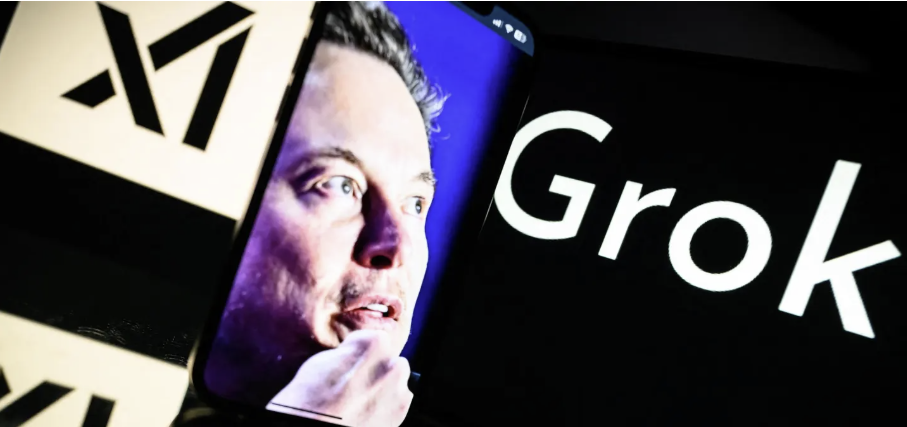
Elon Musk’s AI company, xAI, is preparing to launch a controversial feature for its chatbot, Grok, called ‘Unhinged Mode.’ According to a recently updated FAQ on the Grok website, this mode will deliver responses that are intentionally provocative, offensive, and irreverent, mimicking an amateur stand-up comedian pushing boundaries.

Musk first teased the idea of an unfiltered chatbot nearly a year ago, describing Grok as a tool that would answer controversial questions without self-censorship. While Grok has already been known for its edgy responses, it currently avoids politically sensitive topics. The new mode appears to be an effort to deliver on Musk’s vision of an anti-‘woke’ AI assistant, standing apart from more conservative competitors like OpenAI’s ChatGPT.

The move comes amid ongoing debates about political bias in AI systems. Musk has previously claimed that most AI tools lean left due to their reliance on web-based training data. He has vowed to make Grok politically neutral, blaming the internet’s content for any perceived bias in the chatbot’s current outputs. Critics, however, worry that unleashing an unfiltered mode could lead to harmful or offensive outputs, raising questions about the responsibility of AI developers.

As Grok continues to evolve, the AI industry is closely watching how users respond to Musk’s push for a less restrained chatbot. Whether this will prove a success or ignite further controversy remains to be seen.

EU denies censorship claims made by Meta

The European Commission has rejected accusations from Meta CEO Mark Zuckerberg that European Union laws censor social media, saying regulations only target illegal content. Officials clarified that platforms are required to remove posts deemed harmful to children or democracy, not lawful content.

Zuckerberg recently criticised EU regulations, claiming they stifle innovation and institutionalise censorship. In response, the Commission strongly denied the claims, emphasising its Digital Services Act does not impose censorship but ensures public safety through content regulation.

Meta has decided to end fact-checking in the US for Facebook, Instagram and Threads, opting for a ‘community notes’ system. The system allows users to highlight misleading posts, with notes published if diverse contributors agree they are helpful.

The EU confirmed that such a system could be acceptable in Europe if platforms submit risk assessments and demonstrate effectiveness in content moderation. Independent fact-checking for European users will remain available for US-based content.

Brazil warns tech firms to follow laws or face expulsion

Brazilian Supreme Court Judge Alexandre de Moraes reiterated on Wednesday that technology companies must comply with national laws to continue operating in the country. His statement followed Meta’s recent announcement to scale back its US fact-checking program, raising concerns about its impact on Brazil.

Speaking at an event marking the anniversary of anti-institution riots, Moraes emphasised that the court would not tolerate the use of hate speech for profit. Last year, he ordered the suspension of social media platform X for over a month due to its failure to moderate hate speech, a decision later upheld by the court. X owner Elon Musk criticised the move as censorship but ultimately complied with court demands to restore the platform’s services in Brazil.

Brazilian prosecutors have also asked Meta to clarify whether its US fact-checking changes will apply in Brazil, citing an ongoing investigation into social media platforms’ efforts to combat misinformation and violence. Meta has been given 30 days to respond but declined to comment through its local office.

Spain urges neutrality from social media platforms

The Spanish government stressed social media platforms must remain neutral and avoid interfering in political matters. The statement came after X’s owner, Elon Musk, commented on crime data involving foreigners in Catalonia.

Government spokesperson Pilar Alegria emphasised the need for absolute impartiality from such platforms when responding to questions about Musk’s remarks and his ongoing disagreements with European leaders like Keir Starmer and Emmanuel Macron.

Musk had reposted crime statistics from a Spanish newspaper, leading to criticism from Catalan officials. Catalonia’s Socialist leader Salvador Illa warned against using the region’s name to promote hate speech, while Spanish Prime Minister Pedro Sanchez rejected any link between immigration and crime rates.

The Spanish Interior Ministry previously reported stable or declining crime rates, affirming that immigration has no significant impact on criminal activity.

Telegram provided user data to US authorities following Durov’s arrest

Telegram, the popular messaging app, has fulfilled 900 requests from US authorities for personal information about its users in 2024, with a significant rise in inquiries following the arrest of CEO Pavel Durov in France. A report from 404 Media, published on 7 January, revealed that the platform provided 14 requests for IP addresses and phone numbers between January and September 2024. However, most of these requests were made after October, affecting over 2,000 users.

The increase in requests came after French authorities arrested Durov on 24 August, accusing Telegram of enabling criminal activity. Durov has stated that since 2018, Telegram has been providing user information like IP addresses and phone numbers to law enforcement authorities when requested. The policy, which is mentioned in Telegram’s privacy guidelines, continues to be a source of controversy.

Despite the ongoing legal issues, with Durov still barred from leaving France, Telegram remains a key platform, especially within the cryptocurrency community, where it has more than 950 million monthly active users.

Meta ends fact-checking program in the US

Meta Platforms has announced the termination of its US fact-checking program and eased restrictions on politically charged discussions, such as immigration and gender identity. The decision, which affects Facebook, Instagram, and Threads, marks a significant shift in the company’s content moderation strategy. CEO Mark Zuckerberg framed the move as a return to ‘free expression,’ citing recent US elections as a cultural tipping point. The changes come as Meta seeks to build rapport with the incoming Trump administration.

In place of fact-checking, Meta plans to adopt a ‘Community Notes’ system, similar to that used by Elon Musk’s platform X. The company will also scale back proactive monitoring of hate speech, relying instead on user reports, while continuing to address high-severity violations like terrorism and scams. Meta is also relocating some policy teams from California to other states, signalling a broader operational shift. The decision follows the promotion of Republican policy executive Joel Kaplan to head of global affairs and the appointment of Trump ally Dana White to Meta’s board.

The move has sparked criticism from fact-checking organisations and free speech advocates. Angie Drobnic Holan, head of the International Fact-Checking Network, pushed back against Zuckerberg’s claims of bias, asserting that fact-checkers provide context rather than censorship. Critics, including the Centre for Information Resilience, warn that the policy rollback could exacerbate disinformation. For now, the changes will apply only to the US, with Meta maintaining its fact-checking operations in regions like the European Union, where stricter tech regulations are in place.

As Meta rolls out its ‘Community Notes’ system, global scrutiny is expected to intensify. The European Commission, already investigating Musk’s X over similar practices, noted Meta’s announcement and emphasised compliance with the EU’s Digital Services Act, which mandates robust content regulation. While Meta navigates a complex regulatory and political landscape, the impact of its new policies on disinformation and public trust remains uncertain.

Albania’s TikTok ban: Balancing youth protection with free speech and economic impact

In Tirana, Albania, Ergus Katiaj, a small business owner who relies on TikTok to market his nighttime delivery service for snacks, cigarettes, and alcohol, faces an uncertain future. The Albanian government has announced a year-long ban on the social media platform, a move aimed at curbing youth violence.

The ban follows a tragic incident in November where a 14-year-old boy was fatally stabbed, reportedly after an online clash with a peer. Prime Minister Edi Rama said the decision, announced on 21 December, is to protect young people, but critics argue it threatens free speech and commerce ahead of the May elections.

The ban aligns Albania with a growing list of countries imposing restrictions on TikTok due to concerns over harmful content and its ties to China-based parent company ByteDance. However, business owners like Katiaj fear significant financial losses, as TikTok has been a vital tool for free marketing.

Rights groups and opposition leaders, such as Arlind Qori of the Bashke party, worry the ban sets a troubling precedent for political censorship, particularly in a country where protests against the jailing of political opponents were met with harsh government responses last year.

TikTok has called for urgent clarification from the Albanian government, asserting that reports indicate the videos linked to the tragic incident were uploaded to another platform. Meanwhile, the debate continues, with some viewing the ban as a protective measure for youth and others as an overreach limiting commerce and dissent.

For many, like Katiaj, the ban underscores the broader challenges of balancing public safety with democratic freedoms in Albania.

Malaysia tightens social media oversight with new licensing law

Malaysia’s communications regulator has granted licenses to Tencent’s WeChat and ByteDance’s TikTok under a new social media law designed to combat rising cybercrime. The law, effective from 1 January, mandates that platforms and messaging services with over 8 million users in Malaysia must obtain a license or face legal consequences.

While messaging app Telegram is close to completing the licensing process, Meta Platforms, the owner of Facebook, Instagram, and WhatsApp, has just started compliance steps. Other major platforms face scrutiny under the law. X, formerly known as Twitter, claims its user base in Malaysia falls below the 8 million threshold, a claim currently under review by authorities.

Alphabet’s YouTube has not applied for a license, citing concerns about how the law applies to its video-sharing features. The regulator emphasised that non-compliance could lead to investigations and regulatory actions.

The move follows a surge in harmful online content earlier this year, prompting Malaysian authorities to urge tighter monitoring from social media companies. Content related to online scams, child exploitation, cyberbullying, and sensitive topics such as race, religion, and royalty is classified as harmful.

Platforms like TikTok, Facebook, and YouTube reportedly have millions of active users in Malaysia. TikTok has over 28 million users aged 18 and above, highlighting the region’s high stakes of regulatory compliance.

TikTok’s Pool Guy balances fame with everyday work

Miles Laflin, a Bedfordshire-based pool cleaner known as ‘The Pool Guy’, has amassed over 22 million followers across social media platforms for his visually satisfying videos of pool cleaning. Despite his fame, the 34-year-old continues his day job, crediting it with keeping him grounded. Laflin has been in the pool cleaning business for over a decade and began sharing his work on TikTok, where a single video has attracted over 170 million views.

His viral content has significantly boosted his business, with 90% of his work coming from followers who discover him online. Laflin’s success led to him winning the high-quality content creator of the year title at the inaugural UK and Ireland TikTok Awards. He encourages others to share content about their jobs, emphasising that social media offers opportunities for brand deals, global travel, and personal transformation.

Laflin continues to balance his viral fame with his pool cleaning business, a testament to his passion for the trade. He believes there is an audience for every profession, urging aspiring content creators to showcase their unique skills online.

TikTok fined in Russia for legal violations

A Moscow court has fined TikTok three million roubles (around $28,930) for failing to meet Russian legal requirements. The court’s press service confirmed the verdict but did not elaborate on the specific violation.

The social media platform, owned by ByteDance, has been facing increasing scrutiny worldwide. Allegations of non-compliance with legal frameworks and security concerns have made headlines in multiple countries.

TikTok encountered further setbacks recently, including a year-long ban in Albania last December. Canadian authorities also ordered the company to halt operations, citing national security threats.

The fine in Russia reflects the mounting regulatory challenges for TikTok as it navigates stricter oversight in various regions.