Brazilian authorities have uncovered a massive cryptocurrency money laundering operation worth $9.7 billion, leading to multiple arrests across major cities, including São Paulo, Fortaleza, and Brasília. The investigation, named ‘Operation Niflheim,’ targeted suspects believed to be laundering funds from drug trafficking and smuggling through crypto assets.
Officials executed 23 search warrants and arrested eight individuals, focusing on a network of companies accused of moving billions using shell firms, tax dodgers, and foreign exchange companies. Investigators discovered that over half of the deposits were linked to individuals with criminal backgrounds, highlighting the extensive use of cryptocurrencies in illegal activities.
The Federal Police have also frozen more than $1.58 billion in bank and crypto exchange accounts as part of the operation. The investigation, ongoing since 2021, underscores the growing role of cryptocurrencies in facilitating financial crimes in Brazil.
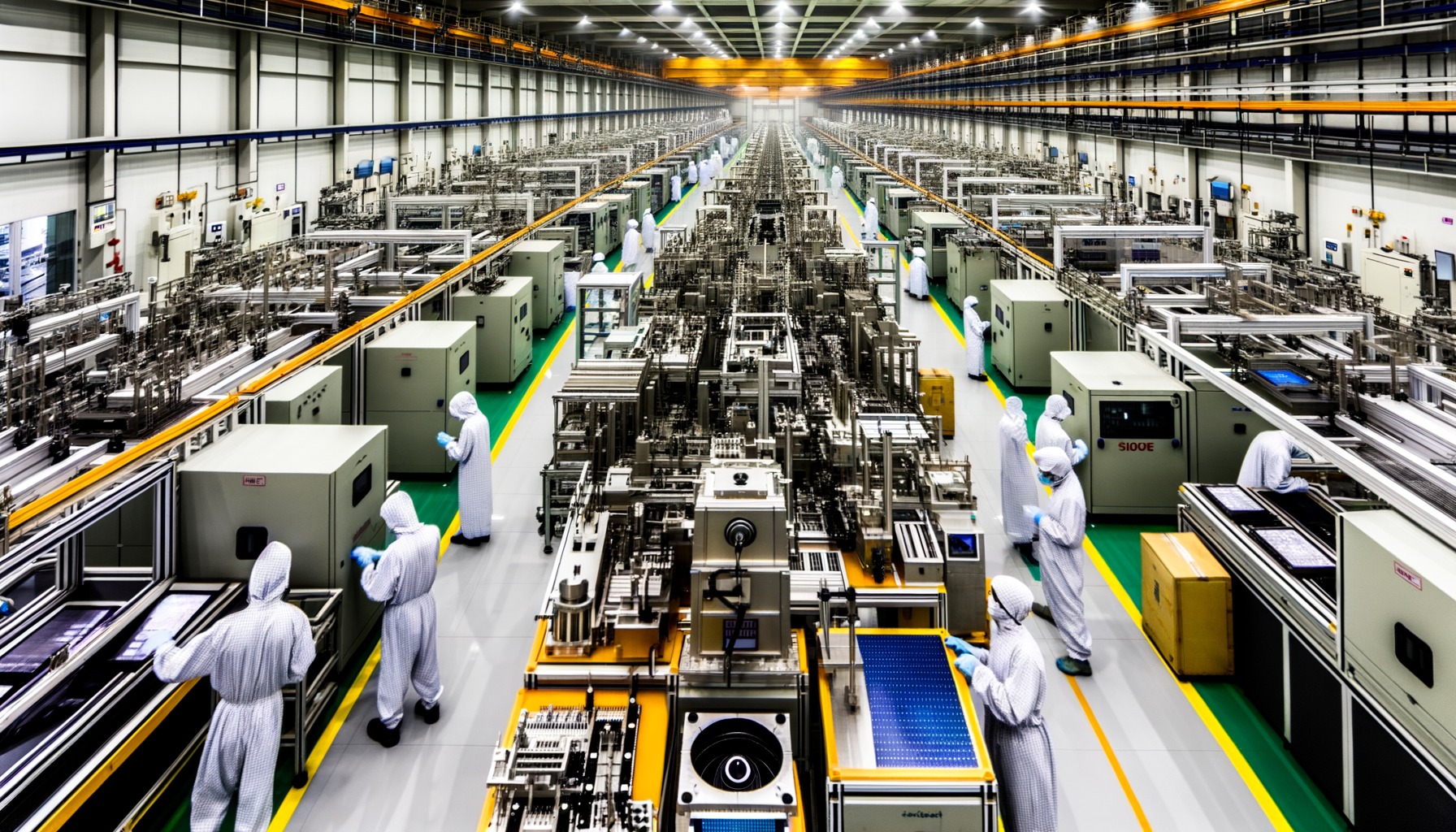
Analog Devices (ADI) has entered into an agreement with India’s Tata Group to explore semiconductor manufacturing opportunities in the country. Tata Electronics, the conglomerate’s electronics manufacturing division, is investing $14 billion to build India’s first semiconductor fabrication plant in Gujarat and a chip-assembly and testing facility in Assam.
The collaboration aims to produce ADI’s semiconductor products at Tata Electronics’ facilities, boosting India’s presence in the global semiconductor industry. Prime Minister Narendra Modi’s government is pushing for the country to become a key player in semiconductor production, rivalling established hubs such as Taiwan.
As part of the deal, Tata will also integrate ADI’s semiconductor products into Tata Motors’ electric vehicles and Tejas Networks’ telecom infrastructure. However, neither company has disclosed specific details regarding the products that will be manufactured or utilised.
Several other global companies, including NXP Semiconductors and Micron, have also announced plans to invest in India’s growing semiconductor sector, further solidifying the nation’s ambitions in this critical technology area.
AI is forecast to add a cumulative $19.9 trillion to the global economy by 2030, according to a recent IDC study. This growth includes direct revenue from AI companies and investments in infrastructure. By that year, AI-related activities could contribute 3.5% to global GDP.
IDC reports AI spending will involve direct, indirect, and induced categories. Direct spending includes revenue from AI companies and their investment in hardware, while indirect spending covers the construction of data centres and related hiring. Induced spending, meanwhile, represents the broader economic impact of AI advancements.
Every dollar invested in business-related AI solutions in 2030 is expected to generate $4.60 into the global economy. However, IDC’s analysis does not cover potential changes in jobs or wages, which many believe AI adoption could affect.
A survey from IDC revealed that 48% of workers expect part of their roles to be automated within two years. While job automation is a significant concern, full automation remains rare, with only 3% expecting their jobs to be completely automated.
Securitize, a tokenisation platform backed by BlackRock, has announced a new partnership with the Wormhole Foundation to enhance the cross-chain capabilities of its tokenised assets. The collaboration revealed on 20 September, will allow future assets issued through Securitize to leverage Wormhole’s blockchain interoperability framework, improving connectivity across different blockchains.
As part of the agreement, Wormhole’s messaging protocol will be customised by Securitize using its own smart contracts to meet the regulatory requirements of asset managers. This integration is seen as a major step towards bridging the gap between traditional and decentralised finance, facilitating faster and cheaper transactions across multiple blockchains.
The partnership follows Securitize’s recent $47 million funding round, led by BlackRock, with investors such as Hamilton Lane and Tradeweb Markets also participating. Since the announcement, Wormhole’s native token has risen by 6%, reflecting the growing interest in real-world asset tokenisation.
Samsung has rolled out its One UI 6.1.1 update for the Galaxy Tab S8 series in South Korea. The update, initially available for Galaxy smartphones, introduces new Galaxy AI features and various improvements to One UI. The software upgrade applies to the Galaxy Tab S8, S8+, and S8 Ultra, with firmware versions X700XXU8CXHB, X800XXU8CXHB, and X900XXU8CXHB, respectively.
The update is significant, with a download size of over 2.8GB. The Galaxy AI features included in the upgrade were previously seen on the Galaxy Z Flip 6 and Galaxy Z Fold 6. Besides the AI enhancements, users will also experience improved Samsung stock apps and refined One UI functionality.
Samsung tablet users in South Korea can now install the update by heading to their device settings and manually downloading the software. For Galaxy Tab S8 series owners outside South Korea, the update is expected to roll out soon across various regions.
German authorities have shut down 47 cryptocurrency exchange services in a major crackdown on illegal money laundering. The Federal Criminal Police Office (BKA) and the Central Office for Combating Internet Crime led the operation, targeting platforms that allowed users to exchange conventional currencies and cryptocurrencies without verifying their identities. These services bypassed the ‘know-your-customer’ (KYC) rules, enabling users to trade cryptocurrencies like Bitcoin and Ethereum quickly and anonymously.
Criminals reportedly used these exchanges to conceal the origins of illicit funds, often obtained through dark web drug sales or ransomware attacks. As part of the operation on 20 August, authorities confiscated 13 crypto ATMs and seized nearly $28 million in cash from 35 locations across Germany. Financial watchdog BaFin led the raids, targeting machines operating without the necessary licences, which posed significant money laundering risks.
The closure of these exchanges is part of a wider effort to disrupt cybercrime networks. Investigators managed to secure vital user and transaction data, which could assist in future money-laundering investigations. It follows earlier German crackdowns, including the seizure of ChipMixer, a platform involved in laundering €90 million in crypto.
LinkedIn has come under scrutiny for using user data to train AI models without updating its privacy terms in advance. While LinkedIn has since revised its terms, United States users were not informed beforehand, which usually allows them time to make decisions about their accounts. LinkedIn offers an opt-out feature for data used in generative AI, but this was not initially reflected in their privacy policy.
LinkedIn clarified that its AI models, including content creation tools, use user data. Some models on its platform may also be trained by external providers like Microsoft. LinkedIn assures users that privacy-enhancing techniques, such as redacting personal information, are employed during the process.
The Open Rights Group has criticised LinkedIn for not seeking consent from users before collecting data, calling the opt-out method inadequate for protecting privacy rights. Regulatory bodies, including Ireland‘s Data Protection Commission, have been involved in monitoring the situation, especially within regions under GDPR protection, where user data is not used for AI training.
LinkedIn is one of several platforms reusing user-generated content for AI training. Others, like Meta and Stack Overflow, have also begun similar practices, with some users protesting the reuse of their data without explicit consent.
Chinese multinational technology company, Alibaba, has intensified its push into the generative AI space by releasing new open-source AI models and text-to-video technology. The Chinese tech giant’s latest models, part of its Qwen 2.5 family, range from 0.5 to 72 billion parameters, covering fields like mathematics, coding, and supporting over 29 languages.
This marks Alibaba’s shift towards a hybrid approach, combining both open-source and proprietary AI developments, as it competes with rivals such as Baidu and OpenAI, which favor closed-source models. The newly introduced text-to-video model, part of the Tongyi Wanxiang family, positions Alibaba as a key player in the rapidly growing AI-driven content creation market.
The company’s new AI offerings aim to serve a wide range of industries, from automotive and gaming to scientific research, solidifying its role in shaping the future of AI across various sectors.
Russia is planning to introduce a new tax system for cryptocurrency miners, basing it on electricity usage rather than the value of mined tokens. Deputy Finance Minister Ivan Chebeskov revealed on 18 September that the government is considering an excise tax on the electricity consumed by miners as a temporary solution before implementing a tax on their profits. The authorities have faced difficulties in calculating miners’ earnings, particularly as some do not disclose all of their wallets.
The proposed tax follows Russia granting legal status to industrial crypto mining earlier this year. Lawmakers are expected to pass legislation on the crypto mining tax by the end of the State Duma’s autumn session. The government’s long-term aim remains profit-based taxation, but electricity consumption is seen as a more practical approach for the time being, especially given the complexities of accounting in the crypto industry.
While cryptocurrency exchanges remain unregulated in Russia, there have been calls for the establishment of state-run platforms for trading digital assets. Meanwhile, Russia is positioning itself as a global leader in the crypto mining sector, with major firms such as Gazprom setting up large-scale mining operations. The country’s finance ministry expects the industry to generate substantial tax revenue by 2025.
European antitrust regulators will not take action against Microsoft’s acquisition of staff from AI startup Inflection, including its co-founders, following the withdrawal of requests from seven European Union countries. These countries dropped their requests for the European Commission to investigate, due to a recent court ruling that limits the regulator’s ability to examine mergers below the EU’s revenue threshold.
The court ruling has been viewed by some as a correction against regulatory overreach. The European Commission, in response, stated it would not pursue the case further. Despite this, the Commission acknowledged the Microsoft-Inflection deal as a merger due to its restructuring of Inflection’s business focus towards AI development.
The agreement between Microsoft and Inflection represents a significant market shift. Under the EU’s merger rules, it is considered a concentration, reflecting the ongoing transformations in the AI industry.