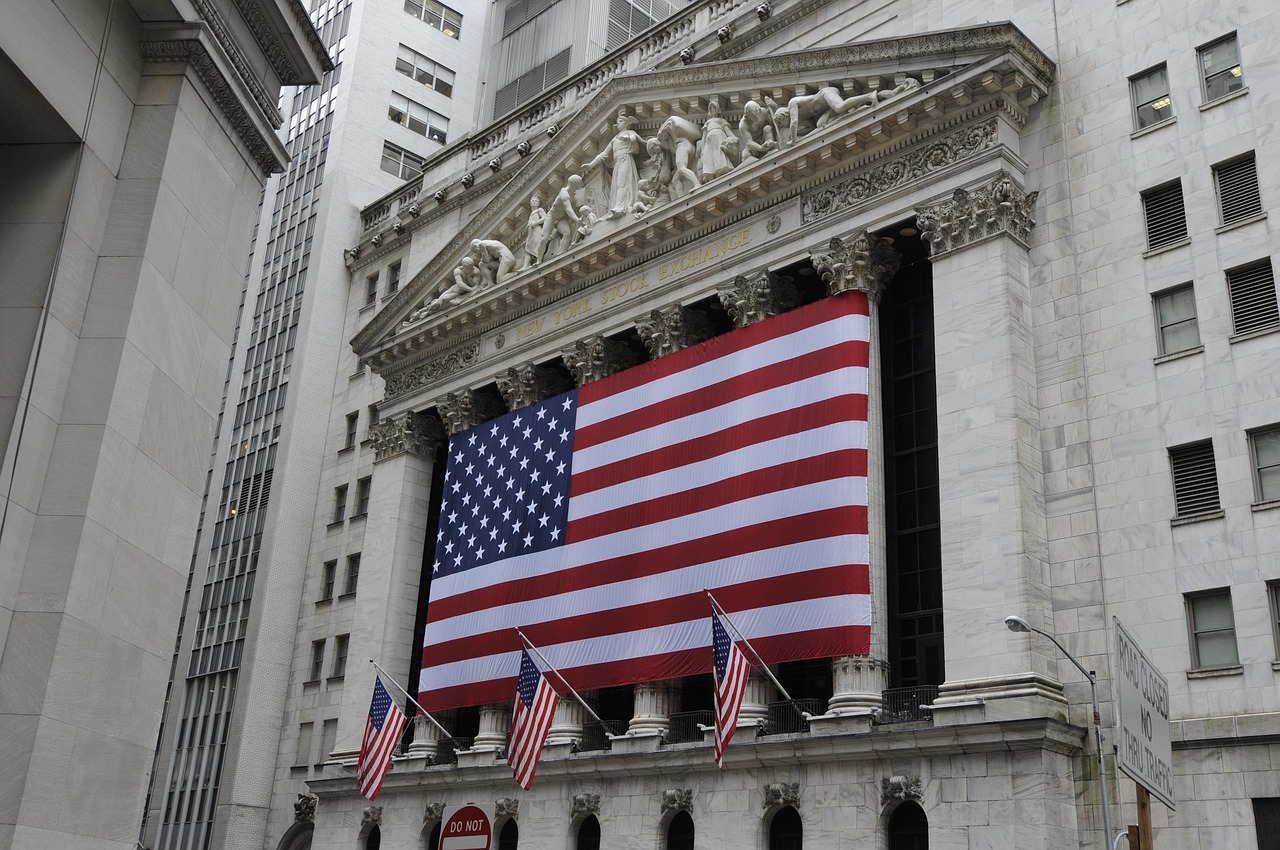
US President Donald Trump has directed his trade officials to revive investigations into digital service taxes imposed by foreign countries on American tech giants.
The move could lead to new tariffs on imports from nations like France, Canada, and India, which have introduced taxes targeting major firms such as Google, Meta, Apple, and Amazon. Trump argues that these levies unfairly exploit US companies and has vowed to protect America’s tax base from foreign appropriation.
The renewed probe follows previous investigations during Trump’s first term, where the US Trade Representative found that several countries discriminated against American firms, paving the way for potential retaliatory tariffs.
While the Biden administration initially imposed 25% tariffs on goods from countries with digital taxes, these duties were suspended to allow for global tax negotiations. However, with talks stalling and the US rejecting the 15% global minimum tax, Trump has now abandoned the deal entirely.
As tensions grow, the US could impose fresh tariffs on billions of dollars worth of foreign imports. Trump has not yet revealed the specific tariff rates or the value of goods that may be targeted in this latest round of trade actions.
For more information on these topics, visit diplomacy.edu.
AI search startup Genspark has secured $100 million in a Series A funding round, raising its valuation to $530 million as it aims to disrupt Google’s dominance in the search engine market.
Backed by United States and Singapore-based investors, the Palo Alto-based firm now boasts over two million monthly active users. The funding follows a $60 million seed round last June, continuing Genspark’s rapid growth.
Led by CEO Eric Jing, formerly head of Baidu’s AI-powered Xiaodu unit, Genspark is positioning itself as a major contender in the AI-driven search space. Its platform uses multiple AI models working together to conduct detailed online research, aiming to provide users with streamlined, citation-backed answers—an approach that contrasts Google’s traditional list of links.
Google is also testing AI-enhanced search results, highlighting the growing pressure to innovate in the industry. Genspark’s latest funding positions it to expand its technology and user base as the battle for AI-powered search heats up.
For more information on these topics, visit diplomacy.edu.
Google has quietly disclosed the pricing for its Veo 2 video-generating AI model, setting the cost at 50 cents per second of video. This translates to $30 per minute or $1,800 per hour, positioning Veo 2 as a premium tool for AI-generated video content.
While unlikely to produce big-budget epics, the model can create clips of two minutes or longer, as highlighted in Google’s initial announcement.
Jon Barron, a Google DeepMind researcher, compared Veo 2’s cost to Hollywood productions, noting that Avengers: Endgame had a production cost of around $32,000 per second.
Though Veo 2 operates at a fraction of that price, its output serves different purposes, targeting creators seeking efficient video generation without traditional production expenses.
The AI video generation space has grown increasingly competitive, with OpenAI recently releasing its Sora model to ChatGPT Pro subscribers for $200 a month. Google’s move to price Veo 2 publicly reflects the broader push to commercialise AI video tools as demand surges among content creators and businesses.
For more information on these topics, visit diplomacy.edu.
Following the recent security breach at Bybit, major cryptocurrency firms have joined forces to combat the attack and mitigate its impact. Bybit’s CEO, Ben Zhou, confirmed that both centralised and decentralised finance leaders, such as Orbiter and SynFutures, quickly moved to blacklist the attacker’s addresses. Chainalysis also tracked and published wallet addresses linked to the exploit.
Blockchain security companies, including SIS and Zero Shadows, intensified efforts to block malicious transactions and trace the perpetrators, while institutional traders such as TMSI and Cumberland provided support to stabilise the market. Several DeFi protocols, including Lido Finance and Solana Foundation, also extended their assistance.
Zhou praised the swift collaboration from industry players, calling it a testament to the cryptocurrency sector’s resilience. The exchange has since launched a recovery bounty programme, offering up to 10% of recovered funds. Bybit is working hard to enhance its security infrastructure following the breach.
Investigations have pointed to North Korea’s Lazarus Group as the likely culprit behind the attack, which exploited Bybit’s Ethereum multisig cold wallet. This group is also connected to other high-profile crypto hacks, including the 2022 DMM Bitcoin exchange breach.
For more information on these topics, visit diplomacy.edu.
Researchers from the University of Tokyo and Waseda University have developed the world’s largest biohybrid robot hand, which utilises cultivated human muscle tissue to perform complex movements. The 18-centimetre hand, complete with five individually moving fingers, incorporates a novel “sushi roll” design that bundles multiple thin muscle tissue strings to ensure sufficient nutrient supply and strength. Gold electrodes are employed to stimulate the tissues, translating straight muscle contractions into the rotational motion of the joints.
This innovative Japanese device is capable of delicate tasks such as grasping small objects, although its muscle tissues exhibit a decrease in force after approximately ten minutes of continuous action, recovering fully after an hour of rest. Such a breakthrough overcomes the limitations of earlier biohybrid devices, which were restricted to single-joint movements and were much smaller due to nutrient diffusion challenges in thicker muscle constructs.
Professor Shoji Takeuchi, specialising in mechanical engineering, believes that this research paves the way for the development of humanlike robots and precision prosthetic hands. The team’s findings, published in Science Robotics, mark a significant advance in the fusion of biological elements with mechanical systems, promising a future where robotics more closely mimic the capabilities of the human body.
For more information on these topics, visit diplomacy.edu.
Bluesky, the rapidly growing decentralised social media platform, has partnered with the UK-based Internet Watch Foundation (IWF) to combat the spread of child sexual abuse material (CSAM). As part of the collaboration, Bluesky will gain access to the IWF’s tools, which include a list of websites containing CSAM and a catalogue of digital fingerprints, or ‘hashes,’ that identify abusive images. This partnership aims to reduce the risk of users encountering illegal content while helping to keep the platform safe from such material.
Bluesky’s head of trust and safety, Aaron Rodericks, welcomed the partnership as a significant step in protecting users from harmful content. With the platform’s rapid growth—reaching over 30 million users by the end of last month—the move comes at a crucial time. In November, Bluesky announced plans to expand its moderation team to address the rise in harmful material following the influx of new users.
The partnership also highlights the growing concern over online child sexual abuse material. The IWF reported record levels of harmful content last year, with over 291,000 web pages removed from the internet. The foundation’s CEO, Derek Ray-Hill, stressed the urgency of tackling the crisis, calling for a collective effort from governments, tech companies, and society.
For more information on these topics, visit diplomacy.edu.
Qatar has signed a five-year agreement with Scale AI to integrate AI into government services. The partnership aims to enhance efficiency through predictive analytics, automation, and advanced data analysis, according to the country’s communications and information technology ministry.
Scale AI will explore over 50 AI applications tailored for Qatar’s public sector during the contract period. Trevor Thompson, the company’s global head of growth, described the initiative as a model for other governments worldwide and an opportunity to accelerate impactful AI adoption. The financial details of the agreement remain undisclosed.
Qatar is intensifying efforts to position itself as a leader in AI, competing with regional players such as Saudi Arabia and the UAE.
The San Francisco-based Scale AI, founded in 2016, specialises in providing high-quality labelled data for AI training and serves major clients, including Microsoft, Morgan Stanley, and OpenAI.
For more information on these topics, visit diplomacy.edu.
Hackers have stolen $1.5 billion from Dubai-based cryptocurrency exchange Bybit in what is believed to be the largest digital heist in history. The attacker gained access to an Ethereum wallet during a routine transfer and moved the funds to an unknown address, sparking concerns across the cryptocurrency sector.
Bybit quickly reassured users that their funds remained secure, with chief executive Ben Zhou pledging to fully compensate affected customers. Despite this, the platform saw a surge of over 350,000 withdrawal requests, leading to potential delays. The company remains solvent, holding $20 billion in customer assets and is prepared to cover losses if necessary.
The price of Ethereum briefly dipped by nearly 4% following the breach but has since stabilised. Bybit has called upon leading cybersecurity experts to assist in recovering the stolen assets, offering a reward of up to $140 million. Speculation has emerged regarding the hackers’ identity, with reports suggesting possible links to the North Korean state-sponsored Lazarus group known for previous large-scale cryptocurrency thefts.
For more information on these topics, visit diplomacy.edu.
Elon Musk’s Starlink network is facing increasing competition in the satellite internet market, particularly from SpaceSail, a Shanghai-based company backed by the Chinese government, and Amazon’s Project Kuiper. SpaceSail is expanding rapidly, having entered Brazil in November and begun operations in Kazakhstan by January. Meanwhile, Brazil is also in talks with Project Kuiper and Canada’s Telesat to diversify its options for providing high-speed internet to remote areas.
SpaceSail plans to launch 648 low Earth orbit (LEO) satellites this year, with the ambition of deploying up to 15,000 by 2030. This move aims to compete directly with Starlink, which currently operates around 7,000 satellites but plans to increase its constellation to 42,000 by the end of the decade. China’s push into satellite internet is part of its broader strategy to dominate space and digital technologies, which has raised concerns among Western governments, particularly regarding Beijing’s potential to extend its censorship and surveillance reach globally.
China’s rapid expansion in satellite technology, supported by state funding and military research, has intensified. It has launched 263 LEO satellites in the past year alone, and researchers are focusing on low-latency systems to compete with Starlink’s capabilities. The Chinese government is also exploring ways to track and monitor satellite constellations, potentially targeting Starlink as a strategic competitor.
As competition in the satellite internet sector intensifies, particularly between the US, China, and other players like Brazil, the geopolitical and military implications of these space technologies are becoming clearer. With nations striving to secure positions in space, experts warn of an increasingly complex and competitive environment.
For more information on these topics, visit diplomacy.edu.
The US Securities and Exchange Commission (SEC) has decided to close its investigation into NFT marketplace OpenSea, marking a significant win for the cryptocurrency industry. OpenSea’s CEO, Devin Finzer, shared the news, calling it a victory for creators and innovators in the space. He expressed relief that the SEC would not classify NFTs as securities, as this could have hindered progress and innovation.
The move follows a similar announcement from Coinbase, where the SEC dropped its case against the exchange. The shift towards a more relaxed regulatory stance under the current administration is seen as a sign that the crypto industry may be gaining ground.
In addition to the regulatory win, OpenSea has announced a new SEA token airdrop, rewarding loyal users of its platform and Seaport protocol. Though details on the launch remain unclear, the move has excited the community. OpenSea has also launched OS2, a new multi-chain trading platform, further enhancing its services.
The SEC’s decision signals a shift in the regulatory landscape, as crypto-friendly policies seem to gain momentum under the influence of pro-crypto figures within the agency.
For more information on these topics, visit diplomacy.edu.