Elon Musk’s Starlink network is facing increasing competition in the satellite internet market, particularly from SpaceSail, a Shanghai-based company backed by the Chinese government, and Amazon’s Project Kuiper. SpaceSail is expanding rapidly, having entered Brazil in November and begun operations in Kazakhstan by January. Meanwhile, Brazil is also in talks with Project Kuiper and Canada’s Telesat to diversify its options for providing high-speed internet to remote areas.
SpaceSail plans to launch 648 low Earth orbit (LEO) satellites this year, with the ambition of deploying up to 15,000 by 2030. This move aims to compete directly with Starlink, which currently operates around 7,000 satellites but plans to increase its constellation to 42,000 by the end of the decade. China’s push into satellite internet is part of its broader strategy to dominate space and digital technologies, which has raised concerns among Western governments, particularly regarding Beijing’s potential to extend its censorship and surveillance reach globally.
China’s rapid expansion in satellite technology, supported by state funding and military research, has intensified. It has launched 263 LEO satellites in the past year alone, and researchers are focusing on low-latency systems to compete with Starlink’s capabilities. The Chinese government is also exploring ways to track and monitor satellite constellations, potentially targeting Starlink as a strategic competitor.
As competition in the satellite internet sector intensifies, particularly between the US, China, and other players like Brazil, the geopolitical and military implications of these space technologies are becoming clearer. With nations striving to secure positions in space, experts warn of an increasingly complex and competitive environment.
For more information on these topics, visit diplomacy.edu.
The US Securities and Exchange Commission (SEC) has decided to close its investigation into NFT marketplace OpenSea, marking a significant win for the cryptocurrency industry. OpenSea’s CEO, Devin Finzer, shared the news, calling it a victory for creators and innovators in the space. He expressed relief that the SEC would not classify NFTs as securities, as this could have hindered progress and innovation.
The move follows a similar announcement from Coinbase, where the SEC dropped its case against the exchange. The shift towards a more relaxed regulatory stance under the current administration is seen as a sign that the crypto industry may be gaining ground.
In addition to the regulatory win, OpenSea has announced a new SEA token airdrop, rewarding loyal users of its platform and Seaport protocol. Though details on the launch remain unclear, the move has excited the community. OpenSea has also launched OS2, a new multi-chain trading platform, further enhancing its services.
The SEC’s decision signals a shift in the regulatory landscape, as crypto-friendly policies seem to gain momentum under the influence of pro-crypto figures within the agency.
For more information on these topics, visit diplomacy.edu.
Alibaba has announced plans to invest at least 380 billion yuan ($52.44 billion) in cloud computing and AI infrastructure over the next three years. This significant investment, revealed on Monday, follows the company’s earnings announcement on Friday, where it reported revenue of 280.15 billion yuan for the quarter ending December 31, slightly surpassing analysts’ expectations. The investment in AI and cloud computing will exceed the company’s total spending in these areas over the past decade.
The announcement marks a strategic push for Alibaba in the rapidly growing AI sector, positioning the company as a key player in China’s AI race. This has already paid off in the stock market, with Alibaba’s shares climbing over 68% so far this year, reflecting strong investor confidence. The move also comes as other Chinese tech giants, such as ByteDance, are making similar investments, with ByteDance reportedly allocating over 150 billion yuan this year to enhance its AI capabilities.
This wave of investment underscores the growing importance of AI and cloud computing to China’s tech landscape. It also highlights the competitive race between Chinese firms to dominate these sectors and secure their positions in the global technology arena.
For more information on these topics, visit diplomacy.edu.
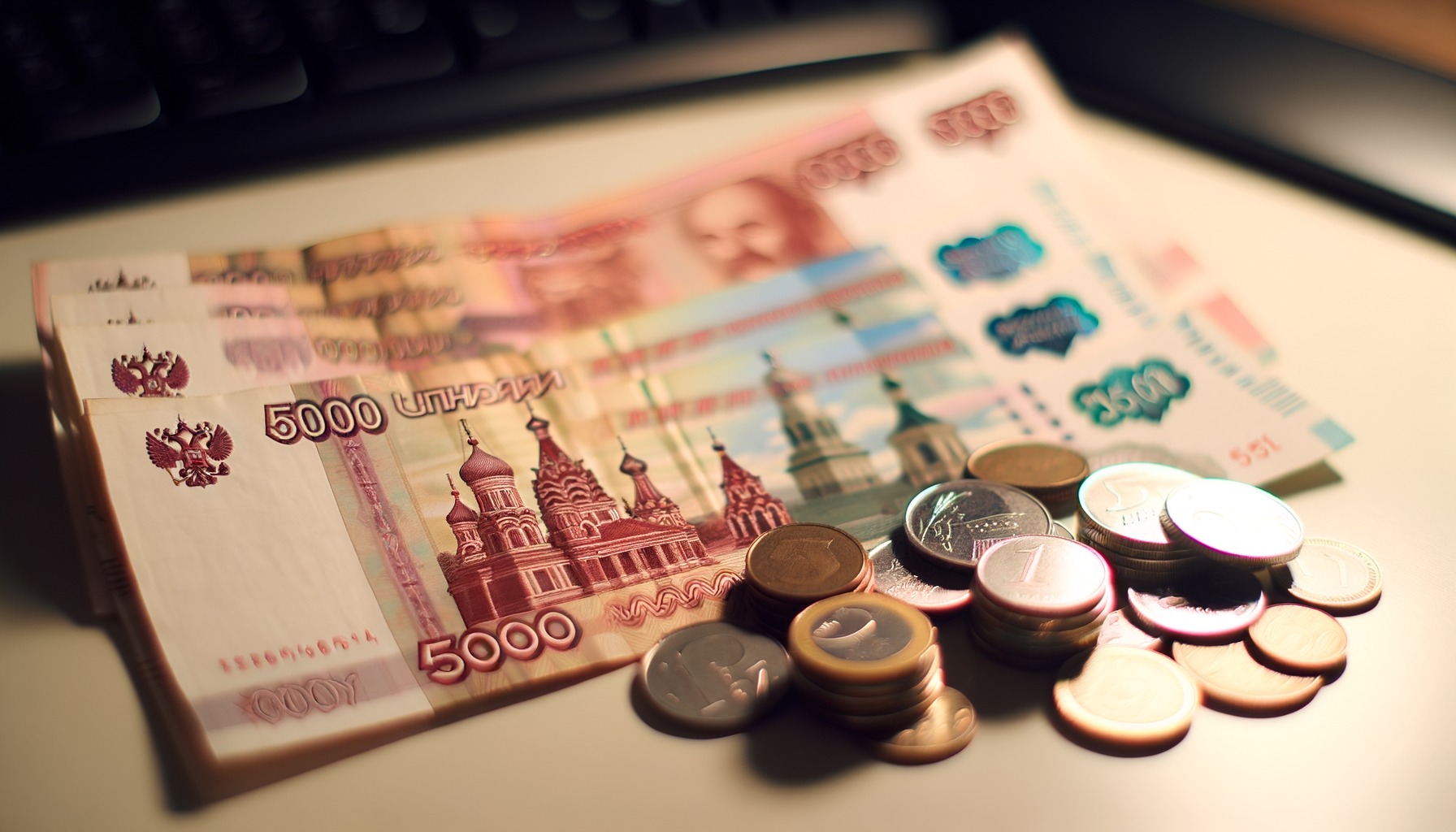
Russia’s Central Bank has launched an anti-fraud protection system for banks ahead of the planned rollout of its digital ruble (CBDC). The new measures, which came into effect on 23 February, aim to protect transactions involving the digital currency. Under the system, if a bank detects potential fraud, it can suspend a transaction for up to two days, allowing time for verification. Customers will be notified and asked to confirm the transaction before it proceeds.
The measures are primarily targeted at commercial and B2B users and are designed to reduce the risk of fraudulent activities. This builds on similar protections introduced last year for peer-to-peer transactions. The system includes a ‘cooling-off period’ to help users avoid hasty decisions that could lead to financial losses due to fraud.
Despite these efforts, concerns remain about the digital ruble’s impact on the banking sector. Some fear the CBDC could reduce liquidity for commercial banks, while others worry about its mandatory use for certain groups, such as pensioners. The Central Bank has denied these claims, asserting that the digital ruble will be voluntary for citizens.
As Russia prepares for a full digital ruble launch later this year, experts continue to question the technical and organisational challenges of mass adoption, especially for businesses and banks.
For more information on these topics, visit diplomacy.edu.
US drugmaker Amgen has announced a $200 million investment in a new technology centre in southern India, which will focus on using AI and data science to support the development of new medicines. The centre, located in Hyderabad, is expected to have a workforce of around 2,000 by the end of the year, with 300 employees already on-site. Amgen plans to make additional investments in the coming years as part of its ongoing expansion in India.
Amgen’s decision to invest in India reflects the growing importance of the country in the global pharmaceutical industry, often referred to as the ‘pharmacy of the world.’ The company’s new centre aligns with broader efforts by global pharmaceutical companies to increase their presence in India. The BioAsia conference in Hyderabad will feature executives from major drugmakers, including Amgen, Eli Lilly, and Novartis.
Amgen’s move comes amid heightened cooperation between India and the US, which recently launched discussions for an early trade deal. A key focus of these talks is to promote collaboration in critical and emerging technologies, which includes areas like pharmaceuticals. US officials have praised Amgen’s expansion as a model for how both countries can work together to harness innovation and technology.
For more information on these topics, visit diplomacy.edu.
Montana’s House of Representatives recently voted 41-59 against a proposal that would have established a Bitcoin reserve in the state. House Bill No. 429 aimed to create a special revenue account for investing in digital assets, including Bitcoin, alongside precious metals and stablecoins. However, many lawmakers expressed concerns that the bill would allow the state to speculate with taxpayer funds, with some describing the proposal as too risky.
While some representatives, like Bill Mercer, opposed the bill on the grounds of financial prudence, others saw potential benefits. Representative Lee Demming argued that the state should aim to maximise returns for taxpayers, suggesting that the bill could have achieved that goal. Curtis Schomer, the bill’s sponsor, emphasised that not passing the bill would limit the state’s investment opportunities and reduce purchasing power.
Despite the proposal’s rejection, Montana is not alone in considering a Bitcoin reserve. Twenty-four states have introduced similar legislation, with Utah making the most progress. While Montana’s bill is effectively dead for now, it could be reintroduced in the future.
For more information on these topics, visit diplomacy.edu.
Australia’s eSafety Commission has fined messaging platform Telegram A$1 million ($640,000) for failing to respond promptly to questions regarding measures it took to prevent child abuse and extremist content. The Commission had asked social media platforms, including Telegram, to provide details on their efforts to combat harmful content. Telegram missed the May 2024 deadline, submitting its response in October, which led to the fine.
eSafety Commissioner Julie Inman Grant emphasised the importance of timely transparency and adherence to Australian law. Telegram, however, disagreed with the penalty, stating that it had fully responded to the questions, and plans to appeal the fine, which it claims was solely due to the delay in response time.
The fine comes amid increasing global scrutiny of Telegram, with growing concerns over its use by extremists. Australia’s spy agency recently noted that a significant portion of counter-terrorism cases involved youth, highlighting the increasing risk posed by online extremist content. If Telegram does not comply with the penalty, the eSafety Commission could pursue further legal action.
For more information on these topics, visit diplomacy.edu.
US House Judiciary Chair Jim Jordan has called on European Union antitrust chief Teresa Ribera to clarify how the EU enforces its Digital Markets Act (DMA), which he believes disproportionately targets American companies. His request follows a memorandum signed by US President Donald Trump, warning that the administration would scrutinise the EU’s new rules regulating how US companies interact with consumers in Europe.
Jordan and his co-signatory, Scott Fitzgerald, criticised the DMA’s hefty fines, which can reach up to 10% of a company’s global revenue for violations. They argue that the rules not only disadvantage US companies but also potentially benefit Chinese firms, stifling innovation and handing over valuable data to adversarial nations. The letter urges Ribera to address these concerns with the judiciary committee by March 10.
The European Commission, where Ribera is the second-highest official, has rejected claims that its laws are aimed at American companies. Ribera defended the DMA in a recent interview, stating that the EU should not be pressured into altering laws that have already been approved by European lawmakers.
For more information on these topics, visit diplomacy.edu.
Huawei’s founder Ren Zhengfei told President Xi Jinping that China’s concerns about a lack of domestically developed chips and operating systems have eased, following a meeting with key entrepreneurs. According to Chinese state media, Ren expressed confidence that China would rise faster, thanks to its advancements in technology, particularly in semiconductors and software. The phrase ‘lack of core and soul,’ which refers to the absence of critical technology like chips and operating systems, was first used in 1999 to highlight challenges in China’s information industry.
The meeting, which included prominent founders such as BYD’s Wang Chuanfu and Xiaomi’s Lei Jun, discussed the achievements and growth in sectors like electric vehicles and electronics. Ren’s comments reflected the progress made despite challenges like US sanctions, with Huawei playing a key role in pushing for China’s self-sufficiency. Wang shared how China’s EV industry had grown significantly, while Lei praised Xi’s leadership, stating that under his guidance, any challenges could be overcome.
Other entrepreneurs, including representatives from Will Semiconductor, Unitree Robotics, and New Hope Group, also spoke at the meeting, although details about their comments were not widely disclosed. The meeting was part of a broader push for China to strengthen its technological independence.
For more information on these topics, visit diplomacy.edu.
Stellantis has unveiled its first in-house-developed automated driving system, STLA AutoDrive, designed to assist urban commuters with hands-free and eyes-off driving. The system can manage speed, steering and braking while adapting to traffic flow.
The new technology allows drivers to momentarily shift focus from the road at speeds of up to 60 kilometres per hour.
Stellantis confirmed that future advancements could enable operation at speeds reaching 95 kilometres per hour.
Deployment of STLA AutoDrive will be determined by market demand, with integration planned across Stellantis’ vehicle brands. The system represents a step forward in the company’s push for enhanced driving automation.
For more information on these topics, visit diplomacy.edu.