In Nagpur, India, flower shop owner Ashish Nagose is one of many young Indians turning to cryptocurrency trading as a way to supplement their income. With regulations tightening around equity derivatives in India, Nagose hopes that trading in crypto assets like Bitcoin and Ethereum can provide stability during slower months for his family-owned flower business. His efforts reflect a broader trend among young Indians who are increasingly looking to cryptocurrencies as a source of income, with the crypto market in India growing rapidly.
The surge in cryptocurrency trading volumes on Indian exchanges has been remarkable, more than doubling in the last quarter of 2024. As of now, young retail traders, particularly in smaller cities like Jaipur, Lucknow, and Pune, are driving much of the interest in crypto. Many of these individuals are seeking opportunities to earn more in a country where job growth has not kept pace with the economy. With India’s crypto market projected to grow to $15 billion by 2035, local platforms like CoinSwitch are seeing increasing numbers of users.
However, this rise in crypto interest is not without challenges. The Indian government has imposed steep taxes on crypto trading and has issued warnings about the risks and volatility of these digital assets. Despite these concerns, young traders like Sagar Neware are determined to make a living through crypto, aiming to restart their family’s business with the money they earn from trading.
The surge in crypto trading in India is also drawing attention to the need for regulatory oversight. While the government has yet to adopt comprehensive regulations for cryptocurrencies, it has warned of potential risks to macroeconomic stability. Despite the central bank’s caution, India’s young crypto enthusiasts are undeterred, continuing to learn and trade in hopes of a more prosperous future.
For more information on these topics, visit diplomacy.edu.
Crypto exchange Bybit has seen a dramatic drop in reserves, losing over $6 billion in just two days. The mass withdrawals came after a $1.4 billion exploit on 21 February, sparking panic among users. Data shows that Bybit processed $2.5 billion in withdrawals on 22 February and another $3.26 billion the following day, bringing its total assets down from $16.9 billion to $10.8 billion.
The biggest outflows were in stablecoins and Bitcoin, with users withdrawing more than $2.3 billion in USDT and over $1.5 billion in BTC. Some of these funds were reportedly transferred to Binance and over-the-counter (OTC) platforms, raising speculation over whether Bybit sold Bitcoin or used it as collateral to cover Ethereum withdrawals.
Despite the turbulence, the exchange managed to process all withdrawals without major disruptions. Bybit’s CEO, Ben Zhou, reassured users that the platform had resolved its Ethereum shortfall and maintained full backing of customer assets on a 1:1 basis. However, the incident has reignited concerns about security and liquidity in the crypto industry.
For more information on these topics, visit diplomacy.edu.
Indonesia and Apple have reportedly reached an agreement to lift the country’s ban on iPhone 16s, with a potential deal expected to be signed this week. The ban was imposed in October after Apple failed to meet the requirement that smartphones sold in Indonesia must include at least 35% locally-made parts.
As part of the agreement, Apple will invest $1 billion into a manufacturing plant in Indonesia, focused on producing components for smartphones and other products. Additionally, Apple will commit to training local workers in research and development, expanding beyond its existing Apple academies. However, Apple has no immediate plans to begin iPhone production in the country.
Neither Apple nor Indonesia’s Ministry for Industry have responded to requests for comment on the matter.
For more information on these topics, visit diplomacy.edu.
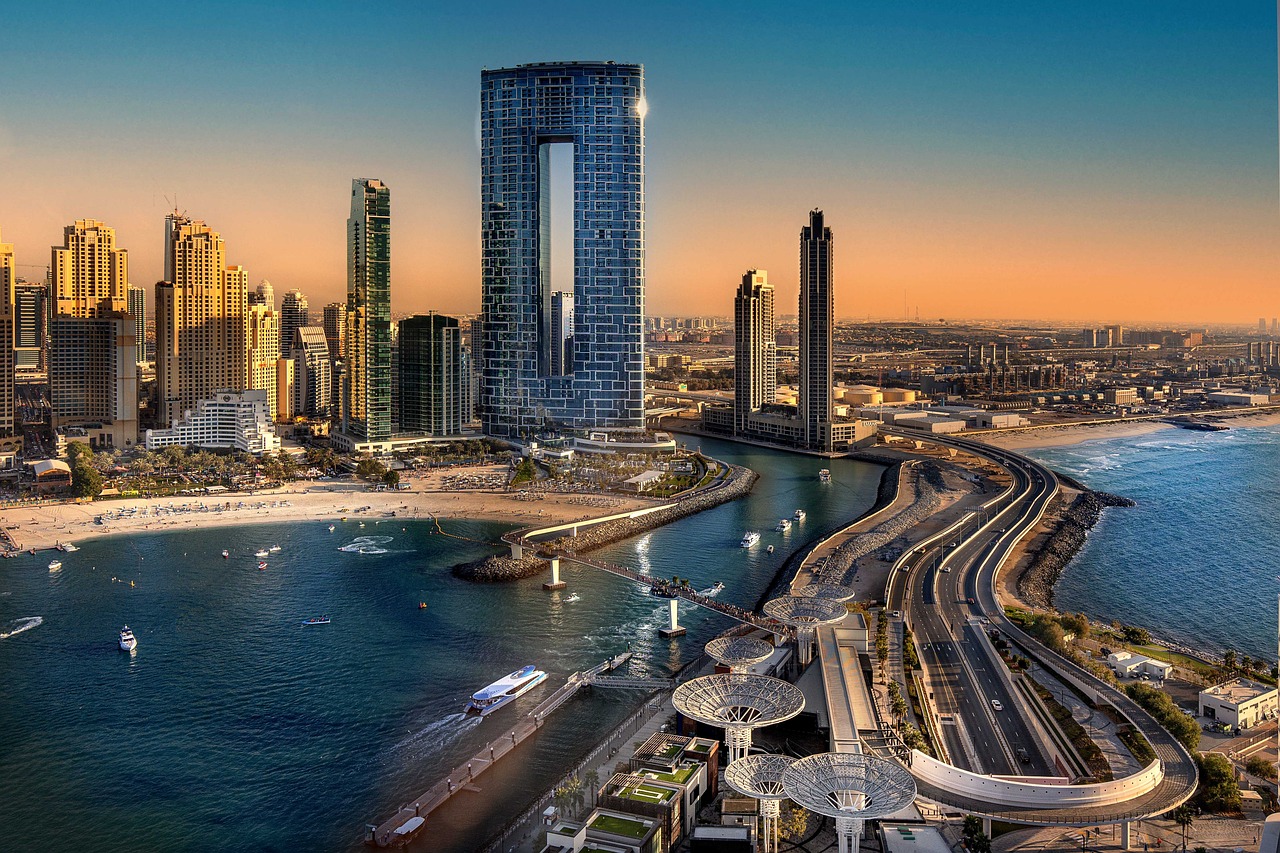
Dubai’s financial regulator has officially recognised Circle’s USDC and EURC stablecoins, marking a major milestone for digital assets in the region. The Dubai Financial Services Authority (DFSA) has approved both tokens under the new regulatory framework of the Dubai International Financial Centre (DIFC), an independent economic zone.
The DIFC, operating since 2004, enforces strict rules on digital assets, permitting only officially recognised tokens for financial services. With this approval, Circle becomes the first stablecoin issuer to receive regulatory clearance in Dubai, strengthening its presence in the global crypto market.
Circle’s success in Dubai follows recent regulatory approvals in the European Union and Canada, where the company has secured compliance with new crypto asset laws. Meanwhile, rival stablecoin issuer Tether has also expanded in the UAE, gaining approval for USDT in the Abu Dhabi Global Market in late 2024.
This recognition underlines Dubai’s growing influence in the regulated digital asset space, positioning the city as a key hub for blockchain innovation and stablecoin adoption.
For more information on these topics, visit diplomacy.edu.
Tesla has introduced a long-awaited update to its Autopilot software in China, adding city navigation features that allow for automatic lane changes and traffic light detection. However, many Chinese Tesla owners were disappointed, expressing that the update did not meet the high expectations set by CEO Elon Musk. The new features, while similar to the company’s Full Self-Driving (FSD) system, are less advanced in China due to insufficient data on local roads and traffic rules.
Tesla faces stiff competition from Chinese automakers like Huawei, Xiaomi, and BYD, which offer advanced driver-assistance systems at lower prices or even for free. These rivals have already launched vehicles capable of navigating complex Chinese traffic, leaving Tesla behind in the race for smart-driving technology. Despite this, Tesla continues to charge its customers nearly $9,000 for the limited version of its FSD software, which many feel does not live up to the promises made by the company.
The delays in rolling out full FSD in China are partly due to regulatory hurdles and restrictions on data transfer between China and the US. Tesla is working on gaining approval from Beijing for its advanced systems, but China currently only requires registration for level-two autonomous features like Autopilot. Tesla is also looking into establishing a data centre in China to train its AI software, though the process has been complicated by strict Chinese data laws.
While Tesla’s Autopilot update is seen as a step forward, it faces growing criticism for not keeping pace with the rapidly evolving smart-driving features offered by local competitors. Tesla’s challenge in China highlights the complex balance the company must maintain between innovation, regulatory compliance, and local competition.
For more information on these topics, visit diplomacy.edu.
Russia’s Energy Ministry claims that banning crypto mining in parts of Siberia has eased pressure on the region’s power grid. Officials reported a reduction of over 300 MW in electricity consumption since the restrictions took effect on 1 January 2025. The ministry insists this has prevented blackouts during peak winter months and has announced plans for ongoing meetings to assess the policy’s impact.
Despite government assurances, local reports suggest crypto mining remains strong in Siberia. Power provider Irkutskenergosbyt noted that household electricity usage increased by 1% in January compared to the previous year, despite milder winter temperatures. Industry analysts also estimate that Russia’s Bitcoin mining sector expanded by 7% in 2024, indicating continued activity.
Some experts argue the ban does little to curb mining operations, with many industrial-scale enterprises still running in parts of Irkutsk. While Bitcoin remains the dominant cryptocurrency for miners, there is also significant interest in Litecoin, Kaspa, Ethereum, and Monero. Meanwhile, the Energy Ministry is pushing for a national register of mining equipment to track legal operations and tackle illegal activity.
As debate over the effectiveness of the restrictions continues, Russian energy firms have approved plans that could see power allocated to mining increase significantly in the coming years. Experts remain divided on whether stricter regulations will stifle the industry or simply drive it further underground.
For more information on these topics, visit diplomacy.edu.
The European Court of Justice has backed Italy‘s antitrust authority in a ruling against Google, stating that the tech giant’s refusal to allow Enel’s JuicePass app to work with its Android Auto platform could constitute an abuse of market power. This decision supports a 2021 fine of 102 million euros imposed by the Italian watchdog after Google blocked the e-mobility app. Google had argued that the refusal was due to security concerns and the absence of a specific template for compatibility, but the court disagreed, stating that dominant companies must ensure their platforms are interoperable with third-party apps unless doing so would harm security.
Although Google has since resolved the issue, the ruling sets a precedent for future cases involving platform dominance. The court acknowledged that companies could refuse interoperability if it compromises platform security, but if this is not the case, they must develop a compatible template in a reasonable timeframe. Google claimed the feature was only relevant to a small percentage of cars in Italy at the time, but the ruling now forces the company to comply with the antitrust decision. The case is final and cannot be appealed, and the Italian Council of State will follow the court’s guidance in its future ruling.
For more information on these topics, visit diplomacy.edu.
Chinese AI startup DeepSeek has announced plans to release five new code repositories next week, reinforcing its commitment to open-source artificial intelligence.
The company, which gained global attention with its R1 reasoning model rivaling Western AI systems, described the release as ‘small but sincere progress’ towards full transparency. These repositories, tested in real-world applications, will provide essential infrastructure to support the AI models DeepSeek has already made public.
DeepSeek has set itself apart in China‘s AI sector by embracing open-source practices, a rare move in a market that typically favours closed-source models.
Founder Liang Wenfeng has emphasised the cultural significance of open-source over commercial gains, highlighting the satisfaction that comes from driving innovation and earning industry respect.
His approach has sparked global interest, particularly after the release of the R1 model, known for its strong performance and cost efficiency.
The company has also recently introduced a new algorithm, Native Sparse Attention (NSA), designed to improve efficiency in long-context training and inference.
DeepSeek’s popularity has surged, becoming China’s leading chatbot service with 22.2 million daily active users, surpassing long-established platforms like Douban. The growing user base and commitment to open-source are positioning DeepSeek as a major player in the global AI landscape.
For more information on these topics, visit diplomacy.edu.
US President Donald Trump has directed his trade officials to revive investigations into digital service taxes imposed by foreign countries on American tech giants.
The move could lead to new tariffs on imports from nations like France, Canada, and India, which have introduced taxes targeting major firms such as Google, Meta, Apple, and Amazon. Trump argues that these levies unfairly exploit US companies and has vowed to protect America’s tax base from foreign appropriation.
The renewed probe follows previous investigations during Trump’s first term, where the US Trade Representative found that several countries discriminated against American firms, paving the way for potential retaliatory tariffs.
While the Biden administration initially imposed 25% tariffs on goods from countries with digital taxes, these duties were suspended to allow for global tax negotiations. However, with talks stalling and the US rejecting the 15% global minimum tax, Trump has now abandoned the deal entirely.
As tensions grow, the US could impose fresh tariffs on billions of dollars worth of foreign imports. Trump has not yet revealed the specific tariff rates or the value of goods that may be targeted in this latest round of trade actions.
For more information on these topics, visit diplomacy.edu.
AI search startup Genspark has secured $100 million in a Series A funding round, raising its valuation to $530 million as it aims to disrupt Google’s dominance in the search engine market.
Backed by United States and Singapore-based investors, the Palo Alto-based firm now boasts over two million monthly active users. The funding follows a $60 million seed round last June, continuing Genspark’s rapid growth.
Led by CEO Eric Jing, formerly head of Baidu’s AI-powered Xiaodu unit, Genspark is positioning itself as a major contender in the AI-driven search space. Its platform uses multiple AI models working together to conduct detailed online research, aiming to provide users with streamlined, citation-backed answers—an approach that contrasts Google’s traditional list of links.
Google is also testing AI-enhanced search results, highlighting the growing pressure to innovate in the industry. Genspark’s latest funding positions it to expand its technology and user base as the battle for AI-powered search heats up.
For more information on these topics, visit diplomacy.edu.