Malta’s rapid crypto approvals under EU review

The EU regulator ESMA has criticised Malta’s fast approval of crypto licences under the MiCA rules. The Malta Financial Services Authority (MFSA) granted licences quickly but overlooked key compliance and risk checks.

Since January 2025, Malta has issued five licences to crypto firms like OKX and Crypto.com. While MFSA has adequate resources, some areas—such as governance and AML controls—were not fully assessed before approval.

ESMA urges Malta to slow the process and improve oversight as licence applications grow. The report stresses that all EU states must ensure thorough checks to protect the evolving crypto market.

Would you like to learn more about AI, tech and digital diplomacy? If so, ask our Diplo chatbot

Wealthy Indians shift to crypto as traditional assets lag

As Indian equities plateau and fixed-income instruments underperform, the country’s wealthiest investors are increasingly turning to cryptocurrencies. Bitcoin’s recent surge past $123,000 and global institutional support have made digital assets a compelling addition to long-term portfolios.

Family offices, institutional players and high-net-worth individuals (HNIs) are shifting strategies, prioritising allocation plans and custody options over crypto’s legitimacy. Major Indian exchanges report rising volumes mainly from sophisticated investors, not retail traders seeking quick gains.

The trend is further fuelled by global signals, including the return of Donald Trump to the US presidency and bipartisan support for crypto regulation. International exposure and the rise of Bitcoin ETFs have also influenced Indian investor sentiment, particularly among those with cross-border holdings.

Despite the momentum, India’s 30% capital gains tax and 1% TDS continue to hinder broader participation. While the ultra-wealthy can absorb these costs, the crypto industry argues that friendlier tax rules are essential for innovation and mainstream adoption.

Would you like to learn more about AI, tech and digital diplomacy? If so, ask our Diplo chatbot

Europe’s quantum ambitions meet US private power and China’s state drive

Quantum computing could fundamentally reshape technology, using quantum bits (qubits) instead of classical bits. Qubits allow complex calculations beyond classical computing, transforming sectors from pharmaceuticals to defence.

Europe is investing billions in quantum technology, emphasising technological sovereignty. Yet, it competes fiercely with the United States, which enjoys substantial private investment, and China, powered by significant state-backed funding.

The UK began quantum initiatives early, launching the National Quantum Programme 2014. It recently pledged £2.5 billion more, supporting start-ups like Orca Computing and Universal Quantum, alongside nations like Canada, Israel, and Japan.

Europe accounted for eight of the nineteen quantum start-ups established globally in 2024, including IQM Quantum Computers and Pasqal. Despite Europe’s scientific strengths, it only captured 5% of global quantum investments, versus 50% for the US.

The European Commission aims to strengthen quantum capabilities by funding six chip factories and a continent-wide Quantum Skills Academy. However, attracting sufficient private investment remains a significant challenge.

The US quantum industry thrives, driven by giants such as IBM, Google, Microsoft, IonQ, Rigetti, and D-Wave Quantum. Recent breakthroughs include Microsoft’s topological qubit and Google’s Willow quantum chip.

D-Wave Quantum has demonstrated real-world quantum advantages, solving complex optimisation problems in minutes. Its technology is now used commercially in logistics, traffic management, and supply chains.

China, meanwhile, leads in state-driven quantum funding, investing $15 billion directly and managing a $138 billion tech venture fund. By contrast, US federal investment totals about $6 billion, underscoring China’s aggressive approach.

Global investment in quantum start-ups reached $1.25 billion in Q1 2025 alone, reflecting a shift towards practical applications. By 2040, the quantum market is projected to reach $173 billion, influencing global economics and geopolitics.

Quantum computing raises geopolitical concerns, prompting democratic nations to coordinate through bodies like the OECD and G7. Interoperability, trust, and secure infrastructure have become essential strategic considerations.

Europe’s quantum ambitions require sustained investment, standard-setting leadership, and robust supply chains. Its long-term technological independence hinges on moving swiftly beyond initial funding towards genuine strategic autonomy.

Would you like to learn more about AI, tech and digital diplomacy? If so, ask our Diplo chatbot!

AI Appreciation Day highlights progress and growing concerns

AI is marking another milestone as experts worldwide reflect on its rapid rise during AI Appreciation Day. From reshaping business workflows to transforming customer experiences, AI’s presence is expanding — but so are concerns over its long-term implications.

Industry leaders point to AI’s growing role across sectors. Patrick Harrington from MetaRouter highlights how control over first-party data is now seen as key instead of just processing large datasets.

Vall Herard of Saifr adds that successful AI implementations depend on combining curated data with human oversight rather than relying purely on machine-driven systems.

Meanwhile, Paula Felstead from HBX Group believes AI could significantly enhance travel experiences, though scaling it across entire organisations remains a challenge.

Voice AI is changing industries that depend on customer interaction, according to Natalie Rutgers from Deepgram. Instead of complex interfaces, voice technology is improving communication in restaurants, hospitals, and banks.

At the same time, experts like Ivan Novikov from Wallarm stress the importance of securing AI systems and the APIs connecting them, as these form the backbone of modern AI services.

While some celebrate AI’s advances, others raise caution. SentinelOne’s Ezzeldin Hussein envisions AI becoming a trusted partner through responsible development rather than unchecked growth.

Naomi Buckwalter from Contrast Security warns that AI-generated code could open security gaps instead of fully replacing human engineering, while Geoff Burke from Object First notes that AI-powered cyberattacks are becoming inevitable for businesses unable to keep pace with evolving threats.

Would you like to learn more about AI, tech and digital diplomacy? If so, ask our Diplo chatbot!

Co-op CEO apologises after cyberattack hits 6.5 million members

Co-op CEO Shirine Khoury-Haq has confirmed that all 6.5 million members had their data stolen during a cyberattack in April.

‘I’m devastated that information was taken,’ Khoury-Haq told BBC Breakfast. ‘It hurt my members; they took their data, and it hurt our customers, whom I take personally.’

The stolen data included names, addresses, and contact details, but no financial or transaction information. Khoury-Haq said the incident felt ‘personal’ due to its impact on Co-op staff, adding that IT teams ‘fought off these criminals’ under immense pressure.

Although the hackers were removed from Co-op’s systems, the stolen information could not be recovered. The company monitored the breach and reported it to the authorities.

Co-op, which operates a membership profit-sharing model, is still working to restore its back-end systems. The financial impact has not been disclosed.

In response, Co-op is partnering with The Hacking Games — a cybersecurity recruitment initiative — to guide young talent towards legal tech careers. A pilot will launch in Co-op Academies Trust schools.

The breach was part of a wider wave of cyberattacks on UK retailers, including Marks & Spencer and Harrods. Four people aged 17 to 20 have been arrested concerning the incidents.

In a related case, Australian airline Qantas also confirmed a recent breach involving its frequent flyer programme. As with Co-op, financial data was not affected, but personal contact information was accessed.

Experts warn of increasingly sophisticated attacks on public and private institutions, calling for stronger digital defences and proactive cybersecurity strategies.

Would you like to learn more about AI, tech and digital diplomacy? If so, ask our Diplo chatbot!

Air Serbia suffers deep network compromise in July cyberattack

Air Serbia delayed issuing June payslips after a cyberattack disrupted internal systems, according to internal memos obtained by The Register. A 10 July note told staff: ‘Given the ongoing cyberattacks, for security reasons, we will postpone the distribution of June 2025 payslips.’

The IT department is reportedly working to restore operations, and payslips will be emailed once systems are secure again. Although salaries were paid, staff could not access their payslip PDFs due to the disruption.

HR warned employees not to open suspicious emails, particularly those appearing to contain payslips or that seemed self-addressed. ‘We kindly ask that you act responsibly given the current situation,’ said one memo.

Air Serbia first informed staff about the cyberattack on 4 July, with IT teams warning of possible disruptions to operations. Managers were instructed to activate business continuity plans and adapt workflows accordingly.

By 7 July, all service accounts had been shut down, and staff were subjected to company-wide password resets. Security-scanning software was installed on endpoints, and internet access was restricted to selected airserbia.com pages.

A new VPN client was deployed due to security vulnerabilities, and data centres were shifted to a demilitarised zone. On 11 July, staff were told to leave their PCs locked but running over the weekend for further IT intervention.

An insider told The Register that the attack resulted in a deep compromise of Air Serbia’s Active Directory environment. The source claims the attackers may have gained access in early July, although exact dates remain unclear due to missing logs.

Staff reportedly fear that the breach could have involved personal data, and that the airline may not disclose the incident publicly. According to the insider, attackers had been probing Air Serbia’s exposed endpoints since early 2024.

The airline also faced several DDoS attacks earlier this year, although the latest intrusion appears far more severe. Malware, possibly an infostealer, is suspected in the breach, but no ransom demands had been made as of 15 July.

Infostealers are often used in precursor attacks before ransomware is deployed, security experts warn. Neither Air Serbia nor the government of Serbia responded to media queries by the time of publication.

Air Serbia had a record-breaking year in 2024, carrying 4.4 million passengers — a 6 percent increase over the previous year. Cybersecurity experts recently warned of broader attacks on the aviation industry, with groups such as Scattered Spider under scrutiny.

Would you like to learn more about AI, tech and digital diplomacy? If so, ask our Diplo chatbot!
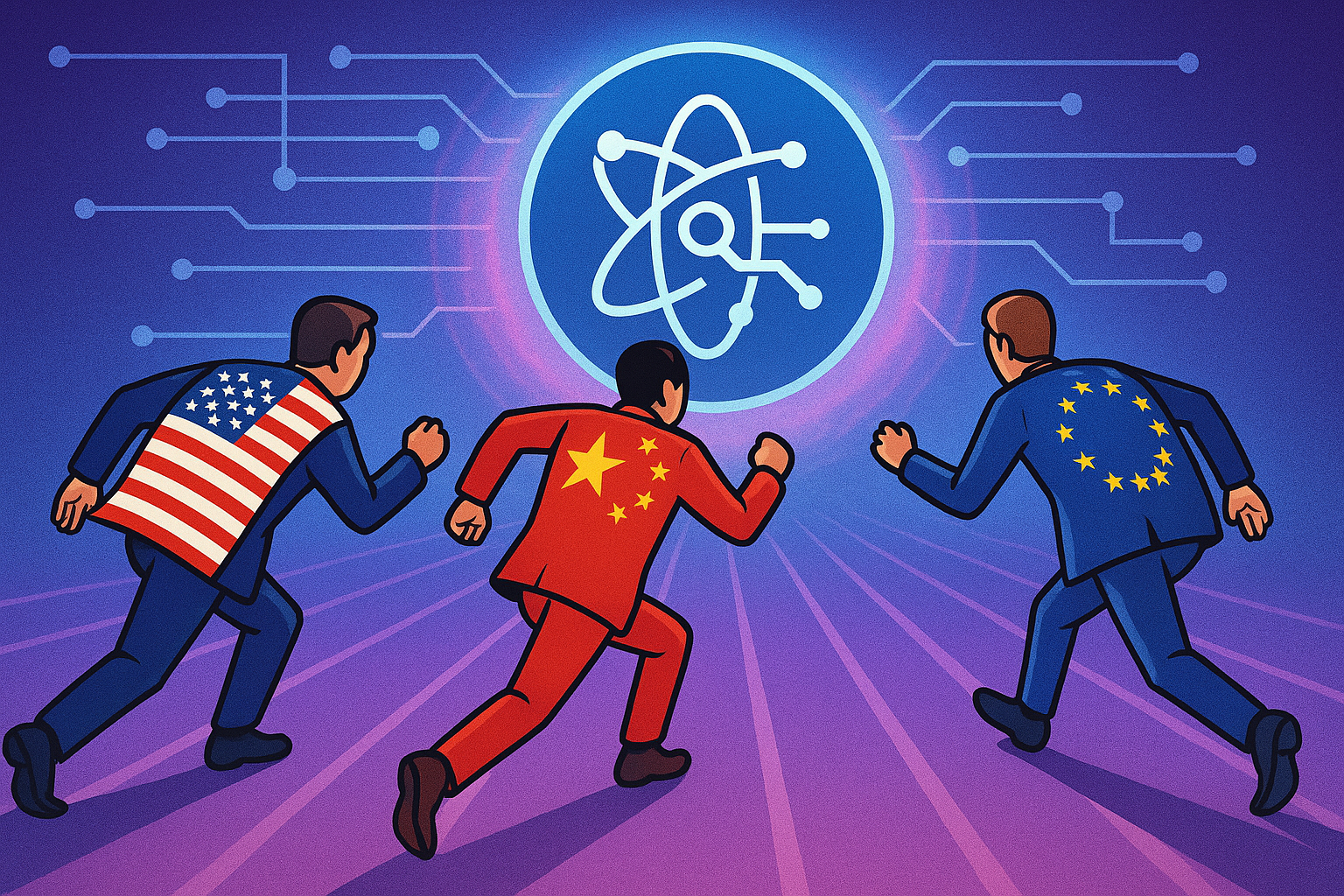
Trump unveils AI economy with $100 billion investment push

Donald Trump revealed during the Pittsburgh, Pennsylvania Energy and Innovation Summit that the US will receive over $100 billion in investments to drive its AI economy and energy infrastructure.

The funding is set to create tens of thousands of jobs across the energy and AI sectors, with Pennsylvania positioned as a central hub.

Trump stated the US is already ‘way ahead of China’ in AI development, adding that staying in the lead will require expanding power production.

Instead of relying solely on renewables, Trump highlighted ‘clean, beautiful coal, oil, and nuclear energy as key pillars supporting AI-related growth.

Westinghouse plans to build several nuclear plants nationwide, while Knighthead Capital will invest $15 billion in North America’s largest natural gas power plant in Homer City, Pennsylvania.

Additionally, Google will revitalise two hydropower facilities within the state, contributing to the broader investment wave. Trump mentioned that 20 major technology and energy firms are preparing further commitments in Pennsylvania, reinforcing its role in what he calls the US ‘AI economy’.

The event, hosted by Senator Dave McCormick at Carnegie Mellon University, also featured discussions with Pennsylvania Governor Josh Shapiro.

Would you like to learn more about AI, tech and digital diplomacy? If so, ask our Diplo chatbot!

Meta opens audio lab to improve AI smart glasses

Meta has unveiled a £12 million audio research lab in Cambridge’s Ox‑Cam corridor, aimed at enhancing immersive sound for its Ray‑Ban Meta and upcoming Oakley Meta glasses. The facility includes advanced acoustic testing environments, motion‑tracked living spaces, and one of the world’s largest configurable reverberation chambers, enabling engineers to fine‑tune spatial audio through real‑world scenarios.

Designed to filter noise, focus on speech, and respond to head movement, the lab is developing adaptive audio intelligent enough to improve clarity in settings like busy streets or on public transport. Meta plans to integrate these features into its next generation of AR eyewear.

Officials say the lab represents a long‑term investment in UK engineering talent and bolsters the Oxford‑to‑Cambridge tech corridor. Meta’s global affairs lead and the Chancellor emphasised the significance of the investment, supported by a national £22 billion R&D strategy. This marks Meta’s largest overseas engineering base and reinforces its ambition to lead the global AI glasses market.

Would you like to learn more about AI, tech and digital diplomacy? If so, ask our Diplo chatbot!

Women see AI as more harmful across life settings

Women are showing more scepticism than men when it comes to AI particularly regarding its ethics, fairness and transparency.

A national study from Georgetown University, Boston University and the University of Vermont found that women were more concerned about AI’s risks in decision-making. Concerns were especially prominent around AI tools used in the workplace, such as hiring platforms and performance review systems.

Bias may be introduced when such tools rely on historical data, which often underrepresents women and other marginalised groups. The study also found that gender influenced compliance with workplace rules surrounding AI use, especially in restrictive environments.

When AI use was banned, women were more likely to follow the rules than men. Usage jumped when tools were explicitly permitted. In cases where AI was allowed, over 80% of both women and men reported using the tools.

Women were generally more wary of AI’s impact across all areas of life — not just in the professional sphere. From personal settings to public life, survey respondents who identified as women consistently viewed AI as more harmful than beneficial.

The study, conducted via Qualtrics in August 2023, surveyed a representative US sample with a majority of female respondents. On average, participants were 45 years old, with over half identifying as women across different educational and professional backgrounds.

The research comes amid wider concerns in the AI field about ethics and accountability, often led by women researchers. High-profile cases include Google’s dismissal of Timnit Gebru and later Margaret Mitchell, both of whom raised ethical concerns about large language models.

The study’s authors concluded that building public trust in AI may require clearer policies and greater transparency in how systems are designed. They also highlighted the importance of increasing diversity among those developing AI tools to ensure more inclusive outcomes.

Would you like to learn more about AI, tech and digital diplomacy? If so, ask our Diplo chatbot!

Hungary enforces prison terms for unauthorised crypto trading

Hungary has introduced strict penalties for individuals and companies involved in unauthorised cryptocurrency trading or services. Under the updated Criminal Code, using unauthorised crypto exchanges can lead to two years in prison, with longer terms for larger trades.

Crypto service providers operating without authorisation face even harsher penalties. Sentences can reach up to eight years for transactions exceeding 500 million forints (around $1.46 million).

The updated law defines new offences such as ‘abuse of crypto-assets’, aiming to impose stricter control over the sector.

The implementation has caused confusion among crypto companies, with Hungary’s Supervisory Authority for Regulatory Affairs (SZTFH) yet to publish compliance guidelines. Businesses now face a 60-day regulatory vacuum with no clear direction.

UK fintech firm Revolut responded by briefly halting crypto services in Hungary, citing the new legislation. It has since reinstated crypto withdrawals, while its EU entity works towards securing a regional crypto licence.

Would you like to learn more about AI, tech and digital diplomacy? If so, ask our Diplo chatbot