Alignment Project to tackle safety risks of advanced AI systems

The UK’s Department for Science, Innovation and Technology (DSIT) has announced a new international research initiative aimed at ensuring future AI systems behave in ways aligned with human values and interests.

Called the Alignment Project, the initiative brings together global collaborators including the Canadian AI Safety Institute, Schmidt Sciences, Amazon Web Services (AWS), Anthropic, Halcyon Futures, the Safe AI Fund, UK Research and Innovation, and the Advanced Research and Invention Agency (ARIA).

DSIT confirmed that the project will invest £15 million into AI alignment research – a field concerned with developing systems that remain responsive to human oversight and follow intended goals as they become more advanced.

Officials said this reflects growing concerns that today’s control methods may fall short when applied to the next generation of AI systems, which are expected to be significantly more powerful and autonomous.

This positioning reinforces the urgency and motivation behind the funding initiative, before going into the mechanics of how the project will work.

The Alignment Project will provide funding through three streams, each tailored to support different aspects of the research landscape. Grants of up to £1 million will be made available for researchers across a range of disciplines, from computer science to cognitive psychology.

A second stream will provide access to cloud computing resources from AWS and Anthropic, enabling large-scale technical experiments in AI alignment and safety.

The third stream focuses on accelerating commercial solutions through venture capital investment, supporting start-ups that aim to build practical tools for keeping AI behaviour aligned with human values.

An expert advisory board will guide the distribution of funds and ensure that investments are strategically focused. DSIT also invited further collaboration, encouraging governments, philanthropists, and industry players to contribute additional research grants, computing power, or funding for promising start-ups.

Science, Innovation and Technology Secretary Peter Kyle said it was vital that alignment research keeps pace with the rapid development of advanced systems.

‘Advanced AI systems are already exceeding human performance in some areas, so it’s crucial we’re driving forward research to ensure this transformative technology is behaving in our interests,’ Kyle said.

‘AI alignment is all geared towards making systems behave as we want them to, so they are always acting in our best interests.’

The announcement follows recent warnings from scientists and policy leaders about the risks posed by misaligned AI systems. Experts argue that without proper safeguards, powerful AI could behave unpredictably or act in ways beyond human control.

Geoffrey Irving, chief scientist at the AI Safety Institute, welcomed the UK’s initiative and highlighted the need for urgent progress.

‘AI alignment is one of the most urgent and under-resourced challenges of our time. Progress is essential, but it’s not happening fast enough relative to the rapid pace of AI development,’ he said.

‘Misaligned, highly capable systems could act in ways beyond our ability to control, with profound global implications.’

He praised the Alignment Project for its focus on international coordination and cross-sector involvement, which he said were essential for meaningful progress.

‘The Alignment Project tackles this head-on by bringing together governments, industry, philanthropists, VC, and researchers to close the critical gaps in alignment research,’ Irving added.

‘International coordination isn’t just valuable – it’s necessary. By providing funding, computing resources, and interdisciplinary collaboration to bring more ideas to bear on the problem, we hope to increase the chance that transformative AI systems serve humanity reliably, safely, and in ways we can trust.’

The project positions the UK as a key player in global efforts to ensure that AI systems remain accountable, transparent, and aligned with human intent as their capabilities expand.

Would you like to learn more about AI, tech, and digital diplomacy? If so, ask our Diplo chatbot!

White House launches AI Action Plan with Executive Orders on exports and regulation

The White House has unveiled a sweeping AI strategy through its new publication Winning the Race: America’s AI Action Plan.

Released alongside three Executive Orders, the plan outlines the federal government’s next phase in shaping AI policy, focusing on innovation, infrastructure, and global leadership.

The AI Action Plan centres on three key pillars: accelerating AI development, establishing national AI infrastructure, and promoting American AI standards globally. Four consistent themes run through each pillar: regulation and deregulation, investment, research and standardisation, and cybersecurity.

Notably, deregulation is central to the plan’s strategy, particularly in reducing barriers to AI growth and speeding up infrastructure approval for data centres and grid expansion.

Investment plays a dominant role. Federal funds will support AI job training, data access, lab automation, and domestic component manufacturing, instead of relying on foreign suppliers.

Alongside, the plan calls for new national standards, improved dataset quality, and stronger evaluation mechanisms for AI interpretability, control, and safety. A dedicated AI Workforce Research Hub is also proposed.

In parallel, three Executive Orders were issued. One bans ‘woke’ or ideologically biased AI tools in federal use, another fast-tracks data centre development using federal land and brownfield sites, and a third launches an AI exports programme to support full-stack US AI systems globally.

While these moves open new opportunities, they also raise questions around regulation, bias, and the future shape of AI development in the US.

Would you like to learn more about AI, tech and digital diplomacy? If so, ask our Diplo chatbot!

Taiwan invests NT$50 million to train AI-ready professionals

Taiwan’s Ministry of Economic Affairs has announced the launch of the first phase of its 2025 AI talent training programme, set to begin in August.

The initiative aims to develop 152 skilled professionals capable of supporting businesses in adopting AI technologies across a vast range of sectors.

Chiu Chiu-hui, Director-General of the Industrial Development Administration, said the programme has attracted over 60 domestic and international companies that will contribute instructors and offer internship placements.

Notable participating firms include Microsoft Taiwan, ASE Group, and Acer. Students will be selected from leading universities, such as National Taipei University, National Taipei University of Technology, National Formosa University, and National Cheng Kung University.

Structured as a one-year curriculum, the training is divided into three four-month phases. The initial stage will focus on theoretical foundations and current industry trends.

The first training stage will be followed by four months of practical application, and finally, four months of on-site corporate internships. Graduates of the programme are required to commit to working for one of the participating companies for a minimum of two years upon completion.

Participants will receive financial support throughout their training. A monthly stipend of NT$20,000 (approximately US$673) will be provided during the academic and practical stages, increasing to NT$30,000 during the internship period.

The government has earmarked NT$50 million for the first phase of the programme, and additional co-investment from private companies is being actively encouraged.

According to Chiu, some Taiwanese firms are struggling to find qualified talent to support their AI ambitions. In response, the ministry trained approximately 70,000 AI professionals last year and has set a slightly lower target of over 50,000 for 2025.

However, the long-term vision remains ambitious — to develop a total of 200,000 AI specialists within the next four years.

Registration for the second phase of the initiative is now open and will close in September. Training will expand to include universities and research institutions across Taiwan, with the next round of classes scheduled to start in October.

Industry leaders have praised the initiative as a timely response to the rapidly evolving technological landscape.

Lee Shu-hsia, Vice President of Human Resources at ASE Group, noted that AI is no longer confined to manufacturing but is increasingly being integrated into various functions such as procurement, human resources, and management.

The cross-departmental adoption is creating demand for AI-literate professionals who can bridge technical knowledge with operational needs.

Danny Chen, General Manager of Microsoft Taiwan’s public business group, added that the digital transformation underway in many companies has led to a significant increase in demand for AI-related talent.

Chen expressed optimism that the training programme will help companies not only recruit but also retain skilled personnel. The Ministry of Economic Affairs has expressed its expectation for participation to grow in the coming years and plans to expand both the scope and scale of the training.

In addition to co-investment, the ministry is exploring partnerships with international institutions to further enhance the programme’s global relevance and ensure alignment with emerging industry standards.

While the government’s long-term goal is to future-proof Taiwan’s workforce, the immediate focus is on plugging the talent gap that threatens to slow industrial innovation.

By linking academic institutions with real-world corporate challenges, the programme aims to produce graduates who are not only technically proficient but also industry-ready from day one.

Observers say the initiative represents a proactive strategy in preparing Taiwan’s economy for the next wave of AI-driven transformation. With AI applications becoming increasingly prevalent in sectors ranging from logistics to administration, building a robust talent pipeline is now viewed as a national priority.

Would you like to learn more about AI, tech, and digital diplomacy? If so, ask our Diplo chatbot!

Scientists use quantum AI to solve chip design challenge

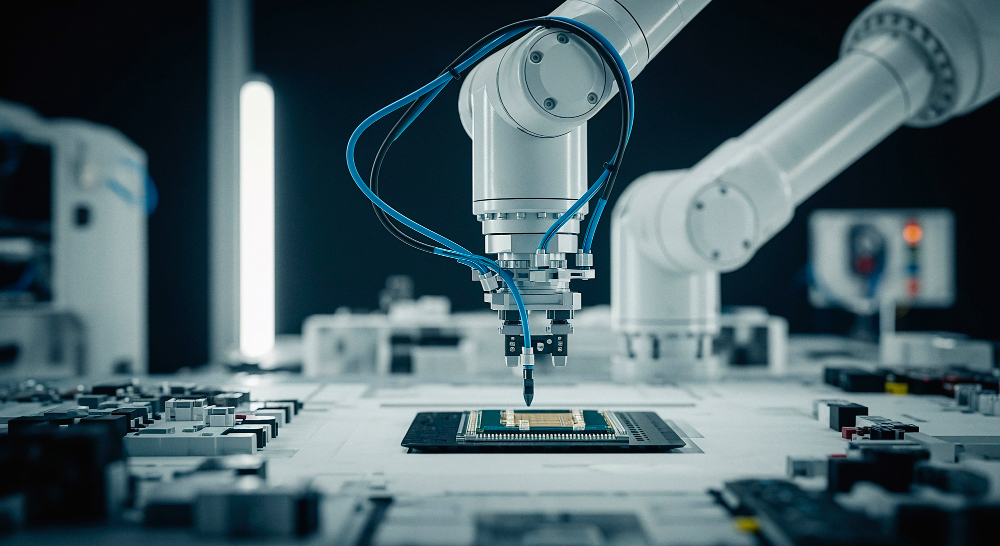
Scientists in Australia have used quantum machine learning to model semiconductor properties more accurately, potentially transforming how microchips are designed and manufactured.

The hybrid technique combines AI with quantum computing to solve a long-standing challenge in chip production: predicting electrical resistance where metal meets semiconductor.

The Australian researchers developed a new algorithm, the Quantum Kernel-Aligned Regressor (QKAR), which uses quantum methods to detect complex patterns in small, noisy datasets, a common issue in semiconductor research.

By improving how engineers predict Ohmic contact resistance, the approach could lead to faster, more energy-efficient chips. It also offers real-world compatibility, meaning it can eventually run on existing quantum machines as the hardware matures.

The findings highlight the growing role of quantum AI in hardware design and suggest the method could be adopted in commercial chip production in the near future.

Would you like to learn more about AI, tech and digital diplomacy? If so, ask our Diplo chatbot!

Brainstorming with AI opens new doors for innovation

AI is increasingly embraced as a reliable creative partner, offering speed and breadth in idea generation. In Fast Company, Kevin Li describes how AI complements human brainstorming under time pressure, drawing from his work at Amazon and startup Stealth.

Li argues AI is no longer just a tool but a true collaborator in creative workflows. Generative models can analyse vast data sets and rapidly suggest alternative concepts, helping teams reimagine product features, marketing strategies, and campaign angles. The shift aligns with broader industry trends.

A McKinsey report from earlier this year highlighted that, while only 1% of companies consider themselves mature in AI use, most are investing heavily in this area. Creative use cases are expected to generate massive value by 2025.

Li notes that the most effective use of AI occurs when it’s treated as a sounding board. He recounts how the quality of ideas improved significantly when AI offered raw directions that humans later refined. The hybrid model is gaining traction across multiple startups and established firms alike.

Still, original thinking remains a hurdle. A recent study by PsyPost found human pairs often outperform AI tools in generating novel ideas during collaborative sessions. While AI offers scale, human teams reported more substantial creative confidence and profound originality.

The findings suggest AI may work best at the outset of ideation, followed by human editing and development. Experts recommend setting clear roles for AI in the creative cycle. For instance, tools like ChatGPT or Midjourney might handle initial brainstorming, while humans oversee narrative coherence, tone, and ethics.

The approach is especially relevant in advertising, product design, and marketing, where nuance is still essential. Creatives across X are actively sharing tips and results. One agency leader posted about reducing production costs by 30% using AI tools for routine content work.

The strategy allowed more time and budget to focus on storytelling and strategy. Others note that using AI to write draft copy or generate design options is becoming common. Yet concerns remain over ethical boundaries.

The Orchidea Innovation Blog cautioned in 2023 that AI often recycles learned material, which can limit fresh perspectives. Recent conversations on X raise alarms about over-reliance. Some fear AI-generated content will eradicate originality across sectors, particularly marketing, media, and publishing.

To counter such risks, structured prompting and human-in-the-loop models are gaining popularity. ClickUp’s AI brainstorming guide recommends feeding diverse inputs to avoid homogeneous outputs. Précis AI referenced Wharton research to show that vague prompts often produce repetitive results.

The solution: intentional, varied starting points with iterative feedback loops. Emerging platforms are tackling this in real-time. Ideamap.ai, for example, enables collaborative sessions where teams interact with AI visually and textually.

Jabra’s latest insights describe AI as a ‘thought partner’ rather than a replacement, enhancing team reasoning and ideation dynamics without eliminating human roles. Looking ahead, the business case for AI creativity is strong.

McKinsey projects hundreds of billions in value from AI-enhanced marketing, especially in retail and software. Influencers like Greg Isenberg predict $100 million niches built on AI-led product design. Frank$Shy’s analysis points to a $30 billion creative AI market by 2025, driven by enterprise tools.

Even in e-commerce, AI is transforming operations. Analytics India Magazine reports that brands build eight-figure revenues by automating design and content workflows while keeping human editors in charge. The trend is not about replacement but refinement and scale.

Li’s central message remains relevant: when used ethically, AI augments rather than replaces creativity. Responsible integration supports diverse voices and helps teams navigate the fast-evolving innovation landscape. The future of ideation lies in balance, not substitution.

Would you like to learn more about AI, tech, and digital diplomacy? If so, ask our Diplo chatbot!

AI sparks fears over future of dubbing

Voice actors across Europe are pushing back against the growing use of AI in dubbing, fearing it could replace human talent in film and television. Many believe dubbing is a creative profession beyond simple voice replication, requiring emotional nuance and cultural sensitivity.

In Germany, France, Italy and the UK, nearly half of viewers prefer dubbed content over subtitles, according to research by GWI. Yet studios are increasingly testing AI tools that replicate actors’ voices or generate synthetic speech, sparking concern across the dubbing industry.

French voice actor Boris Rehlinger, known for dubbing Hollywood stars, says he feels threatened even though AI has not replaced him. He is part of TouchePasMaVF, an initiative defending the value of human dubbing and calling for protection against AI replication.

Voice artists argue that digital voice cloning ignores the craftsmanship behind their performances. As legal frameworks around voice ownership lag behind the technology, many in the industry demand urgent safeguards.

Would you like to learn more about AI, tech and digital diplomacy? If so, ask our Diplo chatbot!

Alibaba launches Wan2.2 AI for text and image to video generation

Alibaba and Zhipu AI have unveiled new open-source models as China intensifies its efforts to compete with the US in AI development. Alibaba’s Wan2.2 is being promoted as the first large video generation model using a Mixture-of-Experts (MoE) architecture in the open-source space.

The Wan2.2 series includes models for generating video from text and images, supporting hybrid capabilities for advanced multimedia applications. MoE architecture allows these models to use less computing power by dividing tasks among specialised sub-networks.

Zhipu, one of China’s leading AI firms, launched the GLM-4.5 and GLM-4.5-Air models with up to 355 billion parameters, built on a self-developed architecture. The GLM-4.5 model ranked third globally and first among open-source models across 12 performance benchmarks.

China’s open-source ecosystem is expanding rapidly, with Zhipu’s models amassing over 40 million downloads and Alibaba’s Qwen series producing hundreds of derivatives. Industry momentum reflects a strategic shift towards wider adoption, improved efficiency and greater international reach.

Would you like to learn more about AI, tech and digital diplomacy? If so, ask our Diplo chatbot!
Google urges faster AI adoption to boost productivity

Google’s CEO Sundar Pichai and other tech leaders are urging their employees to quickly integrate AI into daily operations. The aim is to enhance productivity as companies seek smarter ways to manage rising costs.

Rather than simply expanding their workforce during periods of growth, firms like Google and Amazon are now focusing on AI tools to improve efficiency. Google plans to spend $85 billion this year to expand data centres for advanced AI models.

Meanwhile, Amazon has warned employees about upcoming layoffs linked to AI adoption, encouraging staff to learn how to work effectively with smaller teams.

Alphabet, Google’s parent company, has already reduced its workforce by about 6% in 2023, cutting thousands of jobs while continuing to invest heavily in AI development. Pichai described this period as one for cautious investment aimed at boosting productivity.

Other tech leaders, including Microsoft’s Julia Liuson and Shopify’s Tobi Lutke, have echoed the sentiment that adopting AI is now essential for success.

Would you like to learn more about AI, tech and digital diplomacy? If so, ask our Diplo chatbot

Italy investigates Meta over AI integration in WhatsApp

Italy’s antitrust watchdog has investigated Meta Platforms over allegations that the company may have abused its dominant position by integrating its AI assistant directly into WhatsApp.

The Rome-based authority, formally known as the Autorità Garante della Concorrenza e del Mercato (AGCM), announced the probe on Wednesday, stating that Meta may have breached European Union competition regulations.

The regulator claims that the introduction of the Meta AI assistant into WhatsApp was carried out without obtaining prior user consent, potentially distorting market competition.

Meta AI, the company’s virtual assistant designed to provide chatbot-style responses and other generative AI functions, has been embedded in WhatsApp since March 2025. It is accessible through the app’s search bar and is intended to offer users conversational AI services directly within the messaging interface.

The AGCM is concerned that this integration may unfairly favour Meta’s AI services by leveraging the company’s dominant position in the messaging market. It warned that such a move could steer users toward Meta’s products, limit consumer choice, and disadvantage competing AI providers.

‘By pairing Meta AI with WhatsApp, Meta appears to be able to steer its user base into the new market not through merit-based competition, but by ‘forcing’ users to accept the availability of two distinct services,’ the authority said.

It argued that this strategy may undermine rival offerings and entrench Meta’s position across adjacent digital services. In a statement, Meta confirmed cooperating fully with the Italian authorities.

The company defended the rollout of its AI features, stating that their inclusion in WhatsApp aimed to improve the user experience. ‘Offering free access to our AI features in WhatsApp gives millions of Italians the choice to use AI in a place they already know, trust and understand,’ a Meta spokesperson said via email.

The company maintains its approach, which benefits users by making advanced technology widely available through familiar platforms. The AGCM clarified that its inquiry is conducted in close cooperation with the European Commission’s relevant offices.

The cross-border collaboration reflects the growing scrutiny Meta faces from regulators across the EU over its market practices and the use of its extensive user base to promote new services.

If the authority finds Meta in breach of EU competition law, the company could face a fine of up to 10 percent of its global annual turnover. Under Article 102 of the Treaty on the Functioning of the European Union, abusing a dominant market position is prohibited, particularly if it affects trade between member states or restricts competition.

To gather evidence, AGCM officials inspected the premises of Meta’s Italian subsidiary, accompanied by Guardia di Finanza, the tax police’s special antitrust unit in Italy.

The inspections were part of preliminary investigative steps to assess the impact of Meta AI’s deployment within WhatsApp. Regulators fear that embedding AI assistants into dominant platforms could lead to unfair advantages in emerging AI markets.

By relying on its established user base and platform integration, Meta may effectively foreclose competition by making alternative AI services harder to access or less visible to consumers. Such a case would not be the first time Meta has faced regulatory scrutiny in Europe.

The company has been the subject of multiple investigations across the EU concerning data protection, content moderation, advertising practices, and market dominance. The current probe adds to a growing list of regulatory pressures facing the tech giant as it expands its AI capabilities.

The AGCM’s investigation comes amid broader EU efforts to ensure fair competition in digital markets. With the Digital Markets Act and AI Act emerging, regulators are becoming more proactive in addressing potential risks associated with integrating advanced technologies into consumer platforms.

As the investigation continues, Meta’s use of AI within WhatsApp will remain under close watch. The outcome could set an essential precedent for how dominant tech firms can release AI products within widely used communication tools.

Would you like to learn more about AI, tech, and digital diplomacy? If so, ask our Diplo chatbot!

UAE partnership boosts NeOnc’s clinical trial programme

Biotech firm NeOnc Technologies has gained rapid attention after going public in March 2025 and joining the Russell Microcap Index just months later. The company focuses on intranasal drug delivery for brain cancer, allowing patients to administer treatment at home and bypass the blood-brain barrier.

NeOnc’s lead treatment is in Phase 2A trials for glioblastoma patients and is already showing extended survival times with minimal side effects. Backed by a partnership with USC’s Keck Medical School, the company is also expanding clinical trials to the Middle East and North Africa under US FDA standards.

A $50 million investment deal with a UAE-based firm is helping fund this expansion, including trials run by Cleveland Clinic through a regional partnership. The trials are expected to be fully enrolled by September, with positive preliminary data already being reported.

AI and quantum computing are central to NeOnc’s strategy, particularly in reducing risk and cost in trial design and drug development. As a pre-revenue biotech, the company is betting that innovation and global collaboration will carry it to the next stage of growth.

Would you like to learn more about AI, tech and digital diplomacy? If so, ask our Diplo chatbot!