Amazon Web Services (AWS) has announced a $11 billion investment to build new data centres in Georgia, aiming to support the growing demand for cloud computing and AI technologies. The facilities, located in Butts and Douglas counties, are expected to create at least 550 high-skilled jobs and position Georgia as a leader in digital innovation.
The move highlights a broader trend among tech giants investing heavily in AI-driven advancements. Last week, Microsoft revealed an $80 billion plan for fiscal 2025 to expand data centres for AI training and cloud applications. These facilities are critical for supporting resource-intensive AI technologies like machine learning and generative models, which require vast computational power and specialised infrastructure.
The surge in AI infrastructure has also raised concerns about energy consumption. A report from the Electric Power Research Institute suggests data centres could account for up to 9% of US electricity usage by 2030. To address this, Amazon has secured energy supply agreements with utilities like Talen Energy in Pennsylvania and Entergy in Mississippi, ensuring reliable power for its expanding operations.
Amazon’s commitment underscores the growing importance of AI and cloud services, as companies race to meet the demands of a rapidly evolving technological landscape.
AI startup Anthropic is reportedly in advanced discussions to secure $2 billion in funding, potentially valuing the company at $60 billion. The funding round is being led by venture capital firm Lightspeed Venture Partners, according to sources cited by the Wall Street Journal. The company, known for its Claude chatbot, was valued at around $18 billion in 2024 following a fundraising round led by Menlo Ventures.
Investor interest in Anthropic has grown significantly, with Amazon doubling its investment in the company to $8 billion last year as part of its push into generative AI. Alphabet has also pledged up to $2 billion in backing, further reinforcing the startup’s position as a key player in the AI sector. The company was founded by former OpenAI executives Dario and Daniela Amodei, who left the firm to develop their own AI models.
Competition in the AI industry remains fierce, with OpenAI, backed by Microsoft, leading the charge after launching ChatGPT in 2022. OpenAI recently secured $6.6 billion in funding, bringing its valuation to an estimated $157 billion. The race to dominate the AI market has intensified, with major tech firms investing heavily in developing next-generation AI models.
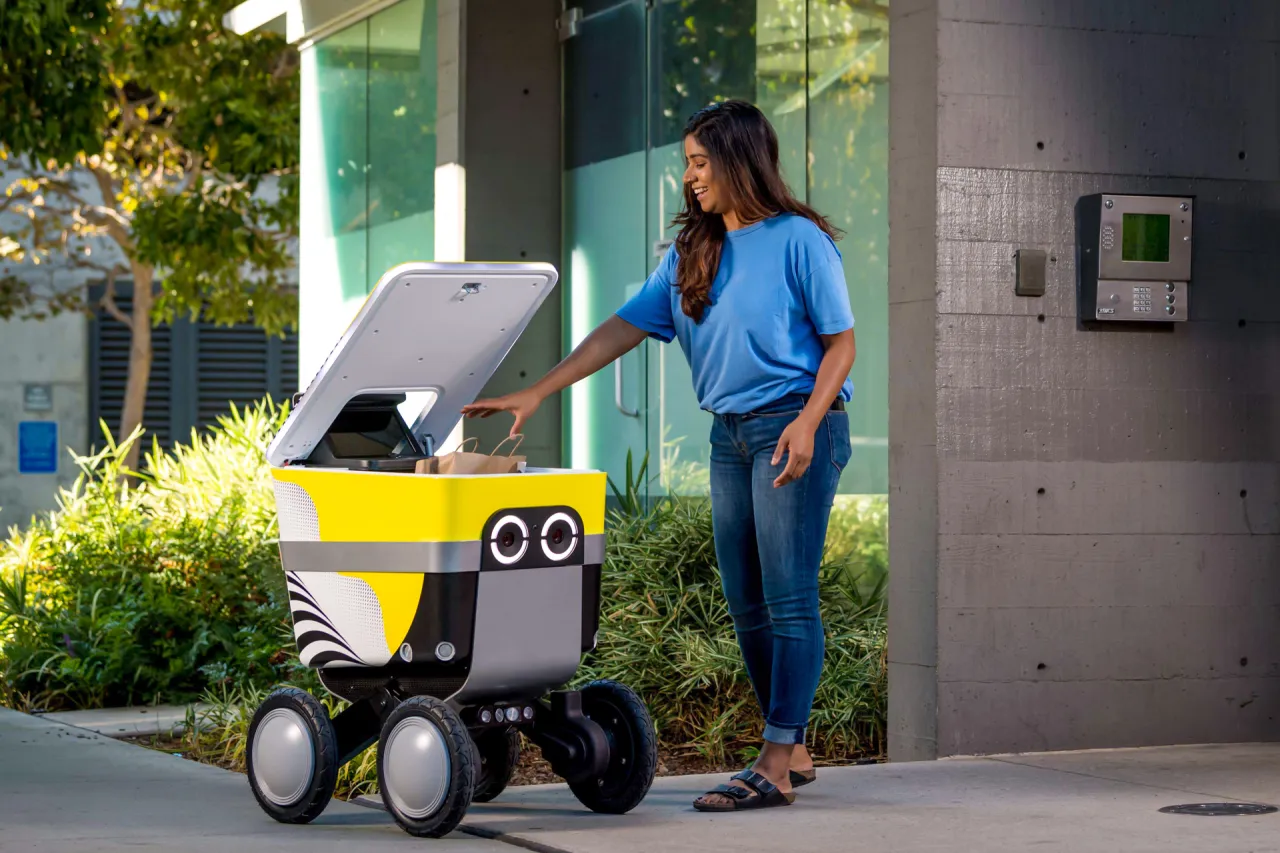
Serve Robotics, backed by Nvidia and Uber, has secured $80 million through a direct stock offering to institutional investors. The funding will support the expansion of its autonomous delivery robot fleet, with plans to scale from 100 robots in Los Angeles to 2,000 across multiple US cities by the end of 2025. CFO Brian Read stated that the investment is intended for long-term growth rather than short-term expenditure, positioning the company for sustained financial stability beyond 2026.
The fresh capital follows $86 million raised in December 2024, bringing Serve’s total funding to over $247 million in the past year. The company aims to use its reserves to self-finance equipment investments, reducing reliance on external financing and improving cash flow. Read highlighted that full ownership of the robots would provide greater financial flexibility and lower operational costs as the fleet expands.
Currently, Serve operates around 100 robots in Los Angeles, delivering for Uber Eats and 7-Eleven. A trial in Dallas, launched in partnership with Wing, is exploring hybrid drone and sidewalk robot deliveries. The company plans to deploy 250 additional robots in Los Angeles in early 2025, with the goal of achieving cash-flow positivity once the 2,000-robot fleet reaches full utilisation.
Meta Platforms has elected three new directors to its board, including Dana White, CEO of Ultimate Fighting Championship (UFC) and a close associate of President-elect Donald Trump. Investor and former Microsoft executive Charlie Songhurst and Exor CEO John Elkann have also joined. Meta CEO Mark Zuckerberg said their expertise would help the company navigate opportunities in artificial intelligence, wearables, and digital connectivity.
White’s appointment strengthens his ties with Zuckerberg, who has become a mixed martial arts enthusiast. The two have shared public exchanges in recent years, with Zuckerberg attending UFC events at White’s invitation. Songhurst has been involved in Meta’s AI advisory group since May, while Elkann holds leadership roles at Ferrari and Stellantis, alongside chairing the Agnelli Foundation.
Zuckerberg has been adjusting Meta’s strategy ahead of a possible second Trump presidency. The company recently promoted Republican policy expert Joel Kaplan and donated $1 million to Trump’s inaugural fund, signalling a shift in its political stance. Meta has also acknowledged past content decisions that were unpopular among conservatives as it prepares for the evolving political landscape.
AI startups have played a key role in reviving United States venture capital funding, with total capital raised in 2024 increasing by nearly 30% year-on-year, according to PitchBook. AI firms secured a record 46.4% of the $209 billion raised, a sharp rise from less than 10% a decade ago. The surge in investment has been driven by growing enthusiasm for AI technology, particularly since OpenAI’s ChatGPT gained widespread attention in late 2022. Major funding rounds, including $6.6 billion for OpenAI and $12 billion for Elon Musk’s xAI, highlight investor confidence in AI’s potential.
Despite the strong investment trends, analysts warn that maintaining such momentum could be challenging, especially for foundation model firms that require significant capital for computing power and expertise. Venture capital funding overall still faces hurdles, with only $76 billion raised in 2024—the lowest in five years. Exit values also remain well below their 2021 peak, although they improved from 2023’s seven-year low. While the IPO market did not recover as quickly as expected, year-end listings like ServiceTitan have provided some renewed optimism.
Hopes for a stronger IPO and M&A market are tied to the incoming administration of President-elect Donald Trump, which is expected to introduce policies favourable to technology and business. Industry experts believe more venture-backed companies could go public in the second half of 2025, helping to sustain the investment rebound. With AI continuing to dominate venture capital funding, the sector’s ability to meet ambitious business milestones will be critical to maintaining investor confidence.
Microsoft will invest $3 billion to expand AI and cloud-computing infrastructure in India, CEO Satya Nadella announced during a conference in Bengaluru. The investment, the company’s largest expansion in the country, aims to strengthen its Azure cloud services and AI capabilities. Nadella also revealed plans to train 10 million people in AI by 2030, building on an earlier commitment to provide AI skilling opportunities for two million individuals by 2025, with a focus on smaller cities and rural areas.
India’s growing importance as a tech hub has attracted interest from major US technology firms, with recent visits from Nvidia’s Jensen Huang and Meta’s chief AI scientist Yann LeCun. Nadella met Prime Minister Narendra Modi to discuss technology, innovation, and Microsoft‘s ambitious plans for expansion in the country. India’s vast population and affordable internet access make it a key market for AI-driven growth.
Microsoft is making significant global investments in AI and cloud infrastructure, committing around $80 billion in fiscal 2025. More than half of that will be directed towards US data centers to support AI model training and cloud-based applications. With India positioned as a strategic market, Microsoft’s latest investment underscores the country’s growing role in the global AI ecosystem.
US stock markets climbed to one-week highs on Monday, driven by gains in semiconductor stocks and optimism over AI investments. Reports suggesting that Donald Trump’s incoming administration may adopt a more selective approach to tariffs, rather than broad measures, also helped boost investor confidence. The Dow Jones Industrial Average rose 0.41%, the S&P 500 gained 1.02%, and the Nasdaq Composite surged 1.53%, with automakers and tech stocks leading the rally.
Semiconductor shares saw strong gains after Microsoft announced an $80 billion investment in AI-enabled data centres, while Foxconn posted better-than-expected quarterly revenue. Nvidia climbed 3.5%, AMD gained 2.8%, and Micron Technology surged 9.6%, pushing the Philadelphia Semiconductor Index to a two-month high. Meanwhile, the Russell 2000 index, which tracks small-cap companies, added 0.7% as investors weighed economic data and Federal Reserve policy signals.
Investors are closely watching monetary policy developments, with the Federal Reserve expected to provide further guidance on interest rate cuts later in the week. While Trump’s proposals could support corporate earnings and economic growth, concerns remain over potential inflationary pressures. US markets will be closed on January 9 for a national day of mourning in honour of former President Jimmy Carter.
AI-powered chatbots played a key role in boosting online sales during the 2024 holiday season, with United States e-commerce revenue rising nearly 4% year-on-year to $282 billion, according to Salesforce. Consumers increasingly relied on AI-based customer service tools for purchases and returns, with chatbot usage growing by 42% compared to 2023. Retailers also leveraged targeted promotions, product recommendations, and loyalty programmes to attract bargain hunters.
Despite the sales growth, a sharp increase in product returns emerged as a significant challenge for retailers. The return rate climbed to 28%, up from 20% in the previous year, potentially affecting profit margins. Caila Schwartz, director of Consumer Insights at Salesforce, noted that AI-driven tools would be crucial in 2025 to help retailers reduce losses from returns and retain customers. Mobile shopping remained dominant, with 79% of all orders placed via smartphones, peaking on Christmas Day as last-minute buyers made their final purchases.
Social media platforms such as TikTok Shop and Instagram also played a growing role in holiday sales, driving 14% of traffic to e-commerce sites. AI-driven sales reached $229 billion globally, an increase from $199 billion in 2023. As retailers continue to invest in digital shopping tools, the balance between AI-driven efficiency and managing high return rates will be critical for sustaining profitability in the coming years.
Demis Hassabis, CEO of Google DeepMind, has warned that the rapid progress in AI development may be slowing as companies exhaust the available digital data needed to train large language models. The industry has long relied on feeding vast amounts of online text into AI systems to improve performance, but diminishing returns are now setting in. Some experts, including OpenAI’s Ilya Sutskever, believe the industry has reached “peak data,” meaning future improvements will require entirely new approaches.
Researchers are now exploring alternative methods, such as synthetic data, where AI models generate and learn from their own outputs. While this technique has shown promise in fields like mathematics and programming, it struggles with more complex areas like philosophy and the arts, where defining correctness is difficult. OpenAI has already applied this method in its latest system, OpenAI o1, but challenges remain, particularly in preventing AI from making errors or generating misleading information.
Another possibility to overcome ‘data limitation’ in AI development is to shift focus from quantity to quality of data through better data labelling and contextual enrichment, as done by Diplo’s cognitive proximity approach (see below).
DiploAI approach to data enrichment
Tech leaders remain divided on whether AI advancements will continue at the same pace. Nvidia’s CEO Jensen Huang remains optimistic, citing strong demand for AI chips and ongoing innovation. However, some of the company’s biggest customers are preparing for a possible plateau in AI development. Despite the uncertainty, investment in AI infrastructure remains high, with firms continuing to push the boundaries of what AI can achieve.
OpenAI CEO Sam Altman has revealed that the company is losing money on its $200-per-month ChatGPT Pro plan due to unexpectedly high usage. The plan, introduced last year, provides access to an advanced AI model and fewer restrictions on OpenAI’s tools. Altman admitted that the pricing was not based on a rigorous study but was instead a personal decision.
Despite raising around $20 billion, OpenAI remains unprofitable, with estimated losses of $5 billion last year. The company is considering price increases or usage-based fees to improve financial stability. Altman also acknowledged that OpenAI requires more investment than initially expected.
The company remains optimistic about its future revenue, projecting $11.6 billion in 2025 and aiming for $100 billion by 2029. As OpenAI undergoes corporate restructuring, attracting new investors and refining its pricing strategy will be key to long-term profitability.