Japanese technology giant SoftBank has announced plans to buy a $2 billion stake in Intel, signalling a stronger push into the American semiconductor industry.
The investment comes as Washington debates greater government involvement in the sector, with reports suggesting President Donald Trump is weighing a US government stake in the chipmaker.
SoftBank will purchase Intel’s common stock at $23 per share. Its chairman, Masayoshi Son, said semiconductors remain the backbone of every industry and expressed confidence that advanced chip manufacturing will expand in the US, with Intel playing a central role.
The move follows SoftBank’s increasing investments in the US, including its role in the $500 billion ‘Stargate’ AI project announced earlier this year.
Once a dominant force in Silicon Valley, Intel has struggled against rivals such as Nvidia and AMD. Under new CEO Lip-Bu Tan, the company is cutting 15% of its workforce and reducing costs to stabilise operations.
After a private meeting, Trump recently criticised Tan’s leadership but later softened his stance.
Shares in both companies slipped following the announcement, with SoftBank down 2.2% in Tokyo and Intel falling 3.7% in New York.
Would you like to learn more aboutAI, tech and digital diplomacy? If so, ask our Diplo chatbot!
The African Development Bank has strengthened Africa’s digital journey by backing a landmark AI training initiative linked to Agenda 2063. The effort aims to accelerate the continent’s long-term strategy, ‘The Africa We Want,’ by equipping states with practical expertise.
Through its Joint Secretariat Support Office, the Bank gave both technical and financial backing to the 5th Annual Training Workshop. The event focused on applying AI to monitoring, evaluation, and reporting under the Second Ten-Year Plan of Agenda 2063.
The Lusaka workshop, co-hosted by the African Union Commission and the African Capacity Building Foundation, featured sessions with Ailyse, ChatGPT, Google AI Studio, Google Gemini, and Perplexity. Delegates explored embedding AI insights into analytics for stronger policymaking and accountability.
By investing in institutional capacity, the AfDB and partners aim to advance AI-enabled solutions that improve policy interventions, resource allocation, and national priorities. The initiative reflects a broader effort to integrate digital tools into Africa’s governance structures.
The workshop also fostered peer learning, allowing delegates to share best practices in digital monitoring frameworks. By driving AI adoption in planning and results delivery, the AfDB underlines its role as a partner in Africa’s transformation.
Would you like to learn more about AI, tech, and digital diplomacy? If so, ask our Diplo chatbot!
The ads, circulating primarily on TikTok, combine unnatural expressions with awkward speech patterns, triggering community outrage.
Fans on Reddit slammed the ads as ’embarrassing’ and akin to ‘cheap, lazy marketing,’ arguing that Nexon had bypassed genuine collaborators for synthetic substitutes, even though those weren’t subtle attempts.
Critics warned that these deepfake-like promotions undermine the trust and credibility of creators and raise ethical questions over likeness rights and authenticity in AI usage.
Would you like to learn more about AI, tech and digital diplomacy? If so, ask our Diplo chatbot!
Tredence has launched Milky Way, a multi-agent, multi-turn system that uses autonomous AI agents to accelerate enterprise decision-making. The platform introduces specialised agents that collaborate like digital co-workers, combining reasoning and execution to deliver outcomes at scale.
The system addresses a common challenge: converting enterprise data into timely and actionable insights. The Milky Way incorporates over 15 prebuilt agents across key business roles and more than 50 specialised agents trained on real-world enterprise scenarios.
Agents span critical functions, from marketing analysts optimising campaigns to supply chain analysts anticipating disruptions. Technical agents, such as anomaly detection and Text-to-SQL, complement them by handling operational complexity with accuracy and transparency.
Early trials have shown striking results, with companies reporting up to five times faster insights and 50% lower analytics costs. Global retailers cut manual effort by 60%, while healthcare providers streamlined patient data aggregation and triage, supporting speedier diagnosis.
Designed for enterprise-grade use, Milky Way integrates seamlessly with existing data systems, offering role-based access, full audit trails, and domain expertise. Tredence positions it as a step towards AI agents that deliver context-aware, scalable business outcomes.
Would you like to learn more about AI, tech, and digital diplomacy? If so, ask our Diplo chatbot!
Moving like this empowers enterprises to build AI agents tailored for multimodal understanding, software development, workflow automation and research.
The rollout extends beyond the initial model. Oracle plans to integrate the entire Gemini suite, including video, image, speech, and music generation, as well as vertically specialised models like MedLM for healthcare.
For customers, Oracle simplifies adoption: Gemini access is billed via Oracle Universal Credits, and no new contracts are required. Behind the scenes, OCI’s bare-metal GPU instances ensure optimised compute performance for demanding AI workflows.
This integration further strengthens Oracle’s position in enterprise AI, offering partners and clients a curated, model-agnostic environment that combines AI innovation with operational reliability.
Would you like to learn more about AI, tech and digital diplomacy? If so, ask our Diplo chatbot!
Singapore has launched a $27 billion initiative to boost AI readiness and protect jobs, as global tensions and automation reshape the workforce.
Prime Minister Lawrence Wong stressed that securing employment is key to national stability, particularly as geopolitical shifts and AI adoption accelerate.
IMF research warns Singapore’s skilled workers, especially women and youth, are among the most exposed to job disruption from AI technologies.
To address this, the government is expanding its SkillsFuture programme and rolling out local initiatives to connect citizens with evolving job markets.
The tech investment includes $5 billion for AI development and positions Singapore as a leader in digital transformation across Southeast Asia.
Social challenges remain, however, with rising inequality and risks to foreign workers highlighting the need for broader support systems and inclusive policy.
Would you like to learn more about AI, tech and digital diplomacy? If so, ask our Diplo chatbot!
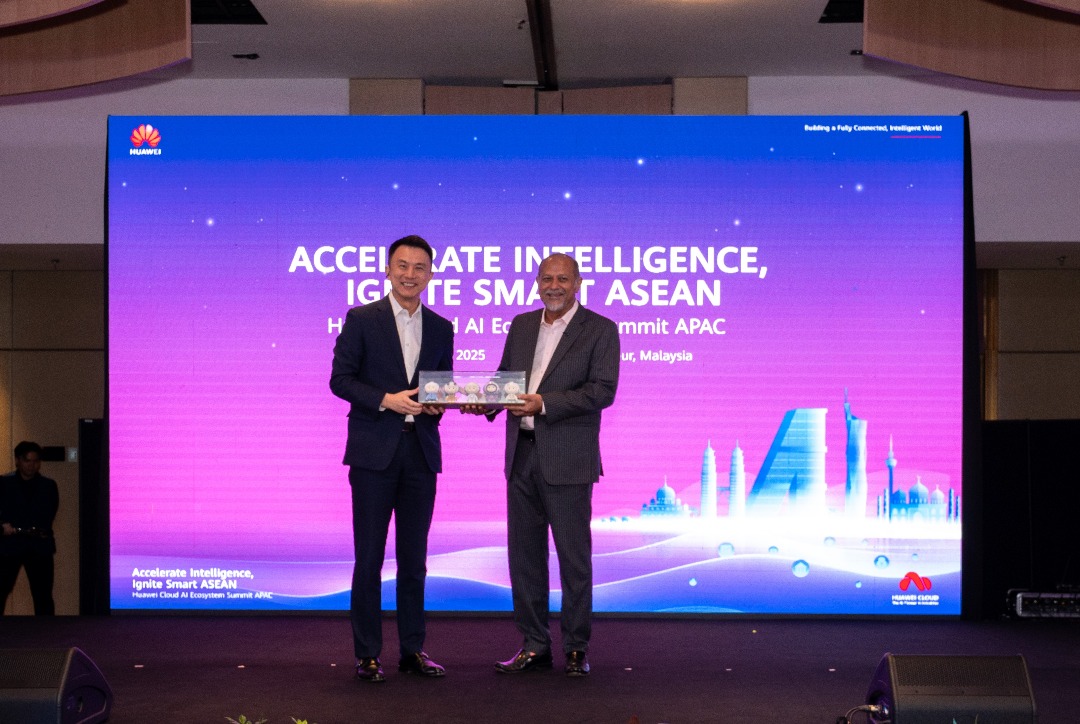
Malaysia has intensified its push to build an AI-ready workforce, with Huawei pledging to train 30,000 local professionals under a new initiative. The plan aligns with Malaysia’s National Cloud Computing Policy, balancing sovereignty and digital economy competitiveness.
Digital Minister Gobind Singh Deo stressed that AI adoption must benefit all Malaysians, highlighting applications from small business platforms to AI-assisted diagnostics in remote clinics. He urged collaboration across industries to ensure inclusivity as the country pursues its digital future.
Huawei’s Gartner recognition for container management highlights its cloud-native strength. Its Pangu models and container products will support Malaysia’s AI goals in manufacturing, healthcare, transport, and ASEAN industries.
The programme will target students, officials, industry leaders, and associations while supporting 200 local AI partners. Huawei’s network of availability zones in ASEAN provides low-latency infrastructure, with AI-native innovations designed to accelerate training, inference, and industrial upgrades.
The government of Malaysia views AI as crucial to achieving its 2030 goals, which aim to balance infrastructure, security, and governance. With Huawei’s backing and a new policy framework, the country seeks to establish itself as a regional hub for AI expertise.
Would you like to learn more about AI, tech, and digital diplomacy? If so, ask our Diplo chatbot!
Priorities include deploying 4G networks in remote regions, expanding public internet services, and reinforcing the Palapa Ring broadband infrastructure.
On the talent front, the government launched a Digital Talent Scholarship and AI Talent Factory to nurture AI skills, from beginners to specialists, setting the stage for future AI innovation domestically.
In parallel, digital protection measures have been bolstered: over 1.2 million pieces of harmful content have been blocked, while new regulations under the Personal Data Protection Law, age-verification, content monitoring, and reporting systems have been introduced to enhance child safety online.
Would you like to learn more about AI, tech and digital diplomacy? If so, ask our Diplo chatbot!
A fake Telegram Premium website infects users with Lumma Stealer malware through a drive-by download, requiring no user interaction.
The domain, telegrampremium[.]app, hosts a malicious executable named start.exe, which begins stealing sensitive data as soon as it runs.
The malware targets browser-stored credentials, crypto wallets, clipboard data and system files, using advanced evasion techniques to bypass antivirus tools.
Obfuscated with cryptors and hidden behind real services like Telegram, the malware also communicates with temporary domains to avoid takedown.
Analysts warn that it manipulates Windows systems, evades detection, and leaves little trace by disguising its payloads as real image files.
To defend against such threats, organisations are urged to implement better cybersecurity controls, such as behaviour-based detection and enforce stronger download controls.
Would you like to learn more about AI, tech and digital diplomacy? If so, ask our Diplo chatbot!
A new workplace trend known as ‘quiet cracking’ describes employees who stay in their roles while feeling increasingly disengaged and emotionally drained.
Unlike quitting, where workers reduce effort, quiet cracking refers to those who continue to meet expectations yet feel like they are breaking inside.
Experts say the phenomenon usually develops gradually, with workers reporting fatigue, stress and frustration instead of open dissatisfaction. Many feel unable to speak up for fear of losing their job or facing uncertainty in the broader labour market, leaving them silent.
Critics argue that labelling such behaviour risks encouraging weakness instead of resilience, but supporters warn that ignoring the issue may worsen mental health challenges.
Some workers are turning to AI for support instead of seeking human assistance. Generative AI tools offer low-cost and constant access for advice and empathetic responses.
Advocates suggest AI could expand mental health support where professionals are scarce, while opponents caution that relying on AI instead of qualified therapists could carry significant risks.
Whether quiet cracking becomes a lasting workplace concern or fades as a passing trend remains uncertain, for now, it highlights the growing debate about how technology might play a role in addressing modern mental health struggles.
Would you like to learn more aboutAI, tech and digital diplomacy? If so, ask our Diplo chatbot!