Universities back generative AI but guidance remains uneven

A majority of leading US research universities are encouraging the use of generative AI in teaching, according to a new study analysing institutional policies and guidance documents across higher education.

The research reviewed publicly available policies from 116 R1 universities and found that 63 percent explicitly support the use of generative AI, while 41 percent provide detailed classroom guidance. More than half of the institutions also address ethical considerations linked to AI adoption.

Most guidance focuses on writing-related activities, with far fewer references to coding or STEM applications. The study notes that while many universities promote experimentation, expectations placed on faculty can be demanding, often implying significant changes to teaching practices.

US researchers also found wide variation in how universities approach oversight. Some provide sample syllabus language and assignment design advice, while others discourage the use of AI-detection tools, citing concerns around reliability and academic trust.

The authors caution that policy statements may not reflect real classroom behaviour and say further research is needed to understand how generative AI is actually being used by educators and students in practice.

Would you like to learn more about AI, tech, and digital diplomacy? If so, ask our Diplo chatbot!

Conduit revolutionises neuro-language research with 10,000-hour dataset

A San Francisco start-up, named Conduit, has spent six months building what it claims is the largest neural language dataset ever assembled, capturing around 10,000 hours of non-invasive brain recordings from thousands of participants.

The project aims to train thought-to-text AI systems that interpret semantic intent from brain activity moments before speech or typing occurs.

Participants take part in extended conversational sessions instead of rigid laboratory tasks, interacting freely with large language models through speech or simplified keyboards.

Engineers found that natural dialogue produced higher quality data, allowing tighter alignment between neural signals, audio and text while increasing overall language output per session.

Conduit developed its own sensing hardware after finding no commercial system capable of supporting large-scale multimodal recording.

Custom headsets combine multiple neural sensing techniques within dense training rigs, while future inference devices will be simplified once model behaviour becomes clearer.

Power systems and data pipelines were repeatedly redesigned to balance signal clarity with scalability, leading to improved generalisation across users and environments.

As data volume increased, operational costs fell through automation and real time quality control, allowing continuous collection across long daily schedules.

With data gathering largely complete, the focus has shifted toward model training, raising new questions about the future of neural interfaces, AI-mediated communication and cognitive privacy.

Would you like to learn more about AI, tech and digital diplomacy? If so, ask our Diplo chatbot!

Europe risks falling behind without telecom scale, Telefónica says

Telefónica has called for a shift in Europe’s telecommunications policy, arguing that market fragmentation is undermining investment, digital competitiveness, and the continent’s technological sovereignty, according to a new blog post from the company.

In the post, Telefónica says Europe’s emphasis on maximising retail competition has produced a highly fragmented operator landscape. It cites industry data showing the average European operator serves around five million customers, far fewer than peers in the United States or China.

The company argues that this lack of scale explains Europe’s lower per-capita investment in telecoms infrastructure and is slowing the rollout of technologies such as standalone 5G, fibre networks, and sovereign cloud and AI platforms.

Telefónica points to recent reports by Mario Draghi and Enrico Letta as signs of a policy shift, with EU institutions placing greater weight on investment capacity, resilience, and dynamic efficiency alongside traditional competition objectives.

The blog post concludes that Europe faces a strategic choice between preserving fragmented markets or enabling responsible consolidation. Telefónica says carefully regulated mergers could support sustainability, reduce regional digital divides, and strengthen Europe’s digital infrastructure.

Would you like to learn more about AI, tech, and digital diplomacy? If so, ask our Diplo chatbot!

How data centres affect electricity, prices, water consumption and jobs

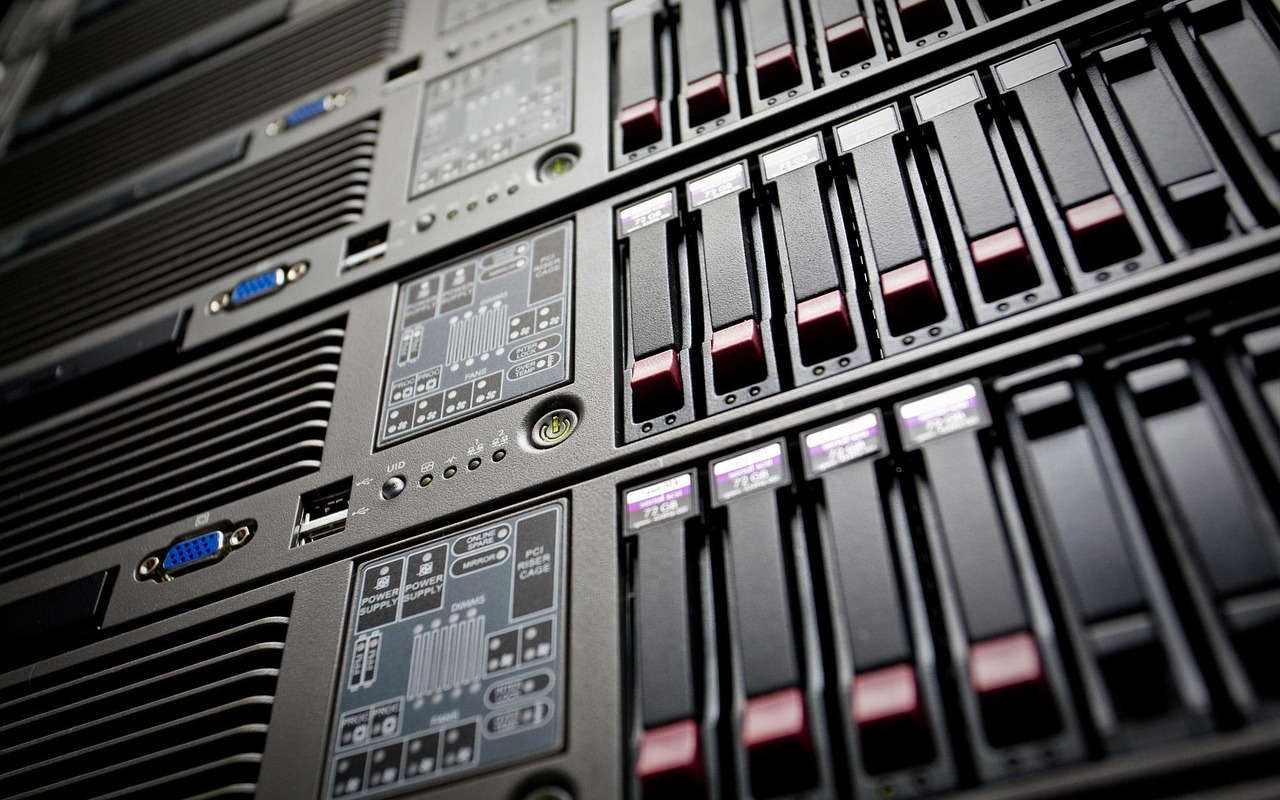
Data centres have become critical infrastructure for modern economies, supporting services ranging from digital communications and online commerce to emergency response systems and financial transactions.

As AI expands, demand for cloud computing continues to accelerate, increasing the need for additional data centre capacity worldwide.

Concerns about environmental impact often focus on electricity and water use, yet recent data indicate that data centres are not primary drivers of higher power prices and consume far less water than many traditional industries.

Studies show that rising electricity costs are largely linked to grid upgrades, climate-related damage and fuel prices instead of large-scale computing facilities, while water use by data centres remains a small fraction of overall consumption.

Technological improvements have further reduced resource intensity. Operators have significantly improved water efficiency per unit of computing power, adopting closed-loop liquid cooling and advanced energy management systems.

In many regions, water is required only intermittently, with consumption levels lower than those in sectors such as clothing manufacturing, agriculture and automotive services.

Beyond digital services, data centres deliver tangible economic benefits to local communities. Large-scale investments generate construction activity, long-term technical employment and stable tax revenues, while infrastructure upgrades and skills programmes support regional development.

As cloud computing and AI continue to shape everyday life, data centres are increasingly positioned as both economic and technological anchors.

Would you like to learn more about AI, tech and digital diplomacy? If so, ask our Diplo chatbot!

EU moves to tax low-value e-commerce parcels

The European Commission welcomed the decision by EU Member States to introduce a €3 customs duty on low-value e-commerce parcels arriving from third countries.

A measure, which enters into force in July 2026, that applies to items valued below €150 and aims to restore fair competition instead of allowing online imports to benefit from longstanding exemptions.

The move responds to the rapid growth of cross-border e-commerce shipments and will operate as a temporary solution until the EU Customs Data Hub becomes fully operational in 2028.

Until then, the Council and the Commission will coordinate legal changes and IT systems to ensure smooth implementation and effective customs supervision across the Union.

Once the Customs Data Hub is in place, a permanent customs duty regime will replace the temporary measure, offering authorities a comprehensive view of goods entering and leaving the EU.

The €3 duty applies only to parcels sent directly to consumers and remains separate from ongoing negotiations on a handling fee intended to offset the rising operational costs faced by customs authorities.

The reform builds on earlier Commission proposals to remove duty exemptions for low-value parcels and forms part of the most extensive overhaul of EU customs rules in decades.

European institutions argue that modernised customs controls are essential instead of relying on outdated frameworks, particularly as global e-commerce volumes continue to expand.

Would you like to learn more about AI, tech and digital diplomacy? If so, ask our Diplo chatbot!

BBVA deepens AI partnership with OpenAI

OpenAI and BBVA have agreed on a multi-year strategic collaboration designed to embed artificial intelligence across the global banking group.

An initiative that will expand the use of ChatGPT Enterprise to all 120,000 BBVA employees, marking one of the largest enterprise deployments of generative AI in the financial sector.

The programme focuses on transforming customer interactions, internal workflows and decision making.

BBVA plans to co-develop AI-driven solutions with OpenAI to support bankers, streamline risk analysis and redesign processes such as software development and productivity support, instead of relying on fragmented digital tools.

The rollout follows earlier deployments that demonstrated strong engagement and measurable efficiency gains, with employees saving hours each week on routine tasks.

ChatGPT Enterprise will be implemented with enterprise grade security and privacy safeguards, ensuring compliance within a highly regulated environment.

Beyond internal operations, BBVA is accelerating its shift toward AI native banking by expanding customer facing services powered by OpenAI models.

The collaboration reflects a broader move among major financial institutions to integrate AI at the core of products, operations and personalised banking experiences.

Would you like to learn more about AI, tech and digital diplomacy? If so, ask our Diplo chatbot!

AI reshapes cybercrime investigations in India

Maharashtra police are expanding the use of an AI-powered investigation platform developed with Microsoft to tackle the rapid growth of cybercrime.

MahaCrimeOS AI, already in use across Nagpur district, will now be deployed to more than 1,100 police stations statewide, significantly accelerating case handling and investigation workflows.

The system acts as an investigation copilot, automating complaint intake, evidence extraction and legal documentation across multiple languages.

Officers can analyse transaction trails, request data from banks and telecom providers and follow standardised investigation pathways, instead of relying on slow manual processes.

Built using Microsoft Foundry and Azure OpenAI Service, MahaCrimeOS AI integrates policing protocols, criminal law references and open-source intelligence.

Investigators report major efficiency gains, handling several cases monthly where only one was previously possible, while maintaining procedural accuracy and accountability.

The initiative highlights how responsible AI deployment can strengthen public institutions.

By reducing administrative burden and improving investigative capacity, the platform allows officers to focus on victim support and crime resolution, marking a broader shift toward AI-assisted governance in India.

Would you like to learn more about AI, tech and digital diplomacy? If so, ask our Diplo chatbot!
Google supports UK quantum innovation push

UK researchers will soon be able to work with Google’s advanced quantum chip Willow through a partnership with the National Quantum Computing Centre. The initiative aims to help scientists tackle problems that classical computers cannot solve.

The agreement will allow academics to compete for access to the processor and collaborate with experts from both organisations. Google hopes the programme will reveal practical uses for quantum computing in science and industry.

Quantum technology remains experimental, yet progress from Google, IBM, Amazon and UK firms has accelerated rapidly. Breakthroughs could lead to impactful applications within the next decade.

Government investment has supported the UK’s growing quantum sector, which hosts several cutting-edge machines. Officials estimate the industry could add billions to the UK economy as real-world uses emerge.

Would you like to learn more about AI, tech, and digital diplomacy? If so, ask our Diplo chatbot!

New law requires AI disclosure in advertising in the US

A new law in New York, US, will require advertisers to disclose when AI-generated people appear in commercial content. Governor Kathy Hochul said the measure brings transparency and protects consumers as synthetic avatars become more widespread.

A second law now requires consent from heirs or executors when using a deceased person’s likeness for commercial purposes. The rule updates the state’s publicity rights, which previously lacked clarity in the context of the generative AI era.

Industry groups welcomed the move, saying it addresses the risks posed by unregulated AI usage, particularly for actors in the film and television industries. The disclosure must be conspicuous when an avatar does not correspond to a real human.

Specific expressive works such as films, games and shows are exempt when the avatar matches its use in the work. The laws arrive as national debate intensifies and President-elect Donald Trump signals potential attempts to limit state-level AI regulation.

Would you like to learn more about AI, tech, and digital diplomacy? If so, ask our Diplo chatbot!

Mercedes-Benz nominates new supervisory board members to drive AI and sustainability

Mercedes-Benz Group AG has announced planned changes to its Supervisory Board, proposing the appointment of Katharina Beumelburg and Rashmi Misra at the company’s 2026 Annual General Meeting.

The move is intended to strengthen the board’s expertise in sustainability, industrial transformation, and AI, reflecting the company’s strategic focus on decarbonisation and digital innovation.

Beumelburg brings extensive experience in global sustainability and energy transition from roles at Heidelberg Materials, SLB, and Siemens. At the same time, Misra brings deep expertise in AI and emerging technologies, having held senior positions at Analogue Devices and Microsoft.

They will succeed Dame Polly Courtice and Prof. Dr Helene Svahn, who will step down in April 2026 after contributing to Mercedes-Benz’s strategic development in recent years.

Would you like to learn more about AI, tech and digital diplomacy? If so, ask our Diplo chatbot!