Google has announced a $9 billion investment in Oklahoma over the next two years to expand cloud and AI infrastructure.
The funds will support a new data centre campus in Stillwater and an expansion of the existing facility in Pryor, forming part of a broader $1 billion commitment to American education and competitiveness.
The announcement was made alongside Governor Kevin Stitt, Alphabet and Google executives, and community leaders.
Alongside the infrastructure projects, Google funds education and workforce initiatives with the University of Oklahoma and Oklahoma State University through the Google AI for Education Accelerator.
Students will gain no-cost access to Career Certificates and AI training courses, helping them acquire critical AI and job-ready skills instead of relying on standard curricula.
Additional funding will support ALLIANCE’s electrical training to expand Oklahoma’s electrical workforce by 135%, creating the talent needed to power AI-driven energy infrastructure.
Google described the investment as part of an ‘extraordinary time for American innovation’ and a step towards maintaining US leadership in AI.
The move also addresses national security concerns, ensuring the country has the infrastructure and expertise to compete with domestic rivals like OpenAI and Anthropic, as well as international competitors such as China’s DeepSeek.
Would you like to learn more aboutAI, tech and digital diplomacy? If so, ask our Diplo chatbot!
A federal judge has rejected Elon Musk’s bid to dismiss claims that he engaged in a ‘years-long harassment campaign’ against OpenAI.
US District Judge Yvonne Gonzalez Rogers ruled that the company’s counterclaims are sufficient to proceed as part of the lawsuit Musk filed against OpenAI and its CEO, Sam Altman, last year.
Musk, who helped found OpenAI in 2015, sued the AI firm in August 2024, alleging Altman misled him about the company’s commitment to AI safety before partnering with Microsoft and pursuing for-profit goals.
OpenAI responded with counterclaims in April, accusing Musk of persistent attacks in the press and on his platform X, demands for corporate records, and a ‘sham bid’ for the company’s assets.
The filing alleged that Musk sought to undermine OpenAI instead of supporting humanity-focused AI, intending to build a rival to take the technological lead.
The feud between Musk and Altman has continued, most recently with Musk threatening to sue Apple over App Store listings for X and his AI chatbot Grok. Altman dismissed the claim, criticising Musk for allegedly manipulating X to benefit his companies and harm competitors.
Despite the ongoing legal battle, OpenAI says it will remain focused on product development instead of engaging in public disputes.
Would you like to learn more aboutAI, tech and digital diplomacy? If so, ask our Diplo chatbot!
Coinbase development staff realise that autonomous AI agents will become Ethereum’s most significant user base, leveraging a long-dormant web standard to make real-world payments in cryptocurrency.
The programme is powered by the HTTP 402 ‘Payment Required’ status, a web standard that was defined thirty years ago. It has now been combined with Ethereum Improvement Proposal 3009 to enable automated stablecoin transfers.
Developers are already experimenting, proving the programme is moving from a theoretical possibility to a practical reality.
The shift could be transformative, as it allows AI agents to autonomously pay for services, eliminating the need for human oversight of API calls or data storage. Potential applications range from self-driving taxis covering their own costs to AI models creating content on demand.
Ethereum’s trustless settlement layer makes it the ideal blockchain for this new payment protocol.
Would you like to learn more about AI, tech and digital diplomacy? If so, ask our Diplo chatbot!
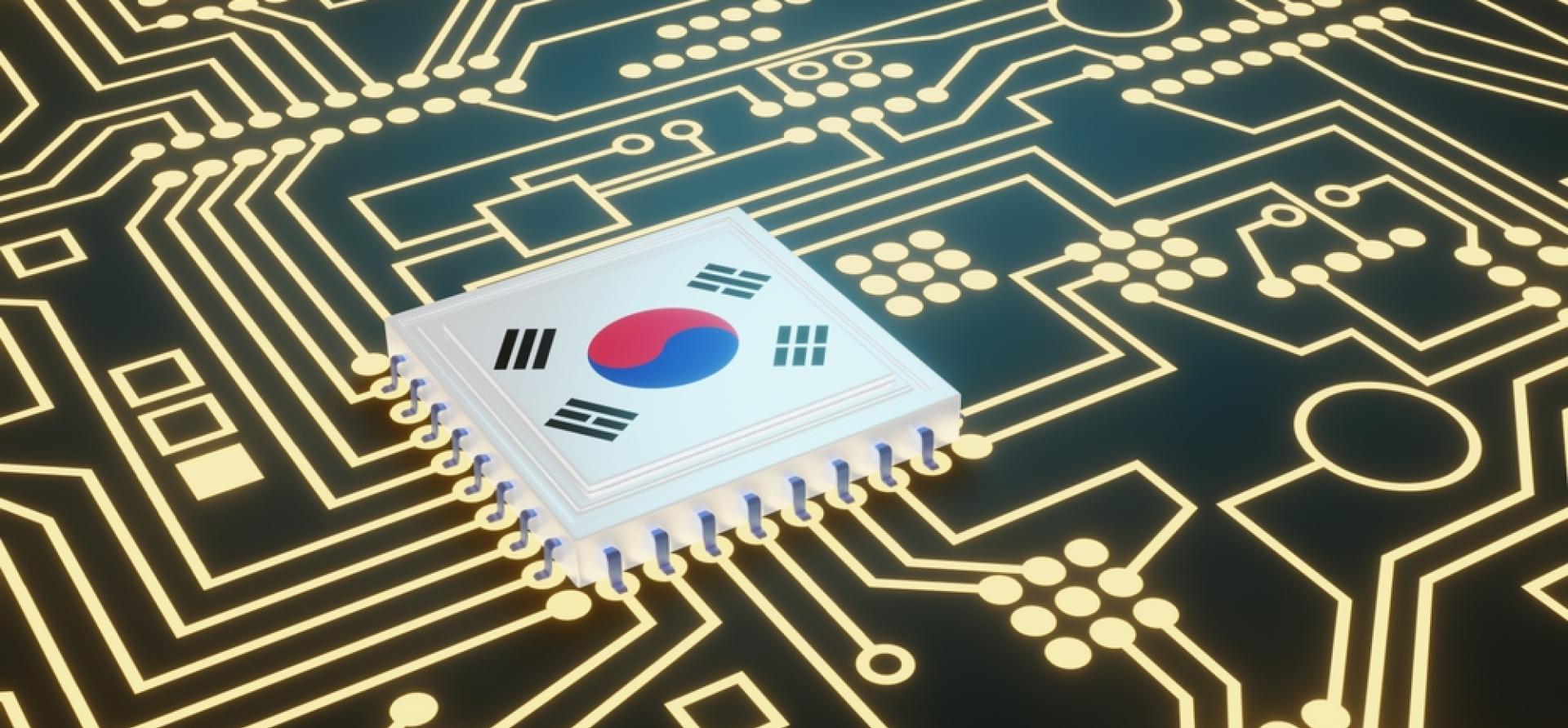
President Lee Jae-myung has announced a sweeping national megagrowth plan that positions South Korea at the forefront of AI and energy transformation.
The initiative includes the creation of an ‘AI expressway’, starting with the Ulsan AI data centre, underpinned by bold tax incentives and regulatory reforms to attract private sector investment. Complementing this is a proposed investment of 100 trillion won to accelerate AI innovation, next-generation semiconductors, and the development of AI infrastructure and innovation zones.
On the energy front, the government has launched a dedicated task force to develop an AI-powered next-generation power grid. This ‘electric highway’ aims to integrate AI technology into renewable energy distribution and grid modernisation without needing vast new infrastructure.
Complementing the power grid overhaul, Korea Electric Power Corp. (KEPCO) plans to invest around 73 trillion won by 2038 to expand transmission lines and upgrade the power infrastructure serving major semiconductor complexes.
Together, these measures form a robust blueprint that aligns digital transformation with energy security, aimed at keeping South Korea globally competitive while responding to rising electricity demands from AI and other tech industries.
Would you like to learn more about AI, tech and digital diplomacy? If so, ask our Diplo chatbot!
At the Emkay Confluence in Mumbai, Chief Economic Adviser V. Anantha Nageswaran emphasised that while trade-related concerns remain significant, they must not obscure the urgent need for India to boost its AI and semiconductor sectors.
He pointed to AI’s transformative economic potential and strategic importance, warning that India must act decisively to remain competitive as the United States and China advance aggressively in these domains.
By focusing on energy transition, energy security, and enhanced collaboration across sectors, Nageswaran argued that India can strengthen its innovation capacity and technological self-reliance.
Would you like to learn more about AI, tech and digital diplomacy? If so, ask our Diplo chatbot!
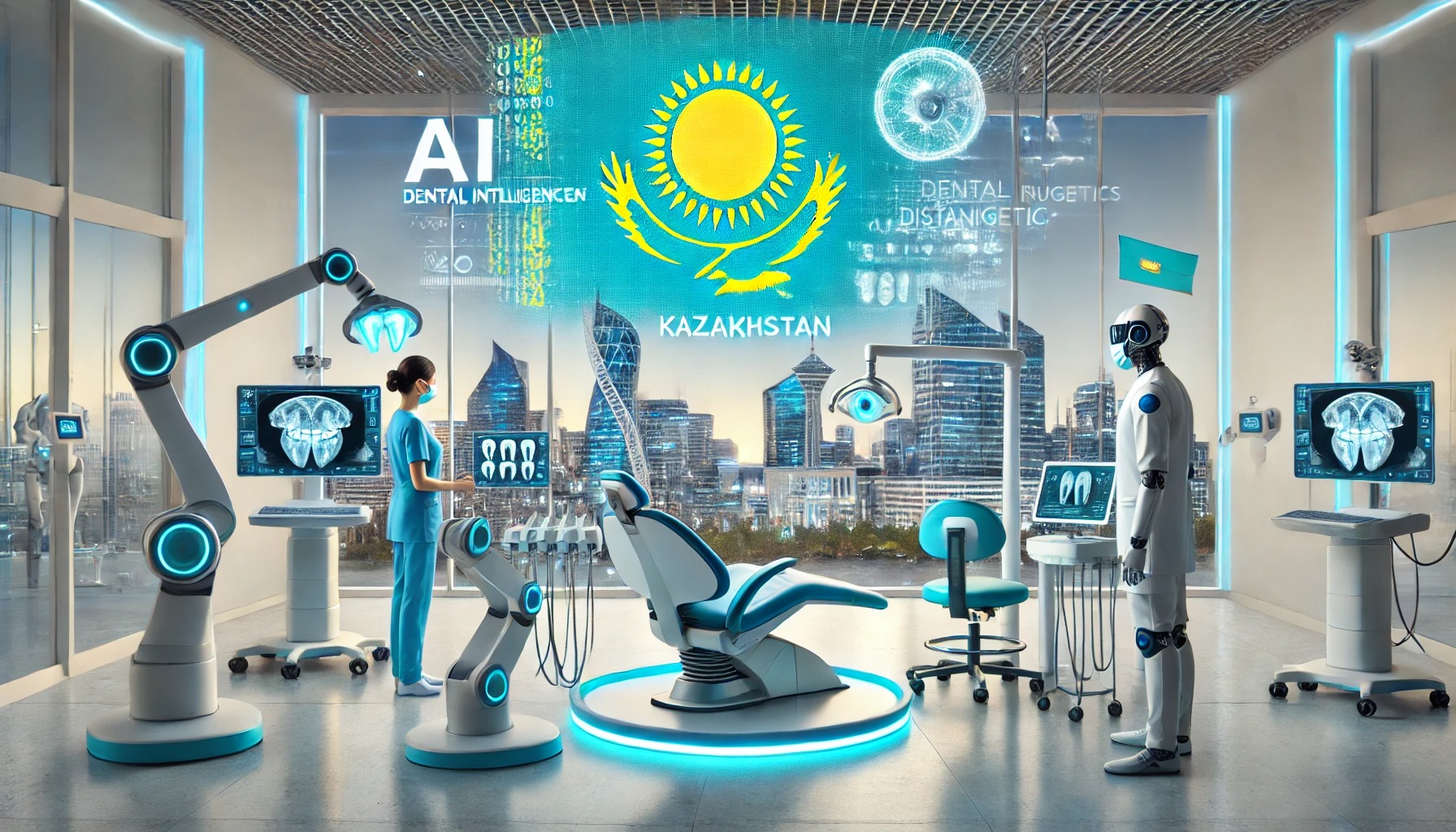
Prime Minister Olzhas Bektenov established a digital transformation group, or digital headquarters, to advance AI integration across Kazakhstan, following President Tokayev’s directives on 11 August 2025.
The group includes senior officials, such as the deputy prime minister, the head of strategic planning, the minister of digital development, innovation, and aerospace industry, and the presidential digitalisation advisor. The group is tasked with implementing nine priority areas outlined by the president.
These span AI deployment in the economy, public administration, and healthcare; digital strategy development; IT architecture modernisation; cybersecurity; support for IT startups; the national QazTech platform; and innovative city initiatives.
A significant plan component involves crafting a roadmap with the Samruk Kazyna Sovereign Wealth Fund to embed AI in production and boost labour productivity. AI solutions are expected to improve diagnostics, personalise treatment, enable continuous patient monitoring, and streamline workflows in healthcare. Startups will gain access to the Ministry of Health infrastructure and integration into a unified medical database.
Consolidating government communication via the Aitu national messenger, IT modernisation, and strengthened cybersecurity aims to create a seamless, safe digital environment for citizens. The emphasis is swift collaboration to address AI integration challenges across all sectors.
Would you like to learn more about AI, tech and digital diplomacy? If so, ask our Diplo chatbot!
According to Science and Technology Daily, Chinese researchers have reported a breakthrough in quantum drug discovery using edge encoding. Origin Quantum, USTC, and the Hefei AI Institute built a quantum-embedded graph neural network (GNN) to predict drug-molecule properties.
In drug development, graph neural networks model molecules as atoms and bonds. Classical and some quantum approaches handle atoms well but struggle with bonds. The gap limits accuracy and screening speed.
The team from China introduced quantum edge and node embeddings to process bonds and atoms simultaneously at the quantum level. The quantum-embedded GNN unifies both signals in one pass. Results show sharper predictions for the properties of candidate drugs.
Validation on the Origin Wukong quantum computer indicates stable performance despite today’s noisy hardware. Benchmarking suggests efficiency gains for molecular screening pipelines. Researchers say the approach is production-oriented as devices scale.
Findings appear in the Journal of Chemical Information and Modelling. Collaboration highlights China’s push to integrate quantum computing with biopharmaceutical research and development. More exhaustive testing on larger qubit counts is anticipated.
Would you like to learn more about AI, tech, and digital diplomacy? If so, ask our Diplo chatbot!
Chrome security update fixes six flaws that could enable arbitrary code execution. Stable channel 139.0.7258.127/.128 (Windows, Mac) and .127 (Linux) ships high-severity patches that protect user data and system integrity.
CVE-2025-8879 is a heap buffer overflow in libaom’s video codec. CVE-2025-8880 is a V8 race condition reported by Seunghyun Lee. CVE-2025-8901 is an out-of-bounds write in ANGLE.
Detection methods included AddressSanitizer, MemorySanitizer, UndefinedBehaviorSanitizer, Control Flow Integrity, libFuzzer, and AFL. Further fixes address CVE-2025-8881 in File Picker and CVE-2025-8882, a use-after-free in Aura.
Successful exploitation could allow code to run with browser privileges through overflows and race conditions. The automatic rollout is staged; users should update it manually by going to Settings > About Chrome.
Administrators should prioritise rapid deployment in enterprise fleets. Google credited external researchers, anonymous contributors, and the Big Sleep project for coordinated reporting and early discovery.
Would you like to learn more about AI, tech, and digital diplomacy? If so, ask our Diplo chatbot!
Google has introduced a new ‘Preferred Sources’ feature that allows users to curate their search results by selecting favourite websites. Once added, stories from these sites will appear more prominently in the ‘Top Stories’ section and a dedicated ‘From your sources’ section on the search results page.
Now rolling out in India and the US, the feature aims to improve search quality by helping users avoid low-value content. There is no limit to the number of sources that can be chosen, and early testers typically added more than four.
While preferred outlets will appear more often, search results will still include content from other websites.
To set preferred sources, users can click the icon next to the ‘Top Stories’ section when searching for a trending topic, find the outlet they want, and reload results.
Google says the change may also benefit publishers, offering them more visibility when AI-driven search engines sharply reduce traffic to news websites.
Would you like to learn more aboutAI, tech and digital diplomacy? If so, ask our Diplo chatbot!
Perplexity AI has made a surprise US$34.5 billion offer to acquire Google’s Chrome browser, which could align with antitrust measures under consideration in the US.
The San Francisco-based startup submitted the proposal in a letter of intent, claiming it would keep Chrome independent while prioritising openness and consumer protection.
The bid arrives as Google awaits a court ruling on potential remedies after being found to have maintained an illegal monopoly in online search.
US government lawyers have suggested Chrome’s divestment instead of allowing Google to strengthen its dominance through AI. Google has urged the court to reject such a move, warning that a sale could harm innovation and reduce quality.
Analysts at Baird Equity Research said Perplexity’s offer undervalues Chrome and may be intended to prompt rival bids or influence the judge’s decision. They added that Perplexity, which already operates its browser, could gain an advantage if Chrome became independent.
Google argues that most Chrome users are outside the US, meaning a forced sale would have global implications. The ruling is expected by the end of August, with the outcome likely to reshape the competitive landscape for browsers as AI increasingly shapes how users access the internet.
Would you like to learn more aboutAI, tech and digital diplomacy? If so, ask our Diplo chatbot!