Over 4.3 million New Zealand account details have been exposed online, according to the National Cyber Security Centre. As Cyber Smart Week begins, the agency is launching a free tool called ‘How Exposed Am I‘ through its Own Your Online platform to help people check their data and strengthen defences.
The tool utilises the Have I Been Pwned database to display users whose personal details have been compromised. It then provides steps to enhance security, giving individuals greater control over their digital safety. Authorities say scammers can easily exploit exposed information to compromise accounts.
New research highlights the scale of the threat. More than half of users in New Zealand faced an online security issue within six months, yet fewer than half felt personally vulnerable. Losses reached NZ$1.6 billion in 2024, affecting over 830,000 people, with an average loss of NZ$1,260 per incident.
NCSC’s Mike Jagusch says almost everyone leaves a digital footprint that exposes them to scammers. Simple steps, such as using long, unique passwords and enabling two-factor authentication, can greatly reduce risk. He notes that two-factor authentication alone can block 99% of automated attacks.
The initiative is part of Own Your Online’s broader push to improve national cyber resilience. Users are encouraged to start by securing their most critical accounts, such as banking, email, and social media, to build stronger protection against future scams.
Would you like to learn more about AI, tech, and digital diplomacy? If so, ask our Diplo chatbot!

The agreement will combine innovations across Google Search, Gemini, and Google Cloud. AI tools will assist Team USA with training analysis, while viewers will benefit from more innovative search functions during NBCUniversal’s coverage.
Gemini will also support athletes and organisers with enhanced data insights and communication tools.
Google Cloud will power what is set to be the most technologically advanced Games in history. It will optimise event logistics, analyse performance data, and provide real-time analytics to NBCUniversal.
Meanwhile, YouTube will host exclusive Olympic content, expanding NBCUniversal’s storytelling reach through short-form video.
The partnership underscores how AI and cloud technologies are shaping the future of global events. Fans attending or watching from home will enjoy more immersive, on-demand access to the athletes, competitions, and stories driving LA28.
Would you like to learn more aboutAI, tech and digital diplomacy? If so, ask our Diplo chatbot!
AI, omics, and systems biology enable targeted drugs for heart disease pathways once considered untreatable. A new study in Frontiers in Science highlights how these innovations could revolutionise treatment and save millions of lives.
Heart disease remains the leading global killer, partly because generic treatments like statins do not account for individual biological differences.
Researchers say AI-powered precision medicine can identify new gene and protein targets, enabling personalised therapies for each patient’s unique heart disease.
RNA-based drugs are emerging as an up-and-coming solution. Unlike conventional medicines that reach only limited protein targets, RNA therapies can influence almost any gene and may be developed more quickly.
Early trials show they can lower cholesterol more effectively than traditional approaches, with potential to address long-standing ‘undruggable’ pathways in cardiovascular disease.
Experts say realising these treatments requires global leadership and collaboration across academia, industry, and healthcare. Bold investment and open science are crucial to make precision medicine global and reduce heart disease, expected to cause 26 million deaths annually by 2030.
Would you like to learn more about AI, tech and digital diplomacy? If so, ask our Diplo chatbot!
The Swedish-Swiss electrical engineering corporation ABB has agreed to sell its Robotics division to Japan’s SoftBank Group for an enterprise value of $5.375 billion, abandoning plans for a spin-off.
However, the move marks one of the most significant robotics transactions in recent years, and reflects both firms’ ambition to drive the next era of AI-based automation.
A divestment that will allow ABB to focus on its core businesses in electrification and automation, while SoftBank expands its ‘Physical AI’ strategy.
ABB said the sale would create immediate shareholder value and that proceeds would be used according to its capital allocation principles.
The Robotics division, which employs around 7,000 people and generated $2.3 billion in 2024 revenues, will become part of SoftBank’s portfolio upon completion of the deal, expected by mid-to-late 2026. The transaction is projected to yield ABB a pre-tax book gain of about $2.4 billion.
SoftBank founder Masayoshi Son said the acquisition aligns with his vision to combine artificial superintelligence and robotics to ‘propel humanity forward’.
ABB’s CEO Morten Wierod said the partnership would unite ABB’s industrial expertise with SoftBank’s AI capabilities, strengthening its global leadership in advanced robotics.
Would you like to learn more aboutAI, tech and digital diplomacy? If so, ask our Diplo chatbot!
Google is expanding access to Opal, its no-code AI mini-app builder. Introduced two months ago within Google Labs, the tool enables users to create AI-powered mini-apps through natural language prompts, eliminating the need for coding.
According to Megan Li, Senior Product Manager at Google Labs, the expansion follows strong early engagement from creators. Users can access Opal at opal.withgoogle.com and join its builder community through Discord.
New debugging features aim to make workflows more transparent and efficient. Users can now run workflows step by step in a visual editor or adjust specific steps in the console, with real-time error reporting.
Meanwhile, Google DeepMind has launched Gemini 2.5 Computer Use, a specialised model capable of interacting with user interfaces. Available in preview through the Gemini API, it can be accessed via Google AI Studio and Vertex AI Studio.
Would you like to learn more about AI, tech, and digital diplomacy? If so, ask our Diplo chatbot!
Kazakhstan’s Prime Minister Olzhas Bektenov has directed the full implementation of AI across government agencies to meet President Kassym-Jomart Tokayev’s goal of reducing the shadow economy’s share in GDP to 15 percent in 2025.
At a government session, Bektenov said progress must go beyond reports and correspondence, calling for structural reforms in taxation, digitalisation, and business regulation. He urged ministries to pursue a ‘transparent economy’ through comprehensive AI and data integration initiatives.
Bektenov stressed that digitalisation projects such as cashless payments and the digital tenge have already proven effective in curbing unrecorded transactions and improving financial oversight.
AI will also be deployed in customs risk profiling and cargo inspection analysis to detect fraud and reduce corruption.
The Ministries of Finance, Justice, Trade, and National Economy were instructed to integrate databases under the Smart Data Finance system and to finalise an automated risk management system for company registration by 25 November.
Deputy Prime Minister Serik Zhumangarin will oversee coordination.
Would you like to learn more aboutAI, tech and digital diplomacy? If so, ask our Diplo chatbot!
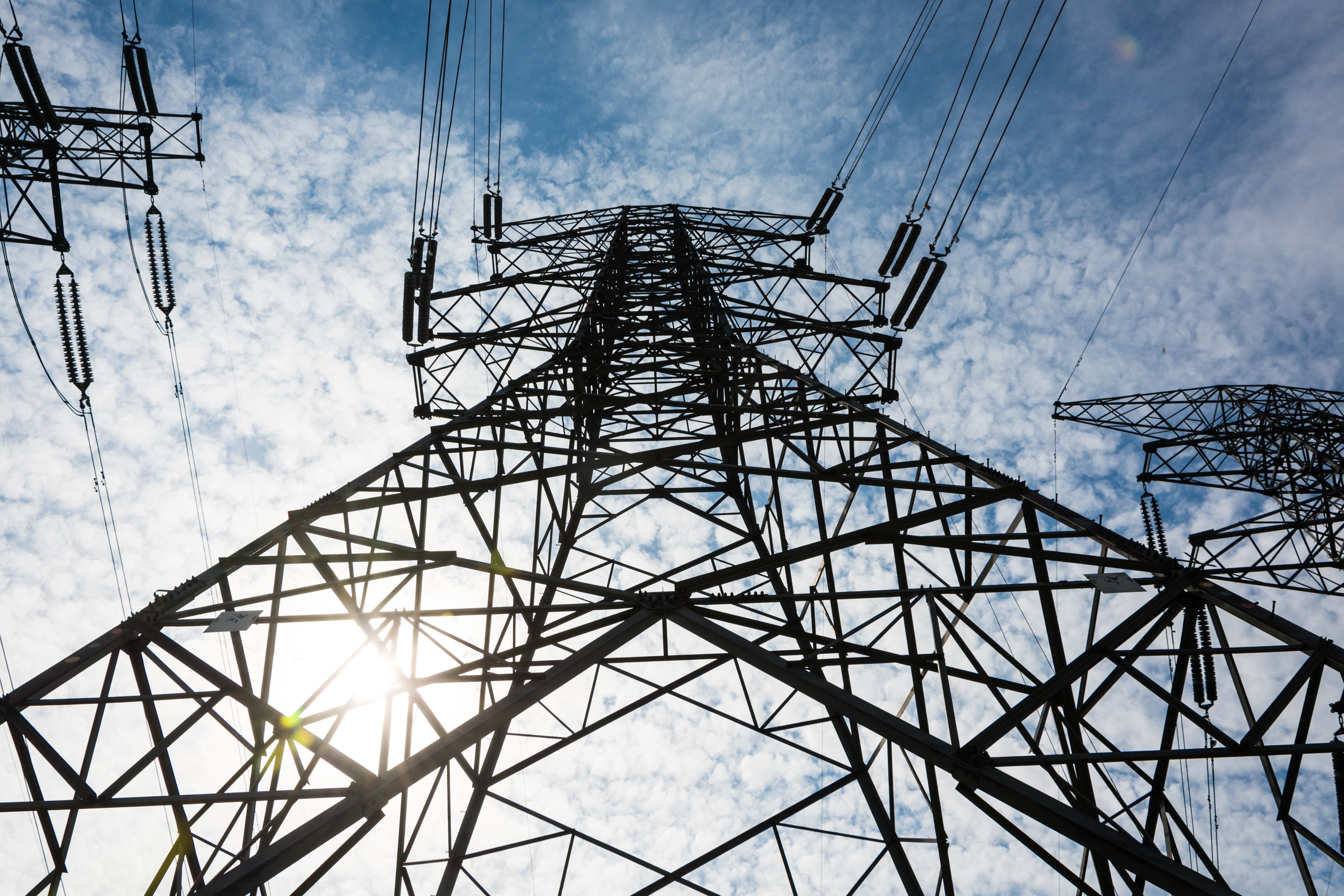
US electric utilities are set to spend nearly $208 billion on the power grid in 2025 and more than $1.1 trillion over the next five years, according to the Edison Electric Institute. The surge in investment reflects rising demand from data centres, artificial intelligence, and wider electrification across the economy.
EEI data shows that investor-owned utilities spent $765 billion on capital projects in the five years to 2024. The new spending represents a significant increase and is aimed at upgrading and expanding infrastructure to keep pace with the accelerating demand for electricity.
The growing investment comes as demand from energy-intensive technologies continues to rise. Data centres and AI workloads are driving sustained growth in US power consumption, placing unprecedented pressure on existing infrastructure and prompting utilities to scale up their spending plans.
David Weeks, supply chain industry practice lead at Moody’s, warned that the escalating energy crisis could become a limiting factor across multiple industries. He said grid constraints and permitting delays must be factored into corporate supply chain strategies to avoid future disruptions.
As electrification spreads across the economy, grid reliability and capacity are becoming critical considerations for companies. The planned investment underscores the urgency of modernising the power grid to support economic growth while adapting to new technological demands.
Would you like to learn more about AI, tech, and digital diplomacy? If so, ask our Diplo chatbot!
Researchers at MIT have developed a predictive model that could make fusion power plants more reliable and safe. The approach uses machine learning and physics-based simulations to predict plasma instabilities and prevent damage during tokamak shutdowns.
Experimental tokamaks use strong magnets to contain plasma hotter than the sun’s core. They often face challenges in safely ramping down plasma currents that circulate at extreme speeds and temperatures.
The model was trained and tested on data from the Swiss TCV tokamak. Combining neural networks with physics simulations, the team achieved accurate predictions using few plasma pulses, saving costs and overcoming limited experimental data.
The system can now generate practical ‘trajectories’ for controllers to adjust magnets and temperatures, helping to safely manage plasma during shutdowns.
Researchers say the method could be particularly important as fusion devices scale up to grid-level energy production. High-energy plasmas in larger reactors pose greater risks, and uncontrolled terminations could damage the machine.
The new model allows operators to carefully balance rampdowns, avoiding disruptions and ensuring safer, more efficient operation.
Work on the predictive model is part of wider collaboration with Commonwealth Fusion Systems and supported by the EUROfusion Consortium and Swiss research institutions. Scientists see it as a crucial step toward making fusion a practical, reliable, and sustainable energy source.
Would you like to learn more about AI, tech and digital diplomacy? If so, ask our Diplo chatbot!
MIT and McMaster researchers used AI to map how a narrow-spectrum antibiotic attacks harmful gut bacteria. Enterololin targets E. coli linked to Crohn’s flares while preserving most of the microbiome, providing a precise alternative to broad-spectrum antibiotics.
AI accelerated the process of identifying the drug’s mechanism of action, reducing a task that usually takes years to just months.
The team used DiffDock, a generative AI tool developed at MIT, to predict how enterololin binds to a protein complex called LolCDE in E. coli. Laboratory experiments, including mutant evolution, RNA sequencing, and CRISPR knockdowns, confirmed the AI predictions.
The method demonstrates how AI can provide mechanistic insights, guide experiments, and speed up early-stage antibiotic development.
Enterololin improved recovery and preserved the microbiome in mouse models compared with conventional treatments. Researchers aim to develop derivatives against resistant pathogens like Klebsiella pneumoniae, with early work underway at spinout company Stoked Bio.
The study highlights broader implications for precision antibiotics, which could treat infections without disrupting beneficial microbes. AI-driven mechanism mapping could speed up drug discovery, cut costs, and help tackle antimicrobial resistance.
Would you like to learn more about AI, tech and digital diplomacy? If so, ask our Diplo chatbot!

Google has expanded its AI Mode in Search, supporting over 35 new languages and 40 more countries and territories. The rollout expands access across Europe and other regions, reaching over 200 countries and territories worldwide.
The update aims to make AI-powered Search more accessible globally, allowing people to interact with Search in their native language. Expanding language support, Google will enable users to ask questions and access information in their preferred language.
AI Mode is powered by Google’s latest Gemini models, which deliver advanced reasoning and multimodal understanding. These capabilities help the system grasp the subtleties of local languages and provide relevant, context-aware answers, making AI Mode genuinely useful across diverse regions.
According to Google, people using AI Mode tend to explore topics in far greater depth, with queries nearly three times longer than traditional searches. The enhanced experience will continue to roll out globally over the coming week.
Would you like to learn more about AI, tech and digital diplomacy? If so, ask our Diplo chatbot!