The divide defining AI’s future through large language models
What are large language models? Large language models (LLMs) are advanced AI systems that can understand and generate various types of content, including human-like text, images, video, and more audio.
The development of these large language models has reshaped ΑΙ from a specialised field into a social, economic, and political phenomenon. Systems such as GPT, Claude, Gemini, and Llama have become fundamental infrastructures for information processing, creative work, and automation.
Their rapid rise has generated an intense debate about who should control the most powerful linguistic tools ever built.
The distinction between open source and closed source models has become one of the defining divides in contemporary technology that will, undoubtedly, shape our societies.
Open source models such as Meta’s Llama 3, Mistral, and Falcon offer public access to their code or weights, allowing developers to experiment, improve, and deploy them freely.
Closed source models, exemplified by OpenAI’s GPT series, Anthropic’s Claude, or Google’s Gemini, restrict access, keeping architectures and data proprietary.
Such a tension is not merely technical. It embodies two competing visions of knowledge production. One is oriented toward collective benefit and transparency, and the other toward commercial exclusivity and security of intellectual property.
The core question is whether language models should be treated as a global public good or as privately owned technologies governed by corporate rights. The answer to such a question carries implications for innovation, fairness, safety, and even democratic governance.
Innovation and market power in the AI economy
From an economic perspective, open and closed source models represent opposing approaches to innovation. Open models accelerate experimentation and lower entry barriers for small companies, researchers, and governments that lack access to massive computing resources.
They enable localised applications in diverse languages, sectors, and cultural contexts. Their openness supports decentralised innovation ecosystems similar to what Linux did for operating systems.
Closed models, however, maintain higher levels of quality control and often outperform open ones due to the scale of data and computing power behind them. Companies like OpenAI and Google argue that their proprietary control ensures security, prevents misuse, and finances further research.
The closed model thus creates a self-reinforcing cycle. Access to large datasets and computing leads to better models, which attract more revenue, which in turn funds even larger models.
The outcome of that has been the consolidation of AI power within a handful of corporations. Microsoft, Google, OpenAI, Meta, and a few start-ups have become the new gatekeepers of linguistic intelligence.
Such concentration raises concerns about market dominance, competitive exclusion, and digital dependency. Smaller economies and independent developers risk being relegated to consumers of foreign-made AI products, instead of being active participants in the creation of digital knowledge.
As so, open source LLMs represent a counterweight to Big Tech’s dominance. They allow local innovation and reduce dependency, especially for countries seeking technological sovereignty.
Yet open access also brings new risks, as the same tools that enable democratisation can be exploited for disinformation, deepfakes, or cybercrime.
Ethical and social aspects of openness
The ethical question surrounding LLMs is not limited to who can use them, but also to how they are trained. Closed models often rely on opaque datasets scraped from the internet, including copyrighted material and personal information.
Without transparency, it is impossible to assess whether training data respects privacy, consent, or intellectual property rights. Open source models, by contrast, offer partial visibility into their architecture and data curation processes, enabling community oversight and ethical scrutiny.
However, we have to keep in mind that openness does not automatically ensure fairness. Many open models still depend on large-scale web data that reproduce existing biases, stereotypes, and inequalities.
Open access also increases the risk of malicious content, such as generating hate speech, misinformation, or automated propaganda. The balance between openness and safety has therefore become one of the most delicate ethical frontiers in AI governance.
Socially, open LLMs can empower education, research, and digital participation. They allow low-resource languages to be modelled, minority groups to build culturally aligned systems, and academic researchers to experiment without licensing restrictions.
They represent a vision of AI as a collaborative human project rather than a proprietary service.
Yet they also redistribute responsibility: when anyone can deploy a powerful model, accountability becomes diffuse. The challenge lies in preserving the benefits of openness while establishing shared norms for responsible use.
The legal and intellectual property dilemma
Intellectual property law was not designed for systems that learn from millions of copyrighted works without direct authorisation.
Closed source developers defend their models as transformative works under fair use doctrines, while content creators demand compensation or licensing mechanisms.
The dispute has already reached courts, as artists, authors, and media organisations sue AI companies for unauthorised use of their material.
Open source further complicates the picture. When model weights are released freely, the question arises of who holds responsibility for derivative works and whether open access violates existing copyrights.
Some open licences now include clauses prohibiting harmful or unlawful use, blurring the line between openness and control. Legal scholars argue that a new framework is needed to govern machine learning datasets and outputs, one that recognises both the collective nature of data and the individual rights embedded in it.
At stake is not only financial compensation but the broader question of data ownership in the digital age. We need to question ourselves. If data is the raw material of intelligence, should it remain the property of a few corporations or be treated as a shared global resource?
Economic equity and access to computational power
Even the most open model requires massive computational infrastructure to train and run effectively. Access to GPUs, cloud resources, and data pipelines remains concentrated among the same corporations that dominate the closed model ecosystem.
Thus, openness in code does not necessarily translate into openness in practice.
Developing nations, universities, and public institutions often lack the financial and technical means to exploit open models at scale. Such an asymmetry creates a form of digital neo-dependency: the code is public, but the hardware is private.
For AI to function as a genuine global public good, investments in open computing infrastructure, public datasets, and shared research facilities are essential. Initiatives such as the EU’s AI-on-demand platform or the UN’s efforts for inclusive digital development reflect attempts to build such foundations.
The economic stakes extend beyond access to infrastructure. LLMs are becoming the backbone of new productivity tools, from customer service bots to automated research assistants.
Whoever controls them will shape the future division of digital labour. Open models could allow local companies to retain more economic value and cultural autonomy, while closed models risk deepening global inequalities.
Governance, regulation, and the search for balance
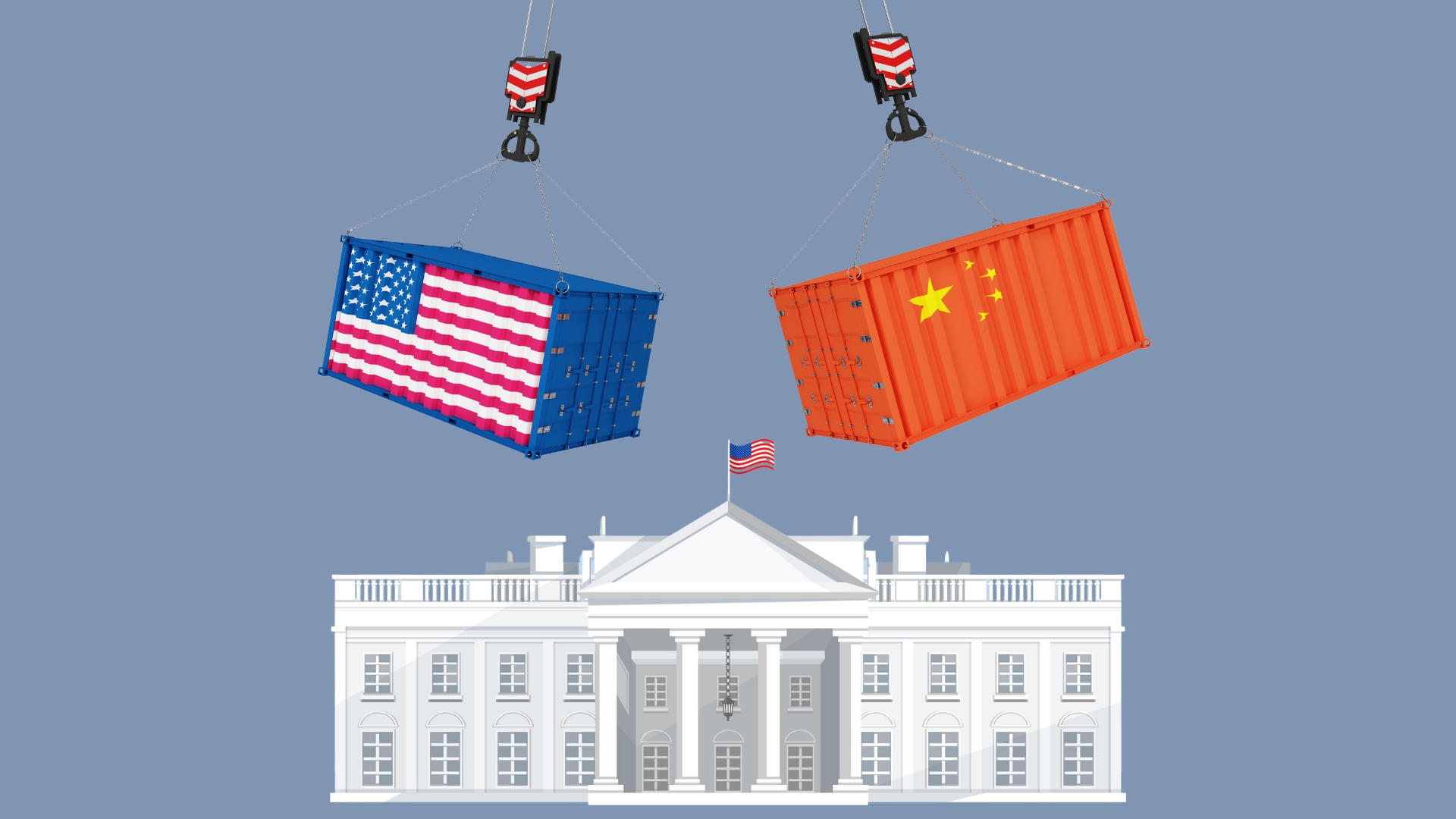
Governments face a difficult task of regulating a technology that evolves faster than policy. For example, the EU AI Act, US executive orders on trustworthy AI, and China’s generative AI regulations all address questions of transparency, accountability, and safety.
Yet few explicitly differentiate between open and closed models.
The open source community resists excessive regulation, arguing that heavy compliance requirements could suffocate innovation and concentrate power even further in large corporations that can afford legal compliance.
On the other hand, policymakers worry that uncontrolled distribution of powerful models could facilitate malicious use. The emerging consensus suggests that regulation should focus not on the source model itself but on the context of its deployment and the potential harms it may cause.
An additional governance question concerns international cooperation. AI’s global nature demands coordination on safety standards, data sharing, and intellectual property reform.
The absence of such alignment risks a fragmented world where closed models dominate wealthy regions while open ones, potentially less safe, spread elsewhere. Finding equilibrium requires mutual trust and shared principles for responsible innovation.
The cultural and cognitive dimension of openness
Beyond technical and legal debates, the divide between open and closed models reflects competing cultural values. Open source embodies the ideals of transparency, collaboration, and communal ownership of knowledge.
Closed source represents discipline, control, and the pursuit of profit-driven excellence. Both cultures have contributed to technological progress, and both have drawbacks.
From a cognitive perspective, open LLMs can enhance human learning by enabling broader experimentation, while closed ones can limit exploration to predefined interfaces. Yet too much openness may also encourage cognitive offloading, where users rely on AI systems without developing independent judgment.
Therefore, societies must cultivate digital literacy alongside technical accessibility, ensuring that AI supports human reasoning rather than replaces it.
The way societies integrate LLMs will influence how people perceive knowledge, authority, and creativity. When language itself becomes a product of machines, questions about authenticity, originality, and intellectual labour take on new meaning.
Whether open or closed, models shape collective understanding of truth, expression, and imagination for our societies.
Toward a hybrid future
The polarisation we are presenting here, between open and closed approaches, may be unsustainable in the long run. A hybrid model is emerging, where partially open architectures coexist with protected components.
Companies like Meta release open weights but restrict commercial use, while others provide APIs for experimentation without revealing the underlying code. Such hybrid frameworks aim to combine accountability with safety and commercial viability with transparency.
The future equilibrium is likely to depend on international collaboration and new institutional models. Public–private partnerships, cooperative licensing, and global research consortia could ensure that LLM development serves both the public interest and corporate sustainability.
A system of layered access (where different levels of openness correspond to specific responsibilities) may become the standard.
Ultimately, the choice between open and closed models reflects humanity’s broader negotiation between collective welfare and private gain.
Just as the internet or many other emerging technologies evolved through the tension between openness and commercialisation, the future of language models will be defined by how societies manage the boundary between shared knowledge and proprietary intelligence.
So, in conclusion, the debate between open and closed source LLMs is not merely technical.
As we have already mentioned, it embodies the broader conflict between public good and private control, between the democratisation of intelligence and the concentration of digital power.
Open models promote transparency, innovation, and inclusivity, but pose challenges in terms of safety, legality, and accountability. Closed models offer stability, quality, and economic incentive, yet risk monopolising a transformative resource so crucial in our quest for constant human progression.
Finding equilibrium requires rethinking the governance of knowledge itself. Language models should neither be owned solely by corporations nor be released without responsibility. They should be governed as shared infrastructures of thought, supported by transparent institutions and equitable access to computing power.
Only through such a balance can AI evolve as a force that strengthens, rather than divides, our societies and improves our daily lives.
Would you like to learn more about AI, tech and digital diplomacy? If so, ask our Diplo chatbot!