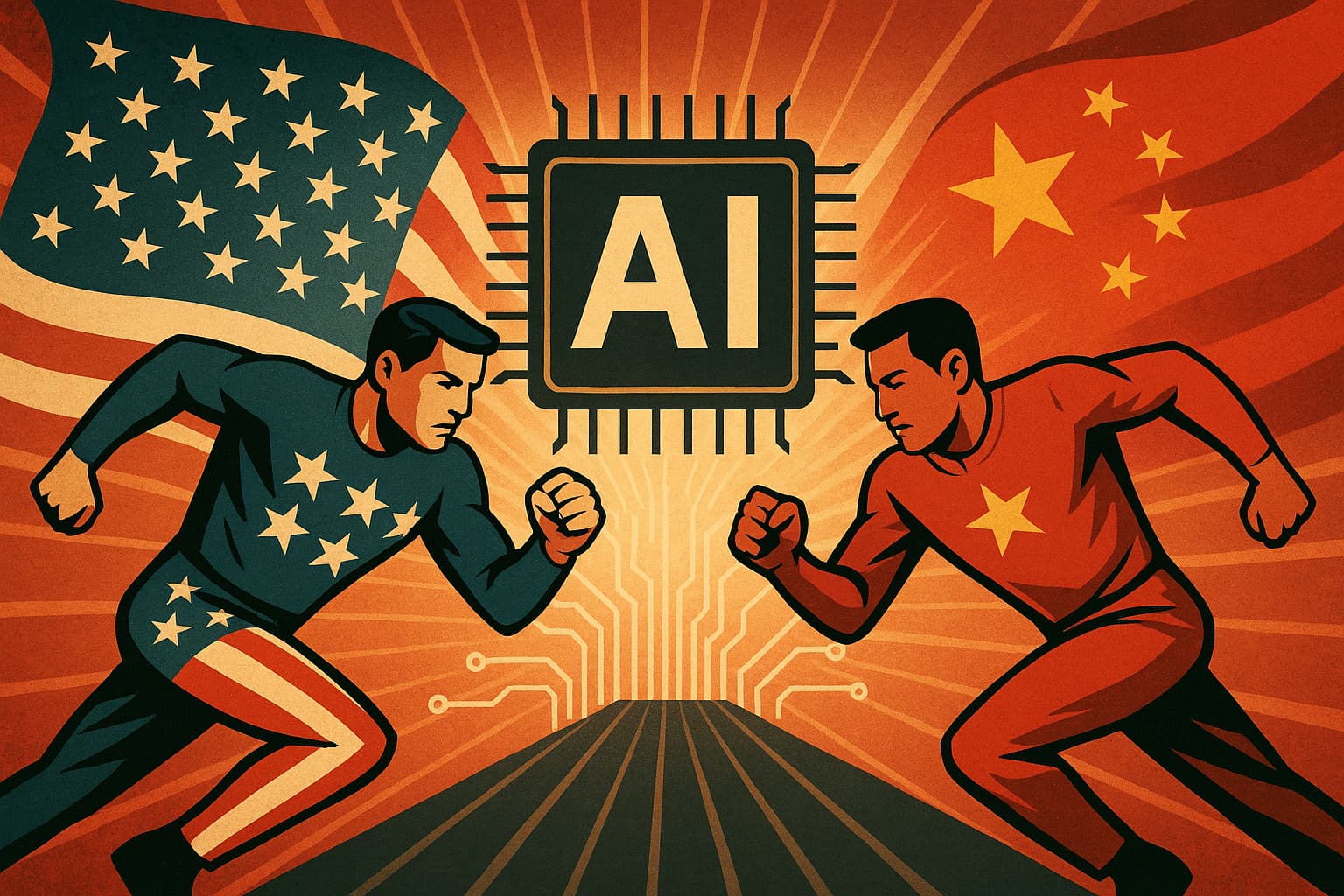
The Commonwealth Bank of Australia has reversed plans to cut 45 customer service roles following union pressure over the use of AI in its call centres.
The Finance Sector Union argued that CBA was not transparent about call volumes, taking the case to the Workplace Relations Tribunal. Staff reported rising workloads despite claims that the bank’s voice bot reduced calls by 2,000 weekly.
CBA admitted its redundancy assessment was flawed, stating that it had not fully considered the business needs. Impacted employees are being offered the option to remain in their current roles, relocate within the firm, or depart.
The Bank of Australia apologised and pledged to review internal processes. Chief executive Matt Comyn has promoted AI adoption, including a new partnership with OpenAI, but the union called the reversal a ‘massive win’ for workers.
Would you like to learn more about AI, tech, and digital diplomacy? If so, ask our Diplo chatbot!
DeepSeek has released a minor upgrade, V3.1, yet conspicuously omitted any R1 label from its chatbot, leading to speculation over the status of the promised R2 model.
The V3.1 version includes improvements such as an expanded 128K token context window for holding more information per interaction, but lacks major innovation beyond that. Observers note that the absence of R1 suggests that DeepSeek may be reworking its roadmap or shifting focus.
Industry watchers point to the gap this update left, especially in light of delays reported for the R2 model, which has faced technical setbacks due to hardware issues and training challenges with domestic chips. Competitors are now gaining ground as a result.
With no official statement from DeepSeek and a quieter-than-usual announcement, delivered only to a WeChat user group, analysts are questioning whether the company is rethinking its product sequencing or concealing delays in rolling out the next-generation R2 reasoning model.
Would you like to learn more about AI, tech and digital diplomacy? If so, ask our Diplo chatbot!
Meta has frozen hiring in its AI division, halting a spree that had drawn top researchers with lucrative offers. The company described the pause as basic organisational planning, aimed at building a more stable structure for its superintelligence ambitions.
The freeze, first reported by the Wall Street Journal, began last week and prevents employees in the unit from transferring to other teams. Its duration has not been communicated, and Meta declined to comment on the number of hires already made.
The decision follows growing tensions inside the newly created Superintelligence Labs, where long-serving researchers have voiced concerns over disparities in pay and recognition compared with recruits.
Alexandr Wang, who leads the division, recently told staff that superintelligence is approaching and that significant changes are necessary to prepare. His email outlined Meta’s most significant reorganisation of its AI efforts.
The pause also comes amid investor scrutiny, as analysts warn that heavy reliance on stock-based compensation to attract talent could fuel innovation or dilute shareholder value without precise results.
Despite these concerns, Meta’s stock has risen by about 28% since the start of the year, reflecting continued investor confidence in the company’s long-term prospects.
Would you like to learn more aboutAI, tech and digital diplomacy? If so, ask our Diplo chatbot!
Meta is launching a research lab focused on superintelligence, led by Scale AI founder Alexandr Wang, in an attempt to regain ground in the global AI race.
Mark Zuckerberg is reportedly in talks to invest billions into Scale, reflecting strong confidence in Wang’s data-driven approach and industry influence.
While Meta’s past efforts with its Llama models gained traction, its latest release, Llama 4, failed to meet expectations and drew criticism.
Wang’s appointment arrives during an ongoing talent exodus from Meta, with several senior AI researchers departing for rivals or founding startups.
The new lab is separate from Meta’s existing FAIR division, led by Yann LeCun, who has dismissed the idea of chasing superintelligence. Meta’s partnership with Scale mirrors deals by Microsoft, Amazon, and Google, aiming to secure top AI talent without formal acquisitions.
Would you like to learn more about AI, tech and digital diplomacy? If so, ask our Diplo chatbot!
Databricks has secured a fresh funding round that pushes its valuation beyond $100bn, cementing its place among the world’s most valuable private tech firms. The Series K deal marks a sharp rise from the company’s $62bn figure in late 2024 and underscores investor confidence in its long-term AI strategy.
The new capital will accelerate Databricks’ global expansion, fuel acquisitions in the AI space, and support product innovation. Upcoming launches include Agent Bricks, a platform for enterprise-grade AI agents, and Lakebase, a new operational database that extends the company’s ecosystem.
Chief executive Ali Ghodsi said the round was oversubscribed, reflecting strong investor demand. He emphasised that businesses can leverage enterprise data to create secure AI apps and agents, noting that this momentum supports Databricks’ growth across 15,000 customers.
The company has also expanded its role in the broader AI ecosystem through partnerships with Microsoft, Google Cloud, Anthropic, SAP, and Palantir. Last year, it opened a European headquarters in London to cement the UK as a key market and strengthen ties with global enterprises.
Databricks has avoided confirming an IPO timeline, though Ghodsi told CNBC that investor appetite surged after fintech Figma’s listing. With Klarna now eyeing a return to New York, Databricks’ soaring valuation highlights how leading AI firms continue to attract capital even as market conditions shift.
Would you like to learn more about AI, tech, and digital diplomacy? If so, ask our Diplo chatbot!

OpenAI chief Sam Altman has warned that the US may be underestimating China’s rapid advancement in AI.
Speaking to CNBC, Altman explained that China’s use of open-source models and its manufacturing capacity may allow it to move faster in some areas of development.
He questioned the effectiveness of export controls, noting that chip restrictions may not be enough to curb long-term innovation. Chinese firms like DeepSeek and MoonshotAI are gaining traction with open-weight models that rival US offerings in cost and capability.
Altman’s comments echo concerns voiced earlier by Nvidia’s CEO, who said firms like Huawei continue to grow despite restrictions.
Would you like to learn more about AI, tech and digital diplomacy? If so, ask our Diplo chatbot!

TeraWulf has secured a $3.2 billion financial backstop from Google to develop a 160-megawatt data centre at its Lake Mariner site in New York. Google will receive warrants for 32.5 million shares, lifting its stake in TeraWulf to about 14%.
Unlike its existing Bitcoin mining activities, the new deal focuses exclusively on AI and high-performance computing (HPC) workloads. TeraWulf confirmed it will maintain its Bitcoin mining operations but has no plans for expansion in that area.
The pivot reflects a broader trend in the mining industry, where companies increasingly shift capacity toward AI following the April 2024 halving that cut block rewards.
Executives highlighted that while Bitcoin mining offers immediate cash flow and grid flexibility, the long-term growth lies in powering AI and HPC demand. Research from VanEck suggests that if miners redirected just 20% of their power toward AI hosting, the industry could see $13.9 billion in additional annual revenue.
TeraWulf’s leadership said the partnership with Google positions the company as a key player in building next-generation digital infrastructure.
Would you like to learn more about AI, tech and digital diplomacy? If so, ask our Diplo chatbot!

Google’s upcoming Pixel 10 smartphones are tipped to place AI at the centre of the user experience, with three new features expected to redefine how people use their devices.
While hardware upgrades are anticipated at the Made by Google event, much of the excitement revolves around the AI tools that may debut.
One feature, called Help Me Edit, is designed for Google Photos. Instead of spending time on manual edits, users could describe the change they want, such as altering the colour of a car, and the AI would adjust instantly.
Expanding on the Pixel 9’s generative tools, it promises far greater control and speed.
Another addition, Camera Coach, could offer real-time guidance on photography. Using Google’s Gemini AI, the phone may provide step-by-step advice on framing, lighting, and composition, acting as a digital photography tutor.
Finally, Pixel Sense is rumoured to be a proactive personal assistant that anticipates user needs. Learning patterns from apps such as Gmail and Calendar, it could deliver predictive suggestions and take actions across third-party services, bringing the smartphone closer to a truly adaptive companion.
These features suggest that Google is betting heavily on AI to give the Pixel 10 a competitive edge.
Would you like to learn more aboutAI, tech and digital diplomacy? If so, ask our Diplo chatbot!
Elon Musk has taken an unexpected conciliatory turn in his feud with Sam Altman by praising a ChatGPT-5 response, ‘I don’t know’, as more valuable than overconfident answers. Musk described it as ‘a great answer’ from the AI chatbot.
At one point, xAI’s Grok chat assistant sided with Altman, while ChatGPT offered a supportive nod to Musk. These chatbot alignments have introduced confusion and irony into a clash already rich with irony.
Musk’s praise of a modest AI response contrasts sharply with the often intense claims of supremacy. It signals a rare acknowledgement of restraint and clarity, even from an avowed critic of OpenAI.
Would you like to learn more about AI, tech and digital diplomacy? If so, ask our Diplo chatbot!
Arm Holdings has hired Amazon’s AI chip lead, Rami Sinno, to design its own complete chips. Known for Amazon’s Trainium and Inferentia processors, Sinno brings key expertise to Arm’s new direction in chip manufacturing.
Arm has traditionally licensed chip designs to companies like Apple and Nvidia, but now aims to build chips and complete systems. The firm is expanding teams with experience from HPE, Intel and Qualcomm, signalling a significant shift in its business model.
Backed by SoftBank, Arm plans to invest profits in chip development to rival Nvidia and reduce reliance on traditional licensing.
Would you like to learn more about AI, tech and digital diplomacy? If so, ask our Diplo chatbot!