As concerns grow over the impact of smartphones on children, several European countries are implementing or debating restrictions on their use in schools. France, for example, has prohibited phones in primary and secondary schools since 2018 and recently extended the policy to include ‘digital breaks’ at some institutions. Similarly, the Netherlands and Hungary have adopted bans, with exceptions for educational purposes or special needs, while Italy, Greece, and Latvia have also imposed restrictions.
The debate is fueled by studies showing that smartphones can distract students, though some argue they can also be useful for learning. A 2023 UNESCO report recommended limiting phones in schools to support education, with more than 60 countries now following similar measures. However, enforcement remains a challenge, as some reports suggest that many students still find ways to use their devices despite the bans.
Experts remain divided on the issue. While some highlight the risks of distraction and mental health impacts, others emphasise the need for balance. ‘Banning phones can be beneficial, but we must ensure children have adequate alternatives for education and communication,’ said Ben Carter, a professor of medical statistics at King’s College London.
The trend reflects broader concerns about screen time among children, with countries like Sweden and Luxembourg calling for clearer rules to promote healthier digital habits. While opinions differ, the growing movement underscores a collective effort to create focused, engaging, and healthier learning environments.
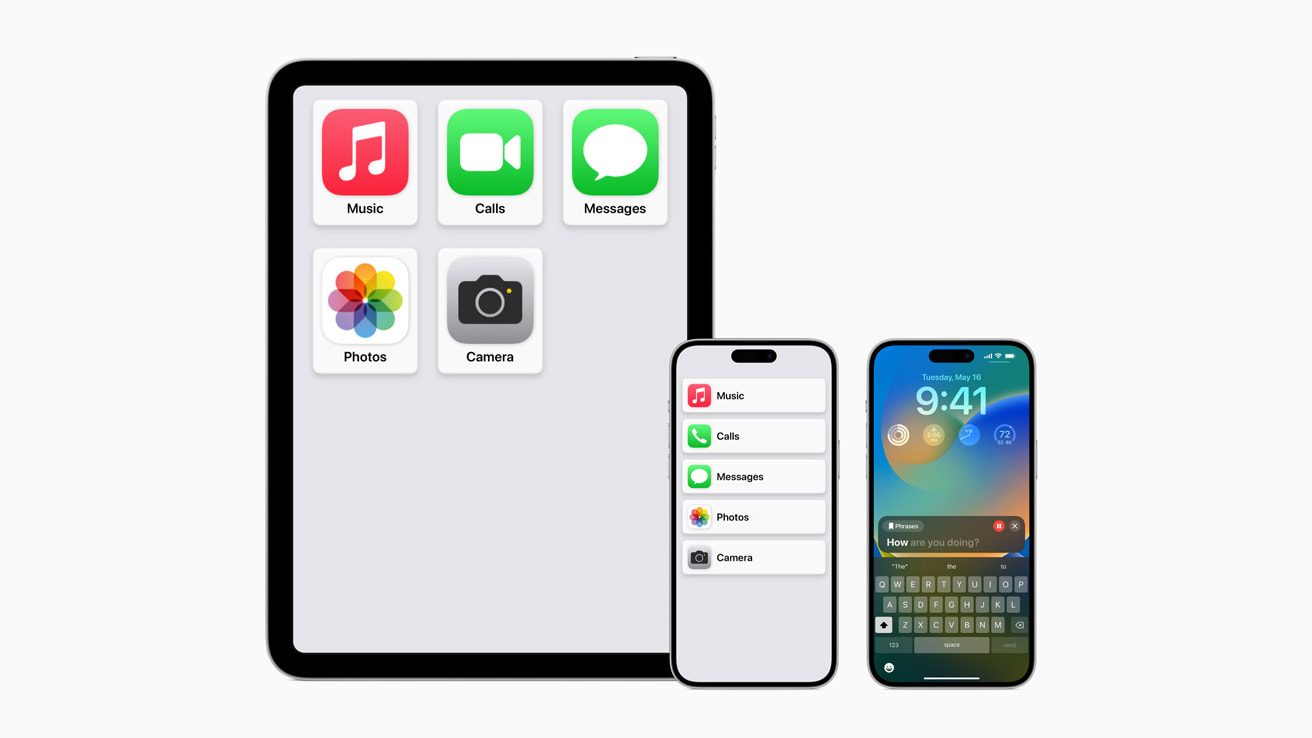
Losing the ability to speak can feel overwhelming, but Apple’s innovative Personal Voice and Live Speech features offer a transformative solution. Designed for individuals at risk of losing their voice, these tools allow users to create a synthesised version of their own voice, preserving their unique communication style even when speaking becomes difficult.
Personal Voice works by recording specific phrases on an iPhone, iPad, or Mac. These recordings are encrypted and stored securely on the user’s device, ensuring privacy. Once created, the personalised voice can be used across Apple devices running iOS 17, iPadOS 17, or macOS Sonoma, enabling seamless communication.
Setting up Personal Voice is simple and requires a quiet space for accurate recording. Apple’s features empower individuals dealing with progressive conditions, recovery from injuries, or anyone seeking a communication backup, underscoring technology’s ability to enhance accessibility and maintain personal expression.
AI is transforming education for students with disabilities, offering tools that level the playing field. From reading assistance to speech and language tools, AI is enabling students to overcome learning barriers. For 14-year-old Makenzie Gilkison, who has dyslexia, AI-powered assistive technology has been life-changing, allowing her to excel academically and keep pace with her peers.
Schools are increasingly adopting AI for personalised learning, balancing its benefits with ethical considerations. Tools like chatbots and text-to-speech programs enhance accessibility while raising concerns about over-reliance and the potential for misuse. Experts emphasise that AI should support, not replace, learning.
Research and development are advancing rapidly, addressing challenges like children’s handwriting and speech impediments. Initiatives such as the National AI Institute for Exceptional Education aim to refine these tools, while educators work to ensure students and teachers are equipped to harness their potential effectively.
Chinese AI firm DeepSeek has unveiled DeepSeek V3, a groundbreaking open-source model designed for a range of text-based tasks. Released under a permissive licence, the model supports coding, translations, essay writing, and email drafting, offering developers the freedom to modify and deploy it commercially.
In internal benchmarks, DeepSeek V3 outperformed major competitors, including Meta’s Llama 3.1 and OpenAI’s GPT-4o, especially in coding contests and integration tests. The model boasts an impressive 671 billion parameters, significantly exceeding the size of many rivals, which often correlates with higher performance.
DeepSeek-V3!
60 tokens/second (3x faster than V2!) API compatibility intact Fully open-source models & papers 671B MoE parameters 37B activated parameters Trained on 14.8T high-quality tokens
DeepSeek V3 was trained on a dataset of 14.8 trillion tokens and built using a data centre powered by Nvidia H800 GPUs. Remarkably, the model was developed in just two months for a reported $5.5 million—far less than comparable systems. However, its size and resource demands make it less practical without high-end hardware.
Regulatory limitations influence the model’s responses, particularly on politically sensitive topics. DeepSeek, backed by High-Flyer Capital Management, continues to push for advancements in AI, striving to compete with leading global firms despite restrictions on access to cutting-edge GPUs.
AI startups specialising in sales development representatives (SDRs) are experiencing rapid growth as businesses embrace new technologies to streamline outreach. These startups, leveraging large language models (LLMs) and voice technology, automate tasks like crafting personalised emails and placing calls to potential customers. This sector has seen an unprecedented surge, with multiple companies achieving notable success in a short span, according to Shardul Shah of Index Ventures. However, investors remain cautious about whether this trend will yield lasting results or fade once the novelty wears off.
The appeal of AI SDRs is particularly strong among small and medium-sized businesses, which find it easier to experiment with these tools. Arjun Pillai, founder of Docket, attributes the popularity to declining reply rates for traditional cold emails, prompting businesses to explore AI-driven solutions. Startups like Regie.ai, AiSDR, and 11x.ai, as well as incumbents like ZoomInfo, are vying for market share, boasting impressive revenue growth. Yet, as Tomasz Tunguz of Theory Ventures noted, some businesses report that while AI SDRs generate substantial leads, they don’t necessarily translate into higher sales, highlighting a gap in effectively integrating AI into sales strategies.
Despite the enthusiasm, the rise of AI SDRs faces significant challenges. Industry leaders such as Salesforce and HubSpot, which control vast customer data, could introduce similar AI features, potentially outpacing smaller startups. Investors also point to cautionary tales like Jasper, a copywriting AI startup that stumbled after the launch of ChatGPT, emphasising the uncertainty surrounding the longevity of AI adoption in sales. For now, the potential of AI SDRs to revolutionise sales processes is undeniable, but their ability to sustain growth and deliver tangible results remains to be seen.
OpenAI’s ChatGPT, Sora, and developer API experienced a significant outage on Thursday, disrupting services for over four hours. The issue began around 11 a.m. PT, with partial recovery reported by 2:05 p.m. PT. By 3:16 p.m. PT, OpenAI stated that Sora was operational, though ChatGPT users might still encounter issues accessing their chat history.
According to OpenAI’s status page, the outage was caused by one of their upstream providers, but the company did not provide further details. This marks the second major outage for OpenAI’s services in December. Two weeks ago, a similar incident attributed to a telemetry service malfunction resulted in a six-hour disruption, a notably longer downtime than usual.
Interestingly, popular platforms utilising OpenAI’s API, such as Perplexity and Siri’s Apple Intelligence integration, appeared unaffected during the outage, as confirmed by their status pages and independent testing. OpenAI is actively working to ensure full restoration of its services while addressing the root causes behind these recurring disruptions.
U Mobile and Huawei Malaysia have entered into a strategic partnership to enhance U Mobile’s 5G networks and support its strategic roadmap. The collaboration builds on an earlier partnership focused on 5G innovation and adoption for businesses, with both companies committed to advancing Malaysia’s telecommunications infrastructure.
The partnership also aims to deploy advanced hardware and software to create a high-performance second 5G network in Malaysia, leveraging Huawei’s global expertise in Radio Access Network (RAN) technologies and future technological advancements. Additionally, both parties will intensify research and development efforts to enhance customer satisfaction and drive greater 5G adoption in both consumer and enterprise markets, focusing on enterprises that require ultra-low latency and high bandwidth.
The collaboration will also explore project financing opportunities, including vendor financing and deferred payment plans, to support the development of these technologies and unlock new business opportunities.
Through this partnership, U Mobile and Huawei Malaysia are positioning themselves to meet the growing demand for 5G services across various sectors. The goal is to ensure the infrastructure can support the evolving needs of businesses and consumers alike.
By combining their strengths and expertise, the two companies aim to fast-track the growth of Malaysia’s telecom services and contribute to its digital economy, ultimately supporting the nation’s transition into a more connected and digitally advanced future.
Viettel High Tech (VHT) and High Cloud Technologies (HCT) have formed a strategic partnership through a $1 million deal to supply 5G systems for the Middle Eastern market. That collaboration strengthens HCT’s position as the region’s leading telecom solutions provider and opens doors for future partnerships with other telecom operators.
Under the agreement, VHT will provide 4G and 5G base stations using Non-Standalone (NSA) technology and cloud-based core network infrastructure, showcasing its expertise in end-to-end telecom solutions. The goal is to implement these solutions, conduct 5G trials, and demonstrate the reliability and performance of VHT’s products with major telecom operators.
The following partnership is expected to enhance telecom coverage, especially in suburban and rural areas, contributing to improved education and living standards across the UAE and the broader Middle East. The collaboration also supports regional growth in sectors like education, healthcare, and business, which depend on robust digital infrastructure.
Why does it matter?
VHT’s entry into the Middle East marks a significant milestone in its technological journey, as it has been developing 4G technologies since 2017 and began 5G research in 2019.
Kyoto University and construction firm Kajima Corp are collaborating on a groundbreaking project to develop a lunar habitat, ‘Neo Lunar Glass,’ capable of generating artificial gravity through rotation. The structure, intended to address the harmful effects of microgravity on the human body, is designed to create Earth-like living conditions on the moon.
The habitat will be a 200-metre-wide, 400-metre-tall paraboloid structure, accommodating up to 10,000 residents. Researchers plan to construct a ground-based prototype by the 2030s, using models and simulations to refine the technology.
The project aims to revolutionise lunar colonisation and human survivability in space, with a scale model already unveiled and early simulations demonstrating artificial gravity’s feasibility.
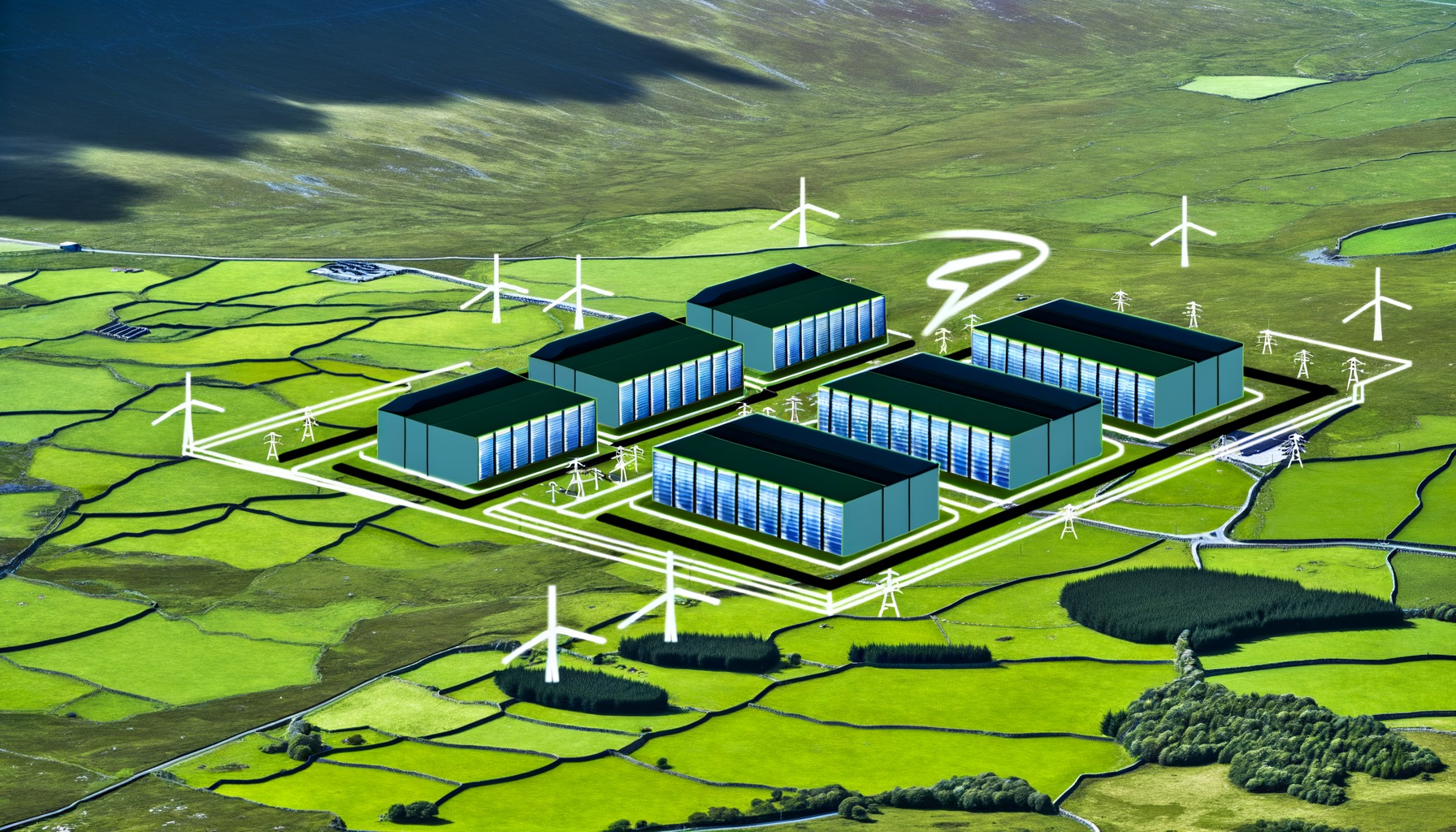
Ireland’s burgeoning data centre industry, dominated by global tech firms like Google and Amazon, is consuming over 20% of the nation’s electricity. Rising demand has led to restrictions on new developments near Dublin until 2028, as regulators address concerns over energy use, emissions, and household electricity costs.
Efforts to expand data centres into rural areas like County Offaly promise economic opportunities but raise environmental and cultural preservation debates. Residents remain divided over renewable energy projects linked to these facilities.
As Ireland navigates energy and climate goals, questions linger about balancing technological growth with sustainability.