Estonia, a small Baltic nation with a population of 1.4 million, has emerged as a leader in the rush to fund defence projects in response to Russia’s 2022 invasion of Ukraine. With heightened security concerns in the region, particularly among the Baltic states that share a border with Russia, Estonia has leveraged its thriving tech sector to fuel investment in defence technologies. The war has created an urgent need for innovation, prompting tech entrepreneurs such as Sten Tamkivi, a former Skype executive, to direct investment towards defence, European sovereignty, and security solutions.
Estonia’s role in supporting emerging defence companies is made possible by the country’s strong network of tech unicorns and wealthy entrepreneurs. With companies like Skype, TransferWise, and Bolt originating from Estonia, local tech executives have the financial resources to invest in critical military technologies. Moreover, Estonia’s proximity to Ukraine allows for rapid collaboration on the frontlines, testing new technologies such as AI-driven defence tools and drones. This has positioned the country as a central player in Europe’s defence tech landscape, with the number of defence-focused funding rounds in Eastern Europe growing sharply since the war began.
Across Central and Eastern Europe, the growing interest in defence tech is evident, with funds like Presto Ventures in Prague also tapping into the sector. The Czech Republic has launched initiatives to support small enterprises in defence, while Estonia has introduced a 100 million euro fund to support the development of its own defence tech ecosystem. Estonia’s longer-term goal is to reach 2 billion euros in defence tech revenue by 2030, focusing on disruptive, offensive technologies.
The region’s defence tech startups are benefiting from a shift in investor sentiment, with venture capital pouring into areas like AI, quantum computing, and cybersecurity. Despite initial doubts about the sector’s growth, the continuing conflict in Ukraine has ensured that defence technology remains a critical priority.
For more information on these topics, visit diplomacy.edu.
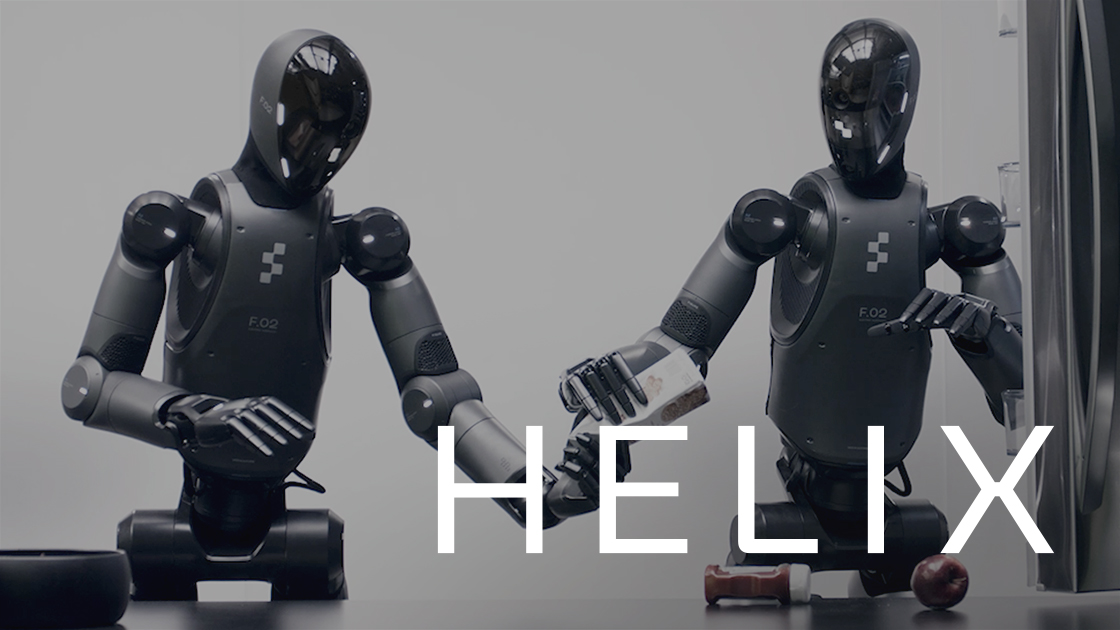
Figure has introduced Helix, a new Vision-Language-Action (VLA) model designed to enhance the capabilities of humanoid robots in complex environments like homes.
The announcement follows the company’s decision to end its collaboration with OpenAI and highlights its growing focus on creating robots that can respond to natural language prompts and adapt to dynamic household settings.
Helix integrates visual data and language commands, enabling robots to understand tasks and execute them in real time. It demonstrates advanced object generalisation, allowing robots to handle thousands of unfamiliar household items simply through verbal instructions.
Designed to control multiple robots simultaneously, Helix can coordinate complex tasks, such as transferring items between robots and organising objects within a home.
While home robotics presents unique challenges due to unpredictable layouts and varying environments, Figure aims to overcome these hurdles through Helix’s adaptive learning capabilities.
By moving away from time-consuming manual programming, the company is working towards making humanoid robots more accessible and practical for domestic use. Although the project remains in its early stages, the Helix model represents a significant step towards bridging the gap between industrial robotics and home applications.
For more information on these topics, visit diplomacy.edu.
Brazil‘s Supreme Court Justice Alexandre de Moraes has fined social media platform X, owned by Elon Musk, 8.1 million reais ($1.42 million) for failing to comply with judicial orders. The ruling, made public on Thursday, follows a legal case from 2023 where the court had instructed X to remove a profile spreading misinformation and provide the user’s registration data.
X’s failure to meet these demands resulted in a daily fine of 100,000 reais, and the company’s local legal representative faced potential criminal liability. The court order required the immediate payment of the fine, citing the platform’s noncompliance. X’s legal team in Brazil has not commented on the matter.
In 2024, X faced a month-long suspension in Brazil for not adhering to court orders related to hate speech moderation and for failing to designate a legal representative in the country, as mandated by law.
For more information on these topics, visit diplomacy.edu.
STMicroelectronics has announced the launch of a new computer chip aimed at the rapidly expanding AI data centre market. Developed in collaboration with Amazon Web Services (AWS), the photonics chip uses light rather than electricity, which helps increase speed and reduce power consumption in AI data centres. These chips are expected to be used in transceivers, which are crucial components in data centre infrastructure.
As top US software companies plan to invest $500 billion into AI infrastructure, there is rising demand for specialised chips, not only for computing but also for memory, power, and communications applications. ST’s new chip targets the communications sector, with a focus on improving the efficiency of transceivers, which are essential in AI data centres. The company also has a collaboration agreement with AWS to deploy this technology in their infrastructure later this year.
ST is working with a leading provider of optical solutions, although the company’s name has not been disclosed, to integrate the new chip into next-generation transceivers. The market for such devices, valued at $7 billion in 2024, is expected to grow significantly, reaching $24 billion by 2030. ST will begin mass production of these chips at its facility in Crolles, France.
For more information on these topics, visit diplomacy.edu.
Lam Research has introduced two new chipmaking tools designed to support the growing demand for advanced AI semiconductors. The company unveiled ALTUS Halo, a deposition tool that applies molybdenum layers to chips, enhancing their performance and enabling further scaling for next-generation devices.
Micron Technology has already adopted the tool, bringing molybdenum into mass production, according to executive Mark Kiehlbauch.
Alongside ALTUS Halo, Lam launched Akara, an etching tool that removes excess material from semiconductor wafers, creating precise chip structures essential for complex AI applications.
These innovations position Lam to compete with major players in wafer fabrication equipment, including Applied Materials, ASML, and KLA Corp.
As AI-driven semiconductor demand surges, major clients like Micron, Samsung Electronics, and Taiwan Semiconductor Manufacturing Co (TSMC) are relying on advanced manufacturing tools.
TSMC executive Y.J. Mii highlighted the need for innovative solutions to develop more powerful chip architectures. In January, Lam reported a strong third-quarter revenue forecast, signalling positive growth amid the AI chip boom.
For more information on these topics, visit diplomacy.edu.
The European Commission has approved a €920 million German state aid package for Infineon to build a new semiconductor manufacturing plant in Dresden. This funding will support the company’s MEGAFAB-DD project, which aims to produce a wide variety of chips. The new facility, expected to reach full capacity by 2031, will play a key role in strengthening Europe’s technological autonomy and security of supply in semiconductor technologies, aligning with the European Chips Act’s goals.
This move is part of a global trend where chipmakers are investing heavily in new plants, taking advantage of subsidies from the US and the EU to maintain the West’s edge in semiconductor technology over China. The European Commission has allocated €15 billion for public and private semiconductor projects by 2030, further reinforcing the region’s commitment to securing its position in the industry.
Infineon’s €3.5 billion investment, the largest in its history, will help address the growing demand for semiconductors used in industrial, automotive, and consumer applications. The company has committed to ensuring the plant benefits the wider EU semiconductor value chain, including research and development for the next generation of chips. The plant will also contribute to crisis preparedness by prioritising orders in case of supply shortages.
For more information on these topics, visit diplomacy.edu.
Microsoft has announced a groundbreaking quantum computing chip, Majorana 1, which it claims could make useful quantum computers a reality within years. The company believes this innovation puts it ahead in the race to unlock quantum computing’s vast potential.
Unlike classical computers, quantum systems could perform calculations in fields like medicine and chemistry that would otherwise take millions of years, although they also pose risks to current encryption standards.
The Majorana 1 chip relies on a particle called the Majorana fermion, theorised in the 1930s. Microsoft says its unique design makes the chip less error-prone than its competitors.
Despite having fewer qubits than chips from Google and IBM, the company argues that the lower error rates mean fewer qubits are needed for practical applications.
Microsoft’s development of Majorana 1 combines advanced materials like indium arsenide and aluminium, using a superconducting nanowire to observe and control the Majorana particles.
Fabricated at its labs in Washington and Denmark, the chip was described as a ‘high risk, high reward’ endeavour by Jason Zander, a senior Microsoft executive.
Quantum physicist Philip Kim from Harvard University praised the innovation, calling it an exciting step forward. While scaling up the technology remains a challenge, experts suggest Microsoft’s approach could lead to significant advancements in quantum computing.
For more information on these topics, visit diplomacy.edu.
President Donald Trump confirmed on Wednesday that he was in active discussions with China over the future of TikTok, as the US seeks to broker a sale of the popular app. Speaking to reporters aboard Air Force One, Trump revealed that talks were ongoing, underscoring the US government’s desire to address national security concerns tied to the app’s ownership by the Chinese company ByteDance. The move comes amid growing scrutiny over TikTok’s data security practices and potential links to the Chinese government.
The Trump administration has expressed concerns that TikTok could be used to collect sensitive data on US users, raising fears about national security risks. As a result, the US has been pushing for ByteDance to sell TikTok’s US operations to an American company. This would be part of an effort to reduce any potential influence from the Chinese government over the app’s data and operations. However, the process has faced complexities, with discussions involving multiple stakeholders, including potential buyers.
While the negotiations continue, the future of TikTok remains uncertain. If a sale is not agreed upon, the US has indicated that it could pursue further actions, including a potential ban of the app. As these talks unfold, the outcome could have significant implications for TikTok’s millions of American users and its business operations in the US, with both sides working to find a solution that addresses the security concerns while allowing the app to continue its success.
For more information on these topics, visit diplomacy.edu.
Hong Kong is considering approving derivatives and margin lending for virtual assets, aiming to strengthen its position as a global hub for digital assets, according to the Securities and Futures Commission (SFC). This move is part of the city’s broader strategy, initiated in 2022, to become a leading virtual asset trading centre, particularly after China’s cryptocurrency ban in 2021. The SFC’s CEO, Julia Leung, announced the potential inclusion of derivative products and margin lending for professional investors, highlighting ongoing efforts to enhance Hong Kong’s competitiveness in the sector.
As part of its regulatory push, the city has already issued nine virtual asset trading platform licences, with more applications under review. One such licence was granted to Bullish Group, the parent company of CoinDesk. Additionally, financial secretary Paul Chan noted that the government is working on advancing regulations for stablecoins, further solidifying Hong Kong’s ambitions in the digital asset space.
The city will soon release a detailed roadmap for virtual asset growth, which will outline future plans. Meanwhile, Hong Kong competes with cities like Singapore and Dubai, also striving to become leading centres for digital finance. The latest developments come amid a broader global shift in the cryptocurrency market, which has seen significant interest from institutional investors following regulatory changes in the US under President Trump.
For more information on these topics, visit diplomacy.edu.
Resonac Holdings, a leading chip materials maker in Japan, is positioning itself to make strategic acquisitions after reducing its borrowing, according to CEO Hidehito Takahashi. Speaking to Reuters, Takahashi expressed the company’s intention to take an aggressive approach this year, particularly eyeing opportunities when a state-backed fund exits its competitor JSR, a photoresist maker recently taken private.
Resonac, formed by Showa Denko’s acquisition of Hitachi Chemical, has been divesting assets, including a planned partial spin-off of its petrochemical business. Takahashi sees JSR’s potential exit as a key opportunity for Resonac to expand its footprint in the semiconductor materials sector. Japan’s semiconductor market remains competitive, despite the country’s reduced role in chip manufacturing, and companies like Resonac must scale up to remain viable.
In addition to its expansion efforts, Resonac is establishing an R&D centre in Silicon Valley to strengthen its ties with firms in the region. However, Takahashi made it clear that the company is not currently considering manufacturing materials in the US, though future demand could prompt a reassessment of such plans.
For more information on these topics, visit diplomacy.edu.