Elon Musk’s xAI unveils Grok-3, taking on AI giants

Elon Musk’s AI startup, xAI, has unveiled its latest AI model, Grok-3, which the billionaire claims is the most advanced chatbot technology. In a live-streamed presentation, Musk and his engineers demonstrated how Grok-3 outperforms competitors, including OpenAI’s GPT-4o and Google’s Gemini, across math, science, and coding benchmarks. With over ten times the computational power of its predecessor, Grok-3 completed pre-training in early January and is now continuously evolving, Musk said, promising visible improvements within just 24 hours.

A key innovation introduced with Grok-3 is DeepSearch, an advanced reasoning chatbot designed to enhance search capabilities by providing transparent explanations of how it processes queries. The feature allows users to engage in research, brainstorming, and data analysis more deeply and clearly. The model is being rolled out immediately to X’s Premium+ subscribers, with an upcoming SuperGrok subscription planned for mobile and web platforms.

The launch marks another escalation in the rivalry between Musk’s xAI and OpenAI, the company he co-founded but later distanced himself from. Musk has been openly critical of OpenAI’s shift toward a for-profit model and recently filed lawsuits against the organisation, accusing it of betraying its founding principles. His bid to acquire OpenAI’s nonprofit arm for $97.4 billion was rejected last week, with OpenAI’s CEO, Sam Altman, dismissing the offer as an attempt to hinder the company’s progress.

Why does it matter?

The AI sector is experiencing an unprecedented investment boom, with xAI reportedly seeking to raise $10 billion in new funding, potentially pushing its valuation to $75 billion. Meanwhile, OpenAI is in talks to raise as much as $40 billion, which could boost its valuation to an astonishing $300 billion. These soaring numbers highlight the capital-intensive nature of AI development, with global tech giants and investment groups pouring billions into the race to dominate AI.

However, new challenges are emerging. Last month, Chinese AI firm DeepSeek introduced R1, an open-source model that matched or surpassed leading American AI systems on key industry benchmarks. The company claims it developed R1 at a fraction of the cost incurred by its US counterparts, suggesting that the dominance of firms like OpenAI and xAI could face disruption from more cost-efficient alternatives shortly.

Indian music industry joins lawsuit against OpenAI

Several of India’s leading Bollywood music labels, including T-Series, Saregama, and Sony, seek to join a lawsuit against OpenAI in New Delhi. They are concerned that the company’s AI models may have used their sound recordings without permission, potentially violating copyright laws. The legal action follows a previous lawsuit filed by Indian news agency ANI, which accused OpenAI’s ChatGPT of using content without authorisation to train its models. The music labels argue that this issue has significant implications for the global music industry.

The music companies, which represent major Indian and international music acts, claim that OpenAI’s AI systems could extract lyrics, compositions, and sound recordings from the internet without consent. T-Series, known for releasing thousands of songs annually, and Saregama, which holds a vast catalogue of iconic Indian music, are leading the charge. The Indian Music Industry (IMI), which also represents global labels like Sony Music and Warner Music, is pushing for the case to be heard in court, as the outcome could impact the future use of copyrighted content in AI training.

OpenAI, backed by Microsoft, argues that it adheres to fair-use principles by using publicly available data to build its AI models. However, the company is facing increasing legal pressure from multiple sectors worldwide, including recent lawsuits in Germany, where GEMA accused OpenAI of unlicensed use of song lyrics. OpenAI has opposed the Indian lawsuit, claiming that Indian courts do not have jurisdiction over the matter, given the company’s US base.

The next court hearing, which could shape the future of AI and copyright law in India, is scheduled for 21 February. This legal battle is gaining attention, particularly as OpenAI’s chief, Sam Altman, recently visited India to discuss the country’s plans for developing low-cost AI technology.

For more information on these topics, visit diplomacy.edu.

Study warns of AI’s role in fueling bank runs

A new study from the UK has raised concerns about the risks of bank runs fueled by AI-generated fake news spread on social media. The research, published by Say No to Disinfo and Fenimore Harper, highlights how generative AI can create false stories or memes suggesting that bank deposits are at risk, leading to panic withdrawals. The study found that a significant portion of UK bank customers would consider moving their money after seeing such disinformation, especially with the speed at which funds can be transferred through online banking.

The issue is gaining traction globally, with regulators and banks worried about the growing role of AI in spreading malicious content. Following the collapse of Silicon Valley Bank in 2023, which saw $42 billion in withdrawals within a day, financial institutions are increasingly focused on detecting disinformation that could trigger similar crises. The study estimates that a small investment in social media ads promoting fake content could cause millions in deposit withdrawals.

The report calls for banks to enhance their monitoring systems, integrating social media tracking with withdrawal monitoring to better identify when disinformation is impacting customer behaviour. Revolut, a UK fintech, has already implemented real-time monitoring for emerging threats, urging financial institutions to be prepared for potential risks. While banks remain optimistic about AI’s potential, the financial stability challenges it poses are still a growing concern for regulators.

As financial institutions work to mitigate AI-related risks, the broader industry is also grappling with how to balance the benefits of AI with the threats it may pose. UK Finance, the industry body, emphasised that banks are making efforts to manage these risks, while regulators continue to monitor the situation closely.

For more information on these topics, visit diplomacy.edu.

EU denies US influence over AI regulation rollback

The European Union has dismissed claims that recent decisions to scale back planned AI regulations were influenced by pressure from the US Trump administration. The bloc recently scrapped the AI Liability Directive, a draft law intended to make it easier for consumers to sue over AI-related harms. EU digital chief Henna Virkkunen stated that the move was driven by a desire to enhance competitiveness by reducing bureaucracy and regulatory burdens.

Washington has encouraged a more lenient approach to AI rules, with US Vice President JD Vance urging European lawmakers to embrace the ”AI opportunity” during a speech in Paris.

The timing of the European Commission‘s 2025 work programme release—one day after Vance’s remarks—has fuelled speculation about US influence over the bloc’s regulatory decisions. However, the EU insists that its focus remains on fostering regional AI development rather than bowing to external pressure.

The upcoming AI code of practice will align reporting requirements with existing AI legislation, ensuring a streamlined regulatory framework. The Commission’s work programme emphasises a ”bolder, simpler, faste” approach, aiming to accelerate AI adoption across Europe while maintaining regulatory oversight.

For more information on these topics, visit diplomacy.edu.

Anthropic’s Claude tested as UK explores AI chatbot for public services

The UK government has partnered with AI startup Anthropic to explore the use of its chatbot, Claude, in public services. The collaboration aims to improve access to public information and streamline interactions for citizens.

Anthropic, a competitor of ChatGPT creator OpenAI and supported by tech giants Google and Amazon, signed a memorandum of understanding with the government.

The initiative aligns with Prime Minister Keir Starmer’s ambition to establish the UK as a leader in AI and enhance public service efficiency through innovative technologies.

Technology minister Peter Kyle highlighted the importance of this partnership, emphasising its role in positioning the UK as a hub for advanced AI development.

Claude has already been employed by the European Parliament to simplify access to its archives, demonstrating its potential in reducing time for document retrieval and analysis.

This step underscores Britain’s commitment to leveraging cutting-edge AI for the benefit of individuals and businesses nationwide.

For more information on these topics, visit diplomacy.edu.

Modi and Musk discuss technology, space, and Starlink’s India plans

Indian Prime Minister Narendra Modi met with Tesla and SpaceX CEO Elon Musk in Washington to discuss space, mobility, technology, and innovation.

The meeting also explored ways to strengthen cooperation in emerging technologies, entrepreneurship, and governance, according to India‘s foreign ministry. Modi’s visit to the United States has brought key discussions on commercial space activities and technological collaboration between the two countries.

Starlink’s potential entry into the Indian market was reportedly a key topic of discussion. The satellite internet provider has long sought to operate in India but has faced regulatory challenges and opposition from local competitors, including billionaire Mukesh Ambani’s company.

The Indian government has supported Musk’s stance that satellite spectrum should be assigned rather than auctioned, but Starlink’s licence application remains under review.

India’s decision on Starlink could reshape the country’s satellite internet sector and influence its position in the global space race.

SpaceX‘s dominance in satellite launches and internet services has already impacted global markets, and its expansion into India would be a significant step in its international growth. Musk continues to act as a crucial link between world leaders and SpaceX, which plays a key role in the Western space industry.

For more information on these topics, visit diplomacy.edu.

AI push in China planned by Apple

Apple is preparing to introduce its AI features to iPhones in China by mid-year. Efforts include significant software adaptations and collaboration with local partners to meet the country’s unique requirements.

Teams based in China and the US are actively working to customise the Apple Intelligence platform for the region. Insiders suggest the launch could happen as early as May, provided technical and regulatory challenges are resolved.

Regulatory compliance remains a critical hurdle for Apple. The project reflects the company’s growing emphasis on localising its technology for key international markets, including China.

For more information on these topics, visit diplomacy.edu.

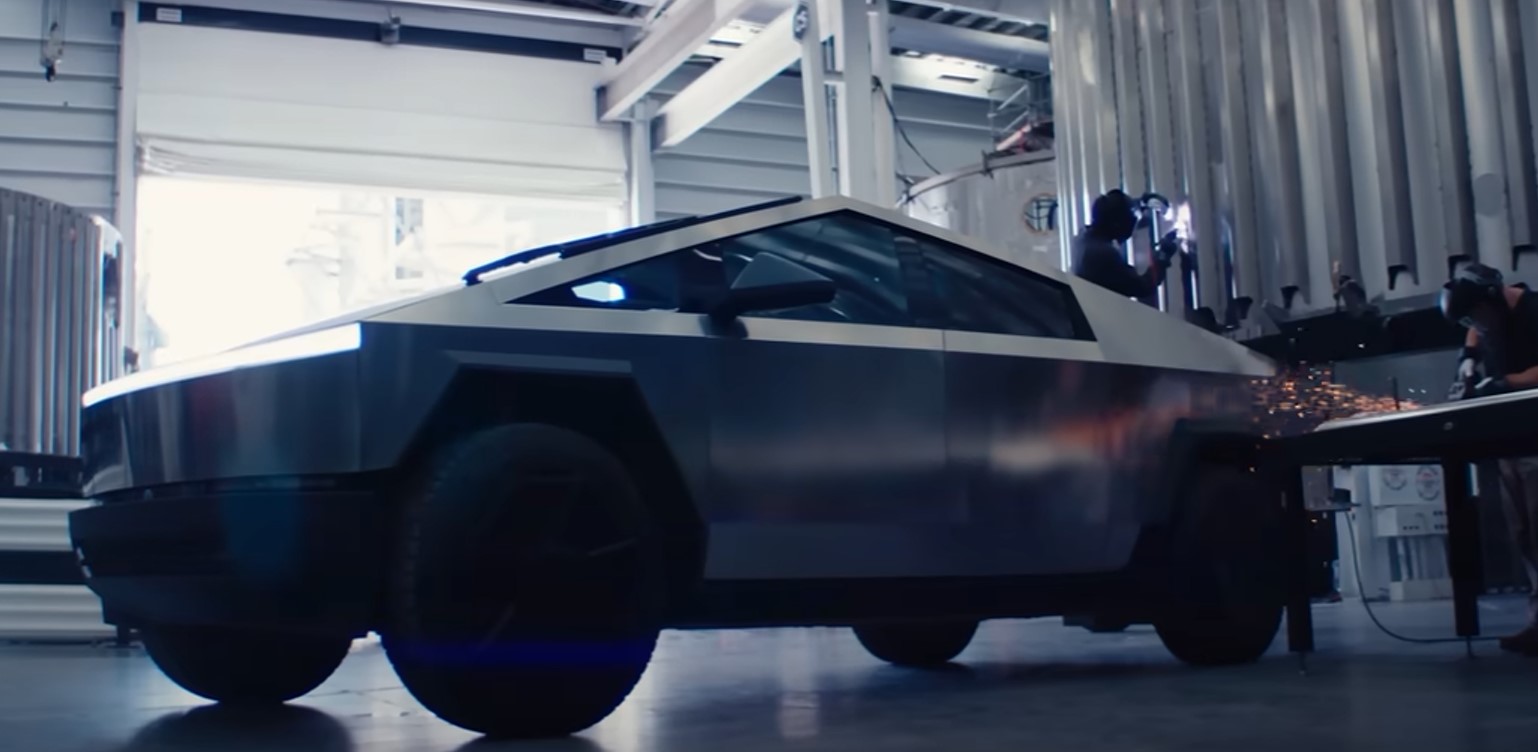
Safety concerns mount as experts question Tesla Cybertruck self-driving readiness

A Tesla Cybertruck in self-driving mode collided with a pole in Reno, Nevada, after failing to merge out of an ending lane. The crash occurred while using Tesla’s Full Self-Driving (FSD) software, which still requires human oversight.

The driver, Jonathan Challinger, reported potential mechanical issues and urged caution to others, warning about complacency when using the feature.

The incident has reignited debate over the safety of Tesla’s self-driving technology. Experts pointed to lane merging and sudden road changes as persistent challenges for AI-driven systems.

Tesla’s reliance on cameras alone, rather than redundant systems used by other automakers, has raised additional concerns about its ability to handle poor visibility or complex conditions.

CEO Elon Musk recently promoted the improved safety of the technology, dubbed Version 13, and announced plans to launch a paid robotaxi service later this year. The rollout will begin in Texas, where regulations on autonomous vehicles are minimal, followed by California and other regions in the US.

Experts argue that the crash highlights unresolved issues with the software, casting doubt on Tesla’s readiness for driverless operation.

A successful robotaxi programme is critical for Tesla’s growth amid slowing demand for its existing electric vehicle lineup. However, the Cybertruck crash has raised fresh questions about whether the company is pushing its self-driving technology too far, too soon.

For more information on these topics, visit diplomacy.edu.

US utilities boost spending to meet surging AI energy demand

US electric utilities are significantly increasing their capital investment plans to expand power generation and strengthen the grid as AI and cloud computing drive up electricity consumption.

Companies such as PPL Corp, Dominion, and Exelon have revised their spending plans upward, with PPL announcing a nearly 40% increase to $20 billion through 2028.

The surge in demand is largely fuelled by data centres, which are now being built at an unprecedented scale, reaching capacities of up to 1 gigawatt per site.

Utility executives have dismissed concerns that market disruptions, such as Chinese AI startup DeepSeek’s recent emergence, would weaken demand from major tech firms.

Instead, companies including American Electric Power (AEP) and Duke Energy have received assurances from technology customers that their expansion plans remain unchanged. AEP is considering adding $10 billion to its existing $54 billion capital plan, while Duke is increasing its five-year spending by $10 billion.

Rising demand for electricity is expected to reach record levels in the US by 2026, driven not only by data centres but also by manufacturing and electrification in sectors like transportation.

While utilities race to expand power supplies, regulatory approval remains a challenge, and increased investment could lead to higher electricity costs for households and businesses.

Some utilities are also exploring whether data centres should bear a greater share of the costs associated with grid expansion.

For more information on these topics, visit diplomacy.edu.

AI revolutionising the wealth management industry

AI is set to revolutionise wealth management by lowering the barriers to entry for new players, according to a Microsoft executive. Martin Moeller, head of AI for financial services at Microsoft, highlighted that AI’s ability to process vast amounts of data could allow small teams or even individuals to offer services that traditionally required entire teams at banks. This shift is expected to reshape the competitive landscape, much like the internet did decades ago.

AI is already being used in the financial sector, with Swedish payment provider Klarna employing AI from OpenAI to handle tasks previously carried out by 700 employees. UBS, the world’s largest asset manager, also sees significant potential in AI to boost productivity and ease job functions. AI is expected to reduce operational costs for startups and allow banks that have not been involved in wealth management to enter the market with minimal investment.

Customer behaviour is also changing, with younger entrepreneurs increasingly managing their own investments. In response, banks are using AI to enable customers to consolidate financial information independently. While AI currently does not provide specific investment advice, ‘agentic AI’ is expected to be developed in the next two years, which will make independent decisions without human input, further transforming the industry.

For more information on these topics, visit diplomacy.edu.