In a collaboration between Alder Hey Children’s NHS Foundation Trust and the Science and Technology Facilities Council’s Hartree Centre, a new AI-based staff scheduling system has been developed to address the complex task of roster planning in one of Europe’s busiest children’s hospitals.
Clinicians traditionally spend substantial time creating rotas manually, juggling annual leave, absences, working patterns and on-call rules.
The AI system automatically generates balanced on-call schedules by incorporating real-world constraints such as staff skills, availability and patterns, producing fairer and more predictable rotas.
The interface allows clinicians to review and adjust schedules while maintaining human oversight, freeing up time previously spent on spreadsheets and administrative tasks, and potentially improving staff wellbeing and operational efficiency.
Future phases aim to expand the tool toward full workforce management, with the potential for NHS-wide scaling.
Would you like to learn more about AI, tech and digital diplomacy? If so, ask our Diplo chatbot!
Global sportswear brand Puma has unveiled a new AI-enabled co-creation platform designed to engage customers more directly in product ideation, feedback and development.
The system uses AI to aggregate community input, analyse preferences and suggest design directions that reflect consumer sentiment, allowing Puma to tailor future products to what users actually want.
By turning static feedback loops into interactive, data-informed dialogues, the platform enhances brand-consumer engagement, unlocks deeper insights into style and function preferences, and enables Puma to respond quickly to trends.
The company sees this as a way to blend creativity with customer insight at scale, combining human design expertise with AI-driven analytics to strengthen loyalty and drive innovation.
Would you like to learn more about AI, tech and digital diplomacy? If so, ask our Diplo chatbot!
Generative AI is increasingly affecting creative industries, raising concerns related to authorship, labour, and human oversight. Companies are under growing pressure to clarify how AI is used in creative production.
Many firms present generative AI as a tool to improve efficiency rather than replace human creativity. This reflects a cautious approach that prioritises human control and risk management.
Take-Two Interactive has confirmed that it is running hundreds of AI pilots focused on cost and time efficiencies. However, the company stresses that AI is used for operational support, not creative generation.
According to CEO Strauss Zelnick, generative AI played no role in the development of Grand Theft Auto VI. Rockstar Games’ worlds are described as fully handcrafted by human developers.
These statements come amid investor uncertainty triggered by recent generative AI experiments in gaming. Alongside this, ongoing labour disputes at Rockstar Games highlight broader governance challenges beyond technology.
Would you like to learn more about AI, tech and digital diplomacy? If so, ask our Diplo chatbot!
Fitbit co-founders James Park and Eric Friedman unveiled a new AI startup, Luffu, aimed at helping families monitor and organise health, safety and caregiving information across household members and caregivers.
The platform begins as a mobile app that uses background AI to aggregate data from devices (including Fitbit and Apple Health) and family-entered information like medications, symptoms, lab results and doctor visits.
Luffu’s AI learns everyday patterns, flags notable changes (such as abnormal vitals or sleep shifts), and provides proactive alerts and plain-language insights, easing the administrative and emotional burden of caregiving.
Users can log data by voice, text or photos, and even ask conversational health questions about family members’ well-being.
Currently in private beta with an open waitlist, Luffu is positioned as a family-centric health coordination hub rather than a medical diagnostic tool, with plans to expand into complementary hardware devices in the future.
Would you like to learn more about AI, tech and digital diplomacy? If so, ask our Diplo chatbot!
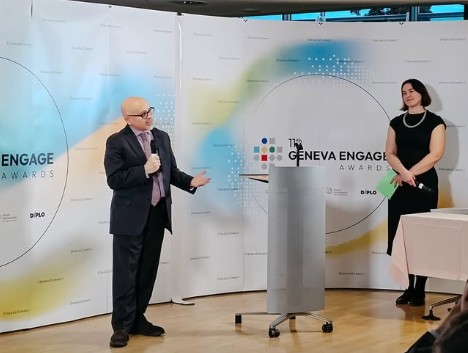
The Geneva Engage initiative, launched in 2016 by the Geneva Internet Platform under DiploFoundation with the support of the Republic and Canton of Geneva, continues to track how International Geneva connects with audiences worldwide. Through research and annual awards, it assesses how Geneva-based actors communicate on global policy issues ranging from development and human rights to health, the environment, and digital governance.
The 11th edition of the Geneva Engage Awards was held on 3 February 2026 at the World Meteorological Organization building, and it came at a moment of significant change in how people access information. Under the theme ‘Back to basics in the AI era’, the event explored how International Geneva can remain a trusted source as users increasingly rely on AI assistants rather than traditional searches, websites, and reports.
Each year, the Geneva Engage Awards recognise excellence in digital outreach across three main categories: international organisations, non-governmental organisations, and permanent representations. The evaluation focuses on how effectively these actors use digital tools to engage global audiences, build trust, and remain visible in an evolving information ecosystem.
The methodology combines quantitative analysis across three areas, social media outreach, web relevancy, and web accessibility. Performance is measured using engagement data from social media platforms, the visibility and relevance of web content in global search results, and accessibility standards that assess how usable and inclusive websites are for diverse audiences.
Together, this year’s results highlight how digital trust, accessibility, and relevance are becoming central to diplomacy in an AI-driven information landscape.
Would you like to learn more about AI, tech and digital diplomacy? If so, ask our Diplo chatbot!
Nvidia’s plans to export its H200 AI chips to China remain pending nearly two months after US President Donald Trump approved. A national security review is still underway before licences can be issued to Chinese customers.
Chinese companies have delayed new H200 orders while awaiting clarity on licence approvals and potential conditions, according to people familiar with the discussions. The uncertainty has slowed anticipated demand and affected production planning across Nvidia’s supply chain.
In January, the US Commerce Department eased H200 export restrictions to China but required licence applications to be reviewed by the departments of State, Defence, and Energy.
Commerce has completed its analysis, but inter-agency discussions continue, with the US State Department seeking additional safeguards.
The export framework, which also applies to AMD, introduces conditions related to shipment allocation, testing, and end-use reporting. Until the review process concludes, Nvidia and prospective Chinese buyers remain unable to proceed with confirmed transactions.
Would you like to learn more about AI, tech and digital diplomacy? If so, ask our Diplo chatbot!
Preparing to restrict social media access for children under 15s, Greece plans to use the Kids Wallet app as its enforcement tool amid rising European concern over youth safety.
The Ministry of Digital Governance intends to rely on the Kids Wallet application, introduced last year, as a mechanism for enforcing the measure instead of developing a new control framework.
Government planning is advanced, yet the precise timing of the announcement by Prime Minister Kyriakos Mitsotakis has not been finalised.
In addition to the legislative initiative in Greece, the European debate on children’s online safety is intensifying.
Spain recently revealed plans to prohibit social media access for those under sixteen and to create legislation that would hold platform executives personally accountable for hate speech.
Such moves illustrate how governments are seeking to shape the digital environment for younger users rather than leaving regulation solely in private hands.
Would you like to learn more about AI, tech and digital diplomacy? If so, ask our Diplo chatbot!
Researchers at the Massachusetts Institute of Technology have developed a generative AI model to guide scientists through the complex process of materials synthesis, a significant bottleneck in materials discovery.
DiffSyn uses diffusion-based AI to suggest multiple synthesis routes for a material, factoring in temperature, reaction time, and precursor ratios. Unlike earlier tools tied to single recipes, DiffSyn reflects the laboratory reality in which multiple pathways can produce the same material.
The system achieved state-of-the-art accuracy on zeolites, a challenging material class used in catalysis and chemical processing. Using DiffSyn’s recommendations, the team synthesised a new zeolite with improved thermal stability, confirming the model’s practical value.
The researchers believe the approach could be extended beyond zeolites to other complex materials, eventually integrating with automated experiments to shorten the path from theoretical design to real-world application dramatically.
Would you like to learn more about AI, tech and digital diplomacy? If so, ask our Diplo chatbot!
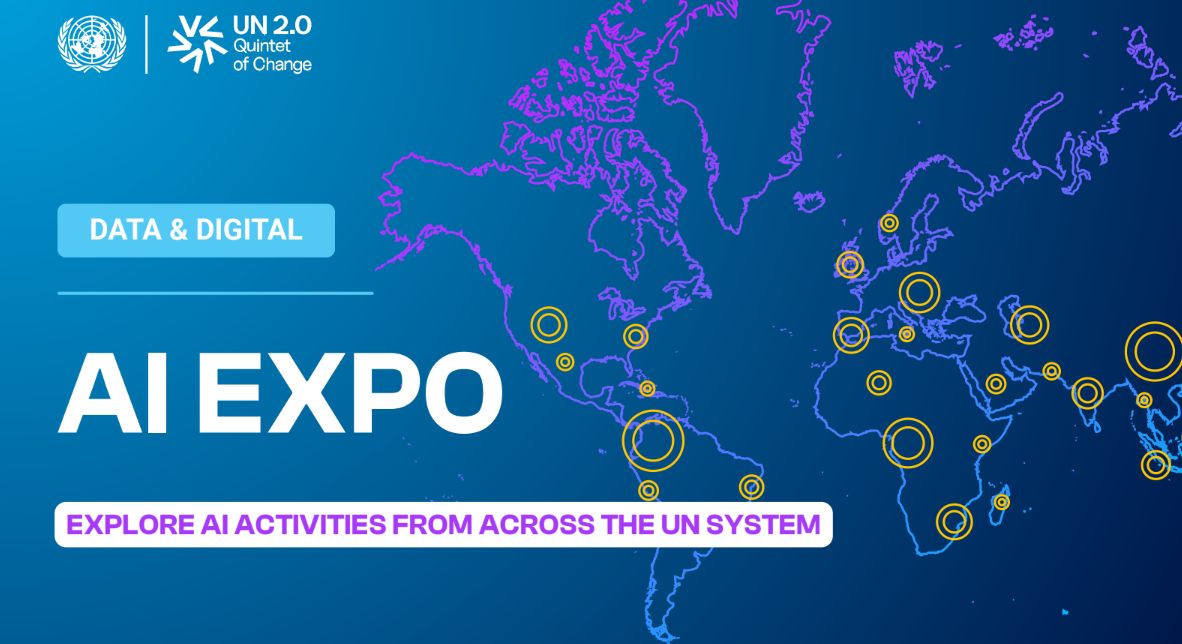
The UN 2.0 Data & Digital Community AI Expo examined how AI is currently embedded within the operational, analytical and institutional work of the United Nations system. The session brought together a range of AI applications already in use across UN entities, offering a consolidated view of how data-driven tools are supporting mandates related to development, humanitarian action, human rights and internal organisational capacity.
Designed as a fast‑paced showcase, the event presented eight specific AI projects from various UN organisations within a one-hour window. These featured programmes were selected by the UN AI Resource Hub, which is a significant collaborative initiative involving over 50 UN entities. The hub serves to strengthen coordination and coherence regarding AI technologies across the entire UN system.
The Expo highlighted how AI interacts with data availability, governance frameworks, and legal obligations. The session therefore functioned as an overview of current practice, revealing both the scope of AI use and the constraints shaping its deployment within a multilateral institution.
UN 2.0, data and digital capacity
UN 2.0 frames data and digital capability as core institutional functions necessary for addressing complex global challenges. Increasing volumes of information, rapidly evolving risks and interconnected crises require tools that support analysis, coordination and timely decision-making.
Within this framework, AI is treated as one component of a broader digital ecosystem. Its effectiveness depends on data quality, governance structures, organisational readiness and ethical oversight. The AI Expo reflected this approach by consistently situating the use of AI within existing mandates and institutional responsibilities, rather than presenting technology as a standalone solution.
UNICEF: Guidance on AI and children
UNICEF addressed how AI systems affect children across education, health, protection, and social services. The guidance focuses on governance frameworks that protect children’s rights in digital environments where automated systems increasingly shape access and outcomes.
Key risks highlighted include profiling, algorithmic bias, data misuse, and exclusion from digital benefits. Safeguards such as transparency, accountability, accessibility, and human oversight are emphasised as essential conditions for any AI system involving children.
The guidance, now in its third edition from December 2025, draws on the Convention on the Rights of the Child and sets out 10 requirements for child-centred AI, including safety, data privacy, non-discrimination, transparency, inclusion, and support for children’s well-being and development.
By anchoring AI governance within established child rights frameworks, the guidance positions technological development as subject to existing international obligations rather than discretionary policy choices. It highlights both the risks of AI, such as harmful content, CSAM, and algorithmic bias, and the opportunities, including enhanced learning, accessibility for children with disabilities, and improved child well-being.
UN-Habitat: BEAM AI (Building & Establishment Automated Mapper)
UN-Habitat presented BEAM, a machine-learning system designed to analyse satellite and aerial imagery to identify buildings and settlement patterns. Rapid urbanisation and the growth of informal settlements often outpace traditional data collection methods, leaving governments without accurate information for planning and service delivery.
AI-supported mapping addresses these gaps by generating up-to-date spatial data at scale. Outputs support decisions related to housing, water, sanitation, infrastructure investment, and risk reduction. It identifies and geo-references rooftops, generating shapefiles for urban planning processes.
Applied in South Africa and Central America, the system has mapped millions of previously unrecorded buildings, providing comprehensive spatial data where none existed before and supporting evidence-based decision-making in rapidly evolving urban areas.
UNFPA: AI platform for adolescents and youth
UNFPA focused on AI-supported platforms designed to improve access to information for adolescents and youth, particularly in areas related to sexual and reproductive health and mental well-being. Many young people face barriers linked to stigma, lack of confidentiality and uneven access to services.
UNFPA India’s JustAsk! AI chatbot provide guidance that is age-appropriate, culturally sensitive, and aligned with ethical and rights-based standards. The system helps users navigate health information, counter misinformation, and connect with relevant services when needed, including mental health support and sexual health facilities.
The design of these platforms emphasises privacy, safety, and responsible AI use, ensuring that interactions remain trustworthy and secure for young people. By leveraging AI, UNFPA supports youth-facing services, reaching populations that may otherwise have limited access to accurate and confidential information, particularly in regions where traditional in-person services are scarce or difficult to access.
IOM: Donor intelligence
IOM showcased an emerging AI project designed to strengthen donor intelligence and improve funding strategies. Following significant funding cuts and increasing competition for resources, the organisation explored new ways to diversify funding, identify opportunities and better align proposals after years of consistent rejections.
To ensure the solution addressed real operational needs, the team organised discovery workshops to identify pain points and opportunities for technological support. Using a rapid‑iteration approach known as ‘vibe coding’, developers built and tested prototypes quickly, incorporating continuous user feedback and daily improvements.
A multi-agent AI system integrates internal and external data to generate comprehensive, up-to-date donor profiles. Specialised agents research, synthesise, and refine information, enabling the organisation to monitor donor priorities and shifts in real-time.
Better alignment of project designs with donor interests has successfully reversed the trend of frequent rejections. Securing new funding has allowed the organisation to resume previously suspended activities and restore essential support to migrant and displaced communities.
UNDP: AI Sprint
UNDP launched the AI Sprint as a strategic initiative to accelerate the adoption of AI across the organisation and to build internal capacity for the responsible and effective use of AI. The AI Sprint is designed to equip UNDP staff with the tools, knowledge and governance frameworks needed to harness AI in support of sustainable development and organisational transformation.
The AI Sprint is structured around multiple components, including building foundational AI awareness and skills, establishing ethical principles and frameworks for AI use, and supporting the deployment of high-impact AI initiatives that address key development challenges. It also contributes to country-level enablement by helping partner countries develop AI strategies, strengthen public sector AI capacity and scale AI-related programmes.
The initiative reflects UNDP’s effort to position the organisation as a leader in responsible AI for development, with the dedicated AI Working Group established to oversee responsible use, legal compliance, risk management and transparency in AI adoption.
The UNDP AI Sprint Initiative forms part of broader efforts to build AI capability and accelerate digital transformation across regions, offering training, strategy support and practical tools in countries worldwide.
Described as a dedicated data service, HRDx aims to consolidate data that is currently fragmented, siloed, unverified and often collected manually into a single, more reliable resource. This will allow for earlier detection and monitoring of patterns, thereby supporting human rights initiatives in the digital era.
Given that human rights are currently at a crossroads and increasingly at risk, with only 15% of the Sustainable Development Goals (SDGs) on track for 2030, the design prioritises data protection, security and accountability. This approach reflects the sensitive nature of such information, particularly as technology can also accelerate inequality, disinformation and digital surveillance.
HRDx forms part of a broader OHCHR strategy to utilise technology and data to identify trends rapidly and facilitate coordinated action. The initiative seeks to establish human rights data as a global public good, ensuring that ethical data governance and the protection of personal data remain fundamental requirements for its operation.
UN Global Pulse: DISHA (Data Insights for Social & Humanitarian Action)
UN Global Pulse has established a collaborative coalition known as DISHA, or Data Insights for Social and Humanitarian Action, to bridge the gap between experimental technology and its practical application.
This partnership focuses on refining and deploying AI-enabled analytics to support critical humanitarian decision-making, ensuring that the most effective tools transition from mere pilots to routine operational use. By fostering cross-sector partnerships and securing authorised access to dynamic data, the project aims to equip humanitarian organisations with the high-level insights necessary to respond to crises with greater speed and precision.
The practical utility of this effort is demonstrated through several key analytical applications designed to address immediate needs on the ground. One such tool significantly accelerates disaster damage assessment, reducing the time required for analysis from weeks or days to just a few hours. In the Philippines, the initiative uses an evergreen data partnership with Globe Telecom to monitor population mobility and dynamically track displacement trends following a disaster.
Furthermore, a shelter-mapping pilot project uses satellite imagery to automatically identify refugee shelters at scale, providing a clearer picture of humanitarian requirements in real time.
A central focus of the DISHA initiative is to overcome the persistent barriers that prevent the humanitarian sector from adopting these advanced solutions. By addressing these governance considerations and focusing on the productisation of AI approaches, the initiative ensures that analytical outputs are not only technically sound but also directly aligned with the live operational requirements of responders during a crisis.
WIPO: Breaking language barriers with AI
The World Intellectual Property Organization (WIPO) has implemented an AI system to automate the transcription and translation of international meetings. Developed by the Advanced Technology Applications Center (ATAC), the WIPO Speech-to-Text tool produces automated transcripts in minutes. These custom models are specifically trained on UN terminology and are designed to function despite background noise or non-native language accents.
The system captures spoken language directly from interpretation channels and publishes the results to the WIPO webcast platform, providing searchable access with timestamps for every word. When used alongside the WIPO Translate engine, the tool can generate machine translations in multiple additional languages.
Since its adoption for most public WIPO meetings in 2022, the initiative has delivered savings of several million Swiss francs. The infrastructure supports highly confidential content and allows for installation within an organisation’s secure framework. WIPO is currently sharing this technology with other organisations and developing a software-as-a-service (SaaS) API to expand its availability.
Across the UN system, initiatives demonstrate a shift toward a more capable, data‑driven, and ethically grounded approach to global operations, highlighting the use of technological tools to strengthen human rights, accountability and multilateral cooperation.
When applied responsibly, AI enhances human expertise, enabling more precise monitoring, planning and decision-making across development, humanitarian action, human rights and internal organisational functions. Ethical safeguards, governance frameworks and oversight mechanisms are embedded from the outset to ensure that innovations operate within established norms.
Overall, these developments reflect a broader institutional transformation, with the UN increasingly equipped to manage complexity, respond to crises with precision, and uphold its mandates with agility in the digital era.
Would you like to learn more about AI, tech, and digital diplomacy? If so, ask our Diplo chatbot!
A cautious mood spread across global markets as US stocks declined and Bitcoin slid to its lowest level since late 2024. Technology and software shares led losses, pushing major indices to their weakest performance in two weeks.
Bitcoin fell sharply before stabilising, remaining well below its October peak despite continued pro-crypto messaging from Washington. Gold and silver moved higher during the session, reinforcing their appeal as defensive assets amid rising uncertainty.
Investor sentiment weakened after Anthropic unveiled new legal-focused features for its Claude chatbot, reviving fears of disruption across software and data-driven business models. Analysts at Morgan Stanley pointed to rotation within the technology sector, with investors reducing exposure to software stocks.
Geopolitical tensions intensified after reports of US military action involving Iran, pushing oil prices higher and increasing market volatility. Combined AI uncertainty, geopolitical risk, and shifting safe-haven flows continue to weigh on equities and digital assets alike.
Would you like to learn more about AI, tech and digital diplomacy? If so, ask our Diplo chatbot!