Microsoft cloud hit by Red Sea cable cuts

Microsoft confirmed that its Azure cloud platform was briefly affected after several undersea cables were cut in the Red Sea.

The disruption caused latency for traffic moving through the Middle East and connecting Asia to Europe. Microsoft said engineers rerouted data to reduce customer impact.

By Saturday evening, the company reported that Azure was running normally. NetBlocks, an internet monitoring group, noted broader connectivity issues in countries including India and Pakistan.

The cause of the cuts remains unclear. Yemen’s Houthi rebels, who have attacked Red Sea infrastructure in the past, denied targeting the cables.

Would you like to learn more about AI, tech and digital diplomacy? If so, ask our Diplo chatbot

Quantum-proof cryptography emerges as key test for stablecoins

Stablecoins have become central to the digital economy, with billions in daily transactions and stronger regulatory backing under the GENIUS Act. Yet experts warn that advances in quantum computing could undermine their very foundations.

Elliptic curve and RSA cryptography, widely used in stablecoin systems, are expected to be breakable once ‘Q-Day’ arrives. Quantum-equipped attackers could instantly derive private keys from public addresses, exposing entire networks to theft.

The immutability of blockchains makes upgrading cryptographic schemes especially challenging. Dormant wallets and legacy addresses may prove vulnerable, putting billions of dollars at risk if issuers fail to take action promptly.

Researchers highlight lattice-based and hash-based algorithms as viable ‘quantum-safe’ alternatives. Stablecoins built with crypto-agility, enabling seamless upgrades, will better adapt to new standards and avoid disruptive forks.

Regulators are also moving. NIST is finalising post-quantum cryptographic standards, and new rules will likely be established before 2030. Stablecoins that embed resilience today may set the global benchmark for digital trust in the quantum age.

Would you like to learn more about AI, tech, and digital diplomacy? If so, ask our Diplo chatbot!

Trilateral quantum talks highlight innovation and security priorities

The United States, Japan, and South Korea held two Trilateral Quantum Cooperation meetings this week in Seoul and Tokyo. Officials and experts from government and industry gathered to discuss securing quantum ecosystems against cyber, physical, and intellectual property threats.

The US State Department stressed that joint efforts will ensure breakthroughs in quantum computing benefit citizens while safeguarding innovation. Officials said cooperation is essential as quantum technologies could reshape industries, global power balances, and economic prosperity.

The President of South Korea, Lee Jae Myung, described the partnership as entering a ‘golden era’, noting that Seoul, Washington, and Tokyo must work together both to address North Korea and to drive technological progress.

The talks come as Paul Dabbar, the former CEO of Bohr Quantum Technology, begins his role as US Deputy Secretary of Commerce. Dabbar brings experience in deploying emerging quantum network technologies to the new trilateral framework.

North Korea has also signalled interest in quantum computing for economic development. Analysts note that quantum’s lower energy demand compared to supercomputers could appeal to a country plagued by chronic power shortages.

Would you like to learn more about AI, tech, and digital diplomacy? If so, ask our Diplo chatbot!
Conti and LockBit dominate ransomware landscape with record attacks

Ransomware groups have evolved into billion-dollar operations targeting critical infrastructure across multiple countries, employing increasingly sophisticated extortion schemes. Between 2020 and 2022, more than 865 documented attacks were recorded across Australia, Canada, New Zealand, and the UK.

Criminals have escalated from simple encryption to double and triple extortion, threatening to leak stolen data as added leverage. Attack vectors include phishing, botnets, and unpatched flaws. Once inside, attackers use stealthy tools to persist and spread.

BlackSuit, formerly known as Conti, led with 141 attacks, followed by LockBit’s 129, according to data from the Australian Institute of Criminology. Ransomware-as-a-Service groups hit higher volumes by splitting developers from affiliates handling breaches and negotiations.

Industrial targets bore the brunt, with 239 attacks on manufacturing and building products. The consumer goods, real estate, financial services, and technology sectors also featured prominently. Analysts note that industrial firms are often pressured into quick ransom payments to restore production.

Experts warn that today’s ransomware combines military-grade encryption with advanced reconnaissance and backup targeting, raising the stakes for defenders. The scale of activity underscores how resilient these groups remain, adapting rapidly to law enforcement crackdowns and shifting market opportunities.

Would you like to learn more about AI, tech, and digital diplomacy? If so, ask our Diplo chatbot!

Mental health concerns over chatbots fuel AI regulation calls

The impact of AI chatbots on mental health is emerging as a serious concern, with experts warning that such cases highlight the risks of more advanced systems.

Nate Soares, president of the US-based Machine Intelligence Research Institute, pointed to the tragic case of teenager Adam Raine, who took his own life after months of conversations with ChatGPT, as a warning signal for future dangers.

Soares, a former Google and Microsoft engineer, said that while companies design AI chatbots to be helpful and safe, they can produce unintended and harmful behaviour.

He warned that the same unpredictability could escalate if AI develops into artificial super-intelligence, systems capable of surpassing humans in all intellectual tasks. His new book with Eliezer Yudkowsky, If Anyone Builds It, Everyone Dies, argues that unchecked advances could lead to catastrophic outcomes.

He suggested that governments adopt a multilateral approach, similar to nuclear non-proliferation treaties, to halt a race towards super-intelligence.

Meanwhile, leading voices in AI remain divided. Meta’s chief AI scientist, Yann LeCun, has dismissed claims of an existential threat, insisting AI could instead benefit humanity.

The debate comes as OpenAI faces legal action from Raine’s family and introduces new safeguards for under-18s.

Psychotherapists and researchers also warn of the dangers of vulnerable people turning to chatbots instead of professional care, with early evidence suggesting AI tools may amplify delusional thoughts in those at risk.

Would you like to learn more about AI, tech and digital diplomacy? If so, ask our Diplo chatbot!

New ChatGPT feature enables multi-threaded chats

The US AI firm OpenAI has introduced a new ChatGPT feature that allows users to branch conversations into separate threads and explore different tones, styles, or directions without altering the original chat.

The update, rolled out on 5 September, is available to anyone logged into ChatGPT through the web version.

The branching tool lets users copy a conversation from a chosen point and continue in a new thread while preserving the earlier exchange.

Marketing teams, for example, could test formal, informal, or humorous versions of advertising content within parallel chats, avoiding the need to overwrite or restart a conversation.

OpenAI described the update as a response to user requests for greater flexibility. Many users had previously noted that a linear dialogue structure limited efficiency by forcing them to compare and copy content repeatedly.

Early reactions online have compared the new tool to Git, which enables software developers to branch and merge code.

The feature has been welcomed by ChatGPT users who are experimenting with brainstorming, project analysis, or layered problem-solving. Analysts suggest it also reduces cognitive load by allowing users to test multiple scenarios more naturally.

Alongside the update, OpenAI is working on other projects, including a new AI-powered jobs platform to connect workers and companies more effectively.

Would you like to learn more about AI, tech and digital diplomacy? If so, ask our Diplo chatbot!

Anthropic settles $1.5 billion copyright case with authors

The AI startup, Anthropic, has agreed to pay $1.5 billion to settle a copyright lawsuit accusing the company of using pirated books to train its Claude AI chatbot.

The proposed deal, one of the largest of its kind, comes after a group of authors claimed the startup deliberately downloaded unlicensed copies of around 500,000 works.

According to reports, Anthropic will pay about $3,000 per book and add interest while agreeing to destroy datasets containing the material. A California judge will review the settlement terms on 8 September before finalising them.

Lawyers for the plaintiffs described the outcome as a landmark, warning that using pirated websites for AI training is unlawful.

The case reflects mounting legal pressure on the AI industry, with companies such as OpenAI and Microsoft also facing copyright disputes. The settlement followed a June ruling in which a judge said using the books to train Claude was ‘transformative’ and qualified as fair use.

Anthropic said the deal resolves legacy claims while affirming its commitment to safe AI development.

Despite the legal challenges, Anthropic continues to grow rapidly. Earlier in August, the company secured $13 billion in funding for a valuation of $183 billion, underlining its rise as one of the fastest-growing players in the global technology sector.

Would you like to learn more about AI, tech and digital diplomacy? If so, ask our Diplo chatbot!

Mistral secures €1.3B ASML investment amid $14B valuation

ASML has reportedly become the top shareholder in French AI company Mistral after investing €1.3 billion. The deal forms part of a wider €2 billion funding round that values Mistral at $14 billion, marking a significant milestone for the Paris-based startup.

The Dutch chip-making equipment giant will also gain a board seat at Mistral, with Bank of America advising on the investment. The move is seen as a step towards reinforcing European technological sovereignty by reducing reliance on American and Chinese AI systems.

The partnership could help Mistral expand its generative AI tools and open-source platforms while enhancing ASML’s ability to integrate data analytics into its operations.

Industry analysts suggest the collaboration will unite two European technology leaders at a critical moment in the global race for AI dominance.

Founded by Timothée Lacroix, Guillaume Lample, and Arthur Mensch, Mistral has quickly become one of Europe’s most valuable AI startups.

The company, backed by investors including Microsoft, Databricks, and General Catalyst, develops open-source generative AI models that directly compete with those produced by OpenAI.

Would you like to learn more about AI, tech and digital diplomacy? If so, ask our Diplo chatbot!

Google avoids breakup as court ruling fuels AI Mode expansion

A US district judge has declined to order a breakup of Google, softening the blow of a 2024 ruling that found the company had illegally monopolised online search.

The decision means Google can press ahead with its shift from a search engine into an answer engine, powered by generative AI.

Google’s AI Mode replaces traditional blue links with direct responses to queries, echoing the style of ChatGPT. While the feature is optional for now, it could become the default.

That alarms publishers, who depend on search traffic for advertising revenue. Studies suggest chatbots reduce referral clicks by more than 90 percent, leaving many sites at risk of collapse.

Google is also experimenting with inserting ads into AI Mode, though it remains unclear how much revenue will flow to content creators. Websites can block their data from being scraped, but doing so would also remove them from Google search entirely.

Despite these concerns, Google argues that competition from ChatGPT, Perplexity, and other AI tools shows that new rivals are reshaping the search landscape.

The judge even cited the emergence of generative AI as a factor that altered the case against Google, underlining how the rise of AI has become central to the future of the internet.

Would you like to learn more about AI, tech and digital diplomacy? If so, ask our Diplo chatbot!
3D-printed ion traps could accelerate quantum computer scaling

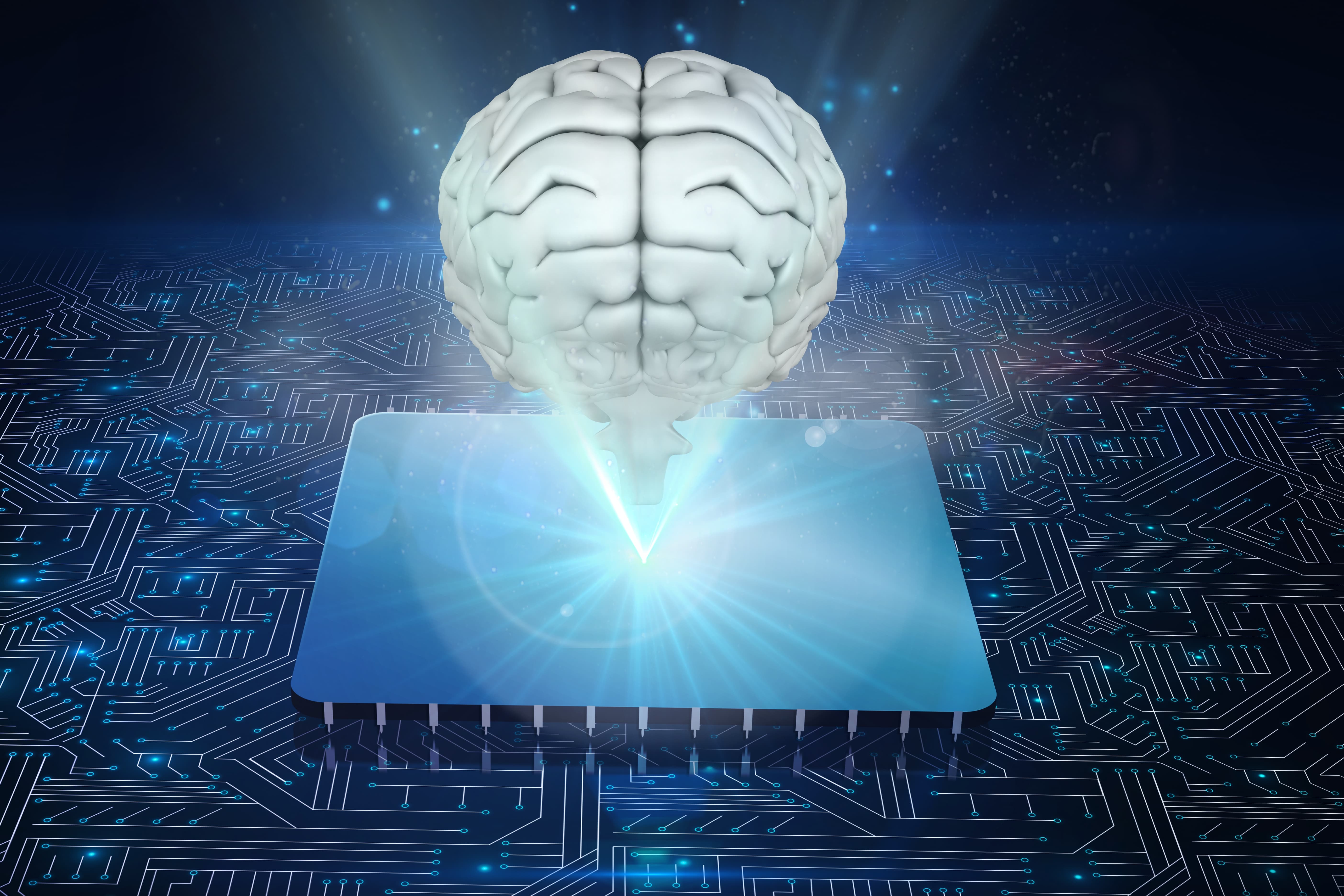
Quantum computers may soon grow more powerful through 3D printing, with researchers building miniaturised ion traps to improve scalability and performance.

Ion traps, which confine ions and control their quantum states, play a central role in ion-based qubits. Researchers at UC Berkeley created 3D-printed traps just a few hundred microns wide, which captured ions up to ten times more efficiently than conventional versions.

The new traps also reduced waiting times, allowing ions to be usable more quickly once the system is activated. Hartmut Häffner, who led the study, said the approach could enable scaling to far larger numbers of qubits while boosting speed.

3D printing offers flexibility not possible with chip-style manufacturing, allowing for more complex shapes and designs. Team members say they are already working on new iterations, with future versions expected to integrate optical components such as miniaturised lasers.

Experts argue that this method could address the challenges of low yield, high costs, and poor reproducibility in current ion-trap manufacturing, paving the way for scalable quantum computing and applications in other fields, including mass spectrometry.

Would you like to learn more about AI, tech, and digital diplomacy? If so, ask our Diplo chatbot!