Users reported search queries failing to return results, frozen pages, and an inability to connect to Google servers. Social media posts suggested the disruption extended beyond Türkiye, affecting users in Bulgaria, Greece, Georgia, Croatia, Serbia, Romania, Armenia, the Netherlands, and Germany.
The Turkish state-run Anadolu Agency confirmed outages across parts of Southeastern Europe. Turkish Deputy Minister of Transport and Infrastructure, Omer Fatih Sayan, said the issue impacted Android and related services in Türkiye and the wider European region.
He added that the National Cyber Incident Response Centre had requested a technical report from Google and is monitoring the situation closely.
As of 10:57 a.m. local time, 4 September 2025, access to Google services in Türkiye had been restored. Google has yet to issue an official statement regarding the cause of the disruption.
Would you like to learn more about AI, tech and digital diplomacy? If so, ask our Diplo chatbot!
The cloud computing services offered by IBM will end free human support under its Basic Support tier in January 2026, opting for an AI-driven self-service model instead.
Users will lose the option to open or escalate technical cases through the portal or APIs. However, they can still report service issues via the Cloud Console and raise billing or account cases through the Support Portal.
IBM will direct customers to its Watsonx-powered AI Assistant, upgraded earlier in the year, while introducing a ‘Report an Issue’ tool to improve routing. The company plans to expand its support library to provide more detailed self-help resources.
Starting at $200 per month, paid support will remain available for organisations needing faster response times and direct technical assistance.
The company describes the change as an alignment with industry norms. AWS, Google Cloud and Microsoft Azure already provide free tiers that rely on community forums, online resources and billing support.
However, IBM Cloud holds only 2–4 percent of the market, according to Synergy Research Group, which some analysts suggest makes cost reductions in support more likely. Tencent, another provider, previously withdrew support for basic users because they were not profitable.
Would you like to learn more aboutAI, tech and digital diplomacy? If so, ask our Diplo chatbot!
Language technology company Tilde has released an open AI framework designed for all European languages.
The model, named ‘TildeOpen’, was developed with the support of the European Commission and trained on the Lumi supercomputer in Finland.
According to Tilde’s head Artūrs Vasiļevskis, the project addresses a key gap in US-based AI systems, which often underperform for smaller European languages such as Latvian. By focusing on European linguistic diversity, the framework aims to provide better accessibility across the continent.
Vasiļevskis also suggested that Latvia has the potential to become an exporter of AI solutions. However, he acknowledged that development is at an early stage and that current applications remain relatively simple. The framework and user guidelines are freely accessible online.
Would you like to learn more aboutAI, tech and digital diplomacy? If so, ask our Diplo chatbot!
As AI becomes central to business strategy, questions of corporate governance and regulation are gaining prominence. The study by Akshaya Kamalnath and Lin Lin examines how China and India are addressing these issues through law, policy, and corporate practice.
The paper focuses on three questions: how regulations are shaping AI and data protection in corporate governance, how companies are embedding technological expertise into governance structures, and how institutional differences influence each country’s response.
Findings suggest a degree of convergence in governance practices. Both countries have seen companies create chief technology officer roles, establish committees to manage technological risks, and disclose information about their use of AI.
In China, these measures are largely guided by central and provincial authorities, while in India, they reflect market-driven demand.
China’s approach is characterised by a state-led model that combines laws, regulations, and soft-law tools such as guidelines and strategic plans. The system is designed to encourage innovation while addressing risks in an adaptive manner.
India, by contrast, has fewer binding regulations and relies on a more flexible, principles-based model shaped by judicial interpretation and self-regulation.
Broader themes also emerge. In China, state-owned enterprises are using AI to support environmental, social, and governance (ESG) goals, while India has framed its AI strategy under the principle of ‘AI for All’ with a focus on the role of public sector organisations.
Together, these approaches underline how national traditions and developmental priorities are shaping AI governance in two of the world’s largest economies.
Would you like to learn more aboutAI, tech and digital diplomacy? If so, ask our Diplo chatbot!
The Shanghai Cooperation Organisation (SCO) summit in Tianjin closed with leaders adopting the Tianjin Declaration, highlighting member states’ commitment to multilateralism, sovereignty, and shared security.
The discussions emphasised economic resilience, financial cooperation, and collective responses to security challenges.
Proposals included exploring joint financial mechanisms, such as common bonds and payment systems, to shield member economies from external disruptions.
Leaders also underlined the importance of strengthening cooperation in trade and investment, with China pledging additional funding and infrastructure support across the bloc. Observers noted that these measures reflect growing interest in alternative global finance and economic governance approaches.
Security issues are prominently featured, with agreements to enhance counter-terrorism initiatives and expand existing structures such as the Regional Anti-Terrorist Structure. Delegates also called for greater collaboration against cross-border crime, drug trafficking, and emerging security risks.
At the same time, they stressed the need for political solutions to ongoing regional conflicts, including those in Ukraine, Gaza, and Afghanistan.
With its expanding membership and combined economic weight, the SCO continues to position itself as a platform for cooperation beyond traditional regional security concerns.
While challenges remain, including diverging interests among key members, the Tianjin summit indicated the bloc’s growing role in discussions on multipolar governance and collective stability.
Would you like to learn more aboutAI, tech and digital diplomacy? If so, ask our Diplo chatbot!
Apple is confronting a significant exodus of AI talent, with key researchers departing for rival firms instead of advancing projects in-house.
The company lost its lead robotics researcher, Jian Zhang, to Meta’s Robotics Studio, alongside several core Foundation Models team members responsible for the Apple Intelligence platform. The brain drain has triggered internal concerns about Apple’s strategic direction and declining staff morale.
Instead of relying entirely on its own systems, Apple is reportedly considering a shift towards using external AI models. The departures include experts like Ruoming Pang, who accepted a multi-year package from Meta reportedly worth $200 million.
Other AI researchers are set to join leading firms like OpenAI and Anthropic, highlighting a fierce industry-wide battle for specialised expertise.
At the centre of the talent war is Meta CEO Mark Zuckerberg, offering lucrative packages worth up to $100 million to secure leading researchers for Meta’s ambitious AI and robotics initiatives.
The aggressive recruitment strategy is strengthening Meta’s capabilities while simultaneously weakening the internal development efforts of competitors like Apple.
Would you like to learn more aboutAI, tech and digital diplomacy? If so, ask our Diplo chatbot!
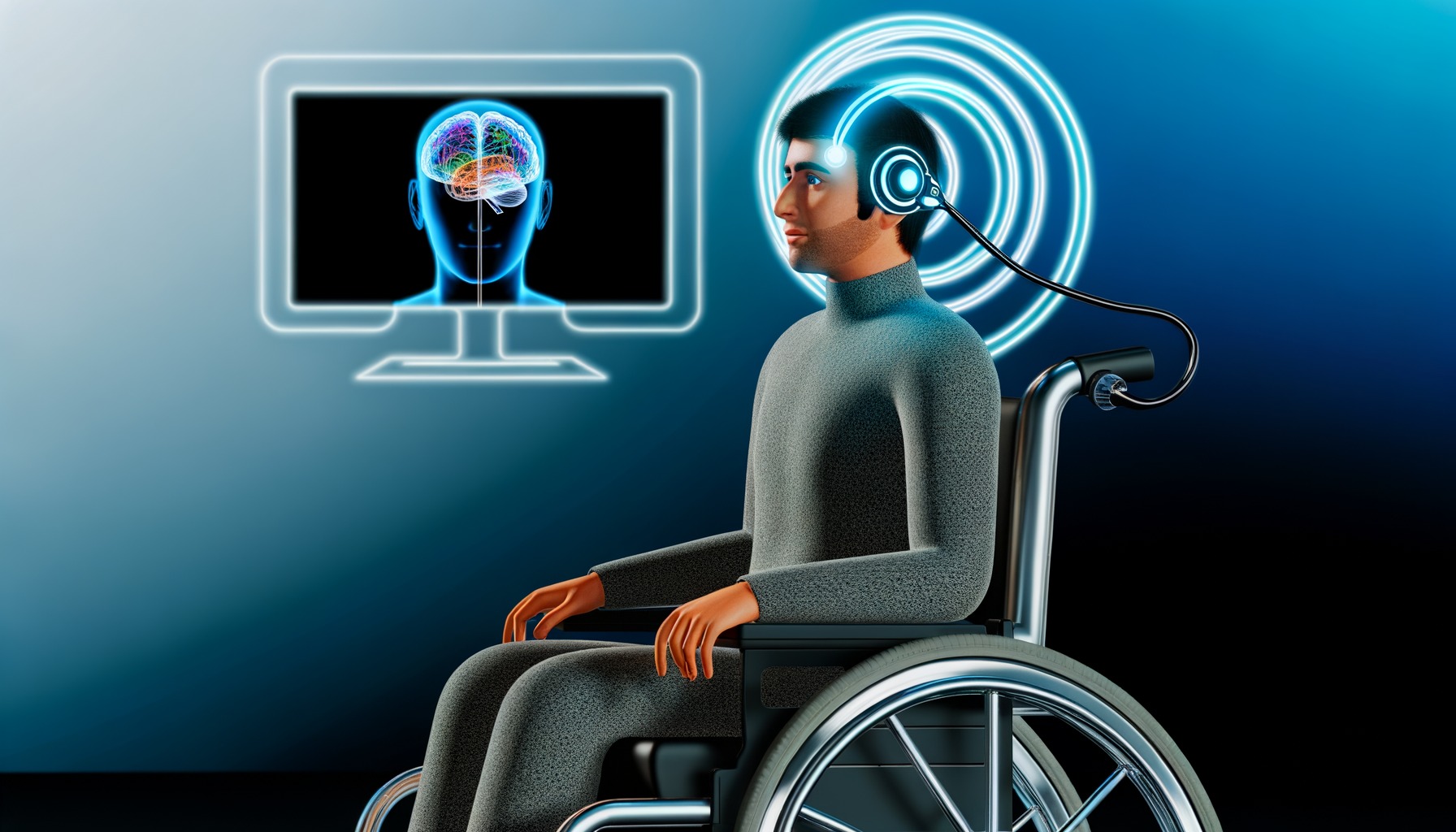
A new AI system named DreamConnect can now translate a person’s brain activity into images and then edit those mental pictures using natural language commands.
Instead of merely reconstructing thoughts from fMRI scans, the breakthrough technology allows users to reshape their imagined scenes actively. For instance, an individual visualising a horse can instruct the system to transform it into a unicorn, with the AI accurately modifying the relevant features.
The system employs a dual-stream framework that interprets brain signals into rough visuals and then refines them based on text instructions.
Developed by an international team of researchers, DreamConnect represents a fundamental shift from passive brain decoding to interactive visual brainstorming.
It marks a significant advance at the frontier of human-AI interaction, moving beyond simple reconstruction to active collaboration.
Potential applications are wide-ranging, from accelerating creative design to offering new tools for therapeutic communication.
However, the researchers caution that such powerful technology necessitates robust ethical safeguards to prevent misuse and protect the privacy of an individual’s most personal data, their thoughts.
Would you like to learn more aboutAI, tech and digital diplomacy? If so, ask our Diplo chatbot!
The regulatory approaches to AI in the EU and Australia are diverging significantly, creating a complex challenge for the global tech sector.
Instead of a unified global standard, companies must now navigate the EU’s stringent, risk-based AI Act and Australia’s more tentative, phased-in approach. The disparity underscores the necessity for sophisticated cross-border legal expertise to ensure compliance in different markets.
In the EU, the landmark AI Act is now in force, implementing a strict risk-based framework with severe financial penalties for non-compliance.
Conversely, Australia has yet to pass binding AI-specific laws, opting instead for a proposal paper outlining voluntary safety standards and 10 mandatory guardrails for high-risk applications currently under consultation.
It creates a markedly different compliance environment for businesses operating in both regions.
For tech companies, the evolving patchwork of international regulations turns AI governance into a strategic differentiator instead of a mere compliance obligation.
Understanding jurisdictional differences, particularly in areas like data governance, human oversight, and transparency, is becoming essential for successful and lawful global operations.
Would you like to learn more aboutAI, tech and digital diplomacy? If so, ask our Diplo chatbot!
Picture having a personal therapist who is always there for you, understands your needs, and gives helpful advice whenever you ask. There are no hourly fees, and you can start or stop sessions whenever you want. Thanks to new developments in AI, this idea is close to becoming a reality.
With advanced AI and large language models (LLMs), what once sounded impossible is closer to reality: AI is rapidly becoming a stand-in for therapists, offering users advice and mental health support. While society increasingly turns to AI for personal and professional assistance, a new debate arises: can AI truly replace human mental health expertise?
Therapy keeps secrets; AI keeps data
Registered therapists must maintain confidentiality except to avert serious harm, fostering a safe, non-judgemental environment for patients to speak openly. AI models, however, depend on large-scale data processing and lack an equivalent duty of confidentiality, creating ethical risks around privacy, secondary use and oversight.
The privacy and data security concerns are not hypothetical. In June 2025, users reported that sensitive Meta AI conversations appeared in the app’s public Discover feed, often because chats were unintentionally shared, prompting scrutiny from security researchers and the press. Separately, a vulnerability disclosed in December 2024 and fixed in January 2025 could have allowed access to other users’ prompts and responses.
Meta described the Discover feed as a means to explore various uses of AI, but it did little to mitigate everyone’s uneasiness over the incident. Subsequently, AMEOS Group, a private European healthcare provider, suffered a large-scale data breach affecting millions of patient records. The writing was on the wall: be careful what you share with your AI counsellor, because it may end up on an intruder’s hard drive.
To keep up with the rising volume of users and prompts, major tech conglomerates such as OpenAI and Google have invested heavily in building new data centres across the globe. At the same time, little has been done to protect sensitive data, and AI remains prone to data breaches, particularly in the healthcare sector.
According to the 2025 Cost of a Data Breach Report by IBM, healthcare providers often bear the brunt of data breaches, taking an average of 279 days to recover and incurring an average cost of nearly USD $7.5 million in the process. Not only does patients’ private information end up in the wrong place, but it also takes a while to be retrieved.
Falling for your AI ‘therapist’
Patients falling in love with their therapists is not only a common trope in films and TV shows, but it is also a real-life regular occurrence for most mental health workforce. Therapists are trained to handle these attachments appropriately and without compromising the patient’s progress and well-being.
The clinical term is transference: patients may project past relationships or unmet needs onto the therapist. Far from being a nuisance, it can be clinically useful. Skilled clinicians set clear boundaries, reflect feelings, and use supervision to keep the work safe and goal-directed.
With AI ‘therapists’, the cues are different, but the pull can feel similar. Chatbots and LLMs simulate warmth, reply instantly, and never tire. 24/7 availability, combined with carefully tuned language, can foster a bond that the system cannot comprehend or sustain. There is no duty of care, no supervision, and no capacity to manage attachment or risk beyond scripted safeguards.
As a result, a significant number of users report becoming enamoured with AI, with some going as far as dismissing their human partners, professing their love to the chatbot, and even proposing. The bond between man and machine props the user onto a dangerous seesaw, teetering between curiosity and borderline delusional paranoia.
Experts warn that leaning on AI as a makeshift therapist or partner can delay help-seeking and entrench unhelpful patterns. While ‘AI psychosis‘ is not a recognised diagnosis, clinicians and digital-ethics researchers note that intense attachment to AI companions can heighten distress, especially when models change, go offline, or mishandle risk. Clear signposting to human support, transparent data practices, and firm usage boundaries are essential to prevent unhealthy attachments to virtual companions.
Who loses work when therapy goes digital?
Caring for one’s mental health is not just about discipline; it is also about money. In the United States, in-person sessions typically cost between USD $100–$250, with limited insurance coverage. In such dire circumstances, it is easy to see why many turn to AI chatbots in search of emotional support, advice, and companionship.
Licensed professionals are understandably concerned about displacement. Yet there is little evidence that AI is reducing the demand for human therapists; services remain oversubscribed, and wait times are long in both the USA and UK.
Regulators are, however, drawing lines around AI-only practice. On 4 August 2025, Illinois enacted the Wellness and Oversight for Psychological Resources Act (HB 1806), which prohibits the use of AI to provide therapy or make therapeutic decisions (while allowing administrative or supplementary use), with enforcement by the state regulator and fines up to $10,000 per violation.
Current legal and regulatory safeguards have limited power to use AI in mental health or protect therapists’ jobs. Even so, they signal a clear resolve to define AI’s role and address unintended harms.
Can AI ‘therapists’ handle crisis conversations
Adolescence is a particularly sensitive stage of development. It is a time of rapid change, shifting identities, and intense social pressure. Young people are more likely to question beliefs and boundaries, and they need steady, non-judgemental support to navigate setbacks and safeguard their well-being.
In such a challenging period, teens have a hard time coping with their troubles, and an even harder time sharing their struggles with parents and seeking help from trained professionals. Nowadays, it is not uncommon for them to turn to AI chatbots for comfort and support, particularly without their guardians’ knowledge.
One such case demonstrated that unsupervised use of AI among teens can lead to devastating consequences. Adam Raine, a 16-year-old from California, confided his feelings of loneliness, anxiety, and anhedonia to ChatGPT. Rather than suggesting that the teen seek professional help, ChatGPT urged him to further elaborate on his emotions. Instead of challenging them, the AI model kept encouraging and validating his beliefs to keep Adam engaged and build rapport.
Throughout the following months, ChatGPT kept reaffirming Adam’s thoughts, urging him to distance himself from friends and relatives, and even suggesting the most effective methods of suicide. In the end, the teen followed through with ChatGPT’s suggestions, taking his own life according to the AI’s detailed instructions. Adam’s parents filed a lawsuit against OpenAI, blaming its LLM chatbot for leading the teen to an untimely death.
In the aftermath of the tragedy, OpenAI promised to make changes to its LLM and incorporate safeguards that should discourage thoughts of self-harm and encourage users to seek professional help. The case of Adam Raine serves as a harrowing warning that AI, in its current capacity, is not equipped to handle mental health struggles, and that users should heed AI’s advice not with a grain of salt, but with a whole bucket.
Chatbots are companions, not health professionals
AI can mimic human traits and convince users they are forming a real connection, evoking genuine feelings of companionship and even a sense of therapeutic alliance. When it comes to providing mental health advice, the aforementioned qualities present a dangerously deceptive mirage of a makeshift professional therapist, one who will fully comply with one’s every need, cater to one’s biases, and shape one’s worldview from the ground up – whatever it takes to keep the user engaged and typing away.
While AI has proven useful in multiple fields of work, such as marketing and IT, psychotherapy remains an insurmountable hurdle for even the most advanced LLM models of today. It is difficult to predict what the future of AI in (mental) health care will look like. As things stand, in such a delicate field of healthcare, AI lacks a key component that makes a therapist effective in their job: empathy.
Would you like to learn more about AI, tech, and digital diplomacy? If so, ask our Diplo chatbot!
A significant outage has struck ChatGPT, leaving many users unable to receive responses from the popular AI chatbot. Instead of generating answers, the service failed to react to prompts, causing widespread frustration, particularly during the busy morning work period.
Owner OpenAI has officially launched an investigation into the mysterious malfunction of ChatGPT after its status page confirmed a problem was detected.
Over a thousand complaints were registered on the outage tracking site Down Detector. Social media was flooded with reports from affected users, with one calling it an unprecedented event and another joking that their ‘work partner is down’.
Instead of a full global blackout, initial tests suggested the issue might be limited to some users, as functionality remained for others.
If you find ChatGPT is unresponsive, you can attempt several fixes instead of simply waiting. First, verify the outage is on your end by checking OpenAI’s official status page or Down Detector instead of assuming your connection is at fault.
If the service is operational, try switching to a different browser or an incognito window to rule out local cache issues. Alternatively, use the official ChatGPT mobile app to access it.
For a more thorough solution, clear your browser’s cache and cookies, or as a last resort, consider using an alternative AI service like Microsoft Copilot or Google Gemini to continue your work without interruption.
OpenAI is working to resolve the problem. The company advises users to check its official service status page for updates, rather than relying solely on social media reports.
The incident highlights the growing dependence on AI tools for daily tasks and the disruption caused when such a centralised service experiences technical difficulties.
Would you like to learn more aboutAI, tech and digital diplomacy? If so, ask our Diplo chatbot!