The European Union will use the COP30 Climate Conference in Belém, Brazil, to reinforce its commitment to a fair and ambitious global clean transition.
The EU aims to accelerate the implementation of the Paris Agreement by driving decarbonisation, promoting renewables, and supporting vulnerable nations most affected by climate change.
President Ursula von der Leyen said the transition is ‘ongoing and irreversible’, stressing that it must remain inclusive and equitable.
Additionally, the EU will call for new efforts to close implementation gaps, limit temperature overshoot beyond 1.5°C, and advance the Global Stocktake outcomes from COP28. It will also promote the global pledges to triple renewable capacity and double energy efficiency by 2030.
A new climate target will commit to cutting net greenhouse gas emissions by between 66.25% and 72.5% below 1990 levels by 2035, on the path to a 90% reduction by 2040.
The EU also supports the creation of a Coalition for Compliance Carbon Markets and increased finance for developing countries through the Baku to Belém Roadmap.
Commissioner Wopke Hoekstra said Europe’s climate ambition strengthens both competitiveness and independence. He urged major economies to raise ambition and accelerate implementation to keep the Paris target within reach.
Would you like to learn more aboutAI, tech and digital diplomacy? If so, ask our Diplo chatbot!
European politicians and experts gathered in Billund for the conference ‘Towards a Safer and More Innovative Digital Europe’, hosted by the Danish Parliament.
The discussions centred on how to protect citizens online while strengthening Europe’s technological competitiveness.
Lisbeth Bech-Nielsen, Chair of the Danish Parliament’s Digitalisation and IT Committee, stated that the event demonstrated the need for the EU to act more swiftly to harness its collective digital potential.
She emphasised that only through cooperation and shared responsibility can the EU match the pace of global digital transformation and fully benefit from its combined strengths.
The first theme addressed online safety and responsibility, focusing on the enforcement of the Digital Services Act, child protection, and the accountability of e-commerce platforms importing products from outside the EU.
Participants highlighted the importance of listening to young people and improving cross-border collaboration between regulators and industry.
The second theme examined Europe’s competitiveness in emerging technologies such as AI and quantum computing. Speakers called for more substantial investment, harmonised digital skills strategies, and better support for businesses seeking to expand within the single market.
A Billund conference emphasised that Europe’s digital future depends on striking a balance between safety, innovation, and competitiveness, which can only be achieved through joint action and long-term commitment.
Would you like to learn more aboutAI, tech and digital diplomacy? If so, ask our Diplo chatbot!
SoftBank and OpenAI have announced the launch of SB OAI Japan, a new joint venture established to deliver an advanced enterprise AI solution known as Crystal Intelligence. Unveiled on 5 November 2025, the initiative aims to transform Japan’s corporate management through tailored AI solutions.
SB OAI Japan will exclusively market Crystal Intelligence in Japan starting in 2026. The platform integrates OpenAI’s latest models with local implementation, system integration, and ongoing support.
Designed to enhance productivity and streamline management, Crystal Intelligence will help Japanese companies adopt AI tools suited to their specific operational needs.
SoftBank Corp. will be the first to deploy Crystal intelligence, testing and refining the technology before wider release. The company plans to share insights through SB OAI Japan to drive AI-powered transformation across industries.
The partnership underscores SoftBank’s vision of becoming an AI-native organisation. The group has already developed around 2.5 million custom GPTs for internal use.
OpenAI CEO Sam Altman stated that the venture marks a significant step in bringing advanced AI to global enterprises. At the same time, SoftBank’s Masayoshi Son described it as the beginning of a new era where AI agents autonomously collaborate to achieve business goals.
Would you like to learn more about AI, tech and digital diplomacy? If so, ask our Diplo chatbot!
AI export policy in Washington remains firm, with officials saying the most advanced Nvidia Blackwell chips will not be sold to China. A White House spokesperson confirmed the stance during a briefing. The position follows weeks of speculation about scaled-down variants.
Senior economic officials floated the possibility of a shift later, citing the rapid pace of chip development. If Blackwell quickly becomes superseded, future sales could be reconsidered. Any change would depend on achieving parity in technology, licensing, and national security assessments.
Nvidia’s chief executive signalled hope that parts for Blackwell family products could be supplied from China, while noting there are no current plans to do so. Company guidance emphasises both commercial and research applications. Analysts say licensing clarity will dictate data centre buildouts and training roadmaps.
Policy hawks argue that cutting-edge accelerators should remain in US allied markets to protect strategic advantages. Others counter that export channels can be reopened once hardware is no longer state-of-the-art. The debate now centres on timelines measured in product cycles.
Diplomatic calendars may influence further discussions, with potential leader-level meetings next year alongside major international gatherings. Officials portrayed the broader bilateral relationship as steadier. The industry will track any signals that link geopolitical dialogue to chip export regulations.
Would you like to learn more about AI, tech, and digital diplomacy? If so, ask our Diplo chatbot!
AI is inserting itself between companies and customers, Cloudflare CEO Matthew Prince warned in Toronto. More people ask chatbots before visiting sites, dulling brands’ impact. Even research teams lose revenue as investors lean on AI summaries.
Frontier models devour data, pushing firms to chase exclusive sources. Cloudflare lets publishers block unpaid crawlers to reclaim control and compensation. The bigger question, said Prince, is which business model will rule an AI-mediated internet.
Policy scrutiny focuses on platforms that blend search with AI collection. Prince urged governments to separate Google’s search access from AI crawling to level the field. Countries that enforce a split could attract publishers and researchers seeking predictable rules and payment.
Licensing deals with news outlets, Reddit, and others coexist with scraping disputes and copyright suits. Google says it follows robots.txt, yet testimony indicated AI Overviews can use content blocked by robots.txt for training. Vague norms risk eroding incentives to create high-quality online content.
A practical near-term playbook combines technical and regulatory steps. Publishers should meter or block AI crawlers that do not pay. Policymakers should require transparency, consent, and compensation for high-value datasets, guiding the shift to an AI-mediated web that still rewards creators.
Would you like to learn more about AI, tech, and digital diplomacy? If so, ask our Diplo chatbot!
The European Commission has approved €2.9 billion in funding for 61 large-scale net-zero technology projects, marking one of the EU’s most significant investments in clean innovation to date.
Financed through revenues from the EU Emissions Trading System, the initiative aims to accelerate Europe’s path towards climate neutrality by 2050.
The selected projects cover 19 industrial sectors across 18 Member States and target areas such as renewable energy, energy storage, zero-emission mobility, and industrial carbon management.
Collectively, they are expected to cut more than 220 million tonnes of CO₂ over the next decade, reinforcing Europe’s global leadership in sustainable technologies instead of relying on imports.
Funded under the Innovation Fund, which draws on an estimated €40 billion in ETS revenues, the initiative highlights the EU’s industrial readiness for decarbonisation. The latest call attracted 359 applications requesting €21.7 billion in support, underscoring the rapid growth of the continent’s cleantech sector.
Commissioner Wopke Hoekstra described the announcement as proof that the EU is turning its climate ambitions into industrial reality, creating green jobs and strengthening economic resilience. The next round of Innovation Fund calls will open in December 2025.
Would you like to learn more aboutAI, tech and digital diplomacy? If so, ask our Diplo chatbot!
Mustafa Suleyman, CEO of Microsoft AI, argues that AI should be built for people, not to replace them. Growing belief in chatbot consciousness risks campaigns for AI rights and a needless struggle over personhood that distracts from human welfare.
Debates over true consciousness miss the urgent issue of convincing imitation. Seemingly conscious AI may speak fluently, recall interactions, claim experiences, and set goals that appear to exhibit agency. Capabilities are close, and the social effects will be real regardless of metaphysics.
People already form attachments to chatbots and seek meaning in conversations. Reports of dependency and talk of ‘AI psychosis‘ show persuasive systems can nudge vulnerable users. Extending moral status to uncertainty, Suleyman argues, would amplify delusions and dilute existing rights.
Norms and design principles are needed across the industry. Products should include engineered interruptions that break the illusion, clear statements of nonhuman status, and guardrails for responsible ‘personalities’. Microsoft AI is exploring approaches that promote offline connection and healthy use.
A positive vision keeps AI empowering without faking inner life. Companions should organise tasks, aid learning, and support collaboration while remaining transparently artificial. The focus remains on safeguarding humans, animals, and the natural world, not on granting rights to persuasive simulations.
Would you like to learn more about AI, tech, and digital diplomacy? If so, ask our Diplo chatbot!
Microsoft’s AI head, Mustafa Suleyman, has dismissed the idea that AI could ever become conscious, arguing that consciousness is a property exclusive to biological beings.
Speaking at the AfroTech Conference in Houston, Suleyman said researchers should stop exploring the notion of sentient AI, calling it ‘the wrong question’.
He explained that while AI can simulate experience, it cannot feel pain or possess subjective awareness.
Suleyman compared AI’s output to a narrative illusion rather than genuine consciousness, aligning with the philosophical theory of biological naturalism, which ties awareness to living brain processes.
Suleyman has become one of the industry’s most outspoken critics of conscious AI research. His book ‘The Coming Wave’ and his recent essay ‘We must build AI for people;’ not to be a person warn against anthropomorphising machines.
He also confirmed that Microsoft will not develop erotic chatbots, a direction that has been embraced by competitors such as OpenAI and xAI.
He stressed that Microsoft’s AI systems are designed to serve humans, not mimic them. The company’s Copilot assistant now includes a ‘real talk’ mode that challenges users’ assumptions instead of offering flattery.
Suleyman said responsible development must avoid ‘unbridled accelerationism’, adding that fear and scepticism are essential for navigating AI’s rapid evolution.
Would you like to learn more aboutAI, tech and digital diplomacy? If so, ask our Diplo chatbot!
Researchers at the University of Surrey have developed a new method to enhance AI by imitating how the human brain connects information. The approach, called Topographical Sparse Mapping, links each artificial neuron only to nearby or related ones, replicating the brain’s efficient organisation.
According to findings published in Neurocomputing, the structure reduces redundant connections and improves performance without compromising accuracy. Senior lecturer Dr Roman Bauer said intelligent systems can now be designed to consume less energy while maintaining power.
Training large models today often requires over a million kilowatt-hours of electricity, a trend he described as unsustainable.
An advanced version, Enhanced Topographical Sparse Mapping, introduces a biologically inspired pruning process that refines neural connections during training, similar to how the brain learns.
Researchers believe that the system could contribute to more realistic neuromorphic computers, which simulate brain functions to process data more efficiently.
The Surrey team said that such a discovery may advance generative AI systems and pave the way for sustainable large-scale model training. Their work highlights how lessons from biology can shape the next generation of energy-efficient computing.
Would you like to learn more aboutAI, tech and digital diplomacy? If so, ask our Diplo chatbot!
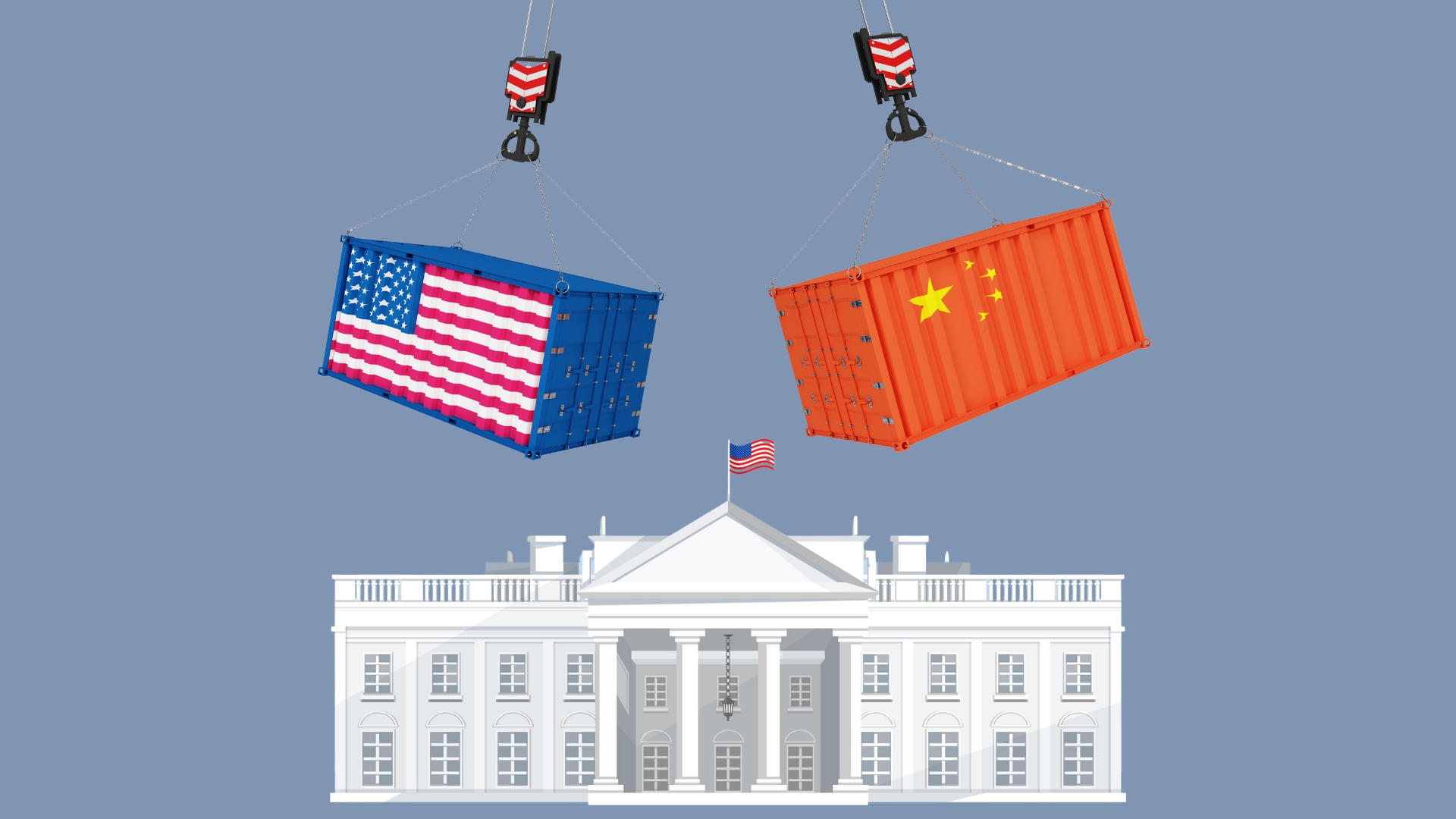
China’s Ministry of Commerce announced plans to exempt specific Nexperia orders from its export ban, aiming to stabilise the global semiconductor supply chain after the Netherlands seized control of the Chinese-owned Dutch chipmaker.
The ministry stated that exemptions would be granted when the criteria were met, encouraging affected firms to apply.
A move that follows a meeting between Chinese President Xi Jinping and US President Donald Trump in Busan, where both sides reached a framework allowing Nexperia to resume shipments under eased restrictions.
Washington reportedly agreed to pause the 50 percent subsidiary rule, which restricts exports from companies half-owned by entities on its trade blocklist. Wingtech Technology, Nexperia’s Chinese parent, has been under these restrictions since December.
Beijing’s export ban, introduced after the Dutch takeover citing national security concerns, disrupted supplies from Nexperia’s Dongguan factory, which assembles about 70 percent of its products.
China condemned the Netherlands for intervening in corporate affairs, warning that such actions deepen global supply chain instability.
Would you like to learn more aboutAI, tech and digital diplomacy? If so, ask our Diplo chatbot!