The rapid development of AI has enabled significant breakthroughs in synthetic media, opening up new opportunities in healthcare, education, entertainment and many more.
Instead of relying on traditional content creation, companies are now using advanced tools to produce immersive experiences, training simulations and personalised campaigns. But what exactly is synthetic media?
Synthetic media refers to content produced partly or entirely by AI, including AI-generated images, music, video and speech. Tools such as ChatGPT, Midjourney and voice synthesisers are now widely used in both creative and commercial settings.
The global market for synthetic media is expanding rapidly. Valued at USD 4.5 billion in 2023, it is projected to reach USD 16.6 billion by 2033, driven mainly by tools that convert text into images, videos or synthetic speech.
The appeal lies in its scalability and flexibility: small teams can now quickly produce a wide range of professional-grade content and easily adapt it for multiple audiences or languages.
However, as synthetic media becomes more widespread, so do the ethical challenges it poses.
How deepfakes threaten trust and security
The same technology has raised serious concerns as deepfakes – highly realistic but fake audio, images and videos – become harder to detect and more frequently misused.
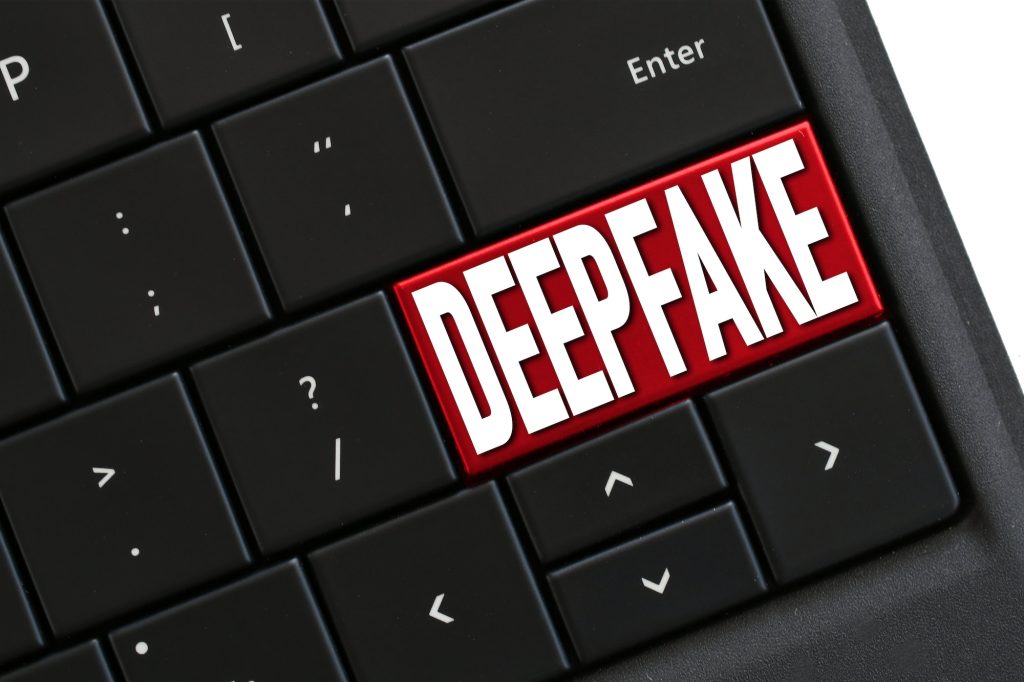
Deepfakes, a subset of synthetic media, go a step further by creating content that intentionally imitates real people in deceptive ways, often for manipulation or fraud.
The technology behind deepfakes involves face swapping through variational autoencoders and voice cloning via synthesised speech patterns. The entry barrier is low, making these tools accessible to the general public.
First surfacing on Reddit in 2017, deepfakes have quickly expanded into healthcare, entertainment, and education, yet they also pose a serious threat when misused. For example, a major financial scam recently cost a company USD 25 million due to a deepfaked video call with a fake CFO.
Politicians and supporters have often openly used generative AI to share satirical or exaggerated content, rather than attempting to disguise it as real.
In Indonesia, AI even brought back the likeness of former dictator Suharto to endorse candidates, while in India, meme culture thrived but failed to significantly influence voters’ decisions.
In the USA, figures like Elon Musk and Donald Trump have embraced AI-generated memes and voice parodies to mock opponents or improve their public image.
While these tools have made it easier to create misinformation, researchers such as UC Berkeley’s Hany Farid argue that the greater threat lies in the gradual erosion of trust, rather than a single viral deepfake.
It is becoming increasingly difficult for users to distinguish truth from fiction, leading to a contaminated information environment that harms public discourse. Legal concerns, public scrutiny, and the proliferation of ‘cheapfakes’—manipulated media that do not rely on AI—may have limited the worst predictions.
Nonetheless, experts warn that the use of AI in campaigns will continue to become more sophisticated. Without clear regulation and ethical safeguards, future elections may not be able to prevent the disruptive influence of synthetic media as easily.
Children use AI to create harmful deepfakes
School-aged children are increasingly using AI tools to generate explicit deepfake images of their classmates, often targeting girls. What began as a novelty has become a new form of digital sexual abuse.
With just a smartphone and a popular app, teenagers can now create and share highly realistic fake nudes, turning moments of celebration, like a bat mitzvah photo, into weapons of humiliation.
Rather than being treated as simple pranks, these acts have severe psychological consequences for victims and are leaving lawmakers scrambling.
Educators and parents are now calling for urgent action. Instead of just warning teens about criminal consequences, schools are starting to teach digital ethics, consent, and responsible use of technology.
Programmes that explain the harm caused by deepfakes may offer a better path forward than punishment alone. Experts say the core issues—respect, agency, and safety—are not new.
The tools may be more advanced, but the message remains the same: technology must be used responsibly, not to exploit others.
Deepfakes become weapons of modern war
Deepfakes can also be deployed to sow confusion, falsify military orders, and manipulate public opinion. While not all such tactics will succeed, their growing use in psychological and propaganda operations cannot be ignored.
Intelligence agencies are already exploring how to integrate synthetic media into information warfare strategies, despite the risk of backfiring.
A new academic study from University College Cork examined how such videos spread on social media and how users reacted.
While many responded with scepticism and attempts at verification, others began accusing the real footage of being fake. The growing confusion risks creating an online environment where no information feels trustworthy, exactly the outcome hostile actors might seek.
While deception has long been part of warfare, deepfakes challenge the legal boundaries defined by international humanitarian law.
Falsifying surrender orders to launch ambushes could qualify as perfidy—a war crime—while misleading enemies about troop positions may remain lawful.
Yet when civilians are caught in the crossfire of digital lies, violations of the Geneva Conventions become harder to ignore.
Regulation is lagging behind the technology, and without urgent action, deepfakes may become as destructive as conventional weapons, redefining both warfare and the concept of truth.
The good side of deepfake technology
Yet, not all applications are harmful. In medicine, deepfakes can aid therapy or generate synthetic ECG data for research while protecting patient privacy. In education, the technology can recreate historical figures or deliver immersive experiences.
Journalists and human rights activists also use synthetic avatars for anonymity in repressive environments. Meanwhile, in entertainment, deepfakes offer cost-effective ways to recreate actors or build virtual sets.
These examples highlight how the same technology that fuels disinformation can also be harnessed for innovation and the public good.
Governments push for deepfake transparency
However, the risks are rising. Misinformation, fraud, nonconsensual content, and identity theft are all becoming more common.
The danger of copyright infringement and data privacy violations also looms large, particularly when AI-generated material pulls content from social media or copyrighted works without permission.
Policymakers are taking action, but is it enough?
The USA has banned AI robocalls, and Europe’s AI Act aims to regulate synthetic content. Experts emphasise the need for worldwide cooperation, with regulation focusing on consent, accountability, and transparency.
Embedding watermarks and enforcing civil liabilities are among the strategies being considered. To navigate the new landscape, a collaborative effort across governments, industry, and the public is crucial, not just to detect deepfakes but also to define their responsible use.
Some emerging detection methods include certifying content provenance, where creators or custodians attach verifiable information about the origin and authenticity of media.
Automated detection systems analyse inconsistencies in facial movements, speech patterns, or visual blending to identify manipulated media. Additionally, platform moderation based on account reputation and behaviour helps filter suspicious sources.
Systems that process or store personal data must also comply with privacy regulations, ensuring individuals’ rights to correct or erase inaccurate data.
Yet, despite these efforts, many of these systems still struggle to reliably distinguish synthetic content from real one.
As detection methods lag, some organisations like Reality Defender and Witness work to raise awareness and develop countermeasures.
The rise of AI influencers on social media
Another subset of synthetic media is the AI-generated influencers. AI (or synthetic) influencers are virtual personas powered by AI, designed to interact with followers, create content, and promote brands across social media platforms.
Unlike traditional influencers, they are not real people but computer-generated characters that simulate human behaviour and emotional responses. Developers use deep learning, natural language processing, and sophisticated graphic design to make these influencers appear lifelike and relatable.
Once launched, they operate continuously, often in multiple languages and across different time zones, giving brands a global presence without the limitations of human engagement.
These virtual influencers offer several key advantages for brands. They can be precisely controlled to maintain consistent messaging and avoid the unpredictability that can come with human influencers.
Their scalability allows them to reach diverse markets with tailored content, and over time, they may prove more cost-efficient due to their ability to produce content at scale without the ongoing costs of human talent.
Brands can also experiment with creative storytelling in new and visually compelling ways that might be difficult for real-life creators.
Synthetic influencers have also begun appearing in the healthcare sector, although their widespread popularity in the sector remains limited. However, it is expected to grow rapidly.
Navigating the risks of AI influencers
Their rise also brings significant challenges. AI influencers lack genuine authenticity and emotional depth, which can hinder the formation of meaningful connections with audiences.
Their use raises ethical concerns around transparency, especially if followers are unaware that they are interacting with AI.
Data privacy is another concern, as these systems often rely on collecting and analysing large amounts of user information to function effectively.
Additionally, while they may save money in the long run, creating and maintaining a sophisticated AI influencer involves a substantial upfront investment.
Study warns of backlash from synthetic influencers
A new study from Northeastern University urges caution when using AI-powered influencers, despite their futuristic appeal and rising prominence.
While these digital figures may offer brands a modern edge, they risk inflicting greater harm on consumer trust compared to human influencers when problems arise.
The findings show that consumers are more inclined to hold the brand accountable if a virtual influencer promotes a faulty product or spreads misleading information.
Rather than viewing these AI personas as independent agents, users tend to see them as direct reflections of the company behind them. Instead of blaming the influencer, audiences shift responsibility to the brand itself.
Interestingly, while human influencers are more likely to be held personally liable, virtual influencers still cause deeper reputational damage.
People assume that their actions are fully scripted and approved by the business, making any error seem deliberate or embedded in company practices rather than a personal mistake.
Regardless of the circumstances, AI influencers are reshaping the marketing landscape by providing an innovative and highly adaptable tool for brands. While they are unlikely to replace human influencers entirely, they are expected to play a growing role in digital marketing.
Their continued rise will likely force regulators, brands, and developers to establish clearer ethical standards and guidelines to ensure responsible and transparent use.
Shaping the future of synthetic media
In conclusion, the growing presence of synthetic media invites both excitement and reflection. As researchers, policymakers, and creators grapple with its implications, the challenge lies not in halting progress but in shaping it thoughtfully.
All forms of synthetic media, like any other form of technology, have a dual capacity to empower and exploit, demanding a new digital literacy — one that prioritises critical engagement, ethical responsibility, and cross-sector collaboration.
On the one hand, deepfakes threaten democratic stability, information integrity, and civilian safety, blurring the line between truth and fabrication in conflict, politics, and public discourse.
On the other hand, AI influencers are transforming marketing and entertainment by offering scalable, controllable, and hyper-curated personas that challenge notions of authenticity and human connection.
Rather than fearing the tools themselves, we as human beings need to focus on cultivating the norms and safeguards that determine how, and for whom, they are used. Ultimately, these tools are meant to enhance our way of life, not undermine it.
Would you like to learn more about AI, tech and digital diplomacy? If so, ask our Diplo chatbot!