
International search widens for ransomware fugitive on EU Most Wanted

A Ukrainian cybercrime suspect has been added to the EU’s Most Wanted list for his role in the 2019 LockerGoga ransomware attack against a major Norwegian aluminium company and other global incidents.

The fugitive is considered a high-value target and is wanted by multiple countries. The US Department of Justice has offered up to USD 10 million for information leading to the arrest.

Europol stated that the identification of the suspect followed a lengthy, multinational investigation supported by Eurojust, with damages from the network estimated to be in the billions. Several members of the group have already been detained in Ukraine.

Investigators have mapped the network’s operations, tracing its hierarchy from malware developers and intrusion experts to money launderers who processed illicit proceeds. The wanted man is accused of directly deploying LockerGoga ransomware.

Europol has urged the public to visit the EU Most Wanted website and share information that could assist in locating the fugitive. The suspect’s profile is now live on the platform.

Would you like to learn more about AI, tech, and digital diplomacy? If so, ask our Diplo chatbot!

Kazakhstan to create state digital asset fund

Kazakhstan President Kassym-Jomart Tokayev has announced plans to establish a State Digital Asset Fund to consolidate the country’s position in digital finance. The fund will accumulate a strategic crypto reserve through the National Bank’s Investment Corporation.

Crypto adoption in Kazakhstan has surged, doubling ownership from 4% in 2022 to 8% in 2024. Mining generated over $10 million in taxes, while licensed providers contributed $367,000 in the first eight months 2024.

Tokayev warned of rising online fraud, highlighting the need for anti-fraud centres, biometric ID systems, and enhanced legislation to protect citizens and state finances. He connected digital finance to urban development, unveiling Alatau City, a $7.2 billion fully digitalised smart city with crypto payments.

The initiative positions Kazakhstan as a regional leader in crypto strategy, combining economic growth, technological innovation, and digital infrastructure development.

Would you like to learn more about AI, tech and digital diplomacy? If so, ask our Diplo chatbot

Google boosts Gemini with audio uploads and NotebookLM upgrades

The US tech giant has expanded the capability of its Gemini app by allowing users to upload audio files for AI analysis across Android, iOS, and the web. The upgrade enables transcription of interviews, voice memos and lecture recordings instead of relying solely on typed or spoken prompts.

Free-tier users can upload clips of up to ten minutes with five prompts daily, while paid subscribers have access to three hours of uploads across multiple files. According to Gemini vice president Josh Woodward, the feature is designed to make the platform more versatile and practical for everyday tasks.

Google has also enhanced its Search AI mode with five new languages, including Hindi, Japanese and Korean, extending its multilingual reach.

NotebookLM, the company’s research assistant powered by Gemini, can now generate structured reports such as quizzes, study guides and blog posts from uploaded content, available in more than 80 languages.

These improvements underline Google’s ambition to integrate AI more deeply into everyday applications instead of leaving the technology confined to experimental tools. They also highlight growing competition in the AI market, with Google using Gemini 2.5 to expand its services for global users.

Would you like to learn more about AI, tech and digital diplomacy? If so, ask our Diplo chatbot!

AI Mode in Google Search adds multilingual support to Hindi and four more languages

Google has announced an expansion of AI Mode in Search to five new languages, including Hindi, Indonesian, Japanese, Korean and Brazilian Portuguese. The feature was first introduced in English in March and aims to compete with AI-powered search platforms such as ChatGPT Search and Perplexity AI.

The company highlighted that building a global search experience requires more than translation. Google’s custom version of Gemini 2.5 uses advanced reasoning and multimodal capabilities to provide locally relevant and useful search results instead of offering generic answers.

AI Mode now also supports agentic tasks such as booking restaurant reservations, with plans to include local service appointments and event ticketing.

Currently, these advanced functions are available to Google AI Ultra subscribers in the US, while India received the rollout of the language expansion in July.

These developments reinforce Google’s strategy to integrate AI deeply into its search ecosystem, enhancing user experience across diverse regions instead of limiting sophisticated AI tools to English-language users.

Would you like to learn more about AI, tech and digital diplomacy? If so, ask our Diplo chatbot!

Social media authenticity questioned as Altman points to bot-like behaviour

Sam Altman, X enthusiast and Reddit shareholder, has expressed doubts over whether social media content can still be distinguished from bot activity. His remarks followed an influx of praise for OpenAI Codex on Reddit, where users questioned whether such posts were genuine.

Altman noted that humans are increasingly adopting quirks of AI-generated language, blurring the line between authentic and synthetic speech. He also pointed to factors such as social media optimisation for engagement and astroturfing campaigns, which amplify suspicions of fakery.

The comments follow OpenAI’s backlash over the rollout of GPT-5, which saw Reddit communities shift from celebratory to critical. Altman acknowledged flaws in a Reddit AMA, but the fallout left lasting scepticism and lower enthusiasm among AI users.

Underlying this debate is the wider reality that bots dominate much of the online environment. Imperva estimates that more than half of 2024’s internet traffic was non-human, while X’s own Grok chatbot admitted to hundreds of millions of bots on the platform.

Some observers suggest Altman’s comments may foreshadow an OpenAI-backed social media venture. Whether such a project could avoid the same bot-related challenges remains uncertain, with research suggesting that even bot-only networks eventually create echo chambers of their own.

Would you like to learn more about AI, tech, and digital diplomacy? If so, ask our Diplo chatbot!

Anthropic AI faces legal setback in authors’ piracy lawsuit

A federal judge has rejected the $1.5 billion settlement Anthropic agreed to in a piracy lawsuit filed by authors.

Judge William Alsup expressed concerns that the deal was ‘nowhere close to complete’ and could be forced on writers without proper input.

The lawsuit involves around 500,000 authors whose works were allegedly used without permission to train Anthropic’s large language models. The proposed settlement would have granted $3,000 per work, a sum far exceeding previous copyright recoveries.

However, the judge criticised the lack of clarity regarding the list of works, authors, notification process, and claim forms.

Alsup instructed the lawyers to provide clear notice to class members and allow them to opt in or out. He also emphasised that Anthropic must be shielded from future claims on the same issue. The court set deadlines for a final list of works by September 15 and approval of all related documents by October 10.

The ruling highlights ongoing legal challenges for AI companies using copyrighted material for training large language models instead of relying solely on licensed or public-domain data.

Would you like to learn more about AI, tech and digital diplomacy? If so, ask our Diplo chatbot!

Fake GitHub downloads deliver GPUGate malware to EU IT staff

A malvertising campaign is targeting IT workers in the EU with fake GitHub Desktop installers, according to Arctic Wolf. The goal is to steal credentials, deploy ransomware, and infiltrate sensitive systems. The operation has reportedly been active for over six months.

Attackers used malicious Google Ads that redirected users to doctored GitHub repositories. Modified README files mimicked genuine download pages but linked to a lookalike domain. MacOS users received the AMOS Stealer, while Windows victims downloaded bloated installers hiding malware.

The Windows malware evaded detection using GPU-based checks, refusing to run in sandboxes that lacked real graphics drivers. On genuine machines, it copied itself to %APPDATA%, sought elevated privileges, and altered Defender settings. Analysts dubbed the technique GPUGate.

The payload persisted by creating privileged tasks and sideloading malicious DLLs into legitimate executables. Its modular system could download extra malware tailored to each victim. The campaign was geo-fenced to EU targets and relied on redundant command servers.

Researchers warn that IT staff are prime targets due to their access to codebases and credentials. With the campaign still active, Arctic Wolf has published indicators of compromise, Yara rules, and security advice to mitigate the GPUGate threat.

Would you like to learn more about AI, tech, and digital diplomacy? If so, ask our Diplo chatbot!

Orson Welles lost film reconstructed with AI

More than 80 years after Orson Welles’ The Magnificent Ambersons was cut and lost, AI is being used to restore 43 missing minutes of the film.

Amazon-backed Showrunner, led by Edward Saatchi, is experimenting with AI technology to rebuild the destroyed sequences as part of a broader push to reimagine how Hollywood might use AI in storytelling.

The project is not intended for commercial release, since Showrunner has not secured rights from Warner Bros. or Concord, but instead aims to explore what could have been the director’s original vision.

The initiative marks a shift in the role of AI in filmmaking. Rather than serving only as a tool for effects, dubbing or storyboarding, it is being positioned as a foundation for long-form narrative creation.

Showrunner is developing AI models capable of sustaining complex plots, with the goal of eventually generating entire films. Saatchi envisions the platform as a type of ‘Netflix of AI,’ where audiences might one day interact with intellectual property and generate their own stories.

To reconstruct The Magnificent Ambersons, the company is combining traditional techniques with AI tools. New sequences will be shot with actors, while AI will be used for face and pose transfer to replicate the original cast.

Thousands of archival set photographs are being used to digitally recreate the film’s environments.

Filmmaker Brian Rose, who has rebuilt 30,000 missing frames over five years, has reconstructed set movements and timing to match the lost scenes, while VFX expert Tom Clive will assist in refining the likenesses of the original actors.

A project that underlines both the creative possibilities and ethical tensions surrounding AI in cinema. While the reconstructed footage will not be commercially exploited, it raises questions about the use of copyrighted material in training AI and the risk of replacing human creators.

For many, however, the experiment offers a glimpse of what Welles’ ambitious work might have looked like had it survived intact.

Would you like to learn more about AI, tech and digital diplomacy? If so, ask our Diplo chatbot!
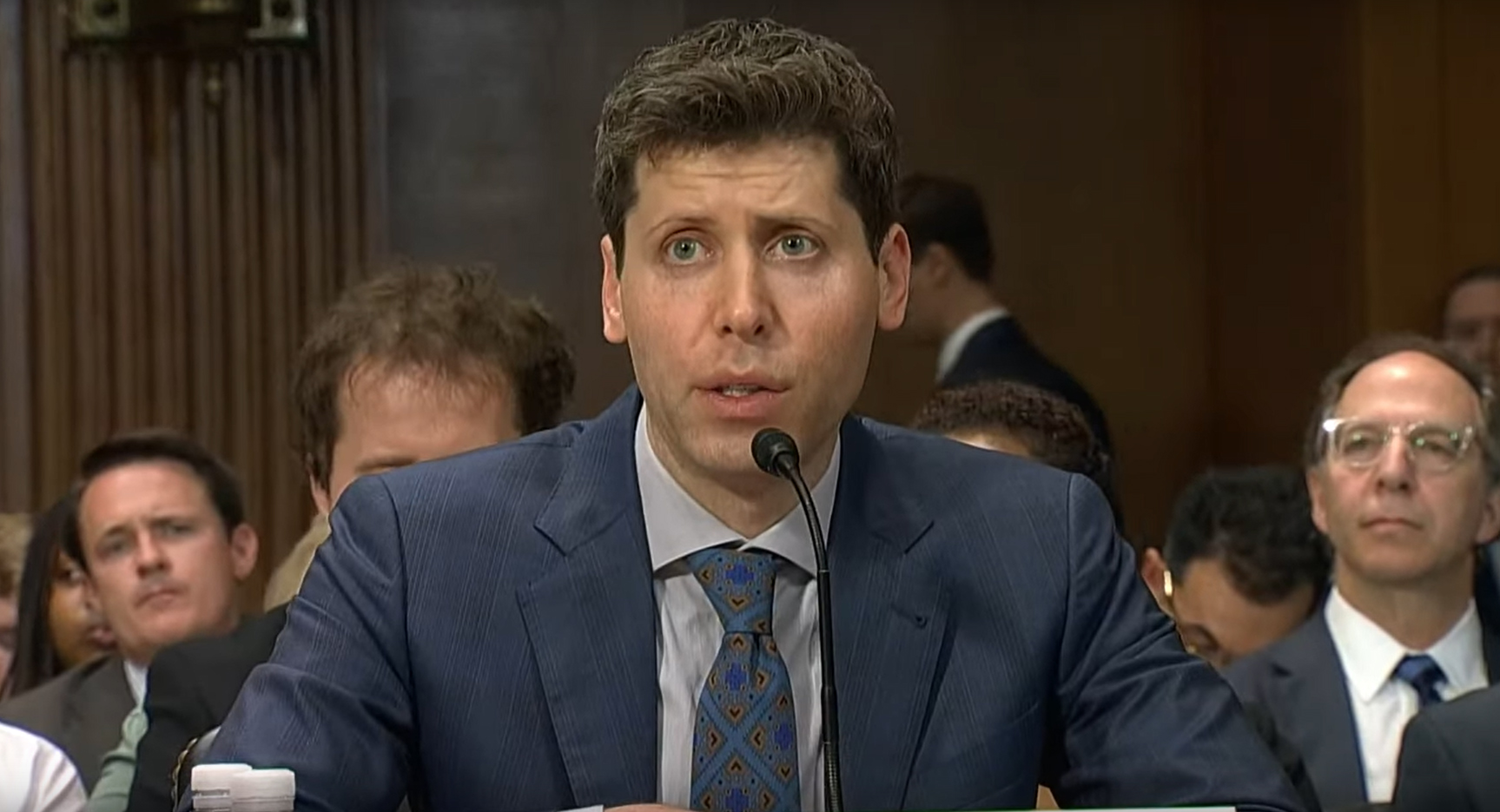
OpenAI study links AI hallucinations to flawed testing incentives

OpenAI researchers say large language models continue to hallucinate because current evaluation methods encourage them to guess rather than admit uncertainty.

Hallucinations, defined as confident but false statements, persist despite advances in models such as GPT-5. Low-frequency facts, like specific dates or names, are particularly vulnerable.

The study argues that while pretraining predicts the next word without true or false labels, the real problem lies in accuracy-based testing. Evaluations that reward lucky guesses discourage models from saying ‘I don’t know’.

Researchers suggest penalising confident errors more heavily than uncertainty, and awarding partial credit when AI models acknowledge limits in knowledge. They argue that only by reforming evaluation methods can hallucinations be meaningfully reduced.

Would you like to learn more about AI, tech and digital diplomacy? If so, ask our Diplo chatbot

Quantum-proof cryptography emerges as key test for stablecoins

Stablecoins have become central to the digital economy, with billions in daily transactions and stronger regulatory backing under the GENIUS Act. Yet experts warn that advances in quantum computing could undermine their very foundations.

Elliptic curve and RSA cryptography, widely used in stablecoin systems, are expected to be breakable once ‘Q-Day’ arrives. Quantum-equipped attackers could instantly derive private keys from public addresses, exposing entire networks to theft.

The immutability of blockchains makes upgrading cryptographic schemes especially challenging. Dormant wallets and legacy addresses may prove vulnerable, putting billions of dollars at risk if issuers fail to take action promptly.

Researchers highlight lattice-based and hash-based algorithms as viable ‘quantum-safe’ alternatives. Stablecoins built with crypto-agility, enabling seamless upgrades, will better adapt to new standards and avoid disruptive forks.

Regulators are also moving. NIST is finalising post-quantum cryptographic standards, and new rules will likely be established before 2030. Stablecoins that embed resilience today may set the global benchmark for digital trust in the quantum age.

Would you like to learn more about AI, tech, and digital diplomacy? If so, ask our Diplo chatbot!