
Security flaw in Dell models affects millions

Millions of Dell laptops faced a serious security risk due to a flaw in a Broadcom chip used for storing sensitive data. Cisco Talos researchers uncovered the vulnerability, which could have allowed attackers to steal passwords and monitor activity.

Dell confirmed over 100 laptop models were impacted, especially those with its ‘ControlVault’ security software used in sensitive industries. A fix has been issued through security patches since March.

No evidence suggests the flaw was exploited, but experts warn users to install updates promptly to avoid exposure. The issue highlights the risks of storing biometrics and credentials directly on devices.

Users are advised to keep security patches current and use reliable antivirus software to help reduce threats from similar vulnerabilities in future.

Would you like to learn more about AI, tech and digital diplomacy? If so, ask our Diplo chatbot!

News Corp CEO warns AI could ‘vandalise’ creativity and IP rights

News Corp chief executive Robert Thomson has warned that AI could damage creativity by undermining intellectual property rights.

At the company’s full-year results briefing in New York, he described the AI era as a historic turning point. He called for stronger protections to preserve America’s ‘comparative advantage in creativity’.

Thomson said allowing AI systems to consume and profit from copyrighted works without permission was akin to ‘vandalising virtuosity’.

He cited Donald Trump’s The Art of the Deal, published by News Corp’s book division, questioning whether it should be used to train AI that might undermine book sales. Despite the criticism, the company has rolled out its AI newsroom tools, NewsGPT and Story Cutter.

News Corp reported a two percent revenue rise to US$8.5 billion ($A13.1 billion), with net income from continuing operations climbing 71 percent to US$648 million.

Growth in the Dow Jones and REA Group segments offset news media subscriptions and advertising declines.

Digital subscribers fell across several mastheads, although The Times and The Sunday Times saw gains. Profitability in news media rose 15 percent, aided by editorial efficiencies and cost-cutting measures.

Would you like to learn more about AI, tech and digital diplomacy? If so, ask our Diplo chatbot!

UK GP surgery praised for using AI to boost efficiency and patient care

UK Health Minister Karin Smyth praised St George’s Surgery in Weston-super-Mare for utilising AI to enhance efficiency. Serving nearly 14,000 patients, the surgery uses AI to automate note-taking and letter drafting, reducing administrative burdens on staff.

It has been reported that, in June of 2025, St George’s Surgery handled over 9,000 appointments, with more than half booked and held on the same day. As part of the UK’s 10-Year Health Plan, the government stated it aims to expand AI adoption in healthcare, potentially freeing up the capacity of over 2,000 full-time GPs.

Andy Carpenter, Digital Director at Mendip Vale Medical Group, highlighted that AI is helping to manage growing patient demand, increase face-to-face time with GPs, and maintain strong data protection standards. Health Minister Karin Smyth also stressed the need for safe, well-regulated AI in healthcare, noting its practical uses, such as remote monitoring of vaccine fridge temperatures.

Would you like to learn more about AI, tech and digital diplomacy? If so, ask our Diplo chatbot!
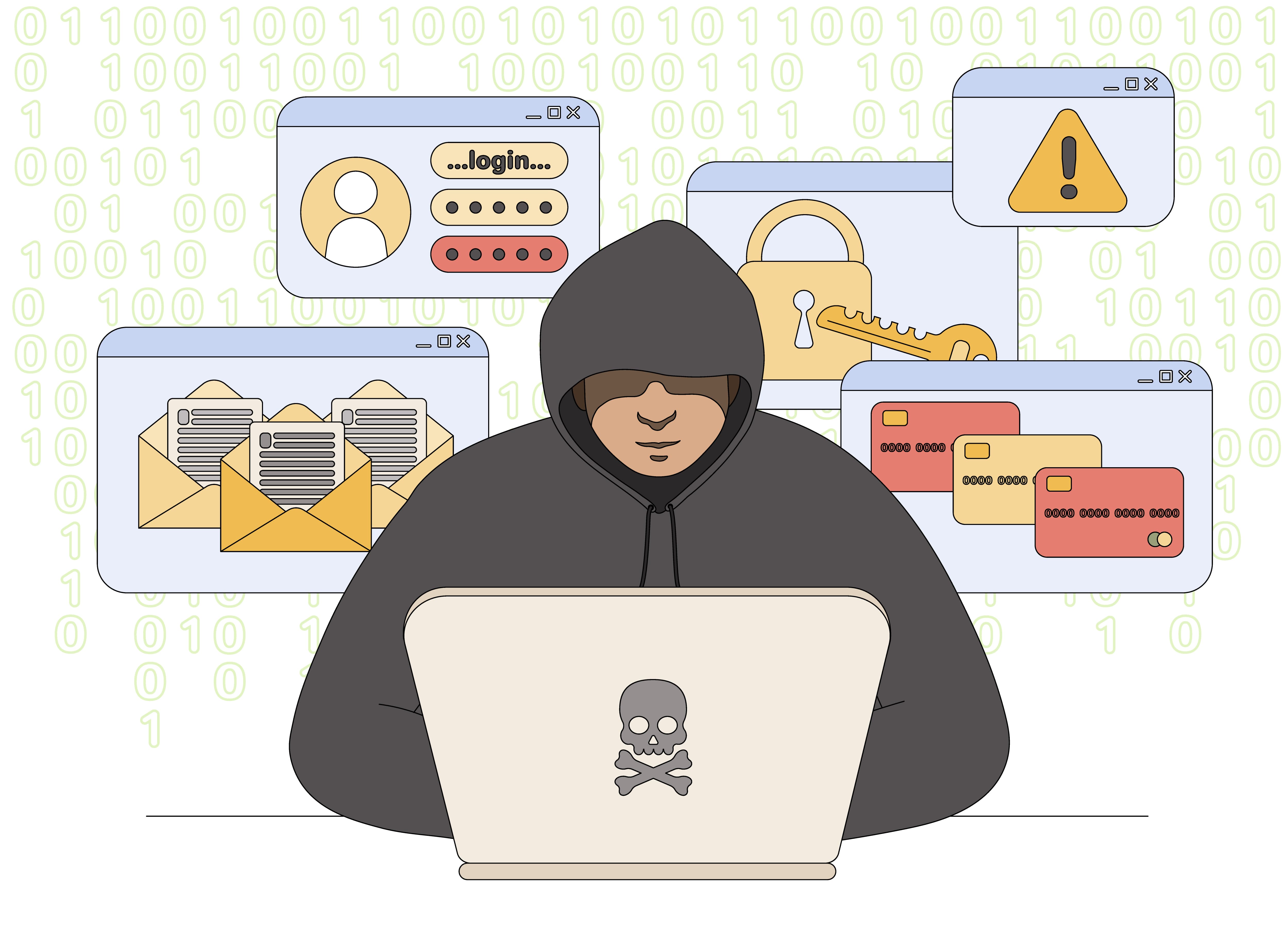
Android spyware posing as antivirus

LunaSpy is a new Android spyware campaign disguised as an antivirus or banking protection app. It spreads via messenger links and fake channels, tricking users into installing what appears to be a helpful security tool.

Once installed, the app mimics a real scanner, shows fake threat detections and operates unnoticed. In reality, it monitors everything on the device and sends sensitive data to attackers.

Active since at least February 2025, LunaSpy spreads through hijacked contact accounts and emerging Telegram channels. It poses as legitimate software to build trust before beginning surveillance.

Android users must avoid apps from unofficial links, scrutinise messenger invites, and only install from trusted stores. Reliable antivirus software and cautious permission granting provide essential defence.

Would you like to learn more about AI, tech and digital diplomacy? If so, ask our Diplo chatbot!

The end of the analogue era and the cognitive rewiring of new generations

Navigating a world beyond analogue

The digital transformation of daily life represents more than just a change in technological format. It signals a deep cultural and cognitive reorientation.

Rather than simply replacing analogue tools with digital alternatives, society has embraced an entirely new way of interacting with information, memory, time, and space.

For younger generations born into this reality, digital mediation is not an addition but the default mode of experiencing the world. A redefinition like this introduces not only speed and convenience but also cognitive compromises, cultural fragmentation, and a fading sense of patience and physical memory.

Generation Z as digital natives

Generation Z has grown up entirely within the digital realm. Unlike older cohorts who transitioned from analogue practices to digital habits, members of Generation Z were born into a world of touchscreen interfaces, search engines, and social media ecosystems.

As Generation Z enters the workforce, the gap between digital natives and older generations is becoming increasingly apparent. For them, technology has never been a tool to learn. It has always been a natural extension of their daily life.

young university students using laptop and studying with books in library school education concept

The term ‘digital native’, first coined by Marc Prensky in 2001, refers precisely to those who have never known a world without the internet. Rather than adapting to new tools, they process information through a technology-first lens.

In contrast, digital immigrants (those born before the digital boom) have had to adjust their ways of thinking and interacting over time. While access to technology might be broadly equal across generations in developed countries, the way individuals engage with it differs significantly.

Instead of acquiring digital skills later in life, they developed them alongside their cognitive and emotional identities. This fluency brings distinct advantages. Young people today navigate digital environments with speed, confidence, and visual intuition.

They can synthesise large volumes of information, switch contexts rapidly, and interact across multiple platforms with ease.

The hidden challenges of digital natives

However, the native digital orientation also introduces unique vulnerabilities. Information is rarely absorbed in depth, memory is outsourced to devices, and attention is fragmented by endless notifications and competing stimuli.

While older generations associate technology with productivity or leisure, Generation Z often experiences it as an integral part of their identity. The integration can obscure the boundary between thought and algorithm, between agency and suggestion.

Being a digital native is not just a matter of access or skill. It is about growing up with different expectations of knowledge, communication, and identity formation.

Memory and cognitive offloading: Access replacing retention

In the analogue past, remembering involved deliberate mental effort. People had to memorise phone numbers, use printed maps to navigate, or retrieve facts from memory rather than search engines.

The rise of smartphones and digital assistants has allowed individuals to delegate that mental labour to machines. Instead of internalising facts, people increasingly learn where and how to access them when needed, a practice known as cognitive offloading.

digital brain

Although the shift can enhance decision-making and productivity by reducing overload, it also reshapes the way the brain handles memory. Unlike earlier generations, who often linked memories to physical actions or objects, younger people encounter information in fast-moving and transient digital forms.

Memory becomes decentralised and more reliant on digital continuity than on internal recall. Rather than cognitive decline, this trend marks a significant restructuring of mental habits.

Attention and time: From linear focus to fragmented awareness

The analogue world demanded patience. Sending a letter meant waiting for days, rewinding a VHS tape required time, and listening to an album involved staying on the same set of songs in a row.

Digital media has collapsed these temporal structures. Communication is instant, entertainment is on demand, and every interface is designed to be constantly refreshed.

Instead of promoting sustained focus, digital environments often encourage continuous multitasking and quick shifts in attention. App designs, with their alerts, pop-ups, and endless scrolling, reinforce a habit of fragmented presence.

Studies have shown that multitasking not only reduces productivity but also undermines deeper understanding and reflection. Many younger users, raised in this environment, may find long periods of undivided attention unfamiliar or even uncomfortable.

The lost sense of the analogue

Analogue interactions involved more than sight and sound. Reading a printed book, handling vinyl records, or writing with a pen engaged the senses in ways that helped anchor memory and emotion. These physical rituals provided context and reinforced cognitive retention.

highlighter in male hand marked text in book education concept

Digital experiences, by contrast, are streamlined and screen-bound. Tapping icons and swiping a finger across glass lack the tactile diversity of older tools. Sensory uniformity might lead to a form of experiential flattening, where fewer physical cues are accessible to strengthen memory.

Digital photography lacks the permanence of a printed one, and music streamed online does not carry the same mnemonic weight as a cherished cassette or CD once did.

From communal rituals to personal streams

In the analogue era, media consumption was more likely to be shared. Families gathered around television sets, music was enjoyed communally, and photos were stored in albums passed down across generations.

These rituals helped synchronise cultural memory and foster emotional continuity and a sense of collective belonging.

The digital age favours individualised streams and asynchronous experiences. Algorithms personalise every feed, users consume content alone, and communication takes place across fragmented timelines.

While young people have adapted with fluency, creating their digital languages and communities, the collective rhythm of cultural experience is often lost.

People no longer share the same moment. They now experience parallel narratives shaped by personal profiles and rather than social connections.

Digital fatigue and social withdrawal

However, as the digital age reaches a point of saturation, younger generations are beginning to reconsider their relationship with the online world.

While constant connectivity dominates modern life, many are now striving to reclaim physical spaces, face-to-face interactions, and slower forms of communication.

In urban centres, people often navigate large, impersonal environments where community ties are weak and digital fatigue is contributing to a fresh wave of social withdrawal and isolation.

Despite living in a world designed to be more connected than ever before, younger generations are increasingly aware that a screen-based life can amplify loneliness instead of resolving it.

But the withdrawal from digital life has not been without consequences.

Those who step away from online platforms sometimes find themselves excluded from mainstream social, political, or economic systems.

Others struggle to form stable offline relationships because digital interaction has long been the default. Both groups would probably say that it feels like living on a razor’s edge.

Education and learning in a hybrid cognitive landscape

Education illustrates the analogue-to-digital shift with particular clarity. Students now rely heavily on digital sources and AI for notes, answers, and study aids.

The approach offers speed and flexibility, but it can also hinder the development of critical thinking and perseverance. Rather than engaging deeply with material, learners may skim or rely on summarised content, weakening their ability to reason through complex ideas.

ChatGPT students Jocelyn Leitzinger AI in education

Educators must now teach not only content but also digital self-awareness. Helping students understand how their tools shape their learning is just as important as the tools themselves.

A balanced approach that includes reading physical texts, taking handwritten notes, and scheduling offline study can help cultivate both digital fluency and analogue depth. This is not a nostalgic retreat, but a cognitive necessity.

Intergenerational perception and diverging mental norms

Older and younger generations often interpret each other through the lens of their respective cognitive habits. What seems like a distraction or dependency to older adults may be a different but functional way of thinking to younger people.

It is not a decline in ability, but an adaptation. Ultimately, each generation develops in response to the tools that shape its world.

Where analogue generations valued memorisation and sustained focus, digital natives tend to excel in adaptability, visual learning, and rapid information navigation.

multi generation family with parents using digital tablet with daughter at home

Bridging the gap means fostering mutual understanding and encouraging the retention of analogue strengths within a digital framework. Teaching young people to manage their attention, question their sources, and reflect deeply on complex issues remains vital.

Preserving analogue values in a digital world

The end of the analogue era involves more than technical obsolescence. It marks the disappearance of practices that once encouraged mindfulness, slowness, and bodily engagement.

Yet abandoning analogue values entirely would impoverish our cognitive and cultural lives. Incorporating such habits into digital living can offer a powerful antidote to distraction.

Writing by hand, spending time with printed books, or setting digital boundaries should not be seen as resistance to progress. Instead, these habits help protect the qualities that sustain long-term thinking and emotional presence.

Societies must find ways to integrate these values into digital systems and not treat them as separate or inferior modes.

Continuity by blending analogue and digital

As we have already mentioned, younger generations are not less capable than those who came before; they are simply attuned to different tools.

The analogue era may be gone for good, but its qualities need not be lost. We can preserve its depth, slowness, and shared rituals within a digital (or even a post-digital) world, using them to shape more balanced minds and more reflective societies.

To achieve something like this, education, policy, and cultural norms should support integration. Rather than focus solely on technical innovation, attention must also turn to its cognitive costs and consequences.

Only by adopting a broader perspective on human development can we guarantee that future generations are not only connected but also highly aware, capable of critical thinking, and grounded in meaningful memory.

Would you like to learn more about AI, tech and digital diplomacy? If so, ask our Diplo chatbot!

Malaysia tackles online scams with AI and new cyber guidelines

Cybercrime involving financial scams continues to rise in Malaysia, with 35,368 cases reported in 2024, a 2.53 per cent increase from the previous year, resulting in losses of RM1.58 billion.

The situation remains severe in 2025, with over 12,000 online scam cases recorded in the first quarter alone, involving fake e-commerce offers, bogus loans, and non-existent investment platforms. Losses during this period reached RM573.7 million.

Instead of waiting for the situation to worsen, the Digital Ministry is rolling out proactive safeguards. These include new AI-related guidelines under development by the Department of Personal Data Protection, scheduled for release by March 2026.

The documents will cover data protection impact assessments, automated decision-making, and privacy-by-design principles.

The ministry has also introduced an official framework for responsible AI use in the public sector, called GPAISA, to ensure ethical compliance and support across government agencies.

Additionally, training initiatives such as AI Untuk Rakyat and MD Workforce aim to equip civil servants and enforcement teams with skills to handle AI and cyber threats.

In partnership with CyberSecurity Malaysia and Universiti Kebangsaan Malaysia, the ministry is also creating an AI-powered application to verify digital images and videos.

Instead of relying solely on manual analysis, the tool will help investigators detect online fraud, identity forgery, and synthetic media more effectively.

Would you like to learn more about AI, tech and digital diplomacy? If so, ask our Diplo chatbot!

Law curbs AI use in mental health services across US state

A new law in a US state has banned the use of AI for delivering mental health care, drawing a firm line between digital tools and licensed professionals. The legislation limits AI systems to administrative tasks such as note-taking and scheduling, explicitly prohibiting them from offering therapy or clinical advice.

The move comes as concerns grow over the use of AI chatbots in sensitive care roles. Lawmakers in the midwestern state of Illinois approved the measure, citing the need to protect residents from potentially harmful or misleading AI-generated responses.

Fines of up to $10,000 may be imposed on companies or individuals who violate the ban. Officials stressed that AI lacks the empathy, accountability and clinical oversight necessary to ensure safe and ethical mental health treatment.

One infamous case saw an AI-powered chatbot suggest drug use to a fictional recovering addict, a warning signal, experts say, of what can go wrong without strict safeguards. The law is named the Wellness and Oversight for Psychological Resources Act.

Other parts of the United States are considering similar steps. Florida’s governor recently described AI as ‘the biggest issue’ facing modern society and pledged new state-level regulations within months.

Would you like to learn more about AI, tech, and digital diplomacy? If so, ask our Diplo chatbot!

New malware steals 200,000 passwords and credit card details through fake software

Hackers are now using fake versions of familiar software and documents to spread a new info-stealing malware known as PXA Stealer.

First discovered by Cisco Talos, the malware campaign is believed to be operated by Vietnamese-speaking cybercriminals and has already compromised more than 4,000 unique IP addresses across 62 countries.

Instead of targeting businesses alone, the attackers are now focusing on ordinary users in countries including the US, South Korea, and the Netherlands.

PXA Stealer is written in Python and designed to collect passwords, credit card data, cookies, autofill information, and even crypto wallet details from infected systems.

It spreads by sideloading malware into files like Microsoft Word executables or ZIP archives that also contain legitimate-looking programs such as Haihaisoft PDF Reader.

The malware uses malicious DLL files to gain persistence through the Windows Registry and downloads additional harmful files via Dropbox. After infection, it uses Telegram to exfiltrate stolen data, which is then sold on the dark web.

Once activated, the malware even attempts to open a fake PDF in Microsoft Edge, though the file fails to launch and shows an error message — by that point, it has already done the damage.

To avoid infection, users should avoid clicking unknown email links and should not open attachments from unfamiliar senders. Instead of saving passwords and card details in browsers, a trusted password manager is a safer choice.

Although antivirus software remains helpful, hackers in the campaign have used sophisticated methods to bypass detection, making careful online behaviour more important than ever.

Would you like to learn more about AI, tech and digital diplomacy? If so, ask our Diplo chatbot!

Cloudflare claims Perplexity circumvented website scraping blocks

Cloudflare has accused AI startup Perplexity of ignoring explicit website instructions not to scrape their content.

According to the internet infrastructure company, Perplexity has allegedly disguised its identity and used technical workarounds to bypass restrictions set out in Robots.txt files, which tell bots which pages they may or may not access.

The behaviour was reportedly detected after multiple Cloudflare customers complained about unauthorised scraping attempts.

Instead of respecting these rules, Cloudflare claims Perplexity altered its bots’ user agent to appear as a Google Chrome browser on macOS and switched its network identifiers to avoid detection.

The company says these tactics were seen across tens of thousands of domains and millions of daily requests, and that it used machine learning and network analysis to identify the activity.

Perplexity has denied the allegations, calling Cloudflare’s report a ‘sales pitch’ and disputing that the bot named in the findings belongs to the company. Cloudflare has since removed Perplexity’s bots from its verified list and introduced new blocking measures.

The dispute arises as Cloudflare intensifies its efforts to grant website owners greater control over AI crawlers. Last month, it launched a marketplace enabling publishers to charge AI firms for scraping, alongside free tools to block unauthorised data collection.

Perplexity has previously faced criticism over content use, with outlets such as Wired accusing it of plagiarism in 2024.

Would you like to learn more about AI, tech and digital diplomacy? If so, ask our Diplo chatbot!

OpenAI to improve its ability in detecting mental or emotional distress

In search of emotional support during a mental health crisis, it has been reported that people use ChatGPT as their ‘therapist.’ While this may seem like an easy getaway, reports have shown that ChatGPT’s responses have had an amplifying effect on people’s delusions rather than helping them find coping mechanisms. As a result, OpenAI stated that it plans to improve the chatbot’s ability to detect mental distress in the new GPT-5 AI model, which is expected to launch later this week.

OpenAI admits that GPT-4 sometimes failed to recognise signs of delusion or emotional dependency, especially in vulnerable users. To encourage healthier use of ChatGPT, which now serves nearly 700 million weekly users, OpenAI is introducing break reminders during long sessions, prompting users to pause or continue chatting.

Additionally, it plans to refine how and when ChatGPT displays break reminders, following a trend seen on platforms like YouTube and TikTok.

Would you like to learn more about AI, tech and digital diplomacy? If so, ask our Diplo chatbot!