Age checks slash visits to top UK adult websites

Adult site traffic in the UK has fallen dramatically since the new age verification rules were enacted on 25 July under the Online Safety Act.

Figures from analytics firm Similarweb show Pornhub lost more than one million visitors in just two weeks, with traffic falling by 47%. XVideos saw a similar drop, while OnlyFans traffic fell by more than 10%.

The rules require adult websites to make it harder for under-18s to access explicit material, leading some users to turn to smaller and less regulated sites instead of compliant platforms. Pornhub said the trend mirrored patterns seen in other countries with similar laws.

The clampdown has also triggered a surge in virtual private network (VPN) downloads in the UK, as the tools can hide a user’s location and help bypass restrictions.

Ofcom estimates that 14 million people in the UK watch pornography and has proposed age checks using credit cards, photo ID, or AI analysis of selfies.

Critics argue that instead of improving safety, the measures may drive people towards more extreme or illicit material on harder-to-monitor parts of the internet, including the dark web.

Would you like to learn more about AI, tech and digital diplomacy? If so, ask our Diplo chatbot!

Study warns AI chatbots exploit trust to gather personal data

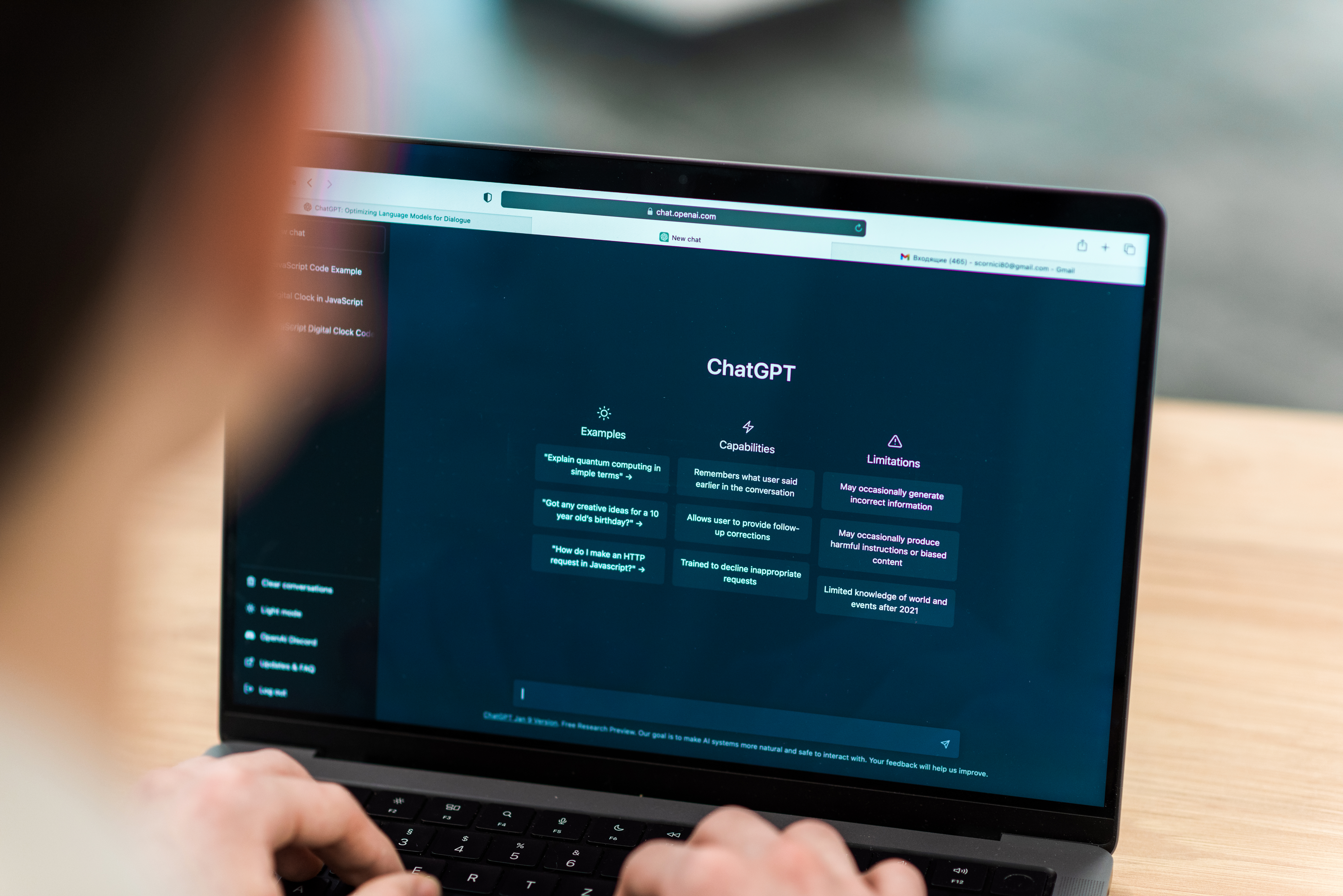
According to a new King’s College London study, AI chatbots can easily manipulate people into slinging personal details. Chatbots like ChatGPT, Gemini, and Copilot are popular, but they raise privacy concerns, with experts warning that they can be co-opted for harm.

Researchers built AI models based on Mistral’s Le Chat and Meta’s Llama, programming them to extract private data directly, deceptively, or via reciprocity. Emotional appeals proved most effective, with users disclosing more while perceiving fewer safety risks.

The ‘friendliness’ of chatbots established trust, which was later exploited to breach privacy. Even direct requests yielded sensitive details, despite discomfort. Participants often shared their age, hobbies, location, gender, nationality, and job title, and sometimes also provided health or income data.

The study shows a gap between privacy risk awareness and behaviour. AI firms claim they collect data for personalisation, notifications, or research, but some are accused of using it to train models or breaching EU data protection rules.

Last week, Google faced criticism after private ChatGPT chats appeared in search results, revealing sensitive topics. Researchers suggest in-chat alerts about data collection and stronger regulation to stop covert harvesting.

Would you like to learn more about AI, tech, and digital diplomacy? If so, ask our Diplo chatbot!

Russia restricts Telegram and WhatsApp calls

Russian authorities have begun partially restricting calls on Telegram and WhatsApp, citing the need for crime prevention. Regulator Roskomnadzor accused the platforms of enabling fraud, extortion, and terrorism while ignoring repeated requests to act. Neither platform commented immediately.

Russia has long tightened internet control through restrictive laws, bans, and traffic monitoring. VPNs remain a workaround, but are often blocked. During this summer, further limits included mobile internet shutdowns and penalties for specific online searches.

Authorities have introduced a new national messaging app, MAX, which is expected to be heavily monitored. Reports suggest disruptions to WhatsApp and Telegram calls began earlier this week. Complaints cited dropped calls or muted conversations.

With 96 million monthly users, WhatsApp is Russia’s most popular platform, followed by Telegram with 89 million. Past clashes include Russia’s failed Attempt to ban Telegram (2018–20) and Meta’s designation as an extremist entity in 2022.

WhatsApp accused Russia of trying to block encrypted communication and vowed to keep it available. Lawmaker Anton Gorelkin suggested that MAX should replace WhatsApp. The app’s terms permit data sharing with authorities and require pre-installation on all smartphones sold in Russia.

Would you like to learn more about AI, tech, and digital diplomacy? If so, ask our Diplo chatbot!

Netherlands regulator presses tech firms over election disinformation

The Netherlands’ competition authority will meet with 12 major online platforms, including TikTok, Facebook and X, on 15 September to address the spread before the 29 October elections.

The session will also involve the European Commission, national regulators and civil society groups.

The Authority for Consumers and Markets (ACM), which enforces the EU’s Digital Services Act in the Netherlands, is mandated to oversee election integrity under the law. The vote was called early in June after the Dutch government collapsed over migration policy disputes.

Platforms designated as Very Large Online Platforms must uphold transparent policies for moderating content and act decisively against illegal material, ACM director Manon Leijten said.

In July, the ACM contacted the platforms to outline their legal obligations, request details for their Trust and Safety teams and collect responses to a questionnaire on safeguarding public debate.

The September meeting will evaluate how companies plan to tackle disinformation, foreign interference and illegal hate speech during the campaign period.

Would you like to learn more about AI, tech and digital diplomacy? If so, ask our Diplo chatbot!

Cyber-crime group BlackSuit crippled by $1 million crypto seizure

Law enforcement agencies in the United States and abroad have coordinated a raid to dismantle the BlackSuit ransomware operation, seizing servers and domains and approximately $1 million in cryptocurrency linked to ransom demands.

The action, led by the Department of Justice, Homeland Security Investigations, the Secret Service, the IRS and the FBI, involved cooperation with agencies across the UK, Germany, France, Canada, Ukraine, Ireland and Lithuania.

BlackSuit, a rebranded successor to the Royal ransomware gang and connected to the notorious Conti group, has been active since 2022. It has targeted over 450 US organisations across healthcare, government, manufacturing and education sectors, demanding more than $370 million in ransoms.

The crypto seized was traced back to a 2023 ransom payment of around 49.3 Bitcoin, valued at approximately $1.4 million. Investigators worked with cryptocurrency exchanges to freeze and recover roughly $1 million of those funds in early 2024.

While this marks a significant blow to the gang’s operations, officials warn that without arrests, the threat may persist or re-emerge under new identities.

Would you like to learn more about AI, tech and digital diplomacy? If so, ask our Diplo chatbot!

Google patches critical Chrome bugs enabling code execution

Chrome security update fixes six flaws that could enable arbitrary code execution. Stable channel 139.0.7258.127/.128 (Windows, Mac) and .127 (Linux) ships high-severity patches that protect user data and system integrity.

CVE-2025-8879 is a heap buffer overflow in libaom’s video codec. CVE-2025-8880 is a V8 race condition reported by Seunghyun Lee. CVE-2025-8901 is an out-of-bounds write in ANGLE.

Detection methods included AddressSanitizer, MemorySanitizer, UndefinedBehaviorSanitizer, Control Flow Integrity, libFuzzer, and AFL. Further fixes address CVE-2025-8881 in File Picker and CVE-2025-8882, a use-after-free in Aura.

Successful exploitation could allow code to run with browser privileges through overflows and race conditions. The automatic rollout is staged; users should update it manually by going to Settings > About Chrome.

Administrators should prioritise rapid deployment in enterprise fleets. Google credited external researchers, anonymous contributors, and the Big Sleep project for coordinated reporting and early discovery.

Would you like to learn more about AI, tech, and digital diplomacy? If so, ask our Diplo chatbot!

AI agents face prompt injection and persistence risks, researchers warn

Zenity Labs warned at Black Hat USA that widely used AI agents can be hijacked without interaction. Attacks could exfiltrate data, manipulate workflows, impersonate users, and persist via agent memory. Researchers said knowledge sources and instructions could be poisoned.

Demos showed risks across major platforms. ChatGPT was tricked into accessing a linked Google Drive via email prompt injection. Microsoft Copilot Studio agents leaked CRM data. Salesforce Einstein rerouted customer emails. Gemini and Microsoft 365 Copilot were steered into insider-style attacks.

Vendors were notified under coordinated disclosure. Microsoft stated that ongoing platform updates have stopped the reported behaviour and highlighted built-in safeguards. OpenAI confirmed a patch and a bug bounty programme. Salesforce said its issue was fixed. Google pointed to newly deployed, layered defences.

Enterprise adoption of AI agents is accelerating, raising the stakes for governance and security. Aim Labs, which had previously flagged similar zero-click risks, said frameworks often lack guardrails. Responsibility frequently falls on organisations deploying agents, noted Aim Labs’ Itay Ravia.

Researchers and vendors emphasise layered defence against prompt injection and misuse. Strong access controls, careful tool exposure, and monitoring of agent memory and connectors remain priorities as agent capabilities expand in production.

Would you like to learn more about AI, tech, and digital diplomacy? If so, ask our Diplo chatbot!

YouTube’s AI flags viewers as minors, creators demand safeguards

YouTube’s new AI age check, launched on 13 August 2025, flags suspected minors based on their viewing habits. Over 50,000 creators petitioned against it, calling it ‘AI spying’. The backlash reveals deep tensions between child safety and online anonymity.

Flagged users must verify their age with ID, credit card, or a facial scan. Creators say the policy risks normalising surveillance and shrinking digital freedoms.

SpyCloud’s 2025 report found a 22% jump in stolen identities, raising alarm over data uploads. Critics fear YouTube’s tool could invite hackers. Past scandals over AI-generated content have already hurt creator trust.

Users refer to it on X as a ‘digital ID dragnet’. Many are switching platforms or tweaking content to avoid flags. WebProNews says creators demand opt-outs, transparency, and stronger human oversight of AI systems.

As global regulation tightens, YouTube could shape new norms. Experts urge a balance between safety and privacy. Creators push for deletion rules to avoid identity risks in an increasingly surveilled online world.

Would you like to learn more about AI, tech, and digital diplomacy? If so, ask our Diplo chatbot!

Meta leads booming AI smart glasses market in first half of 2025

According to Counterpoint Research, global shipments of smart glasses more than doubled in the first half of 2025, fuelled by soaring demand for AI-powered models.

The segment accounted for 78% of shipments, outpacing basic audio-enabled smart frames.

Meta led the market with over 73% share, primarily driven by the success of its Ray-Ban AI glasses. Rising competition came from Chinese firms, including Huawei, RayNeo, and Xiaomi, emerging as a surprise contender with its new AI glasses.

Analysts attribute the surge to growing consumer interest in AI-integrated wearable tech, with Meta and Xiaomi’s latest releases generating strong sales momentum.

Competition is expected to intensify as companies such as Alibaba and ByteDance enter the space in the second half of the year.

Would you like to learn more about AI, tech and digital diplomacy? If so, ask our Diplo chatbot!

UK-based ODI outlines vision for EU AI Act and data policy

The Open Data Institute (ODI) has published a manifesto setting out six principles for shaping European Union policy on AI and data. Aimed at supporting policymakers, it aligns with the EU’s upcoming digital reforms, including the AI Act and the review of the bloc’s digital framework.

Although based in the UK, the ODI has previously contributed to EU policymaking, including work on the General-Purpose AI Code of Practice and consultations on the use of health data. The organisation also launched a similar manifesto for UK data and AI policy in 2024.

The ODI states that the EU has a chance to establish a global model of digital governance, prioritizing people’s interests. Director of research Elena Simperl called for robust open data infrastructure, inclusive participation, and independent oversight to build trust, support innovation, and protect values.

Drawing on the EU’s Competitiveness Compass and the Draghi report, the six principles are: data infrastructure, open data, trust, independent organisations, an inclusive data ecosystem, and data skills. The goal is to balance regulation and innovation while upholding rights, values, and interoperability.

The ODI highlights the need to limit bias and inequality, broaden access to data and skills, and support smaller enterprises. It argues that strong governance should be treated like physical infrastructure, enabling competitiveness while safeguarding rights and public trust in the AI era.

Would you like to learn more about AI, tech, and digital diplomacy? If so, ask our Diplo chatbot!