Gadget makers face rising costs as AI drives intense demand for memory chips. Supplies of DRAM and storage components have tightened across global markets.
Manufacturers have shifted production towards AI data centres, squeezing availability for consumer devices. Analysts warn the memory shortage could extend well into next year.
Higher prices are already affecting laptops, smartphones and connected devices. Some companies are redesigning products or limiting features to manage the costs of chip components.
Industry experts say engineers are writing leaner software to reduce memory use. The AI surge is marking the end of an era of cheap and abundant memory.
Would you like to learn more about AI, tech and digital diplomacy? If so, ask our Diplo chatbot!
European Commission Executive Vice President Teresa Ribera has stated that the EU has a constitutional obligation under its treaties to uphold its digital rulebook, including the Digital Markets Act (DMA).
Speaking at a competition law conference, Ribera framed enforcement as a duty to protect fair competition and market balance across the bloc.
Her comments arrive amid growing criticism from US technology companies and political pressure from Washington, where enforcement of EU digital rules has been portrayed as discriminatory towards American firms.
Several designated gatekeepers have argued that the DMA restricts innovation and challenges existing business models.
Ribera acknowledged the right of companies to challenge enforcement through the courts, while emphasising that designation decisions are based on lengthy and open consultation processes. The Commission, she said, remains committed to applying the law effectively rather than retreating under external pressure.
Apple and Meta have already announced plans to appeal fines imposed in 2025 for alleged breaches of DMA obligations, reinforcing expectations that legal disputes around EU digital regulation will continue in parallel with enforcement efforts.
Would you like to learn more about AI, tech and digital diplomacy? If so, ask our Diplo chatbot!
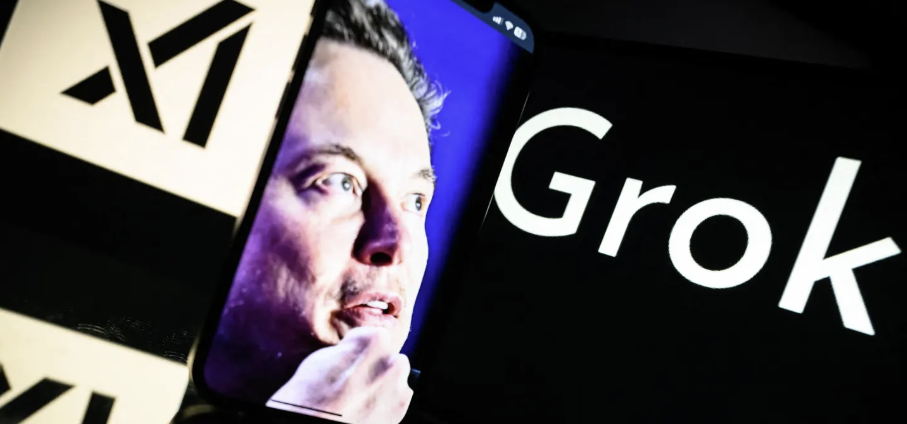
The US Department of Defence plans to integrate Elon Musk’s AI tool Grok into Pentagon networks later in January, according to Defence Secretary Pete Hegseth.
The system is expected to operate across both classified and unclassified military environments as part of a broader push to expand AI capabilities.
Hegseth also outlined an AI acceleration strategy designed to increase experimentation, reduce administrative barriers and prioritise investment across defence technology.
An approach that aims to enhance access to data across federated IT systems, aligning with official views that military AI performance relies on data availability and interoperability.
The move follows earlier decisions by the Pentagon to adopt Google’s Gemini for an internal AI platform and to award large contracts to Anthropic, OpenAI, Google and xAI for agentic AI development.
Officials describe these efforts as part of a long-term strategy to strengthen US military competitiveness in AI.
Grok’s integration comes amid ongoing controversy, including criticism over generated imagery and previous incidents involving extremist and offensive content. Several governments and regulators have already taken action against the tool, adding scrutiny to its expanded role within defence systems.
Would you like to learn more about AI, tech and digital diplomacy? If so, ask our Diplo chatbot!
A Northern Ireland politician, Cara Hunter of the Social Democratic and Labour Party (SDLP), has quit X after renewed concerns over Grok AI misuse. She cited failures to protect women and children online.
The decision follows criticism of Grok AI features enabling non-consensual sexualised images. UK regulators have launched investigations under online safety laws.
UK ministers plan to criminalise creating intimate deepfakes and supplying related tools. Ofcom is examining whether X breached its legal duties.
Political leaders and rights groups say enforcement must go further. X says it removes illegal content and has restricted Grok image functions on the social media.
Would you like to learn more about AI, tech and digital diplomacy? If so, ask our Diplo chatbot!
The Irish government plans to fast-track laws allowing heavy fines for AI abuse. The move follows controversy involving misuse of image generation tools.
Ministers will transpose an existing EU AI Act into Irish law. The framework defines eight harmful uses breaching rights and public decency.
Penalties could reach €35 million or seven percent of global annual turnover. AI systems would be graded by risk under the enforcement regime.
A dedicated AI office is expected to launch by August to oversee compliance. Irish and UK leaders have pressed platforms to curb harmful AI features.
Would you like to learn more about AI, tech and digital diplomacy? If so, ask our Diplo chatbot!
The European Commission has warned X to address issues related to its Grok AI tool. Regulators say new features enabled the creation of sexualised images, including those of children.
EU Tech Sovereignty Commissioner Henna Virkkunen has stated that investigators have already taken action under the Digital Services Act. Failure to comply could result in enforcement measures being taken against the platform.
X recently restricted Grok’s image editing functions to paying users after criticism from regulators and campaigners. Irish and EU media watchdogs are now engaging with Brussels on the issue.
UK ministers also plan laws banning non-consensual intimate images and tools enabling their creation. Several digital rights groups argue that existing laws already permit criminal investigations and fines.
Would you like to learn more about AI, tech and digital diplomacy? If so, ask our Diplo chatbot!
Apple and Google have confirmed a multi-year partnership that will see Google’s Gemini models powering Siri and future Apple Intelligence features. The collaboration will underpin Apple’s next-generation AI models, with updates coming later this year.
The move follows delays in rolling out Siri upgrades first unveiled at WWDC 2024. While most Apple Intelligence features have already been launched, the redesigned Siri has been postponed due to development taking longer than anticipated.
According to reports, Apple will continue using its own models for specific tasks, while Gemini is expected to handle summarisation, planning, and other advanced functions.
Bloomberg reports the upcoming Siri will be structured around three layers: query planning, knowledge retrieval, and summarisation. Gemini will handle planning and summarisation, helping Siri structure responses and create clear summaries.
Knowledge retrieval may also benefit from Gemini, potentially broadening Siri’s general knowledge capabilities beyond its current hand-off system.
All AI processing will operate on Apple’s Private Cloud Compute platform, ensuring user privacy and keeping data secure. Analysts suggest this integration will embed Gemini more deeply into Siri’s core functionality, rather than serving as a supplementary tool.
Would you like to learn more about AI, tech and digital diplomacy? If so, ask our Diplo chatbot!
NVIDIA and Eli Lilly have announced a joint AI co-innovation lab aimed at advancing drug discovery by combining AI with pharmaceutical research.
The partnership combines Lilly’s experience in medical development with NVIDIA’s expertise in accelerated computing and AI infrastructure.
The two companies plan to invest up to $1 billion over five years in research capacity, computing resources and specialist talent.
Based in the San Francisco Bay Area, the lab will support large-scale data generation and model development using NVIDIA platforms, instead of relying solely on traditional laboratory workflows.
Beyond early research, the collaboration is expected to explore applications of AI across manufacturing, clinical development and supply chain operations.
Both NVIDIA and Eli Lilly claim the initiative is designed to enhance efficiency and scalability in medical production while fostering long-term innovation in the life sciences sector.
Would you like to learn more about AI, tech and digital diplomacy? If so, ask our Diplo chatbot!
Morocco is preparing to unveil ‘Maroc IA 2030’, a national AI roadmap designed to structure the country’s AI ecosystem and strengthen digital transformation.
The strategy seeks to modernise public services, improve interoperability across digital systems and enhance economic competitiveness, according to officials ahead of the ‘AI Made in Morocco’ event in Rabat.
A central element of the plan involves the creation of Al Jazari Institutes, a national network of AI centres of excellence connecting academic research with innovation and regional economic needs.
A roadmap that prioritises technological autonomy, trusted AI use, skills development, support for local innovation and balanced territorial coverage instead of fragmented deployment.
The initiative builds on the Digital Morocco 2030 strategy launched in 2024, which places AI at the core of national digital policy.
Authorities expect the combined efforts to generate around 240,000 digital jobs and contribute approximately $10 billion to gross domestic product by 2030, while improving the international AI readiness ranking of Morocco.
Additional measures include the establishment of a General Directorate for AI and Emerging Technologies to oversee public policy and the development of an Arab African regional digital hub in partnership with the United Nations Development Programme.
Their main goal is to support sustainable and responsible digital innovation.
Would you like to learn more aboutAI, tech and digital diplomacy? If so, ask our Diplo chatbot!
Rising living costs and economic instability are the biggest worries for young people worldwide. A World Economic Forum survey shows inflation dominates personal and global concerns.
Many young people fear that AI-driven automation will shrink entry-level job opportunities. Two-thirds expect fewer early career roles despite growing engagement with AI tools.
Nearly 60 per cent already use AI to build skills and improve employability. Side hustles and freelance work are increasingly common responses to economic pressure.
Youth respondents call for quality jobs, better education access and affordable housing. Climate change also ranks among the most serious long-term global risks.
Would you like to learn more about AI, tech and digital diplomacy? If so, ask our Diplo chatbot!